





Key Takeaways:
-
- The global online auction market is estimated at $2.5 billion in 2024 and is expected to grow at a CAGR of 15.5% from 2026 to 2033.
- Auction app development with AI integration leads to Automated processes, streamlined operations, smart bidding, faster auction completion, enhanced user experience, and improved security.
- eBay, LiveAuctioneers, Invaluable, and Catawiki are prime examples of popular AI-enabled auction platforms.
- To choose the best AI tools for mobile auction applications, you need to identify your goals, consider the best features, and evaluate ease of use. Also, you must compare pricing models and explore free trials and demos.
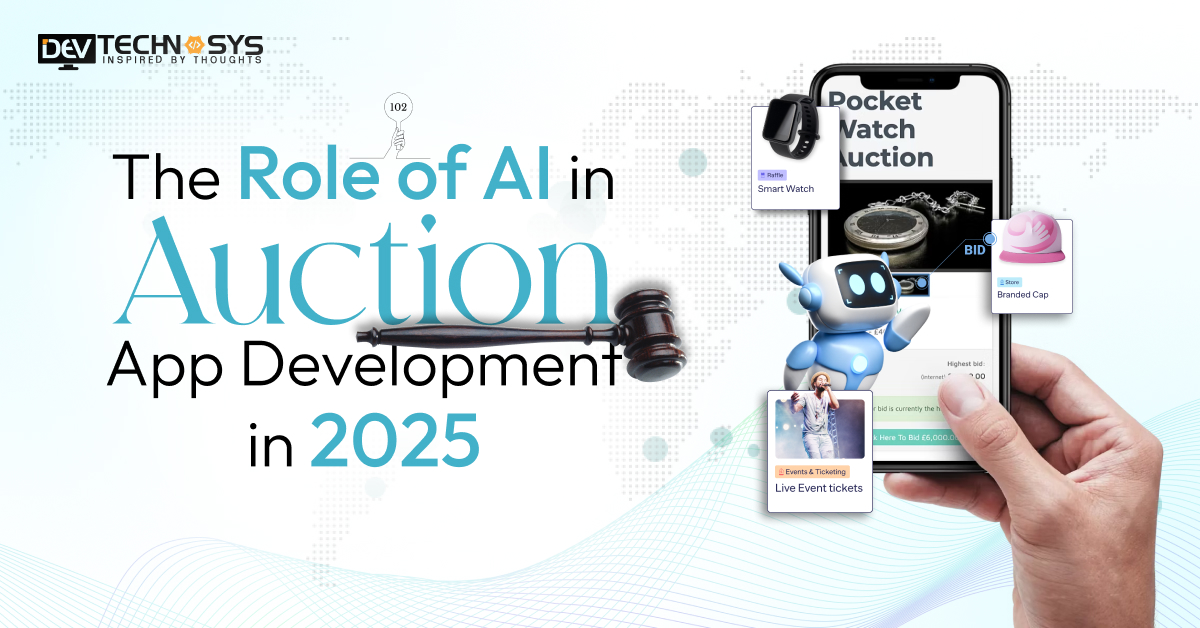
Auction apps are the future of the property buying and selling industry. And now, with the introduction of AI technology and automation, the auction app development industry has reached new heights of revolution. AI enhances user experience, boosts security, and optimizes various aspects of the auction process.
According to Verified Market Research, the global online auction market is expected to reach $32 billion by 2025. It is growing at a compound annual growth rate (CAGR) of 8.1% This growth in demand for auction apps urged many businesses to invest in AI-based online auction platform development.
In today’s blog, we’ll dive into the world of auction app development and explore how AI is transforming the online bidding industry through auction apps. We will also highlight the benefits of AI in auction app development, the top 10 AI-powered auction apps, and more. So, stay tuned!
Auction App Market Overview

- The Mobile Auction Apps Market size was valued at USD2.5 billion in 2024 and is forecasted to grow at a CAGR of 15.5% from 2026 to 2033, reaching USD 7.8 billion by 2033.
- North America is expected to contribute 41% to the global market’s growth during the forecast period.
- Recent developments in the market have involved the introduction of new features by major industry players, such as eBay and Alibaba, including live streaming and social media integration.
What is an Auction App?
An auction app is an online platform that allows people to buy and sell items through a bidding or auction process. Whether it’s a house, a piece of art, or even vintage furniture, the concept remains the same. Users can list their assets, and potential buyers can place bids over a specific period.
The highest bidder at the end of the auction period wins the item and pays the seller the agreed-upon price. You can use them for a range of items, starting from everyday goods to unique collectibles and even real estate. An auction app like Emirates Auction is a perfect example.
Types of Auction Apps to Consider
It is crucial to learn about the various types of auction apps before embarking on AI auction software development. In this section, we will introduce you to multiple kinds of auction apps.
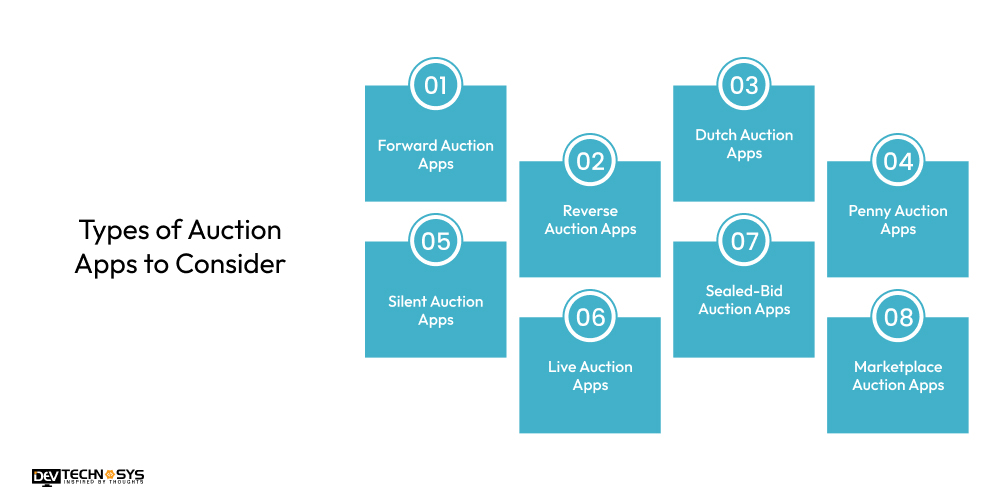
- Forward Auction Apps: Compared to auction app development with AI integration, this is a traditional model. It allows buyers to compete by placing higher bids until the highest bidder wins.
- Reverse Auction Apps: In a reverse auction app, sellers compete by lowering their prices, and the buyer chooses the lowest bid. This type is best for obtaining competitive supplier pricing.
- Dutch Auction Apps: According to an AI-enabled auction app solutions provider, a Dutch auction app starts with a high price. That price gradually decreases until a buyer accepts it.
- Penny Auction Apps: In Penny Auction Apps, users pay a small fee for each bid they place. The auction timer resets slightly with each new bid, creating a dynamic and competitive environment.
- Silent Auction Apps: Bidders submit bids privately without knowing others’, and the highest bid wins. Experts in AI auction system development recommend a silent auction app for businesses aiming to boost engagement in controlled environments.
- Live Auction Apps: Real-time online bidding events, often streamed with live video for an authentic experience. Businesses that wish to enhance their brand experience often opt for auction app development with AI Integration.
- Sealed-Bid Auction Apps: According to an AI-enabled auction app solutions provider, all participants submit a single, confidential bid, and the highest wins.
- Marketplace Auction Apps: This type of AI auction system development combines auction and fixed-price sales. It gives users the power to either bid or buys instantly.
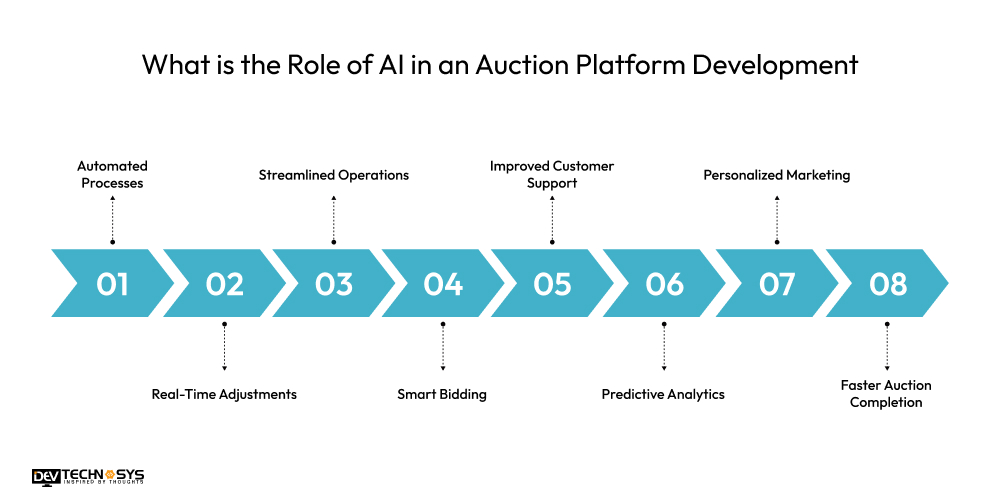
What is the Role of AI in an Auction Platform Development?
Artificial Intelligence plays a vital role in enhancing the process of auction app development. Below are some key points that show why AI is essential in developing a custom AI-powered auction app.
-
Real-time adjustments:
Auction app development with AI integration enables real-time adjustments to bids and pricing. These real-time adjustments lead to optimized auction dynamics, which keep the process competitive.
-
Automated processes:
AI can automate tasks involving item categorization, bidder registration, and bid tracking, thereby reducing manual errors and saving time. This is why businesses are now seeking to develop an auction app that incorporates AI tools and technology.
-
Streamlined operations:
AI auction software development enables efficient handling of routine tasks. It includes functions such as inventory management and customer support, freeing up human staff to focus on more strategic activities.

-
Smart bidding:
AI-powered predictive bidding helps users make informed decisions. AI helps optimize their bidding strategies and potentially increases their chances of winning.
-
Improved customer support:
According to experts who provide AI bidding platform development services, AI chatbots can provide 24/7 instant support. Skilled customer service team answers user questions and resolves the problems quickly, enhancing user satisfaction.
-
Predictive analytics:
AI in auction app development helps developers in analyzing historical data and market trends to predict optimal bidding strategies and pricing. It attracts more bidders and increases sales.
-
Personalized marketing:
Custom auction app development can offer various benefits, including personalized marketing. AI can make adjustments to marketing campaigns to attract specific user segments. It increases user engagement and drives higher participation in auctions.
-
Faster auction completion:
One of the reasons to include AI in auction app development is to optimize the auction or bidding process. AI integration enables faster transaction times and increased efficiency.
Benefits of AI Integration in Auction App Development
The development of AI-based online auction platforms can bring numerous benefits to businesses. Here are some of the benefits of incorporating AI in auction app development.
-
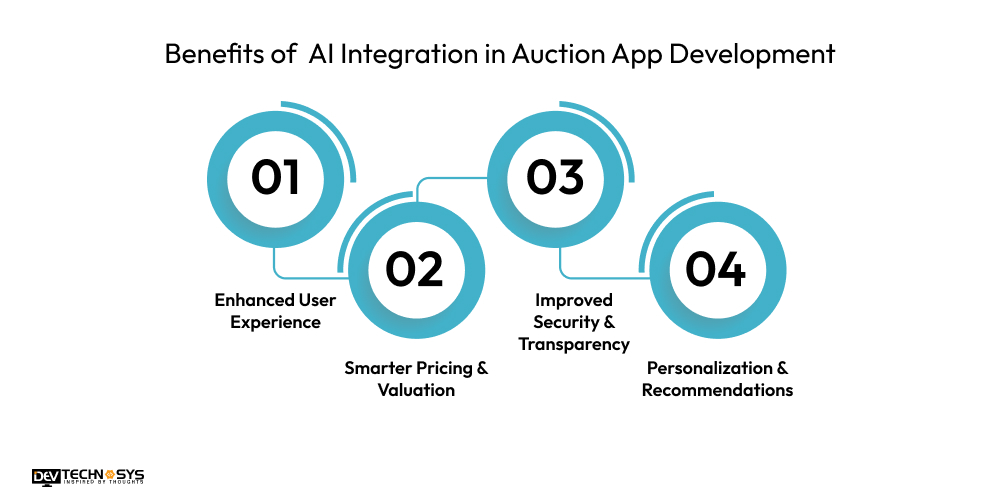
Enhanced User Experience
AI significantly improves user experience by enabling highly personalized interactions. By leveraging machine learning algorithms, apps can analyze user data and behavior to offer tailored content, recommendations, and features. This level of customization enhances user satisfaction and derives engagement, making Android and iOS app development more responsive and interactive to individual needs.
-
Smarter Pricing & Valuation
According to professionals who provide AI bidding platform development services, AI-driven pricing models can analyze historical data. It also helps with analyzing market demand and competitor trends to provide accurate price predictions and valuations. AI in auction app development ensures fair bidding while assisting businesses in maximizing profits. This helps users make more data-driven and informed decisions.
-
Improved Security & Transparency
AI enhances security by detecting anomalies and fraudulent activities in real time. From spotting unusual bidding patterns to preventing shill bidding, AI safeguards both buyers and sellers. This added transparency boosts trust and credibility within the auction platform. Hire AI auction app developers from a reputable company to incorporate robust security features in your auction app.
-
Personalization & Recommendations
The integration of AI tools and technologies in auction apps can deliver customized item suggestions, auction alerts, and bidding strategies tailored to users’ interests and past activity. According to a top AI development company, this level of personalization keeps users engaged, reduces decision fatigue, and improves satisfaction rate.
-
Real-Time Insights & Analytics
A custom AI-powered auction app can enable businesses to gain deep insights into user behavior, bidding trends, and market dynamics. These insights help optimize auction strategies, improve decision-making, and drive better outcomes for both users and businesses.
AI Use Cases in Auction Apps
AI has completely transformed the way the auction app industry works. Here are some of the use cases of auction apps:
-
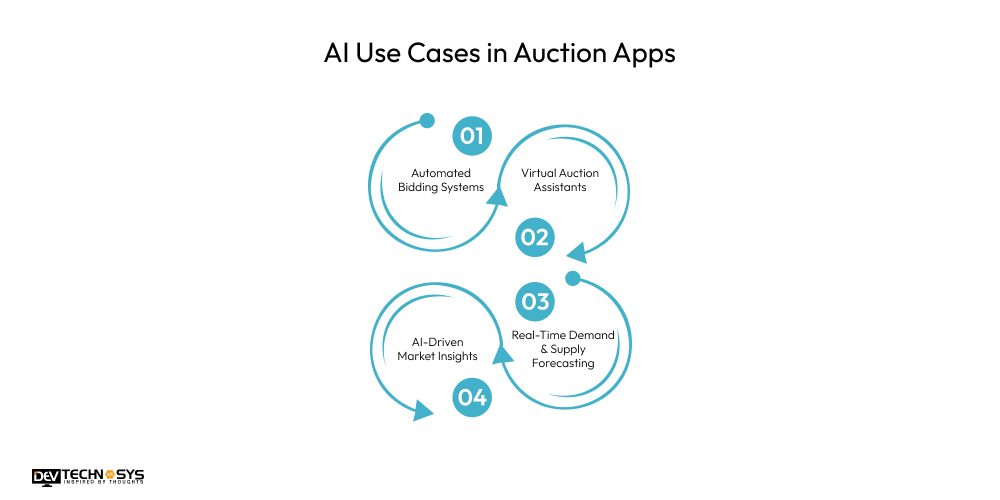
Automated Bidding Systems
AI-powered algorithms enable automatic bidding on behalf of users, ensuring they never miss an opportunity. These systems can be configured with predefined budgets, preferences, and limits, allowing the bidders to remain competitive without requiring constant manual monitoring.
-
Virtual Auction Assistants
AI-driven chatbots and voice assistants act as personal bidding companions. They can answer user queries, provide real-time auction updates, suggest relevant items, and even guide newcomers through the bidding process, enhancing accessibility and convenience.
-
AI-Driven Market Insights
By analyzing massive datasets of past auctions, user behaviors, and market trends, AI delivers deep insights. AI in auction app development helps both bidders and auctioneers understand item valuation, demand patterns, and optimal bidding strategies, enabling more intelligent decision-making.
-
Real-Time Demand & Supply Forecasting
AI models can forecast demand and supply fluctuations in real time. By predicting bidder interest levels, price surges, and inventory needs, auction platforms can optimize pricing strategies, manage lots effectively, and increase overall profitability.
Challenges of Integrating AI in Auction Apps
The use of AI in auction app development can present some hurdles and challenges. Here are some of the challenges you may encounter when creating an auction app by integrating AI tools and technologies.
-
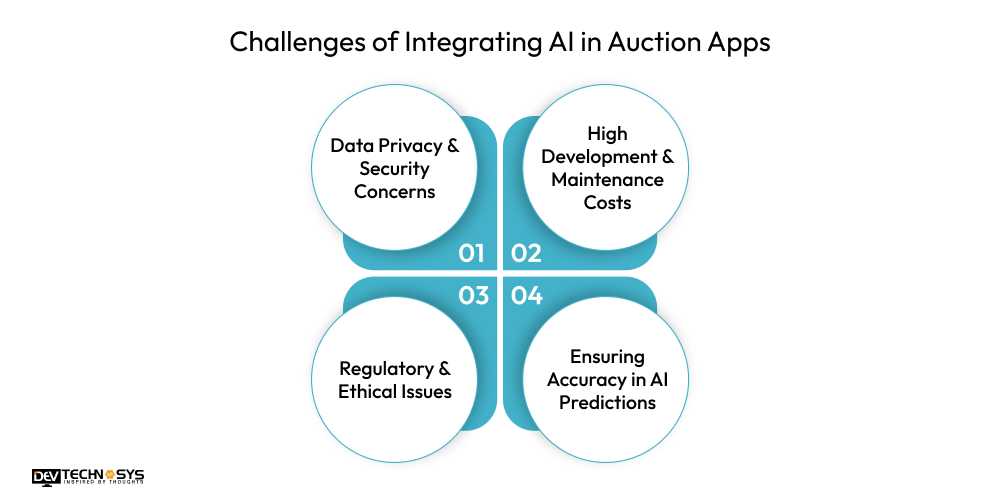
Data Privacy & Security Concerns
AI systems rely heavily on user data for personalization, fraud detection, and bidding predictions. However, this raises privacy risks if sensitive data such as payment details or identity information is mishandled. Auction platforms must implement robust encryption, comply with data protection laws (like GDPR), and have transparent data usage policies to maintain user trust.
-
High Development & Maintenance Costs
Building and maintaining AI-powered auction apps requires specialized talent, advanced infrastructure, and continuous updates. From training AI models to upgrading algorithms for accuracy, the costs can be significant, especially for startups or smaller platforms.
-
Regulatory & Ethical Issues
As AI becomes increasingly involved in auctions, regulatory oversight, and ethical considerations also rise. For instance, dynamic pricing powered by AI may raise concerns of fairness and transparency, while automated decision-making might require strict compliance with local and international laws.
-
Ensuring Accuracy in AI Predictions
The effectiveness of AI depends on the quality and volume of data it processes. Inaccurate predictions, such as flawed bidding recommendations or unreliable fraud detection, can harm user trust. Continuous model training, validation, and monitoring are crucial for maintaining accuracy and reliability.

Which AI Technologies Are Used in Auction App Development?
Various AI technologies can be used while developing an Auction App. The following sections cover some of them:
-
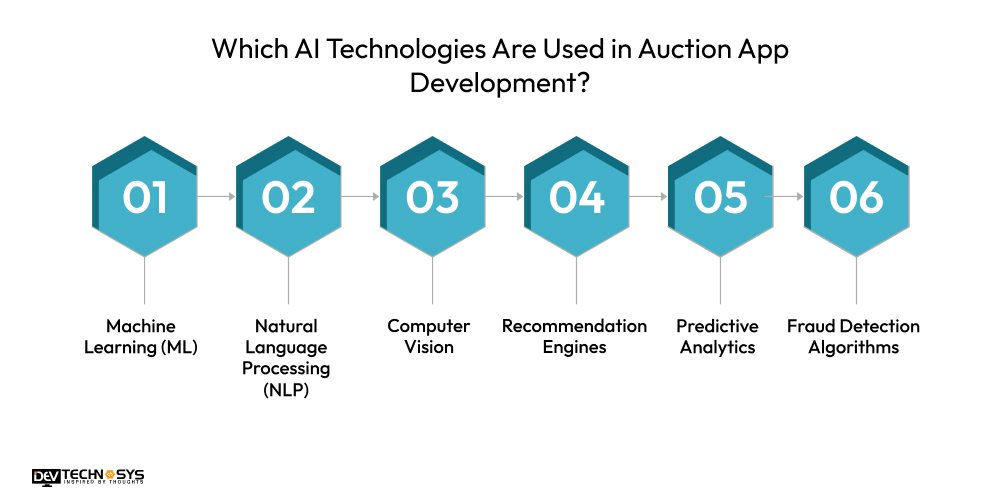
Machine Learning (ML):
ML helps auction apps predict product pricing, forecast demand, and analyze user bidding patterns. It enables platforms to dynamically adjust prices, optimize auction timings, and provide accurate predictions, ultimately improving profitability for sellers while ensuring buyers receive fair and competitive deals.
-
Natural Language Processing (NLP):
NLP powers intelligent chatbots, voice assistants, and smart search features in auction apps. By enabling natural communication between users and the platform, it simplifies queries, improves customer support, and enhances overall user experiences with faster, more personalized, and interactive bidding assistance.
-
Computer Vision:
Computer vision is a technology used to create top auction apps in Middle East. It enables product authentication and quality verification by analyzing images uploaded to auctions. It reduces fraudulent listings, ensures accurate representation of items, and builds trust. It allows buyers to confidently bid knowing the items match the descriptions provided by sellers.
-
Recommendation Engines:
AI-driven recommendation engines analyze users’ browsing history, bid activity, and purchase behavior to deliver personalized auction suggestions. This boosts user engagement, increases conversion rates, and enhances satisfaction by presenting relevant auctions tailored to their unique interests and buying patterns.
-
Predictive Analytics:
Predictive analytics leverages historical and real-time data to forecast market demand, bidder behavior, and auction outcomes. It helps businesses plan inventory, optimize listing strategies, and maximize revenue by anticipating which products will attract the highest interest and competition.
-
Fraud Detection Algorithms:
AI-powered fraud detection monitors bids in real-time, identifying fake accounts, price manipulation, or other suspicious activities. These algorithms enhance platform security, safeguard buyers and sellers, and ensure transparent and trustworthy transactions—an essential factor for the long-term success of auction apps.
Key AI Features Transforming Bidding Apps
Here are some of the key features that you can consider for integration in your AI-based online auction platform. These features can be enhanced.
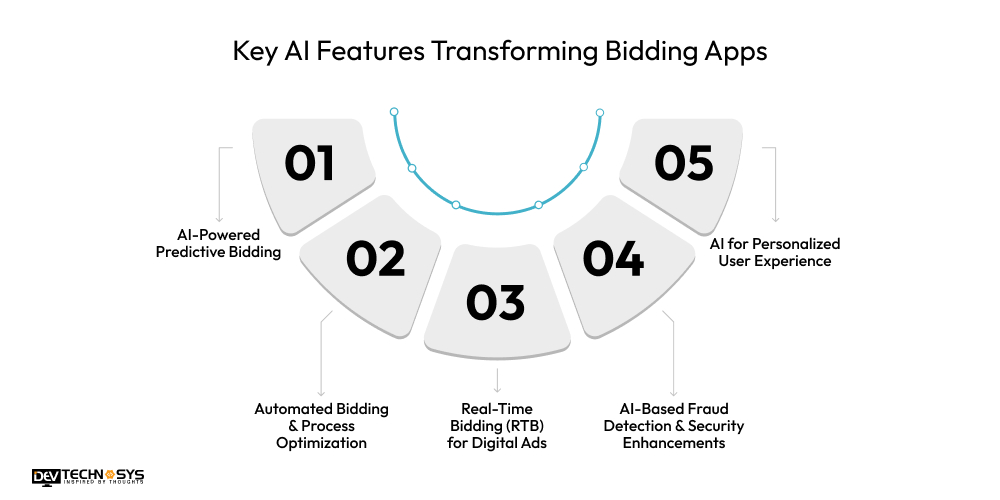
1. AI-Powered Predictive Bidding
The development of an AI auction system enables the analysis of past bidding patterns and user behavior to predict optimal bid amounts. Custom auction app development helps users maximize their chances of winning.
2. Automated Bidding & Process Optimization
According to experts in bidding and suction, automated AI-driven bidding systems place bids on behalf of users. It helps optimize the bidding process and reduce manual effort to improve efficiency.
3. Real-Time Bidding (RTB) for Digital Ads
According to experts from a top AI-powered marketplace development company, AI enables real-time auctions for ad placements. This ensures advertisers reach the right audience at the best possible price instantly.
4. AI-Based Fraud Detection & Security Enhancements
Use of artificial intelligence in auction app development can reduce the risk of cyber fraud. AI monitors for suspicious activity, fake bids, or bots, improving platform security and protecting users and sellers.
5. AI for Personalized User Experience
Auction app development with AI integration enables developers to analyze user behavior, delivering personalized recommendations, notifications, and bidding alerts. It enhances engagement and satisfaction.
How to Choose the Best AI Tools for Mobile Applications
The number of AI tools available and competing in the market has increased with the growing demand. It made the selection process of the right tools for mobile application development challenging for businesses. Given below are some basic steps needed to decide which AI tools are best for your app:
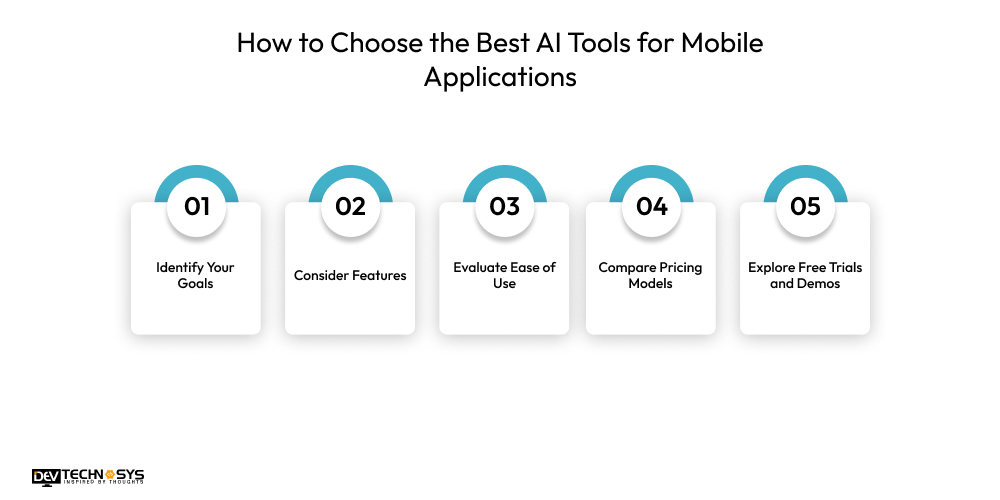
-
Identify Your Goals
Before selecting the right tool for your business, it is essential to understand your goals. Whether for completion, image generation, or creating content, to meet your business requirements, you will need to conduct a thorough search.
-
Consider Features
Research various types of AI tools to understand their features and functionalities. Your motive should be to identify the tools that align directly with your requirements. Various tools may align with your business requirements, but you need to select the right one after taking a demo.
-
Evaluate Ease of Use
Make sure that the tools possess a simple and appealing interface, providing clarity to first-time visitors about your tools. The tool you select should have a straightforward learning curve, allowing you to easily understand its features. Always select the tools that align with your project’s technical requirements and your comfort level.
-
Compare Pricing Models
To access premium features like content generation based on the latest market or image generation. These features require a subscription to the AI tools. The pricing structure of each tool varies based on its features and functions. Define your usage limits, feature requirements, and budget to find the best option.
-
Explore Free Trials and Demos
Most AI tools let users take free trials or provide demos before urging them to buy a subscription plan or select them for their mobile app development process. Take advantage of these benefits and test the functionalities and features provided by each tool.
How AI Impacts the Cost of Auction App Development
The cost to develop an auction app can range between $8,000 and $25,000. It can vary depending on factors such as features, platform, design, and the location of the development team, among others. The use of AI in auction app development can significantly impact the development cost. Here are some of the AI factors that can affect the cost of building auction apps.
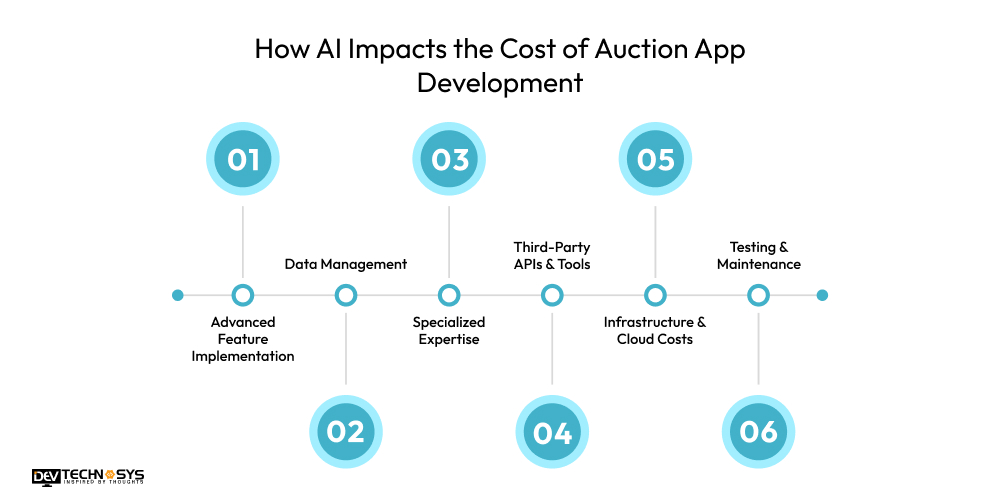
- Advanced Feature Implementation: AI enables smart bidding, personalized recommendations, fraud detection, and price prediction. These features rely on complex algorithms, which raises the cost to develop an app.
- Data Management: AI requires large volumes of training data. Collecting, storing, and processing this data adds infrastructure and operational expenses.
- Specialized Expertise: Auction app development with AI integration demands AI/ML engineers and data scientists, whose specialized skills come at a higher cost compared to standard app developers.
- Third-Party APIs & Tools: AI-based online auction platform development involves using services such as AWS AI or OpenAI APIs. It contains licensing or subscription fees, contributing to ongoing costs.
- Infrastructure & Cloud Costs: AI-driven auction apps need powerful servers for real-time data processing. Cloud hosting via AWS, Azure, or GCP further raises operational costs compared to traditional apps.
- Testing & Maintenance: AI models must be continuously trained and updated to ensure accuracy and performance. It increases the cost to maintain an app for the long term compared to non-AI apps.
Future Trends of AI in Auction Apps (2025 & Beyond)
Here are some of the latest AI trends that can help shape the future of auction app development. Let’s see what these trends are:
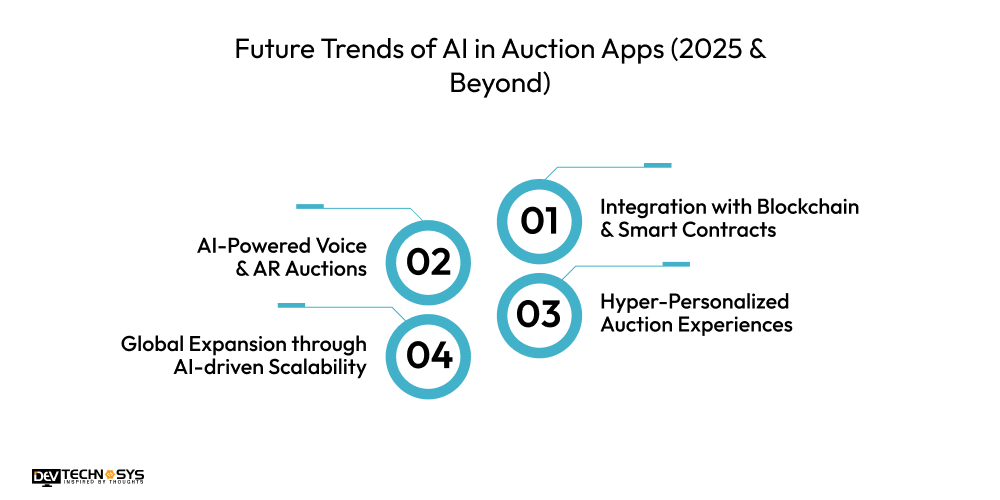
1. Integration with Blockchain & Smart Contracts
- Blockchain Security: Blockchain ensures secure, tamper-proof transactions by encrypting records and storing them across a distributed ledger. Since every record is connected to the current, previous, or next, changing even one entry can lead to modifying the whole chain. This makes it nearly impossible for hackers to access.
- Smart Contracts: These self-executing programs automate transactions once predefined conditions are met. By eliminating the requirement for intermediaries, smart contracts help reduce costs, eliminate delays, and ensure transparent, trustless transactions.
2. AI-Powered Voice & AR Auctions
- Voice Recognition: AI-powered speech recognition converts spoken words and patterns into text, enabling seamless voice-based bidding. With growing accuracy and reliability, this feature improves accessibility along with convenience for users.
- AR Auctions: Augmented Reality (AR) transforms traditional auctions by enabling bidders to virtually inspect items in 3D before making a purchase. This immersive experience enhances bidder confidence, particularly in sectors such as art, collectibles, and real estate.
3. Hyper-Personalized Auction Experiences
Build AI auction app that enables next-level personalization by tailoring the entire bidding journey for each user. Such hyper-personalization enhances user satisfaction, loyalty, and engagement. This includes:
- Personalized lot recommendations.
- Dynamic pricing adjustments based on bidding behavior.
- Customized real-time alerts and auction updates.
4. Global Expansion through AI-Driven Scalability
According to a mobile app development company, AI helps auction platforms scale globally with efficiency and precision. By automating operations, optimizing resource utilization, and delivering personalized experiences, AI enables faster and more cost-effective expansion across diverse markets. This ensures better performance both in new and existing markets.

Conclusion
The above-provided details and information discusses the role of AI in auction app development. From automated bidding to AR-powered experiences, AI ensures enhanced transparency, efficiency, and engagement for both buyers and sellers. If you are a business seeking a top auction app development company, contact Dev Technosys. Stay tuned for more informative updates on how AI technology is shaping the future of digital auctions.
FAQs
1. What Industries Benefit Most From AI-Powered Auction Apps?
AI-powered auction apps are revolutionizing multiple sectors by streamlining bidding, pricing, and personalization. The key industries include:
- Art & Collectibles: Verification and global reach.
- Real Estate: Smart pricing and virtual auctions.
- Automobiles: Accurate pricing and fraud detection.
- E-commerce & Retail: Dynamic pricing and flash sales.
- Luxury Goods: Authentication and security.
2. What Challenges Do Businesses Face When Adopting AI In Auction Apps?
While AI offers huge potential, businesses must overcome particular challenges, such as:
- High Costs: Expensive to build and maintain.
- Data Privacy: Protecting sensitive information.
- Accuracy Issues: Avoiding wrong predictions.
- Ethical Concerns: Fair use of AI automation
3. How Is AI Shaping Auction App Development In 2025?
AI is making auction apps more innovative and more user-friendly by enabling automated bidding, hyper-personalized recommendations, AI-driven pricing strategies, and enhanced security features.
4. What Are The Benefits Of Integrating AI Into Auction Apps?
The benefits of integrating AI into auction apps include:
- Improved user experience through personalization.
- Smarter and more accurate pricing/valuation.
- Real-time demand and supply forecasting.
- Enhanced transparency and security with blockchain integration.
5. Can AI Help Prevent Fraud In Auction Apps?
Yes, AI-powered algorithms detect suspicious bidding patterns, anomalies, and potential fraud in real-time, ensuring trust and transparency in the auction process.