







“Get instant apparels with a Clothes rental application.”
With an increase in different technologies, all business brands are growing faster. Especially in the e-commerce and fashion industry, it results in the expansion of the rates of various products and items. This forced people to switch their interests towards other platforms. But where? Here, businesses started the idea of clothes rental app development to make this task easy for users.
This subcategory of the fashion industry is slowly gaining popularity among the modern generation. Within a few years of its presence, it captured around 8.5% of the total fashion market. Which shows the impact of its existence on the mindset of people and motivating investors to create a clothes rental app for startup ideas.
For the development of high end clothing rental apps, the important thing to know is the cost which we are going to see in this blog. Let us begin to discover more related topics.
What is a Clothes Rental Application?
An app that lets users rent garments and accessories for a set amount of time rather than buying them is called a cloth rental application. Businesses should find sophisticated mobile app development solutions, so that you can offer a large assortment of clothing for parties, and daily wear. This includes formal dress, casual ensembles, designer pieces, and seasonal things.
The clothing is returned using a straightforward procedure after use. It enables consumers to wear high-quality clothing without the long-term commitment or environmental impact of frequent purchases. This service promotes a cyclical fashion model and provides an economical, environmentally friendly, and handy alternative to buying garments.

Market Stats for Cloth Rental Industry
- It is projected that the global apparel business would generate an astounding US$1.84 trillion in revenue by 2025.
- Between 2025 and 2029, this market is expected to develop at a compound annual growth rate (CAGR) of 2.61%.
- Women’s apparel is the largest of the many apparel market sectors, with a projected market volume of US$0.96 trillion in 2025.
- With a projected sales of US$366 billion in 2025, the US leads the world in apparel market revenue.
- The apparel market is expected to earn US$234.80 per person in 2025, taking into account the global population.
- The apparel market is expected to reach a volume of 198.4 billion pieces by 2029.
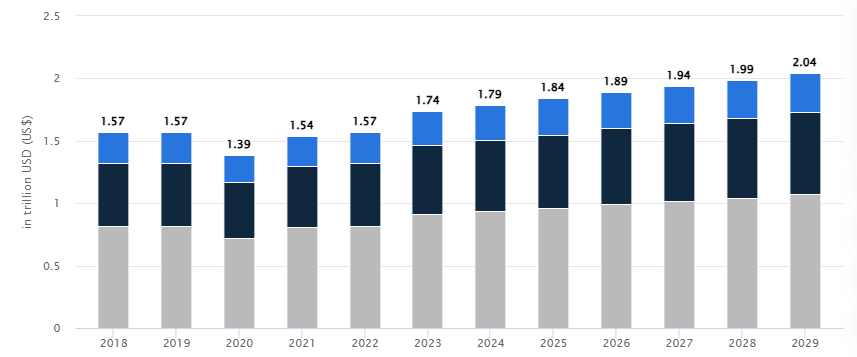
- Furthermore, a 1.3% volume gain is anticipated in 2026.
- In 2025, the apparel market’s average volume per person is projected to reach 24.1 items.
- Additionally, it is projected that non-luxury apparel would account for 94% of apparel market sales by 2025.
- China’s clothing business is seeing a boom in demand for luxury labels, as buyers are prepared to shell out more money for superior goods.
What is the Clothes Rental App Development Cost?
The clothes rental app development cost depends on several key factors that influence both the time and resources required. Understanding these elements can help in estimating the overall cost to develop clothes rental apps. Below are five primary factors that contribute to the app’s development cost.
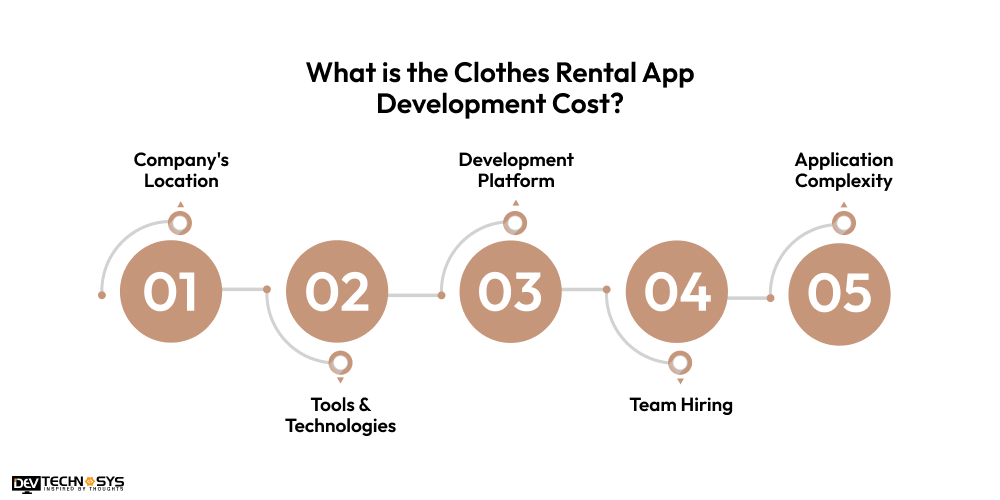
1. Company’s Location
The geographical location of a mobile app development company significantly affects the cost. Companies in regions with higher labor costs, like the US or Western Europe, tend to charge more.
In contrast, a clothes rental app development company in countries with lower living costs, such as India or Eastern Europe, offer more affordable rates. Location also impacts the quality and experience of the developers, as well as the ease of communication.
Location Factor |
Estimated Cost |
| USA | $50,000-$100,000 |
| Australia | $25,000-$50,000 |
| Asia | $8,000-$25,000 |
| European Union | $20,000-$60,000 |
| The Middle East | $5,000-$30,000 |
| Latin | $10,000-$40,000 |
2. Tools & Technologies
The tools and technologies chosen for app development play a crucial role in determining the cost to build rental applications. The use of advanced technologies, like AI for personalized recommendations or blockchain for transactions, increases the complexity and the budget.
Additionally, the choice of programming languages, frameworks, and third-party integrations can either simplify or complicate development, thus impacting costs.
Development Tools |
Technical Stack | Estimated Cost |
| Frontend | $10,000-$15,000 | |
| Backend | $15,000-$20,000 | |
| Testing & Security | $20,000+ | |
Development Technologies |
Technical Stack | Estimated Cost |
| Artificial Intelligence | $50,000-$60,000 | |
| Blockchain | $60,000-$75,000 | |
| Cloud Computing | $40,000-$50,000 | |
| Cyber Security | $75,000-$80,000 |
3. Development Platform
Whether the app is being developed for iOS, Android, or both influences the overall cost to develop a mobile app. Developing for multiple platforms requires separate coding and testing efforts, making it more expensive.
Native apps generally cost more to develop due to the specialized knowledge required for each platform, whereas cross-platform development may offer cost savings but can present challenges in performance.
Development Platform |
Estimated Cost |
| iOS only | $25,000-$27,000 |
| Android Only | $20,000-$23,000 |
| iOS and Android | $25,000-$30,000 |
4. Team Hiring
The size and expertise of the development team are key factors in pricing. A skilled team with experience for e-commerce clothes rental app clone development will demand higher wages, but their expertise can also reduce the overall development time and cost. Additionally, the process to hire dedicated developers for specialized roles such as UI/UX designers or backend developers can also contribute to the overall budget.
Hiring Factor |
Estimated Cost |
| In House Team | $2,000-$5,000 |
| Full-Time Freelancers | $1,500-$3,000 |
| Developer Outreach | $8,000-$15,000 |
5. Application Complexity
The complexity of the app’s features and functionalities directly correlates with the cost. Simple apps with basic features, such as listing products and making bookings, will cost less.
Partnering with an Android app development company is crucial to manage complex features like real-time tracking, payment gateways, or inventory management. More intricate user interfaces and integrations with external systems will also raise the overall clothes rental application development costs.
Application Complexity |
Development Time |
Estimated Cost |
| Simple | 5-8 months | $8000-$14000 |
| Moderate | 8-12 months | $14000-$20000 |
| Advanced | More than 12 months | $20000-$25000 |

Significant Methods to Reduce the Cost to Build Clothes Rental Apps
Reducing the cost of developing a clothes rental app is possible through strategic planning and smart decisions. By leveraging certain methods, businesses can build high-quality apps at a lower cost.
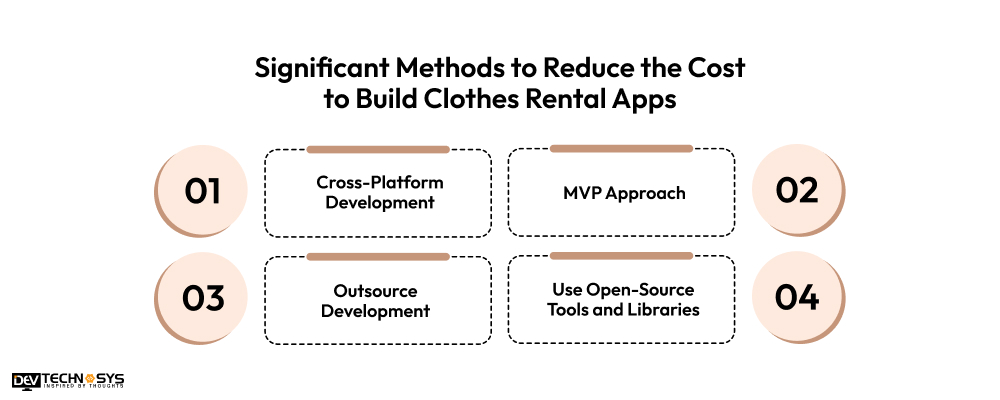
1. Cross-Platform Development
Instead of the process to develop clothes rental apps separately for iOS and Android, consider developing a cross-platform app. This approach allows you to maintain a single codebase, saving time and resources while still reaching both user groups. It reduces the need for multiple developers and streamlines the maintenance process.
Method |
Percentage Cost Reduction |
| Cross-Platform Development | 25% |
2. MVP Approach
Start with an MVP that includes only the essential features needed to launch the app. This allows you to use hybrid app development services to gather user feedback without committing to a fully-featured app upfront. You can then iterate clothes rental website development and add more complex features gradually, spreading the costs over time.
Method |
Percentage Cost Reduction |
| MVP Approach | 20% |
3. Outsource Development
Outsourcing to countries with lower development costs can significantly reduce the overall expense. You can hire clothes rental app developers in regions like Eastern Europe, India, or Southeast Asia to provide high-quality work at a fraction of the cost of US or Western European developers.
Method |
Percentage Cost Reduction |
| Outsourcing Development | 15% |
4. Use Open-Source Tools and Libraries
Businesses should hire dedicated mobile app developers for using open-source frameworks, tools, and libraries instead of developing everything from scratch. Many open-source clothes rental app development services are robust and reliable, cutting down on development time and costs. This method allows you to focus resources on the unique features.
Method |
Percentage Cost Reduction |
| Use Open-Source Tools and Libraries | 10% |
Important Features of a Clothes Rental Application
A cloth rental app offers convenience and flexibility for users to rent apparel for various occasions. Below are 10 essential features that make a clothes rental app efficient and user-friendly.
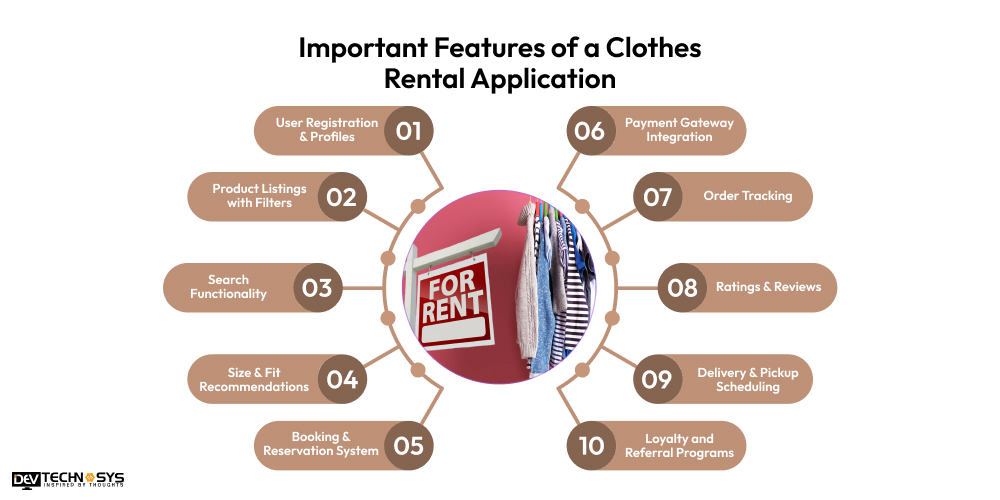
-
User Registration & Profiles
Users can create personalized accounts with basic details and preferences on an iOS application for clothes rental. You can use website development services to add features like rental history, payment methods, and sizing information on web apps.
-
Product Listings with Filters
Browse through a range of wearing items with detailed descriptions, photos, and availability on a cloth napkin rental application. Filters help users quickly find items based on size, color, type, and occasion.
-
Search Functionality
A powerful search bar in a table cloths rental app allows users to find specific items by entering keywords or categories. It helps in narrowing down options and saving time during the browsing process.
-
Size & Fit Recommendations
The app provides size recommendations based on user input or previous purchases. A full stack app development company helps you to include this feature for minimizing the risk of incorrect size selections.
-
Booking & Reservation System
Users can easily book wearables on apps like clothes rental by selecting rental dates and confirming the reservation. A calendar view ensures accurate booking and helps avoid scheduling conflicts.
-
Payment Gateway Integration
Secure payment methods like credit cards, PayPal, and digital wallets are integrated for seamless transactions. A men’s clothing rental subscription platform must ensure a safe and quick payment process for the users.
-
Order Tracking
Users can track the status of their rental orders, including delivery and return dates on an on-demand clothes rental app. It is beneficial to use iOS app development services to generate notifications that keep users updated on the progress of their rentals.
-
Ratings & Reviews
A clothing rack rental app allows customers to leave feedback about their rented items and experiences. This feature helps build trust among new users and encourages quality service.
-
Delivery & Pickup Scheduling
Different Android apps like clothes rental allow users to schedule convenient delivery and pickup times for rented items. This feature adds flexibility and ensures the logistics are hassle-free.
-
Loyalty and Referral Programs
Incentivize users with rewards for frequent rentals or for referring friends to the app. Businesses should hire a web development company to implement such a feature that builds customer loyalty.
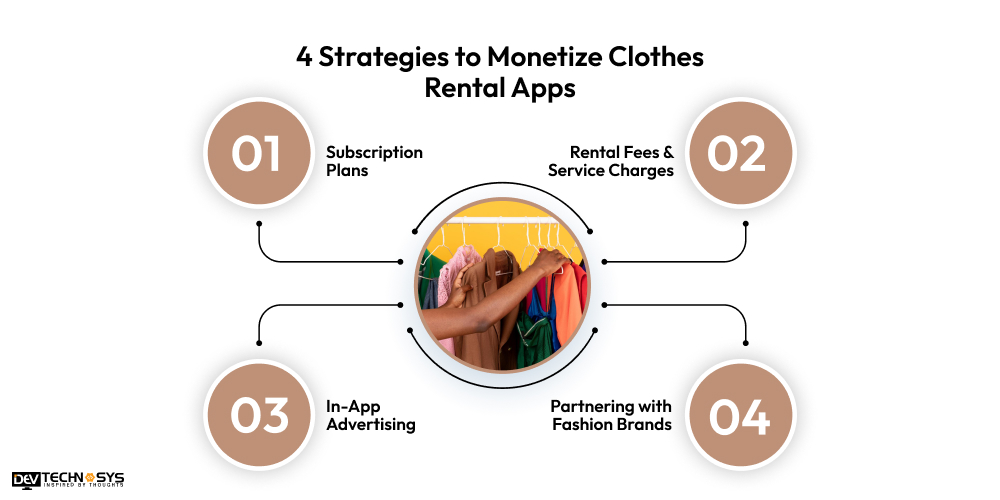
4 Strategies to Monetize Clothes Rental Apps
Monetizing a cloth rental app involves creating revenue streams that align with the app’s user base and services. Here are four effective strategies to generate income from the platform.
1. Subscription Plans
Industrialists can build clothes rental apps to offer users subscription-based models where they pay a recurring fee for access to rental services. Different tiers can provide varying levels of benefits, such as unlimited rentals or premium items, encouraging long-term customer commitment. This ensures a steady and predictable income stream.
2. Rental Fees & Service Charges
Charge users based on the rental duration or the type of clothing item they rent. Knowing the cost to maintain an app is better for you to implement a pricing structure where special or designer clothes come with higher fees. Adding a small service or processing charge for each transaction can also boost overall revenue.
3. In-App Advertising
Businesses can make clothes rental apps in 2025 to incorporate ads from third-party networks within the app to generate passive income. With high traffic on your platform, you can monetize through banner ads, video ads, or sponsored content. This approach works well alongside the primary revenue models without disrupting the user experience.
4. Partnering with Fashion Brands
Collaborate with fashion brands or designers to offer exclusive collections within the app. Brands can pay for exposure or a percentage of the rentals made from their items. So, investment of money in on-demand app development services enhances the app’s offerings while generating extra revenue through collaboration.
Let us Summarize!!
It is a good sign for a lot of businesses that the cloth rental industry is new because it will create multiple opportunities for investment and revenue generation. This will bring a new revolution in the fashion business through uniqueness and modesty. So, businesses must invest their assets and resources in the clothes rental app development.
To begin with the process, it is beneficial to contact the best custom web development companies in Dubai. So, that they can provide you with all the needful supplements like development tools, platform support, and infrastructure assistance. You should have patience in choosing the right services to create clothes rental apps for UAE but don’t delay the process. This will hinder your progress, prevent growth, and stop revenue generation.
FAQs
Q1. What is a Clothes Rental App?
Users of a garments rental app can hire a variety of items, including dresses, suits, and accessories, for a little time. By allowing consumers to select from a large selection of stylish products without having to commit to purchasing them, it offers convenience. The app allows users to schedule returns, place orders, and browse products.
Q2. What is the Average Market Cost for Developing a Clothes Rental App?
Features, design complexity, and platforms like iOS or Android all affect how much it costs to develop an app for renting garments.
- The cost of developing a basic app might range from $8,000 to $14,000.
- Sophisticated apps with several capabilities, such real-time tracking and payment integration, can range from $14,000 to $25,000.
- The cost of custom apps with distinctive design features or specialized functionality can exceed $25,000.
Q3. What are Some Cost Reducing Methods for Clothes Rental App Development?
- Development time and expenses can be reduced by using pre-built frameworks and outside services like inventory management and payment gateways.
- Total costs are decreased by outsourcing development to areas with cheaper labor prices.
- By creating an MVP first, you may start with the essential features and add more later in response to user feedback.
Q4. What is the Development Process for a Clothes Rental App?
These phases are often followed in the development process:
- Collecting requirements and conducting market research to comprehend user demands.
- UI/UX and user flow design of the application to provide a seamless experience.
- Core feature development and testing are followed by deployment and maintenance after launch.
Q5. What Are the Benefits of a Clothes Rental App?
- Consumers can purchase stylish, high-quality apparel without having to pay exorbitant prices.
- By cutting down on clothes waste, it encourages sustainable fashion.
- Because of the app’s flexibility, users can hire clothes for special events or seasonal requirements without committing to a long-term rental agreement.
Q6. How Can a Clothes Rental App Monetize?
- Subscription model: For unlimited rentals or access to a predetermined number of products, users pay a fixed monthly fee.
- Pay-per-rental: Charge clients a fee based on the kind and length of the rental each time they check out an item.
- Partnerships and Ads: For more revenue sources, collaborate with apparel companies and place display adverts inside the app.