





Key takeaways:
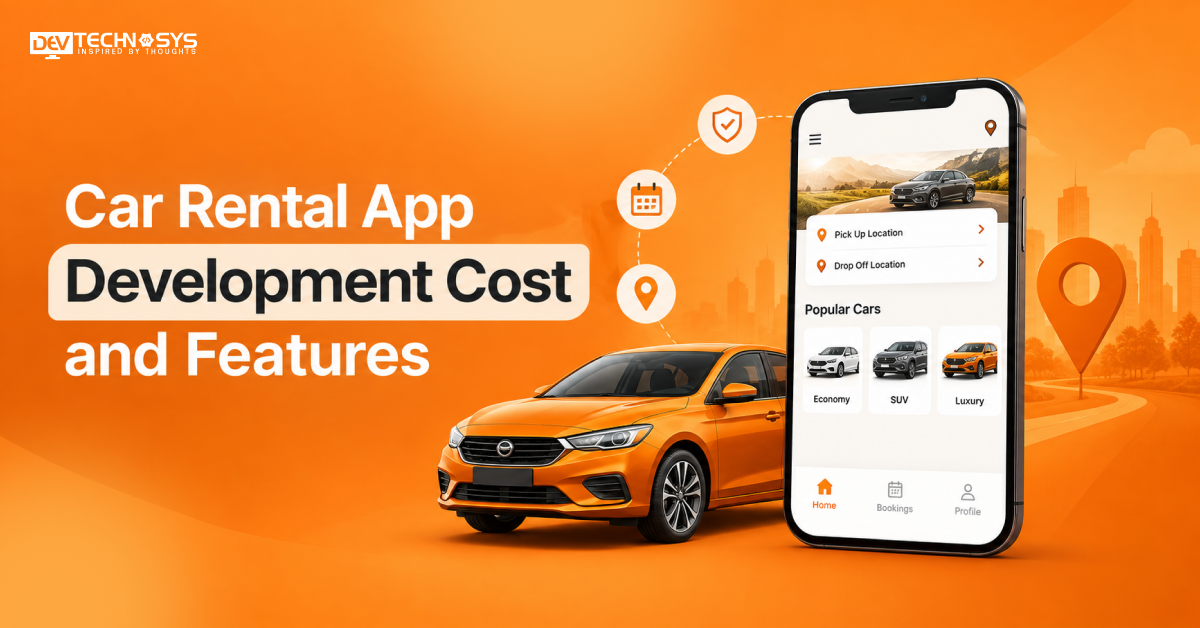
- The car rental industry is rapidly shifting toward digital-first booking, contactless rentals, and connected vehicle experiences. For rental businesses, fleet operators, and startups, a dedicated car rental app can simplify bookings, automate fleet management, streamline payments, and improve customer engagement.
- But how much does it cost to develop a car rental app, and which features actually influence the budget? In 2026, car booking app development costs can vary significantly depending on app complexity, platforms, technology stack, integrations, security requirements, and development location.
- This guide explores the car rental app development cost in UAE, essential and advanced features, technology stack, development timeline, monetization models, and key cost factors to help you plan a scalable and profitable car rental platform.
What is a Car Rental App?
A mobile software program that lets users find, book, and pay for temporary vehicle use directly from their smartphones. These applications range from traditional fleet services to peer-to-peer car sharing and self-drive hourly rentals. Core features include a vehicle catalog, instant booking, digital verification, in-app payments, and remote access.
Why Invest in Car Rental App Development in 2026?
The growing demand for on-demand mobility, contactless bookings, and flexible vehicle access is creating new opportunities for digital car rental businesses. A feature-rich app can help businesses:
- Automate bookings and fleet operations
- Reach customers through mobile-first experiences
- Offer personalized vehicle recommendations
- Enable digital payments and contactless rentals
- Improve fleet utilization and operational efficiency
- Generate revenue through subscriptions, commissions, and add-ons
- Gain valuable customer and fleet analytics for smarter decisions
Car Rental App Development Cost: At a Glance
The car rental app development cost typically ranges between $30,000 and $150,000+, depending on the app’s complexity, feature set, platform selection, integrations, and the development team’s location. A basic MVP with core booking and payment features costs significantly less than an enterprise-grade taxi and car rental app development with AI, IoT, fleet management, and real-time analytics capabilities. Here’s the table highlighting the cost of MVP vs. Mid-Level vs. Advanced car rental app.
App Type |
Estimated Cost |
Development Timeline |
| Basic Car Rental App (MVP) | $30,000 – $50,000 | 3–4 Months |
| Mid-Level Car Rental App | $50,000 – $90,000 | 4–6 Months |
| Advanced Car Rental App | $90,000 – $150,000+ | 6–9+ Months |
The final cost and timeline can vary based on various factors. It includes UI/UX complexity, number of platforms, backend architecture, third-party API integrations, payment systems, security requirements, and advanced features such as AI, IoT, and real-time fleet tracking.
Car Rental App Development Cost Breakdown by Development Stage
According to experts who provide car rental app development services, the car rental app development cost is divided across different stages, including design, development, integrations, testing, and post-launch support. Costs are approximate and can vary based on app complexity, platforms, features, integrations, security requirements, and development location. Each stage contributes to the cost of car rental mobile app development, overall functionality, performance, security, and user experience.
Development Stage |
Estimated Cost |
| UI/UX Design | $3,000 – $12,000 |
| Frontend Development | $8,000 – $35,000 |
| Backend Development | $10,000 – $40,000 |
| Admin Panel Development | $4,000 – $15,000 |
| API & Third-Party Integrations | $3,000 – $15,000 |
| Testing & Quality Assurance | $3,000 – $12,000 |
| Deployment & Maintenance | $2,000 – $10,000+ |
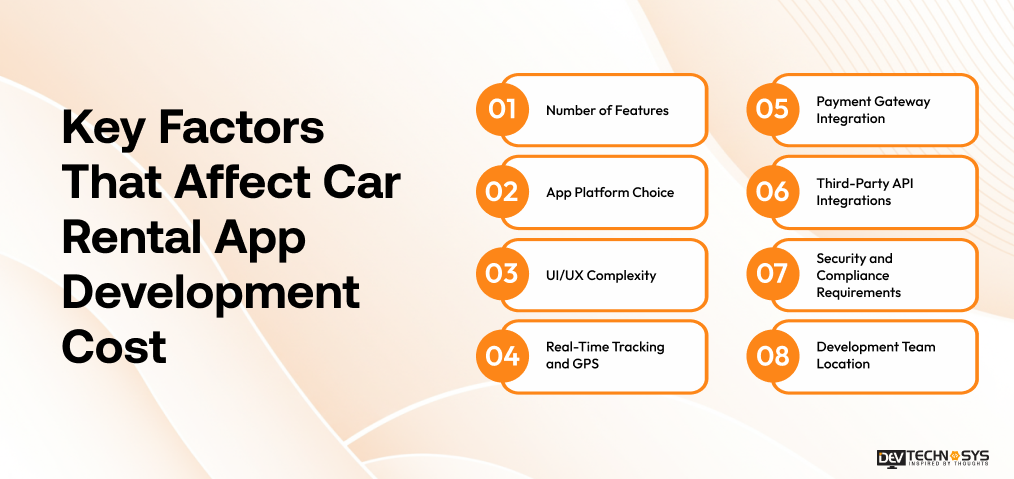
Key Factors That Affect Car Rental App Development Cost
The car rental app development cost depends on several technical and business factors. Understanding these variables early helps you estimate the budget accurately and prioritize features based on your business goals.
1. Number of Features
The more features your car rental app includes, the higher the vehicle rental app development cost. Basic booking and payment features require less investment, while advanced capabilities such as AI recommendations, fleet analytics, digital verification, and keyless access increase development complexity.
2. App Platform Choice
Developing for iOS, Android, or both directly affects your budget. Native apps generally require separate development efforts, while cross-platform frameworks such as Flutter or React Native can reduce development time and overall costs.
3. UI/UX Complexity
An on-demand vehicle rental platform with a simple interface costs less to design and develop than a highly customized experience with interactive maps, animations, personalized dashboards, advanced filters, and multiple user journeys. A well-designed UI also requires extensive usability testing.
4. Real-Time Tracking and GPS
A cross-platform car rental app (React Native/Flutter) with GPS navigation, real-time vehicle tracking, geofencing, route monitoring, and location-based services requires sophisticated backend infrastructure and third-party map APIs. GPS integration for a car rental app, along with other integrations, increases both initial development costs and ongoing API expenses.
5. Payment Gateway Integration
Supporting secure online payments requires a secure payment gateway integration and multiple transaction methods. Features such as refunds, recurring payments, wallet functionality, invoices, and international currencies can further increase development complexity.
6. Third-Party API Integrations
Car rental apps often integrate maps, payment gateways, SMS, email, identity verification, insurance, analytics, and communication APIs. Each integration requires development, testing, configuration, and sometimes recurring subscription or usage fees.
7. Security and Compliance Requirements
For an on-demand car rental app UAE, data security is a top priority. Protecting customer identities, payment information, booking data, and vehicle information requires strong security measures. Encryption, MFA, a secure and real-time vehicle tracking API, PCI DSS requirements, privacy regulations, and role-based access controls can increase development costs.

8. Development Team Location
Developer rates vary significantly by region. Teams in North America and Western Europe generally charge more than car rental software development teams in India, Eastern Europe, or other outsourcing markets. However, expertise, experience, communication, and project quality should be considered alongside hourly rates.
Cost Factor |
Cost Impact |
Approx. Impact on Total Cost |
Timeline Impact |
| Number of Features | $5,000 – $40,000+ | 20%–35% | 3–12+ Weeks |
| App Platform Choice | $5,000 – $25,000+ | 10%–20% | 3–10 Weeks |
| UI/UX Complexity | $3,000 – $15,000 | 8%–15% | 2–5 Weeks |
| Real-Time Tracking & GPS | $4,000 – $15,000 | 8%–15% | 2–6 Weeks |
| Payment Gateway Integration | $2,000 – $8,000 | 3%–8% | 1–3 Weeks |
| Third-Party API Integrations | $3,000 – $15,000+ | 5%–12% | 2–6 Weeks |
| Security & Compliance | $3,000 – $15,000+ | 5%–12% | 2–6 Weeks |
| Development Team Location | Varies | 15%–40% | Depends on Team |
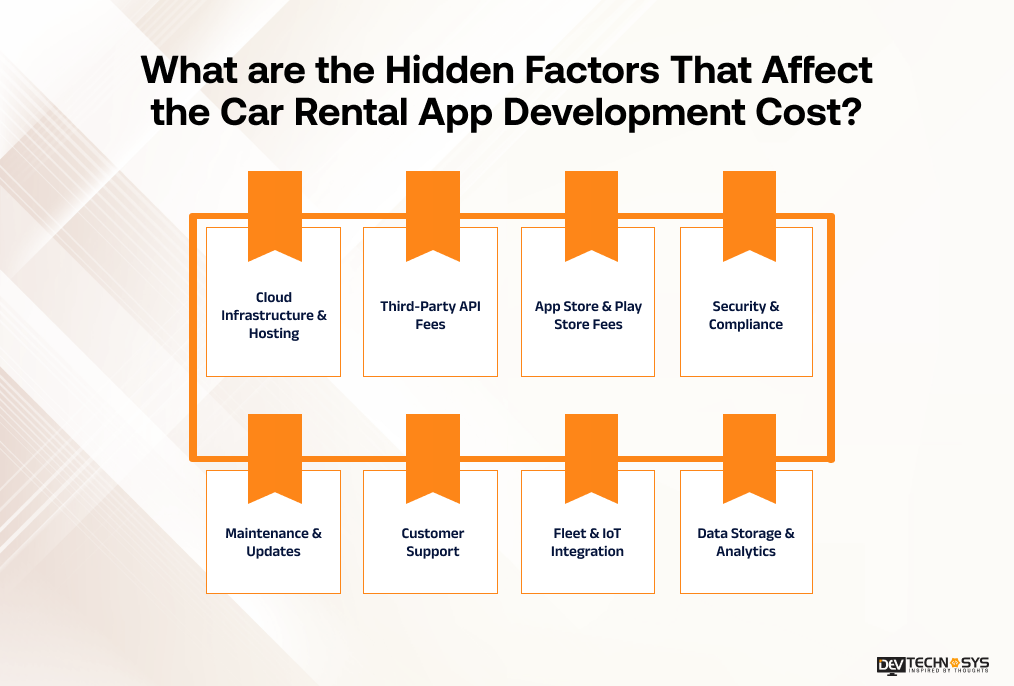
What are the Hidden Factors That Affect the Car Rental App Development Cost?
Whether you want to build an app like Ekar or an app like Careem, the quoted development price does not always represent the complete investment required to launch and operate a car rental app. Several hidden cost factors can increase the budget if they are not considered during initial planning.
-
Cloud Infrastructure & Hosting:
Cloud servers, database storage, CDN usage, backups, monitoring, and traffic scaling create recurring expenses. As bookings, users, vehicles, and stored data increase, businesses may need additional computing resources, storage capacity, and infrastructure optimization.
-
Third-Party API Fees:
Car rental apps commonly integrate maps, payment gateways, SMS, identity verification, insurance, analytics, and communication APIs. Many providers charge based on transactions, API calls, users, or monthly subscriptions, creating ongoing API integration cost beyond initial development.
-
App Store & Play Store Fees:
Publishing applications on the Apple App Store and Google Play Store involves developer account costs and platform-specific policies. Businesses may also incur transaction-related fees, subscription charges, or additional expenses when managing digital purchases and updates.
-
Security & Compliance:
Protecting customer identities, payment information, booking records, and location data requires encryption, security testing, vulnerability assessments, access controls, and compliance measures. Requirements such as PCI DSS, GDPR, and KYC can increase development and auditing expenses.
-
Maintenance & Updates:
Post-launch expenses include bug fixes, operating system compatibility updates, security patches, performance improvements, server maintenance, and feature enhancements. Regular maintenance ensures the car rental app remains secure, functional, compatible, and competitive as technologies and customer expectations evolve.
-
Customer Support:
Customer support infrastructure can become a significant operational expense after launch. Live chat, ticketing systems, AI chatbots, call centers, and human support teams may be required to handle booking issues, cancellations, payments, vehicle problems, and customer queries.
-
Fleet & IoT Integration:
Integrating GPS trackers, telematics, smart locks, vehicle sensors, fuel monitoring, and connected-car systems into fleet management software can increase both software and hardware costs. Businesses may also need to account for device installation, connectivity charges, maintenance, and replacement expenses.
-
Data Storage & Analytics:
Car rental platforms generate substantial customer, vehicle, booking, payment, and location data. Secure storage, data processing, reporting dashboards, analytics tools, and long-term backups can increase infrastructure costs, particularly as fleet size and booking volume expand.
Hidden Cost Factor |
Estimated Cost |
Approx. Impact |
| Cloud Infrastructure & Hosting | $1,000 – $8,000/year | 3%–8% |
| Third-Party API Fees | $1,000 – $10,000+/year | 3%–10% |
| App Store & Play Store Fees | $100 – $500/year* | 1%–3% |
| Security & Compliance | $3,000 – $15,000+ | 5%–12% |
| Maintenance & Updates | $5,000 – $25,000/year | 10%–20% |
| Customer Support | $2,000 – $15,000/year | 5%–12% |
| Fleet & IoT Integration | $5,000 – $30,000+ | 8%–20% |
| Data Storage & Analytics | $1,000 – $8,000/year | 3%–8% |
| Scalability & Performance | $3,000 – $15,000+ | 5%–12% |
Types of Car Rental Apps and Their Development Costs
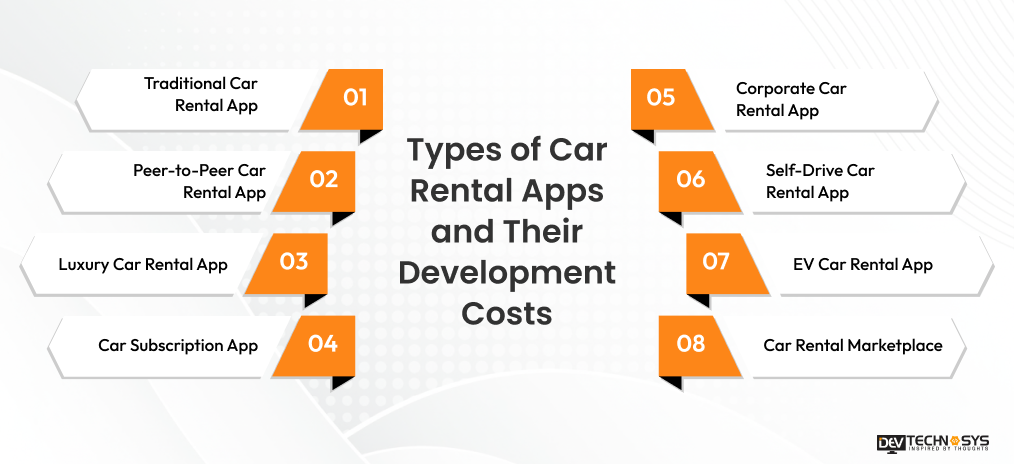
Car rental apps can be built around different business models, including traditional rentals, P2P marketplaces, subscriptions, and self-drive services. Each model requires different features, integrations, and development resources, directly influencing the overall cost.
1. Traditional Car Rental App
This model allows customers to browse vehicles owned or managed by a rental company and book them through the app. A car rental app development company in Dubai creates these apps with features like vehicle search, availability, online booking, payments, fleet management, cancellations, and notifications.
2. Peer-to-Peer Car Rental App
A P2P platform connects individual vehicle owners with customers looking to rent cars. P2P car rental app development Sharjah is more complex because it requires multiple user roles, vehicle listings, owner dashboards, identity verification, reviews, messaging, payments, and commission management.
3. Luxury Car Rental App
Luxury rental platforms focus on premium vehicles and high-value customers. They may require high-quality vehicle catalogs, personalized recommendations, chauffeur booking, concierge services, advanced verification, premium payment options, and customized customer experiences. Adding high-end features increases the cost to develop a car rental app like Ekar in Dubai.
4. Car Subscription App
Instead of charging customers for individual bookings, subscription platforms provide vehicles for a recurring monthly or annual fee. Features generally include subscription plans, recurring billing, vehicle upgrades, swapping options, membership management, and automated renewal or cancellation.
5. Corporate Car Rental App
Corporate platforms are designed for businesses that frequently rent vehicles for employees or business operations. They typically require company accounts, employee management, booking approvals, centralized billing, expense tracking, invoices, and administrative reporting.
6. Self-Drive Car Rental App
Self-drive apps allow customers to rent and access vehicles without traditional counter-based processes. Advanced platforms can integrate digital KYC, GPS tracking, smart locks, keyless entry, digital vehicle inspections, geofencing, and contactless pickup and return.
7. EV Car Rental App
EV rental platforms require additional functionality because electric vehicles have different operational requirements. Features may include charging station discovery, battery-level information, range estimation, route planning, charging integration, and EV-specific vehicle analytics.
8. Car Rental Marketplace
A marketplace model connects multiple rental companies or vehicle owners with customers. Because it combines multi-vendor management, customer booking, payments, commissions, real-time inventory, pricing, verification, and analytics, it generally requires the highest development investment.

Type of Car Rental App |
Key Features |
Estimated Cost |
Development Timeline |
| Traditional Car Rental App | Vehicle search, booking, payments, fleet management, notifications | $30,000–$60,000 | 3–5 Months |
| Peer-to-Peer (P2P) Rental App | Owner listings, renter verification, booking, messaging, reviews, commissions | $45,000–$90,000 | 4–6 Months |
| Luxury Car Rental App | Premium listings, chauffeur services, concierge support | $40,000–$80,000 | 4–6 Months |
| Car Subscription App | Monthly plans, recurring payments, subscription management | $50,000–$100,000 | 5–7 Months |
| Corporate Car Rental App | Employee accounts, business bookings, fleet dashboards | $50,000–$100,000 | 5–7 Months |
| Self-Drive Car Rental App | Digital KYC, GPS tracking, keyless access, contactless pickup | $60,000–$120,000 | 5–8 Months |
| EV Car Rental App | EV discovery, charging station integration, route planning | $60,000–$130,000+ | 6–9 Months |
| On-Demand Car Rental Marketplace | Multi-vendor listings, real-time availability, AI recommendations, admin analytics | $80,000–$150,000+ | 6–10+ Months |
How to Reduce Car Rental App Development Costs
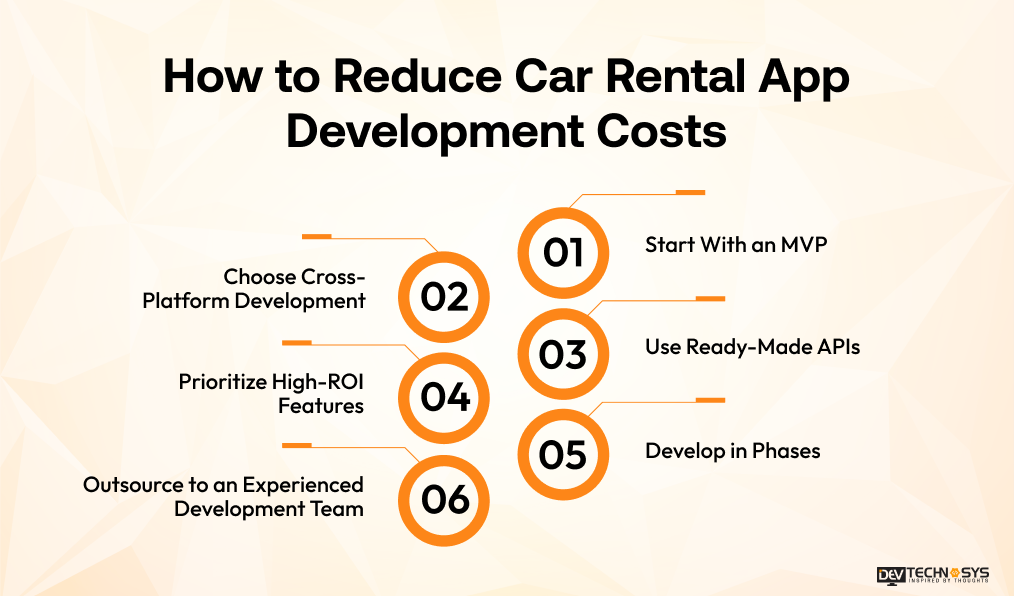
Building a car rental app doesn’t always require a large upfront investment. By making strategic decisions about features, technology, development processes, and resources, businesses can control costs while creating a scalable platform.
1. Start With an MVP
Launch with essential features such as vehicle search, booking, payments, user registration, and basic fleet management. An MVP for car rental app helps validate your business idea with real users before investing in advanced features.
2. Choose Cross-Platform Development
Using frameworks such as Flutter or React Native can reduce development costs by allowing businesses to build applications for iOS and Android from a shared codebase, rather than maintaining separate native development teams.
3. Use Ready-Made APIs
Instead of building every functionality from scratch, integrate reliable third-party APIs for maps, payments, SMS, notifications, identity verification, and analytics. This can reduce development time, testing requirements, and engineering expenses.
4. Prioritize High-ROI Features
Focus your initial budget on features that directly improve bookings, customer experience, and operational efficiency. Advanced capabilities such as AI recommendations, IoT, and predictive analytics can be introduced after the core platform gains traction.
5. Develop in Phases
A phased development strategy spreads investment over time. Start with an MVP, analyze user feedback and business performance, then gradually introduce advanced features based on actual customer demand and measurable business opportunities.
6. Outsource to an Experienced Development Team
Partnering with an experienced car rental app development company in Abu Dhabi can provide access to specialized developers, designers, QA engineers, and project managers without the overhead of building a large in-house team. This can improve development efficiency and cost control.
Cost-Saving Strategy |
Potential Cost Saving |
Estimated Saving on $100K Project |
| Start With an MVP | 25%–40% | $25,000–$40,000 |
| Choose Cross-Platform Development | 20%–30% | $20,000–$30,000 |
| Use Ready-Made APIs | 10%–20% | $10,000–$20,000 |
| Prioritize High-ROI Features | 15%–25% | $15,000–$25,000 |
| Develop in Phases | 15%–25% initially | $15,000–$25,000 |
| Outsource to an Experienced Development Team | 20%–40% | $20,000–$40,000 |
Essential Features of a Car Rental App
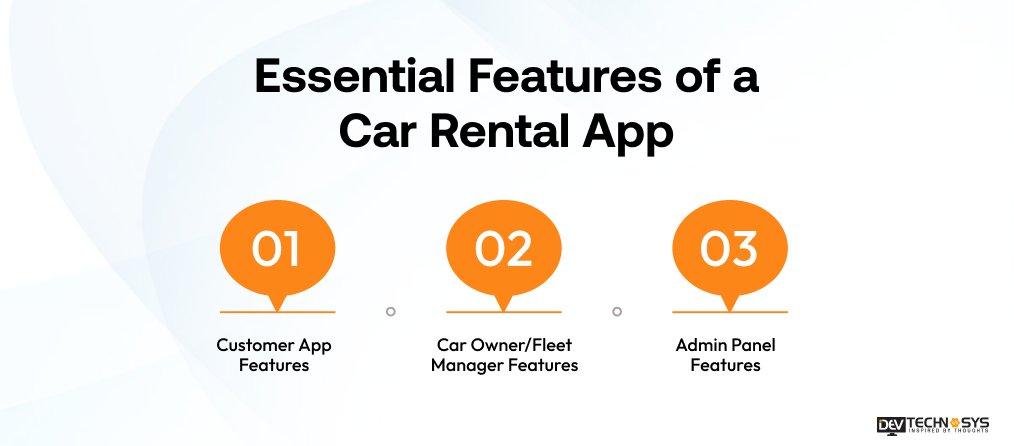
To build a car rental app for UAE citizens, you typically need three interconnected interfaces: a customer app, a car owner/fleet manager app, and an admin panel. Each interface serves a different purpose, from vehicle discovery and booking to fleet operations, payments, and platform management. Here’s the car rental app features list for startups and enterprises.
Customer App Features
The customer-facing app should provide a smooth journey from vehicle discovery to booking, payment, pickup, and return. Features should focus on convenience, transparency, secure transactions, and real-time communication.
Feature |
Estimated Development Cost |
Timeline |
Common Integrations |
| User Registration & Login | $1,000–$2,500 | 1–2 Weeks | Firebase Auth, OAuth, OTP |
| Profile Management | $800–$2,000 | 1–2 Weeks | Cloud Storage, Identity APIs |
| Vehicle Search & Filters | $1,500–$3,500 | 1–2 Weeks | Search API, Database |
| Location-Based Car Discovery | $2,000–$4,500 | 1–3 Weeks | Google Maps, Mapbox |
| Car Details & Availability | $1,500–$3,500 | 1–2 Weeks | Fleet Database, Calendar API |
| Real-Time Vehicle Tracking | $3,000–$7,000 | 2–4 Weeks | GPS, Google Maps, IoT APIs |
| Date & Time-Based Booking | $2,000–$4,500 | 2–3 Weeks | Calendar, Booking APIs |
| Instant Booking Confirmation | $800–$2,000 | 1 Week | SMS, Email, push notification system |
| Digital Payments | $2,000–$5,000 | 1–3 Weeks | Stripe, PayPal, Razorpay |
| Booking Management | $1,500–$3,500 | 1–2 Weeks | Booking Database, Notifications |
| Cancellation & Refunds | $1,000–$2,500 | 1–2 Weeks | Payment Gateway APIs |
| Ratings & Reviews | $1,000–$2,500 | 1–2 Weeks | Database, Moderation APIs |
| Push Notifications | $500–$1,500 | 3–7 Days | Firebase Cloud Messaging, APNs |
| In-App Chat & Support | $1,500–$4,000 | 1–3 Weeks | Firebase, Twilio, Sendbird |
| Digital Rental Agreements | $1,500–$4,000 | 1–3 Weeks | E-Signature, PDF APIs |
Car Owner/Fleet Manager Features
The fleet management interface helps vehicle owners and rental companies manage cars, availability, pricing, bookings, earnings, maintenance, and documents from a centralized platform, improving fleet utilization and operational efficiency.
Feature |
Estimated Development Cost |
Timeline |
Common Integrations |
| Vehicle Registration | $1,000–$2,500 | 1–2 Weeks | Cloud Storage, Database |
| Fleet Management | $3,000–$7,000 | 2–4 Weeks | GPS, IoT, Fleet APIs |
| Availability Management | $1,500–$3,500 | 1–2 Weeks | Calendar, Booking APIs |
| Pricing Management | $1,500–$3,500 | 1–2 Weeks | Pricing Engine, Analytics |
| Booking Management | $1,500–$3,500 | 1–2 Weeks | Booking APIs, Notifications |
| Earnings Dashboard | $1,500–$4,000 | 1–3 Weeks | Payment Gateway, Analytics |
| Driver/Renter Verification | $2,000–$5,000 | 1–3 Weeks | KYC, Identity Verification APIs |
| Maintenance Tracking | $1,500–$4,000 | 1–3 Weeks | Fleet/IoT APIs |
| Document Management | $1,000–$3,000 | 1–2 Weeks | Cloud Storage, OCR APIs |
| Notifications | $500–$1,500 | 3–7 Days | FCM, APNs, SMS APIs |
Admin Panel Features
The admin panel acts as the control center of the car rental platform. It enables administrators to manage users, vehicles, bookings, payments, commissions, verification, disputes, promotions, analytics, and overall platform operations.
Feature |
Estimated Development Cost |
Timeline |
Common Integrations |
| User & Fleet Management | $2,000–$5,000 | 1–3 Weeks | Database, RBAC |
| Vehicle Management | $1,500–$4,000 | 1–2 Weeks | Fleet Database |
| Booking Management | $2,000–$5,000 | 1–3 Weeks | Booking & Calendar APIs |
| Payment Management | $2,000–$5,000 | 1–3 Weeks | Stripe, PayPal, Razorpay |
| Commission Management | $1,500–$3,500 | 1–2 Weeks | Payment APIs |
| Pricing & Promotions | $1,500–$4,000 | 1–3 Weeks | Pricing Engine, Coupon APIs |
| KYC & Document Verification | $2,000–$5,000 | 1–3 Weeks | Identity & OCR APIs |
| Analytics & Reports | $2,000–$5,000 | 2–3 Weeks | Google Analytics, BI Tools |
| Dispute Management | $1,500–$3,500 | 1–2 Weeks | Support/Ticketing APIs |
| Content Management | $1,000–$2,500 | 1–2 Weeks | CMS, Cloud Storage |
| Customer Support | $1,500–$4,000 | 1–3 Weeks | Live Chat, CRM, Helpdesk APIs |
Advanced Features That Affect the Car Rental App Development Cost
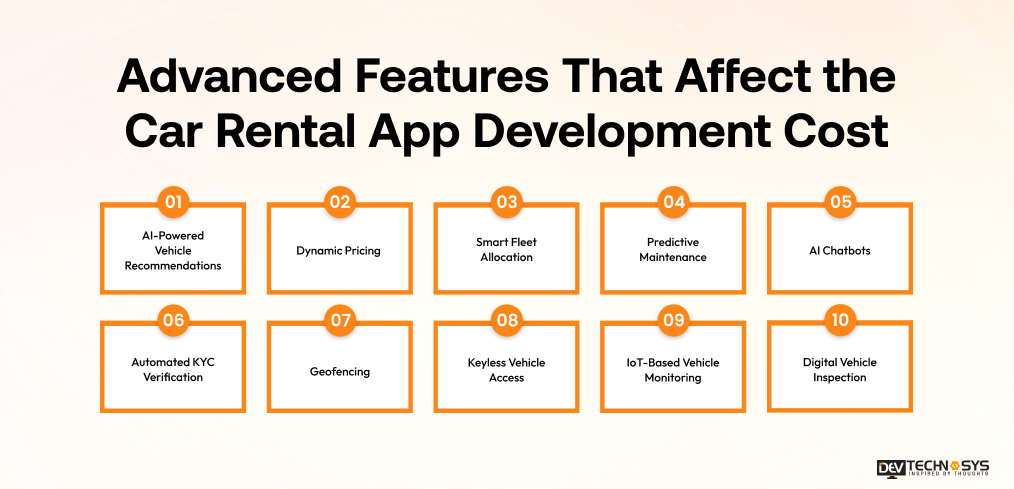
Advanced technologies can significantly improve the customer experience and fleet operations, but they also increase car rental app development costs because they require AI models, real-time processing, specialized APIs, IoT hardware, and additional backend infrastructure.
1. AI-Powered Vehicle Recommendations
AI analyzes customer preferences, booking history, budget, and location to recommend suitable vehicles, creating personalized experiences while requiring recommendation models and customer-data processing infrastructure.
2. Dynamic Pricing
A dynamic pricing algorithm automatically adjusts rental rates according to demand, availability, seasonality, location, and booking duration using pricing algorithms and real-time market data.
3. Smart Fleet Allocation
Smart fleet allocation automatically assigns vehicles based on availability, location, customer requirements, and rental schedules, improving utilization through optimization algorithms and real-time fleet data.
4. Predictive Maintenance
Predictive maintenance analyzes vehicle data, mileage, sensors, and maintenance history to identify potential problems early, reducing breakdowns while requiring IoT connectivity and predictive analytics.
5. AI Chatbots
AI chatbots provide instant assistance for bookings, payments, cancellations, vehicle information, and support queries through conversational AI, knowledge bases, and automated customer-service workflows.
6. Automated KYC Verification
Automated KYC verifies customers using identity documents, OCR, facial recognition, and verification APIs, accelerating onboarding while improving security, compliance, and fraud prevention capabilities.
7. Geofencing
Geofencing establishes virtual geographic boundaries around specific locations, enabling automated alerts and vehicle actions when cars enter or leave predefined areas.
8. Keyless Vehicle Access
Keyless access lets customers unlock and start rental vehicles through smartphones using Bluetooth, NFC, or connected-car technology, requiring secure hardware and software integration.
9. IoT-Based Vehicle Monitoring
IoT monitoring tracks vehicle location, fuel, mileage, battery status, and engine conditions using connected sensors, cloud infrastructure, and real-time data processing.
10. Digital Vehicle Inspection
Digital inspections let users capture vehicle condition through photos, videos, checklists, and digital records, simplifying damage reporting and reducing disputes during rentals.
Advanced Feature |
Estimated Development Cost |
Timeline |
Cost Impact |
| AI-Powered Vehicle Recommendations | $4,000–$12,000 | 3–6 Weeks | 5%–10% |
| Dynamic Pricing | $3,000–$10,000 | 2–5 Weeks | 4%–8% |
| Smart Fleet Allocation | $4,000–$12,000 | 3–6 Weeks | 5%–10% |
| Predictive Maintenance | $5,000–$15,000 | 4–8 Weeks | 6%–12% |
| AI Chatbots | $2,500–$8,000 | 2–4 Weeks | 3%–7% |
| Automated KYC Verification | $2,000–$6,000 | 1–3 Weeks | 2%–5% |
| Geofencing | $2,000–$6,000 | 1–3 Weeks | 2%–5% |
| Keyless Vehicle Access | $5,000–$20,000+ | 4–8 Weeks | 7%–15% |
| IoT-Based Vehicle Monitoring | $6,000–$25,000+ | 5–10 Weeks | 8%–18% |
| Digital Vehicle Inspection | $3,000–$9,000 | 2–5 Weeks | 3%–7% |
Car Rental App Monetization Models
Building a car rental app doesn’t always require a large upfront investment. By making strategic decisions about features, technology, development processes, and resources, businesses can control costs while creating a scalable platform.
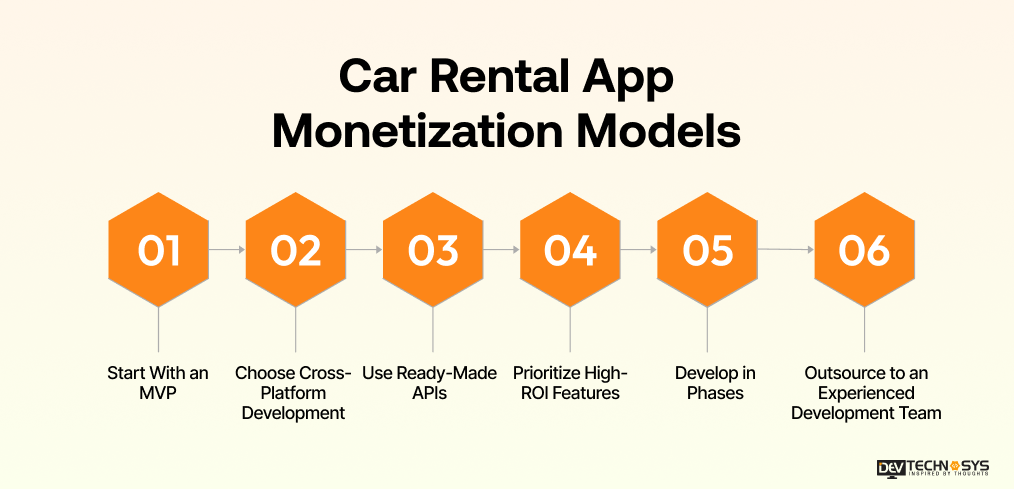
1. Start With an MVP
Launch with essential features such as vehicle search, booking, payments, user registration, and basic fleet management. An MVP helps validate your business idea with real users before investing in advanced features.
2. Choose Cross-Platform Development
Using frameworks such as Flutter or React Native can reduce development costs by allowing businesses to build applications for iOS and Android from a shared codebase, rather than maintaining separate native development teams.
3. Use Ready-Made APIs
Instead of building every functionality from scratch, integrate reliable third-party APIs for maps, payments, SMS, notifications, identity verification, and analytics. This can reduce development time, testing requirements, and engineering expenses.
4. Prioritize High-ROI Features
Focus your initial budget on features that directly improve bookings, customer experience, and operational efficiency. Advanced capabilities such as AI recommendations, IoT, and predictive analytics can be introduced after the core platform gains traction.
5. Develop in Phases
A phased development strategy spreads investment over time. Start with an MVP, analyze user feedback and business performance, then gradually introduce advanced features based on actual customer demand and measurable business opportunities.
6. Outsource to an Experienced Development Team
Partnering with an experienced car rental app development company can provide access to specialized developers, designers, QA engineers, and project managers without the overhead of building a large in-house team. This can improve development efficiency and cost control.

Security and Compliance Requirements for Car Rental Apps
A car rental app handles sensitive customer information, identity documents, payment data, booking details, and real-time location information. Strong security and compliance measures are essential to protect users, prevent fraud, and build trust.
Requirement |
Purpose |
| Secure Authentication | Protect accounts with secure login and token-based authentication. |
| Multi-Factor Authentication | Add an extra verification layer to prevent unauthorized access. |
| Data Encryption | Protect sensitive information during transmission and storage. |
| PCI DSS Compliance | Secure payment and cardholder data processing. |
| GDPR & Privacy | Protect user data and support applicable privacy rights. |
| KYC & Identity Verification | Verify renters and reduce identity-related fraud. |
| Secure Payment Processing | Enable safe transactions through trusted payment gateways. |
| Role-Based Access Control | Limit data and system access according to user roles. |
| API Security | Protect APIs using authentication, validation, rate limiting, and encryption. |
How Long Does It Take to Develop a Car Rental App?
The car rental app development timeline typically ranges from 3 to 9+ months, depending on the app’s complexity, features, platforms, and integrations. A basic MVP can launch faster, while advanced platforms require more development and testing. Proper planning helps reduce delays and development costs.
Development Stage |
Estimated Timeline |
Key Activities |
| Discovery and Planning | 1–2 Weeks | Market research, requirements, business model, and feature planning |
| UI/UX Design | 2–4 Weeks | Wireframes, prototypes, user journeys, and interface design |
| MVP Development | 8–12 Weeks | Core booking, payments, profiles, vehicle listings, and admin features |
| Advanced Feature Development | 4–10 Weeks | GPS tracking, AI, IoT, dynamic pricing, and advanced analytics |
| Testing and Deployment | 3–6 Weeks | Functional, security, performance testing, bug fixing, and app deployment |
| Post-Launch Development | Ongoing | Maintenance, updates, optimization, monitoring, and new feature development |
Build Vs Buy Vs Development Partner: Which Option is Most Cost-Effective?
Choosing the right approach depends on your budget, customization needs, timeline, and long-term business goals. For most businesses seeking a scalable and feature-rich car rental platform, partnering with an experienced development company offers a strong balance between customization, expertise, and cost.
Build In-House
Building in-house offers maximum control over the product and roadmap. However, hiring developers, designers, QA experts, and project managers increases recruitment, salary, infrastructure, and operational costs.
Buy a White-Label Solution
A white-label solution enables faster deployment with lower upfront costs. However, limited customization, recurring licensing fees, vendor dependency, and scalability restrictions can become challenges.
Hire a Development Partner
A development partner provides experienced developers, designers, and QA experts without the cost of maintaining an internal team, making it ideal for custom and scalable car rental apps.
Factor |
Build In-House |
Buy/White-Label |
Development Partner |
| Initial Cost | $100,000–$250,000+ | $10,000–$50,000+ | $30,000–$150,000+ |
| Development Time | 8–15+ Months | 2–8 Weeks | 3–9+ Months |
| Customization | 5/5 | 2/5 | 5/5 |
| Scalability | 5/5 | 3/5 | 5/5 |
| Technical Expertise | Requires Hiring | Vendor-Provided | Expert Team |
| Maintenance | Internal Team | Vendor/Plan Dependent | Usually Included/Optional |
| Upfront Investment | High | Low | Moderate |
| Control | 5/5 | 2/5 | 4/5 |
| Best For | Large Enterprises | Quick Launches | Startups & Growing Businesses |
| Cost-Effectiveness | 3/5 | 4/5 Initially | 5/5 Long-Term |
Conclusion
The car rental app development cost typically ranges from $30,000 to $150,000+, depending on features, platforms, integrations, security requirements, and development complexity. A successful app should combine seamless booking, secure payments, fleet management, GPS tracking, and an intuitive user experience.
Starting with an MVP allows businesses to validate demand while controlling initial investment. As the platform grows, advanced capabilities such as AI recommendations and predictive analytics can be introduced to improve operational efficiency and customer engagement. If you ar a business looking for the best car rental app development company in UAE, contact Dev Technosys. Stay tuned for more updates.
FAQs
What Is a Car Rental App Development Cost Calculator?
A car rental app development cost calculator is an online tool that estimates development expenses based on factors such as app platforms, features, integrations, UI/UX complexity, development location, and project scope. It helps businesses create an initial development budget.
What Are the Steps to Develop a Car Rental Mobile App in 2026?
The key steps include:
- Define the business model and target audience.
- Conduct market and competitor research.
- Identify MVP features and requirements.
- Create wireframes and UI/UX designs.
- Select the technology stack.
- Develop the frontend, backend, and admin panel.
- Integrate maps, payments, KYC, notifications, and other APIs.
- Perform functional, security, and performance testing.
- Deploy the app on iOS and Android.
- Monitor, maintain, and continuously improve the platform.
What Are the Car Rental App Features for Startups?
Startups should prioritize essential features that support booking and fleet operations without making the MVP unnecessarily complex.
- User Registration and Login
- Vehicle Search and Filters
- Vehicle Details and Availability
- Location and GPS Integration
- Online Booking
- Secure Payment Gateway
- Booking Management
- Cancellation and Refunds
- Push Notifications
- Ratings and Reviews
- Customer Support
- User Verification/KYC
- Fleet Management
- Admin Dashboard
- Booking and Revenue Analytics
How Can a Car Rental App Make Money?
Car rental apps can generate revenue through booking commissions, rental fees, subscriptions, service charges, premium listings, advertising, insurance add-ons, and other value-added services.
Should I Build a Car Rental App for iOS and Android?
Yes. Supporting both platforms can help businesses reach a broader customer base. Cross-platform frameworks such as Flutter or React Native can also reduce development time and costs compared with building separate native applications.
How Much Does It Cost to Maintain a Car Rental App?
Annual maintenance generally costs around 15% to 25% of the initial development investment. Expenses include hosting, security updates, bug fixes, API fees, performance optimization, technical support, and new feature development.
What Technology Stack Is Used for Car Rental App Development?
A typical technology stack may include Flutter or React Native for mobile development, Node.js or Laravel for backend development, PostgreSQL or MongoDB for databases, AWS or Google Cloud for infrastructure, and APIs for maps and payments.
How Can I Reduce Car Rental App Development Costs?
Start with an MVP, prioritize high-value features, use cross-platform development, integrate reliable third-party APIs, develop features in phases, and work with an experienced development partner to optimize resources.
What Security Measures Does a Car Rental App Need?
A car rental app should implement secure authentication, MFA, encryption, RBAC, API security, KYC verification, secure payment processing, PCI DSS requirements, and applicable data privacy regulations.