





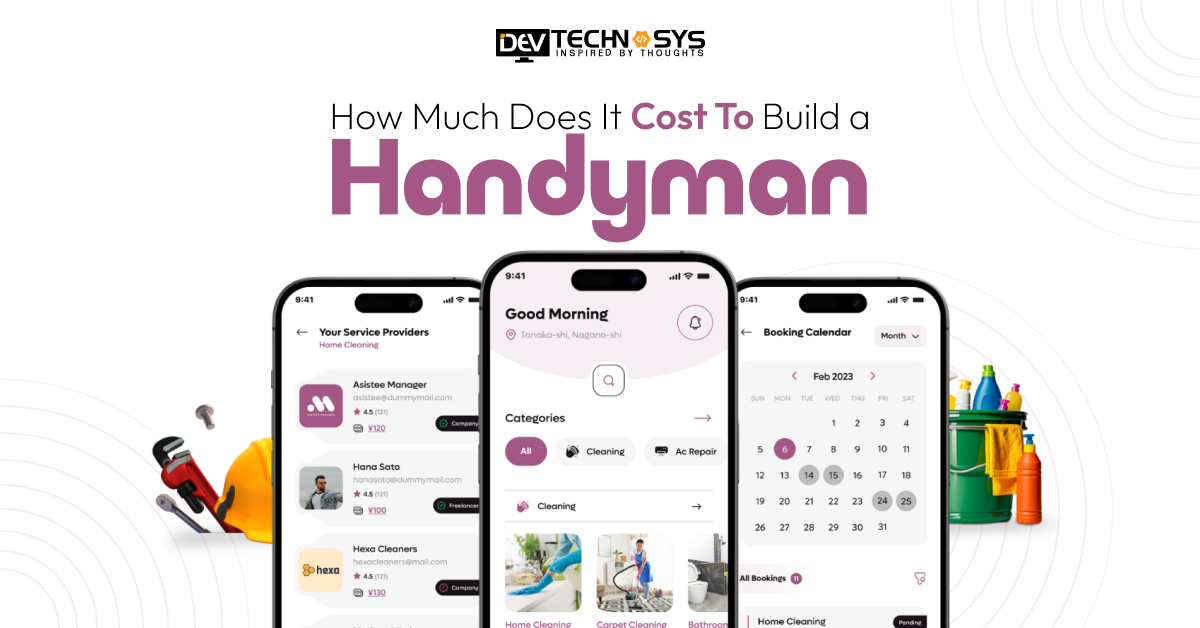
With the rise of technology and digitalization, people want every convenience at their doorstep within a few taps. Be it ride-hailing or food delivery, every industry has seen a massive shift towards digital solutions, and handyman services are no exception.
An on-demand handyman app transforms the way people hire professionals for home services like repairs, maintenance, and renovations. This can be a profitable option for entrepreneurs who want to enter the competitive and advancing digital world.
Before developing, one question that always comes to mind is what is the cost to build a handyman app? Basically, the handyman app development cost relies on several aspects, including application complexity, features, platforms, and development location.
So, this blog offers detailed information related to the cost to develop a handyman app. It includes factors affecting, cost-reduction techniques, and revenue options that assist you in making smart choices.
What Are The Market Stats Of A Handyman App?
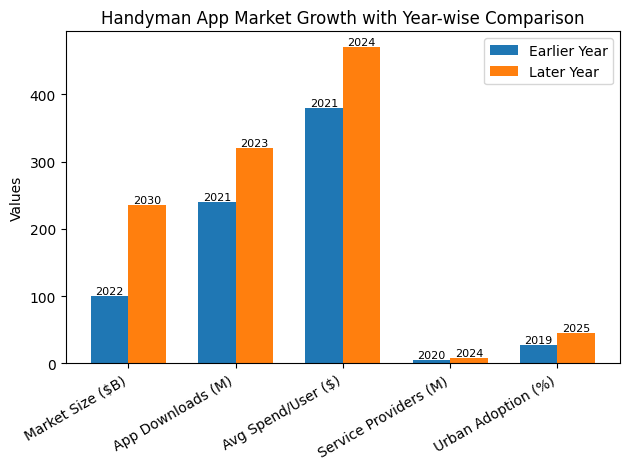
Now, we will see what the market and future predictions about the handyman app explain:
- The global on-demand home services industry was valued at $100 billion in 2022 and is projected to attain $235 billion by 2030, with an estimated compound annual growth rate (CAGR) of5%.
- In 2023, handyman and home services applications experienced over 320 million downloads globally, an increase from 240 million in 2021, indicating a growth of around 33% over two years.
- In 2024, the average annual expenditure per active handyman app user was approximately $470, in contrast to $380 in 2021, an almost 24% increase over three years.
- The quantity of registered service professionals on prominent platforms increased to around 8 million in 2024, up from 2 million in 2020, indicating a growing supply in tandem with demand.
- By 2025, over 45% of urban households in large metropolitan areas will have utilized an on-demand home services application at least once, in contrast to roughly 28% in 2019.
What Is The Handyman App?
A handyman application is an on-demand service platform that links customers with proficient specialists providing residential and commercial repair services, making it easier to build a handyman app that meets modern service expectations.
These services generally encompass plumbing, electrical work, painting, carpentry, cleaning, appliance repair, and maintenance activities. The application enables users to explore services, verify pricing, schedule appointments, monitor service providers, and execute secure payments.
A handyman app provides service providers with task visibility, scheduling capabilities, earnings administration, and client communication functionalities, often delivered through a reliable handyman app development solution.
How Much Does It Cost To Build a Handyman App?
The expense of developing a handyman application typically varies from $8,000 to $30,000, making the cost to build a handyman app highly dependent on project scope, contingent upon the application’s features, complexity, and development methodology.
The basic mobile app development cost features core capabilities, including user registration, service listing, booking, and payment connection.
A mid-tier application with sophisticated functionalities, such as real-time tracking, push notifications, in-app messaging, and user reviews, has a bit higher overall handyman app development cost.
Simultaneously, a comprehensive handyman application equipped with AI recommendations, sophisticated analytics, multilingual assistance, and scalable cloud infrastructure is significantly more expensive.
The final cost is substantially influenced by factors including platform selection (Android, iOS, or both), design quality, backend development, and continuous maintenance, including the long-term cost to maintain an app.
Understand the cost more efficiently with this breakdown table:
App Type |
Description |
Estimated Cost |
| Basic Handyman App | Core booking, service listings, user profiles, and basic payment integration | $8,000 – $12,000 |
| Mid-Level Handyman App | Real-time tracking, push notifications, reviews, and in-app chat functionality | $13,000 – $20,000 |
| Advanced Handyman App | AI features, analytics dashboard, multi-language support, scalable cloud infrastructure | $21,000 – $30,000 |
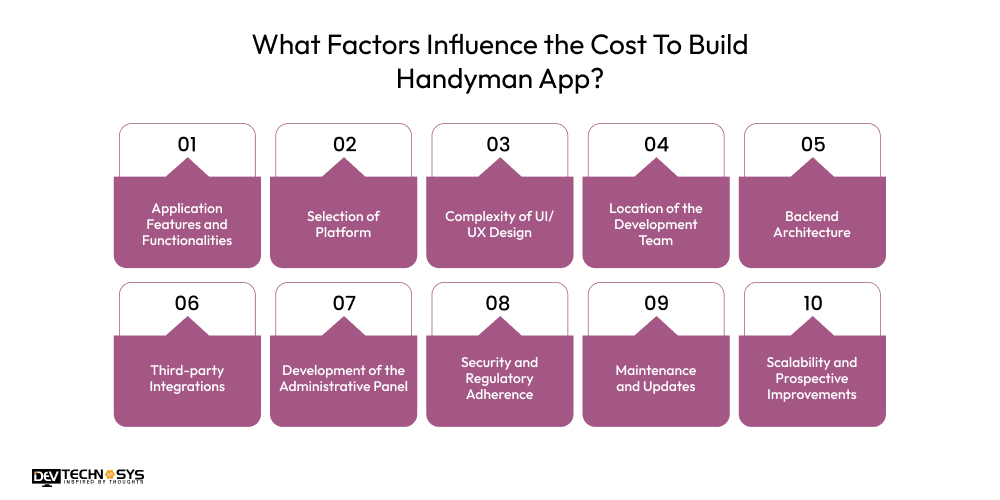
What Factors Influence the Cost To Build Handyman App?
The cost to build a handyman app is affected by several factors, including the app’s features, complexity, backend, design, developer’s location, and so on. Here, we will discuss some of the major factors with cost breakdown tables.
1. Application Features and Functionalities
The quantity and intricacy of features strongly affect development expenses when businesses decide to develop handyman app solutions. Fundamental functionalities such as login, booking, and payments are economically viable; however, sophisticated features like live tracking, AI-driven recommendations, intelligent scheduling, and in-app communication necessitate greater development time, hence substantially elevating the overall cost to make the handyman app scalable.
Type / Basis |
Description |
Cost |
| Basic Features | Login, service listing, booking, simple payment setup | $2,000 – $4,000 |
| Advanced Features | Live tracking, chat, notifications, reviews | $4,000 – $6,000 |
| Premium Features | AI tools, automation, analytics dashboard | $6,000 – $8,000 |
2. Selection of Platform
The decision to select either Android, iOS, or both platforms influences the overall expenditure during handyman app development. Creating distinct native applications for each platform elevates the cost to create a handyman app.
In contrast, a cross-platform development diminishes expenses but may constrain performance optimization and sophisticated native features in certain instances, often supported by a hybrid app development company.
Type / Basis |
Description |
Cost |
| Single Platform | Android or iOS application development | $9,000 – $14,000 |
| Cross-Platform | One codebase for Android and iOS | $14,000 – $22,000 |
| Native Multi-Platform | Separate native apps for both platforms | $22,000 – $30,000 |
3. Complexity of UI/UX Design
An aesthetically pleasing and intuitive interface increases user engagement while elevating development expenses for any create handyman app project.
Custom animations, interactive dashboards, personalized layouts, and seamless navigation necessitate extra design hours, prototyping, and usability testing, hence increasing the overall mobile app development cost.
Type / Basis |
Description |
Cost |
| Basic UI/UX Design | Standard layouts with essential user flows | $2,000 – $4,000 |
| Custom UI/UX Design | Branded visuals with improved usability | $4,000 – $7,000 |
| Advanced UI/UX Design | Interactive design, animations, and user testing | $7,000 – $10,000 |
4. Location of the Development Team
The geographical positioning of developers significantly influences cost estimation when working with a handyman app development company.
Developers in North America and Europe command higher hourly rates, whereas teams in Asia and Eastern Europe provide economical solutions without sacrificing quality, rendering location a crucial budget consideration.
Type / Basis |
Description |
Cost |
| Offshore Team | Cost-effective developers with standard experience | $8,000 – $15,000 |
| Hybrid Team | Combination of local and offshore teams | $15,000 – $21,000 |
| Onshore Team | Premium developers with higher hourly rates | $21,000 – $30,000 |
5. Backend Architecture
An efficient backend guarantees seamless operations, data storage, real-time updates, and scalability for businesses aiming to build a house cleaning app or handyman solution.
Complex backend requirements, including cloud hosting, microservices architecture, APIs, and database optimization. These elevate development intricacy and cost to make a handyman app, particularly for applications anticipating substantial user traffic.
Type / Basis |
Description |
Cost |
| Basic Backend | Simple APIs and database management | $4,000 – $6,500 |
| Scalable Backend | Cloud hosting with performance optimization | $6,500 – $10,000 |
| Advanced Backend | Microservices, load balancing, scalability | $10,000 – $15,000 |
6. Third-party Integrations
Incorporating third-party services such as payment gateways, mapping solutions, SMS notifications, analytics tools, and CRM systems enhances convenience within handyman app development services but also prolongs development time and escalates license costs. The greater the number of integrations needed, the higher the total cost to make a handyman app fully functional.
Type / Basis |
Description |
Cost |
| Essential Integrations | Payment gateway and map services | $300 – $800 |
| Extended Integrations | SMS, email, analytics tools | $800 – $2,000 |
| Advanced Integrations | CRM and automation APIs | $2,000 – $3,500 |
7. Development of the Administrative Panel
An administrative panel is crucial for overseeing users, service providers, reservations, commissions, and analytics when businesses make handyman app platforms at scale.
A fundamental admin dashboard is less expensive; however, sophisticated panels incorporating real-time monitoring, reporting, and automation functionalities elevate both complexity and cost to create a handyman app.
Type / Basis |
Description |
Cost |
| Basic Admin Panel | User and booking management features | $2,500 – $4,000 |
| Advanced Admin Panel | Reports, commissions, provider control | $4,000 – $7,000 |
| Smart Admin Panel | Real-time analytics and automation | $7,000 – $10,000 |
8. Security and Regulatory Adherence
The implementation of robust security measures, including data encryption, secure payment processing, GDPR compliance, and user verification, increases development expenses, particularly in regions such as handyman app development in Middle East markets. These elements are essential for establishing confidence and safeguarding sensitive user information.
Type / Basis |
Description |
Cost |
| Basic Security | SSL, authentication, basic protection | $1,000 – $2,500 |
| Enhanced Security | Data encryption and secure payments | $2,500 – $4,500 |
| Compliance Security | GDPR and advanced verification | $4,500 – $6,000 |
9. Maintenance and Updates
Post-launch maintenance, bug rectifications, performance enhancement, and feature updates incur long-term expenses for any mobile app development company delivering scalable solutions.
Frequent updates are crucial to maintain the app’s competitiveness, security, and compatibility with the latest operating system versions.
Type / Basis |
Description |
Cost |
| Basic Maintenance | Bug fixes and minor improvements | $500 – $1,500 |
| Standard Maintenance | Performance and OS updates | $1,500 – $3,000 |
| Full Maintenance | Feature updates and security monitoring | $3,000 – $4,000 |
10. Scalability and Prospective Improvements
The initial development cost escalates if the application is engineered for future scalability, especially for brands planning handyman app development in Saudi Arabia or regional expansion.
Constructing a scalable architecture that accommodates additional features, increased user capacity, and geographic growth necessitates meticulous planning and substantial development resources in advance, often supported by full-stack development services.
Type / Basis |
Description |
Cost |
| Limited Scalability | Supports a small user base | $8,000 – $11,000 |
| Moderate Scalability | Handles growing users and regions | $11,000 – $19,000 |
| High Scalability | Global expansion and heavy traffic | $19,000 – $30,000 |
What Are The Measures To Reduce The Cost To a Build Handyman App?
Despite having multiple factors affecting the coast, there are several ways to reduce the development cost. Now, we will discuss some of the commonly used measures to reduce the cost of building a handyman app.
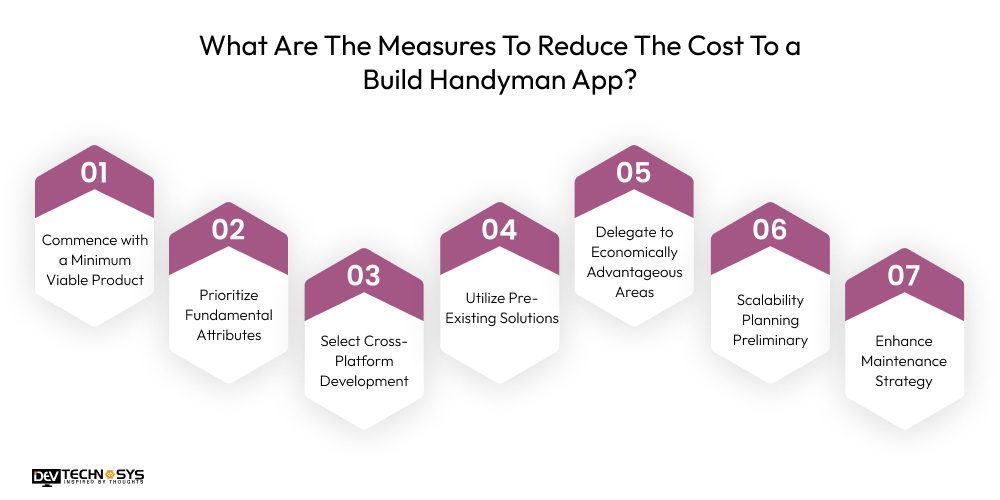
1. Commence with a Minimum Viable Product
Launching a Minimum Viable Product facilitates the validation of your business concept through essential characteristics alone when businesses aim to Develop An App Like Justlife. This strategy saves initial expenditure, shortens development duration, and enables the collection of user input prior to committing to advanced features.
2. Prioritize Fundamental Attributes
Refrain from incorporating superfluous features at the initial phase when you build handyman app platforms. Concentrate on essential functionality such as reservations, transactions, and service directories. Enhanced functionalities may be implemented subsequently in response to customer demand and business expansion.
3. Select Cross-Platform Development
Employing cross-platform frameworks such as Flutter or React Native enables the development of a single application for both Android and iOS platforms, often handled by teams offering mobile app development solutions.
This substantially diminishes development time, resource demands, and total expenses in comparison to creating distinct native applications.
4. Utilize Pre-Existing Solutions
Utilizing pre-existing APIs, templates, and SDKs diminishes the need for unique programming during projects. It reduces the handyman app development cost in UAE. These pre-fabricated solutions accelerate development and reduce expenses without sacrificing functionality or user experience.
5. Delegate to Economically Advantageous Areas
Employing developers from areas with reduced hourly rates can substantially decrease development costs, especially when businesses hire on-demand app developers. Engaging proficient offshore teams guarantees high-quality results while maintaining cost efficiency.
6. Scalability Planning Preliminary
Effective planning mitigates rework and unforeseen costs subsequently when businesses develop handyman app platforms for growth. Establishing a scalable design from inception mitigates expensive redevelopment when the user base expands or new features are integrated.

7. Enhance Maintenance Strategy
Consistent oversight and proactive maintenance mitigate significant problems and expensive repairs for apps built using Android or iOS app development services. Employing automated testing and performance monitoring techniques minimizes long-term operational costs and guarantees seamless application performance.
How to Generate Income with a Handyman Application?
Monetization models, such as subscription, commission, featured listing, in-app advertisement, etc., are implemented by app owners to generate recurring income. We will now thoroughly discuss these money-making models.
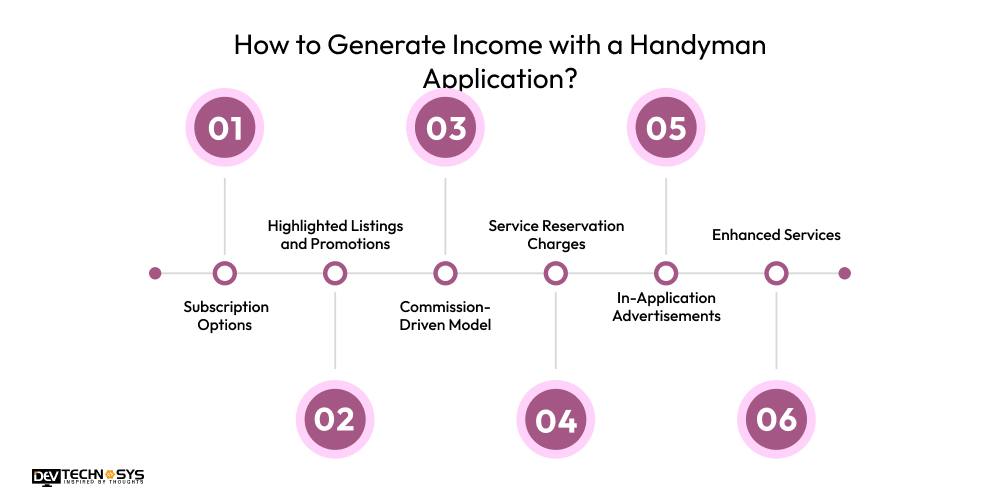
1. Subscription Options
Providing monthly or annual subscription plans to service providers grants them access to premium features, prioritized listings, or diminished commissions. This strategy guarantees consistent recurring revenue and promotes sustained platform involvement.
2. Highlighted Listings and Promotions
Service providers may purchase featured listings or promoted services to enhance their visibility within the application. This monetization method advantages both parties by enhancing provider visibility and producing supplementary revenue for the platform.
3. Commission-Driven Model
The predominant monetization approach entails levying a commission on service providers for each work completed, a common practice within handyman app development platforms. This strategy guarantees stable revenue as the application expands, directly correlating the platform’s success with the earnings of service providers.
4. Service Reservation Charges
Imposing a nominal convenience or service fee on each booking generates a consistent revenue stream. This charge is typically nominal and warranted by the convenience, expediency, and dependability provided by the platform.
5. In-Application Advertisements
Exhibiting pertinent advertisements from tool manufacturers, service providers, or local enterprises produces supplementary income. Advertisements must be unobtrusive to preserve a favorable user experience while facilitating revenue generation.

6. Enhanced Services
Providing supplementary services such as longer warranties, immediate bookings, insurance coverage, or prioritized support can enhance revenue. These premium add-ons augment user confidence and offer additional convenience.
Final Words
Developing a handyman application is a smart investment due to the increasing requirement for on-demand home services. The cost of developing a handyman app fluctuates significantly depending on features, platforms, and development options. However, careful preparation can reduce prices without compromising quality.
Understanding the factors affecting the cost, implementing effective cost-reduction techniques, and selecting the appropriate monetization model are necessary. With this, the enterprises may establish a highly scalable and profitable platform.
An effectively designed handyman application streamlines service booking for customers while providing qualified experts with reliable employment options.
Regardless of whether you are a startup or an established firm, investing in a handyman iOS or Android app development can offer long-term profits when implemented with the appropriate technological and business strategies.
Frequently Asked Questions
Q1. What Is The Duration Required To Develop A Handyman Application?
A handyman application generally requires 3 to 6 months for development, contingent upon its complexity and features. Fundamental applications necessitate less time; however, sophisticated applications with tailored features and integrations may require a longer duration.
Q2. Is It Feasible To Develop A Handyman Application With A Constrained Budget?
Indeed, by initiating a Minimum Viable Product (MVP), opting for cross-platform development, and concentrating on fundamental functionality, one may construct a working handyman application under a constrained budget and expand it progressively.
Q3. Which Platform Is Optimal For A Handyman Application?
Both Android and iOS are optimal for extensive reach. Commencing with a single platform or employing cross-platform development mitigates expenses while effectively engaging a wider audience.
Q4. Is A Handyman Application Financially Viable?
A handyman application can be exceedingly lucrative with appropriate monetization tactics, including commissions, subscriptions, and premium listings. Profitability escalates with the expansion of the user base and service providers.
Q5. Do Handyman Applications Necessitate Frequent Maintenance?
Indeed, routine maintenance is crucial for security, performance enhancement, and compatibility with operating system changes. Continuous updates facilitate the introduction of new features and enhance user experience.
Q6. What Is The Cost To Build a Handyman App?
The cost to develop a handyman app is generally estimated somewhere between $8,000 and $30,000. The final development cost depends on factors, including features, complexity, platform choice, backend, security, and more.