





Businesses are now quickly implementing digital solutions to track resources, manage crops, monitor weather, and boost efficiency. Agricultural software can be developed to fit various budgets and objectives, ranging from straightforward mobile applications for farm record-keeping to sophisticated systems.
Agriculture software development cost depends on the type of users you are targeting, the features you need, and the level of technology involved. Businesses can start with a cost-effective MVP and gradually expand features as operations grow.
In today’s blog, we will break down the agriculture software development cost. We hope it will help you understand how the cost structure of agriculture software development in Middle East enables stakeholders to plan more effectively and invest wisely in technology that delivers real value to the agricultural ecosystem.
Agriculture Software Market Analysis
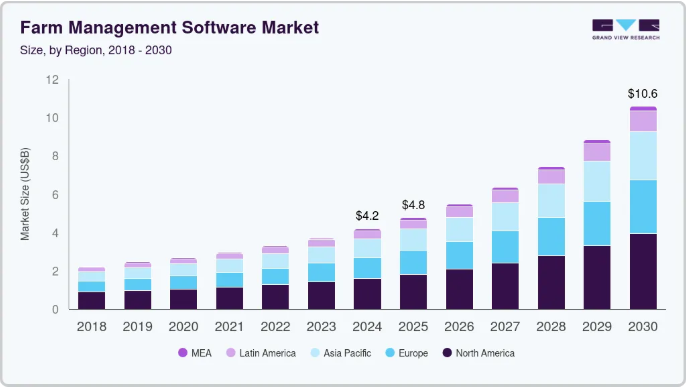
- The global farm management software market size was estimated at USD 4.18 billion in 2024 and is projected to reach USD 10.58 billion by 2030, growing at a CAGR of 17.3% from 2025 to 2030.
- The precision farming segment dominated the industry, accounting for over 43.0% of industry revenue in 2024.
- The cloud-based segment is anticipated to grow fastest from 2025 to 2030. The advancement of precision agriculture technologies is driving the growth of cloud-based FMS.
- The services segment is expected to grow at a CAGR of 16.6% over the forecast period.
What is an Agriculture Software?
Agriculture software, also known as farm management software, leverages digital tools and data to help farmers and agribusinesses manage, monitor, and optimize operations from planting to sale. Automating tasks, analyzing field data, controlling resources like water and fertilizers, managing livestock, and streamlining supply chains improve efficiency, productivity, and sustainability.
What are the Business Benefits of Investing in Agriculture Software?
Before knowing the agriculture software development cost, let’s take a look at the business benefits of investing in a smart agriculture farming software.
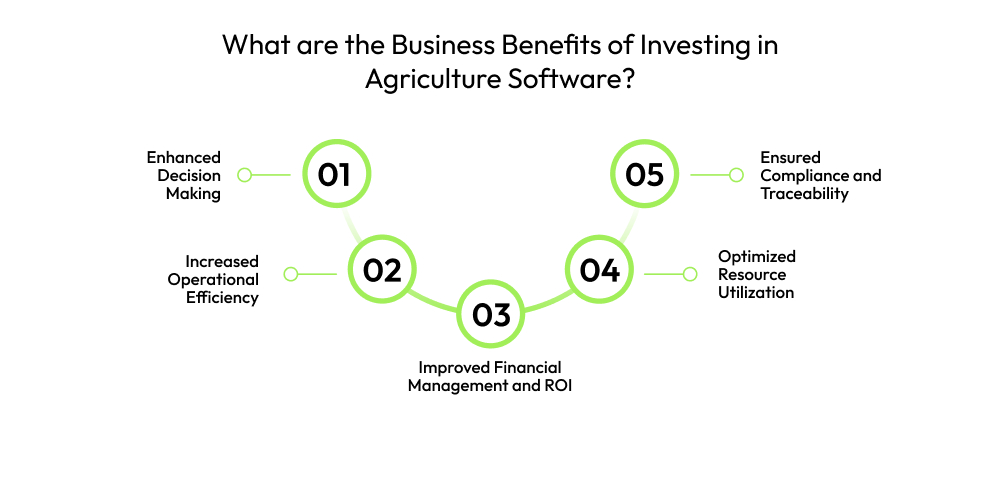
1. Enhanced Decision Making
Build an agriculture software that collects and analyzes real-time data from sensors, drones, weather systems, and historical farm records. These insights help farmers make informed decisions about crop selection, planting schedules, and harvest timing while reducing risks from climate change and pests.
2. Increased Operational Efficiency
Automation of routine tasks like record-keeping, inventory management, and task scheduling significantly reduces manual effort and human errors. Build an agriculture software that streamlines daily operations and allows farm managers to focus on strategic planning and productivity improvements.
3. Improved Financial Management and ROI
Agriculture software offers a centralized view of expenses, revenues, and profits. With features like budgeting, cost analysis by crop, and financial forecasting, businesses can control costs better and maximize overall return on investment.
4. Optimized Resource Utilization
Businesses should develop farm management software that enables the exact use of critical resources such as water, fertilizers, seeds, and pesticides. By applying inputs only where and when required, it minimizes wastage, lowers operational costs, and promotes environmentally sustainable farming practices.
5. Ensured Compliance and Traceability
Digital records of farming activities ensure compliance with regulatory standards and certifications. End-to-end traceability from farm to market increases transparency, builds trust, and helps access premium buyers and export opportunities.
What is the Cost to Build an Agriculture Software?
The agriculture software development cost typically ranges from $8,000 to $25,000. The cost to build an agriculture software with simple features and functionalities will be up to $12,000. The cost to develop an agriculture software with cross-platform capabilities and advanced features such as IoT integration, AI in agriculture, ML, and cloud computing can exceed $25,000. Below is the table explaining the cost to create an agriculture software in detail.
| Software Type | Cost ($) | Timeline |
| Farmer Advisory software | 8,000 to 12,000 | 4 to 6 weeks |
| Farm Record Management | 10,000 to 18,000 | 6 to 8 weeks |
| Cooperative Management | 12,000 to 20,000 | 8 to 10 weeks |
| Agribusiness Dashboard | 15,000 to 25,000 | 10 to 12 weeks |
What are the Factors Affecting the Agriculture Software Development Cost?
The cost of developing an agriculture software development solution varies on the basis of various factors like features and platform choice. Let’s discuss these agriculture software development cost factors in detail:
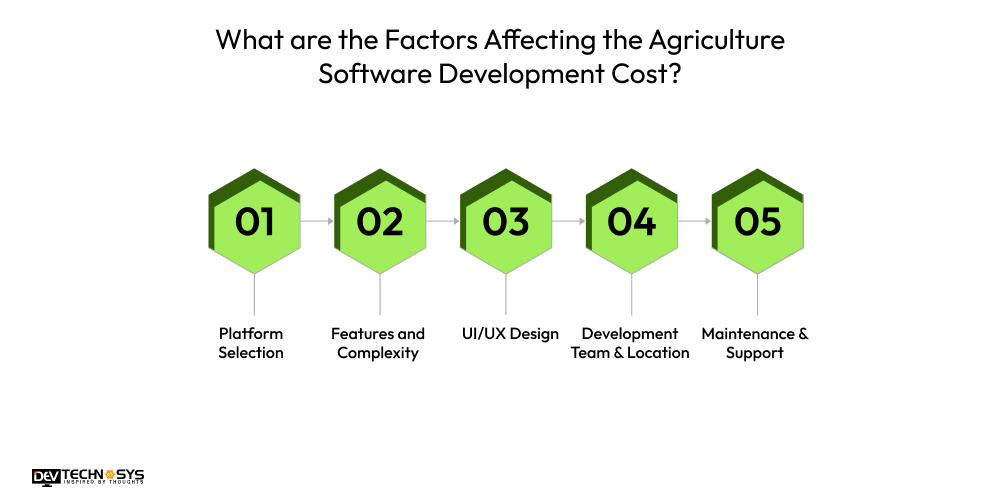
1. Platform Selection
The choice of platform, Android, iOS, web, or cross-platform, directly affects development costs. Building for multiple platforms increases complexity, requires additional coding and testing, and extends timelines, resulting in higher budgets compared to a single-platform solution.
| Platform Choice | Cost Impact ($) | Development Timeline |
| Single Platform (Android or Web) | 8,000 – 15,000 | 4–6 weeks |
| Cross-Platform (Android + iOS) | 12,000 – 22,000 | 6–8 weeks |
| Web + Mobile software | 15,000 – 25,000 | 8–10 weeks |

2. Features and Complexity
The cost of agriculture software rises with feature complexity. The experts in a software development company in Dubai integrate basic functionalities like weather alerts and crop tracking, which are inexpensive, but integrating advanced tools such as IoT sensors and AI analytics demands more development effort and significantly increases overall project expenses.
| Feature Level | Cost Impact ($) | Development Timeline |
| Basic (weather, crop tracking) | 8,000 – 12,000 | 4–5 weeks |
| Medium (dashboards, reports) | 12,000 – 18,000 | 6–8 weeks |
| Advanced (analytics, integrations) | 18,000 – 25,000 | 8–12 weeks |
3. UI/UX Design
A well-designed, intuitive user interface is crucial, particularly for farmers with low technical literacy. Developing a user-friendly design requires additional planning, prototyping, and testing, which increases both the development timeline and overall costs of the agriculture software project.
| Design Scope | Cost Impact ($) | Timeline |
| Basic UI Templates | 1,000 – 2,000 | 1 week |
| Custom Farmer-Friendly UI | 2,000 – 4,000 | 2–3 weeks |
| Multi-language UX | 3,000 – 5,000 | 3–4 weeks |
4. Development Team & Location
Hire dedicated developers or teams from high-cost regions significantly raises project expenses. Conversely, outsourcing to the cost-effective areas can reduce costs. Team experience, location, and hourly rates are critical factors influencing the total budget and timeline.
| Team Type | Cost Range ($) | Timeline Impact |
| In-House Team | 25,000+ | Longer |
| Freelancers | 10,000 – 18,000 | Medium |
| Development Company | 8,000 – 22,000 | Faster |
5. Maintenance & Support
Post-launch maintenance, including updates, bug fixes, cloud hosting, server management, and technical support, adds ongoing expenses. Continuous support ensures software reliability, smooth operation, and security, contributing to long-term costs beyond the initial development budget.
| Maintenance Type | Annual Cost ($) | Duration |
| Basic Maintenance | 1,000 – 2,000 | Ongoing |
| Cloud Hosting & Updates | 2,000 – 4,000 | Ongoing |
| Full Support & Security | 4,000 – 6,000 | Ongoing |
Are There Any Hidden Costs in Agriculture Software Development?
Besides these upfront costs, there are also some hidden factors that can highly impact the cost to develop an agriculture software. Some of these hidden cost affecting factors are mentioned below:
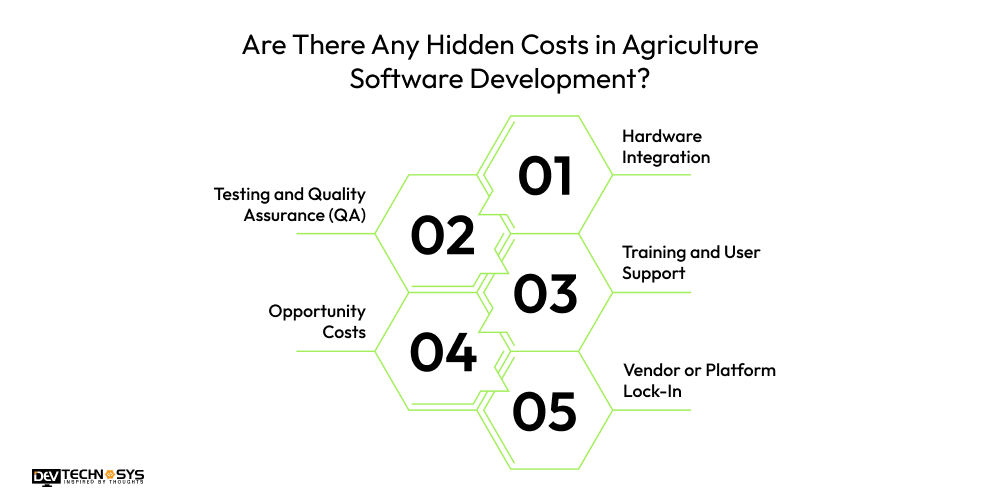
1. Hardware Integration
Many agriculture solutions require integration with IoT sensors, drones, and farm machinery. The number of devices, data frequency, connectivity standards, and compatibility requirements increase complexity, often leading to higher development, testing, calibration, and long-term maintenance costs.
| Integration Scope | Estimated Cost ($) | Timeline Impact |
| Basic IoT sensors (soil, weather) | 2,000 – 4,000 | +1–2 weeks |
| Multiple sensors & devices | 4,000 – 7,000 | +2–4 weeks |
| Farm machinery integration | 6,000 – 10,000 | +3–6 weeks |
2. Testing and Quality Assurance (QA)
Rigorous testing is essential to ensure software reliability in real farming conditions, such as poor connectivity or extreme weather. Extensive QA increases development time and cost, but inadequate testing can cause failures, data inaccuracies, and expensive fixes during peak farming seasons.
| QA Level | Estimated Cost ($) | Timeline Impact |
| Basic functional testing | 1,000 – 2,000 | +1 week |
| Multi-device & performance testing | 2,000 – 4,000 | +2–3 weeks |
| Field condition & stress testing | 3,000 – 5,000 | +3–4 weeks |
3. Training and User Support
Farmers and staff often require training to adopt new software effectively. Developing training materials, onboarding sessions, multilingual guides, help documentation, and providing continuous technical support adds operational costs that are frequently underestimated during initial project planning.
| Support Scope | Estimated Cost ($) | Timeline Impact |
| Basic user guides & FAQs | 500 – 1,000 | 1 week |
| Training videos & onboarding | 1,000 – 2,500 | 2 weeks |
| Ongoing multilingual support | 2,000 – 4,000 (annual) | Ongoing |
4. Opportunity Costs
Delays in software development can result in lost efficiency, productivity, and potential revenue growth. The longer the software takes to launch, the greater the opportunity cost of missing automation benefits, data-driven insights, competitive advantage, and improved decision-making.
| Delay Duration | Estimated Business Impact ($) | Timeline Impact |
| 1-month delay | 2,000 – 5,000 | Short |
| 3-month delay | 5,000 – 12,000 | Medium |
| 6-month delay | 12,000 – 25,000+ | High |
5. Vendor or Platform Lock-In
Using fragmented or non-scalable solutions can create data silos and integration challenges over time. Vendor lock-in increases long-term costs, limits flexibility, complicates future upgrades, and makes switching providers or scaling operations later significantly more expensive.
| Lock-In Level | Estimated Cost ($) | Timeline Impact |
| Minor tool dependency | 1,000 – 3,000 | Low |
| Limited scalability | 3,000 – 6,000 | Medium |
| Major platform migration | 6,000 – 15,000+ | High |
What is the Cost Difference Between Hiring an In-house Team vs an Agriculture Software Development Company?
The cost to develop agriculture software varies depending on various factors, including the development team you hire. The cost of hiring an in-house team is different from hiring a custom software development company.
1. Hiring an In-house Team:
Hiring an in-house team for agriculture software development in UAE involves long-term expenses such as salaries, infrastructure, training, and employee benefits, making it costlier for small or medium-sized agriculture software projects. It offers complete control but requires higher upfront and ongoing investment.
2. Hiring an Agriculture Software Company:
An agriculture software development company provides a ready-to-deploy team with domain expertise, fixed or flexible pricing, and faster delivery. This option significantly reduces operational overhead and is more cost-effective for MVPs and mid-scale solutions.
| Cost Factor | In-House Team | Development Company |
| Hiring & Setup | High | Low |
| Salaries & Benefits | Ongoing | Included |
| Tools & Infrastructure | Extra cost | Included |
| Development Speed | Slower | Faster |
| Maintenance | Continuous | Optional |
| Total MVP Cost | $40,000+ | $8,000–$25,000 |
How to Reduce The Cost to Develop an Agriculture Software?
Besides the factors that affect the cost of Agriculture Software Development in Middle East, there are also factors that help reduce the cost of creating an agriculture software. Let’s discuss these cost-reducing factors in detail.
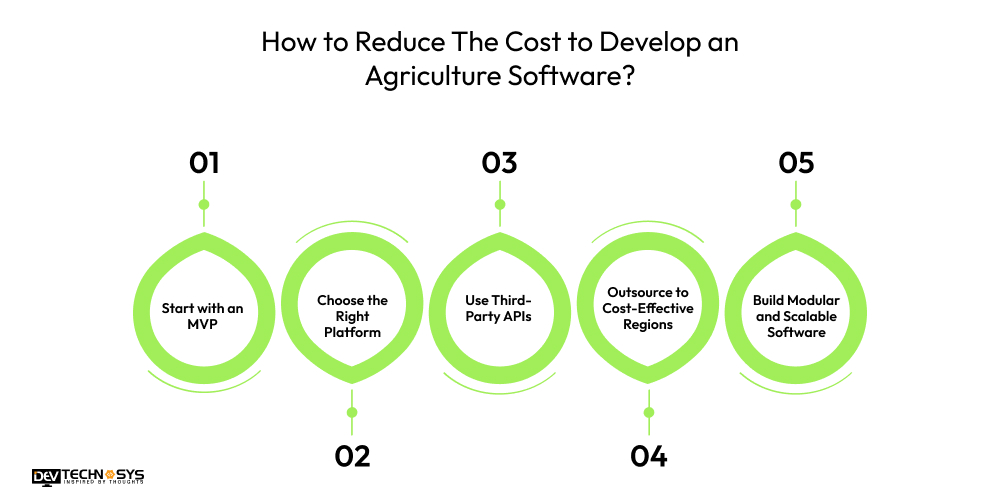
1. Start with an MVP
Hire skilled professionals who provide agriculture software development services. Begin with a Minimum Viable Product that includes only essential features such as crop tracking, weather alerts, and basic dashboards. This approach reduces the cost to create an agriculture software, shortens timelines, and allows improvements based on real farmer feedback.
| Approach | Cost Impact ($) | Timeline Benefit |
| Full-feature product | 20,000 – 25,000 | 10–12 weeks |
| MVP with core features | 8,000 – 15,000 | 4–6 weeks |
| Cost Saved | 5,000 – 10,000 | Faster launch |
2. Choose the Right Platform
Reducing the cost of agriculture software development in UAE involves selecting a single platform or using cross-platform development tools to minimize coding and testing efforts. It helps reach multiple users with one codebase, reduces development complexity, and significantly lowers the overall cost to build an agriculture software.
| Platform Choice | Development Cost ($) | Timeline |
| Separate Android & iOS software | 18,000 – 25,000 | 10–12 weeks |
| Cross-platform software | 12,000 – 18,000 | 6–8 weeks |
| Cost Saved | 4,000 – 7,000 | Reduced effort |
3. Use Third-Party APIs
Leveraging reliable third-party APIs for weather forecasts, maps, notifications, and analytics eliminates the need for custom agriculture software development in Dubai. This saves time, reduces engineering effort, and lowers the cost to create agriculture software while still delivering accurate and scalable functionality.
| Feature Development | Cost ($) | Timeline |
| Custom-built features | 3,000 – 6,000 | 3–4 weeks |
| Third-party API usage | 1,000 – 2,500 | 1–2 weeks |
| Cost Saved | 2,000 – 4,000 | Faster delivery |
4. Outsource to Cost-Effective Regions
Partnering with experienced development teams in cost-effective regions lowers hourly rates without sacrificing quality. This strategy helps businesses access skilled talent, maintain development standards, and significantly reduce the total cost of agriculture software development.
| Team Type | Cost ($) | Timeline |
| In-house team | 40,000+ | Longer |
| Local freelancers | 18,000 – 25,000 | Medium |
| Development company | 8,000 – 18,000 | Faster |
| Cost Saved | 10,000 – 20,000 | Efficient execution |
5. Build Modular and Scalable Software
Designing modular, scalable software enables features to be added gradually. This prevents expensive redesigns, simplifies future upgrades, reduces maintenance effort, and ensures long-term cost efficiency as business requirements evolve.
| Architecture Type | Cost Impact ($) | Long-Term Benefit |
| Monolithic system | High redesign cost | Limited scalability |
| Modular architecture | Lower upgrade cost | Easy expansion |
| Cost Saved (Long Term) | 5,000 – 12,000 | Future-proof |

What Are the Monetization Strategies For Agriculture Software?
Monetization is crucial to ensure the succes of an agriculture software. Here are the strategies businesses can use to generate income from the top agriculture software in UAE.
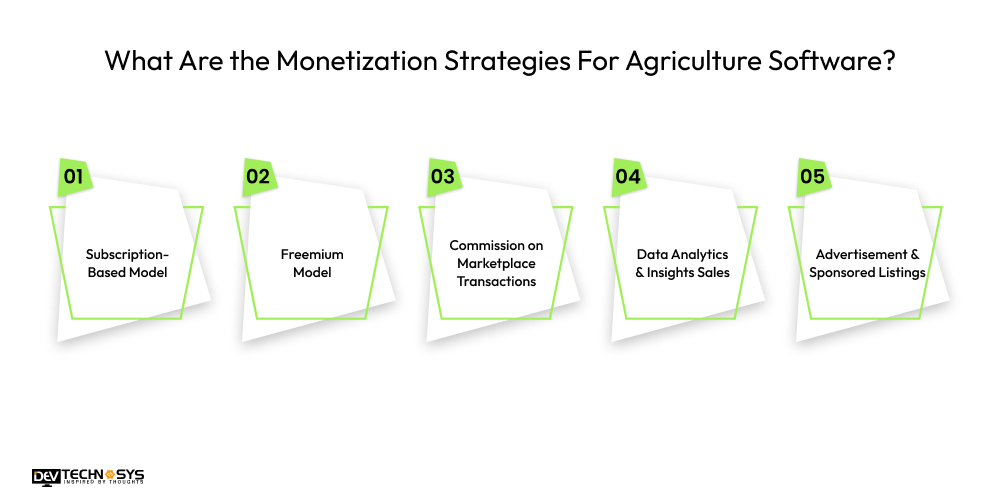
1. Subscription-Based Model:
Charge users a monthly or annual subscription for access to premium features such as advanced analytics, detailed reports, multi-farm management, crop-monitoring dashboards, irrigation tracking, and priority support. This approach ensures predictable revenue, recurring income, strong customer retention, and long-term loyalty across the farming community.
2. Freemium Model:
Offer basic features like weather updates, soil monitoring, and crop tracking for free, while charging for advanced tools such as yield forecasting, financial insights, IoT device integrations, personalized advisory services, and multi-user dashboards to encourage users to upgrade over time. This strategy enables users to upgrade gradually, increasing revenue while maintaining a large free user base.
3. Commission on Marketplace Transactions:
Earn revenue by charging a small commission on transactions between farmers, suppliers, and buyers. This model works well for agricultural platforms offering seed sales, equipment rentals, crop trading, fertilizer supply, farm services, logistics solutions, and other value-added marketplace operations, creating multiple revenue streams while enhancing platform engagement.
4. Data Analytics & Insights Sales:
Monetize aggregated and anonymized farm data by providing actionable insights to agribusinesses, insurers, government agencies, research organizations, and agricultural consultants. These analytics help improve crop planning, resource allocation, predictive modeling, risk management, operational efficiency, and informed decision-making across the entire agriculture value chain, offering high-value insights.
5. Advertisement & Sponsored Listings:
Generate additional income by displaying relevant advertisements, sponsored products, or promoted listings from agribusinesses, fertilizer companies, seed suppliers, equipment manufacturers, or service providers. Targeted, contextual ads within the agriculture software platform engage the right audience effectively, increase user interaction, and maximize overall revenue potential.
Conclusion
We hope the above-mentioned facts and information will help businesses devise a better cost strategy. Whether designed for farmers, agribusinesses, or cooperatives, well-planned agriculture software delivers long-term value through improved efficiency, better decision-making, and higher profitability, making it a smart and sustainable digital investment. If you are a business looking to build agricultural software, contact a top agricultural software development company like Dev Technosys. Stay tuned for more informative updates.
FAQs
Q1. How do Features Like Crop Monitoring, Weather Forecasting, and Yield Prediction Impact Development Cost?
Basic features like crop monitoring and weather forecasting have a low cost impact, while advanced capabilities such as yield prediction, AI analytics, and real-time data processing increase development complexity, time, and overall agriculture software development costs.
Q2. How Does Agriculture Software Development Cost Vary by Region or Country?
Development costs vary by region due to differences in labor rates, expertise, and infrastructure. Hiring teams in North America or Europe is costlier, while outsourcing to Asia or Eastern Europe significantly reduces overall agriculture software development expenses.
Q3. How Much Does It Cost To Develop Agriculture Software?
The cost to develop agriculture software generally ranges between $8,000 and $25,000 for basic to mid-level solutions. Pricing depends on selected features, platforms, customization level, and the development approach used.
Q4. What Factors Influence Agriculture Software Development Cost The Most?
Major cost factors include platform selection, feature complexity, UI/UX design, third-party integrations, development team location, and maintenance needs. Advanced technologies such as AI or IoT significantly increase overall expenses.
Q5. Can Agriculture Software Be Developed On A Limited Budget?
Yes, agriculture software can be developed affordably by starting with an MVP, focusing on essential features, leveraging third-party APIs, and choosing a cross-platform approach to minimize time and cost.