






Stablecoins are changing how we think about money in the digital age. Unlike other cryptocurrencies that often swing wildly in price, stablecoins are designed to keep their value steady, usually tied to real-world currencies like the US dollar.
This stability makes them ideal for everyday transactions, cross-border payments, and even saving. In fact, the total market capitalization of stablecoins reached over $150 billion in 2024, with USDT and USDC leading the pack.
As interest grows, more startups, fintech companies, and even governments are exploring how to build their own stablecoins. But developing one isn’t as simple as copying code. It involves careful planning, regulatory understanding, technical know-how, and trust-building.
Whether you’re a developer, entrepreneur, or just curious, understanding the step-by-step process behind stablecoin development can open your eyes to the future of digital finance. Let’s break it down, one step at a time.
So, let’s begin!
What is a StableCoin?
A stablecoin is a type of cryptocurrency designed to keep its value stable, usually tied to a real-world asset like the US dollar, euro, or gold. Unlike regular cryptocurrencies like Bitcoin, which can go up or down a lot in price, stablecoins aim to stay the same in value.
For example, one stablecoin might always be worth $1. This makes them useful for everyday transactions, saving money, or sending money across borders. Stablecoins combine the speed and low cost of crypto with the reliability of traditional money.
How Do Stablecoins Work?
Stablecoin platforms work by issuing cryptocurrencies that are designed to maintain a stable value, typically pegged to a fiat currency like the US dollar. These platforms use a variety of mechanisms to keep the coin’s value steady. Here’s a breakdown of how they work, categorized by type:
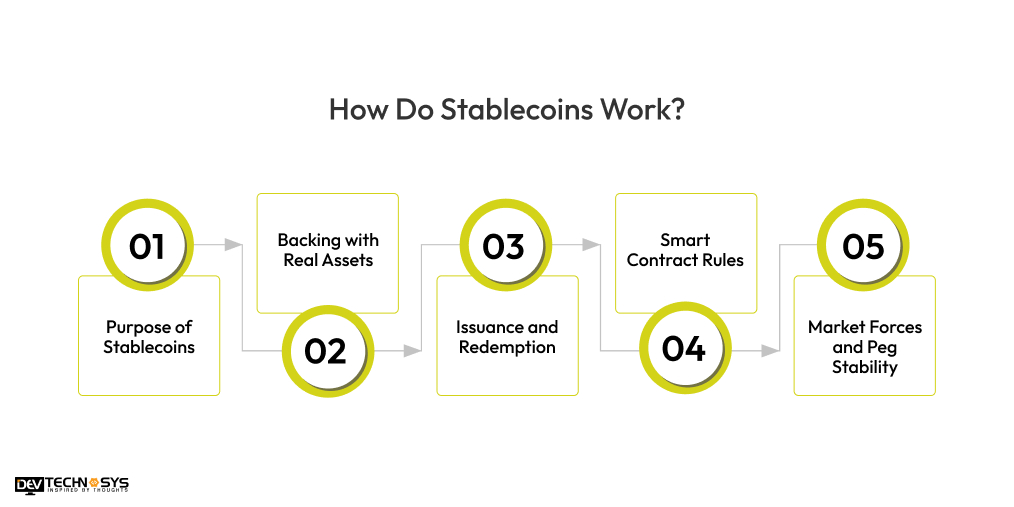
1. Purpose of Stablecoins
Stablecoins are a type of cryptocurrency development solution to keep their value stable—usually pegged to a real-world currency like the US Dollar (USD). While regular cryptocurrencies like Bitcoin can swing wildly in price, stablecoins aim to stay around $1 (or their pegged value).
2. Backing with Real Assets
Most stablecoins are backed by real assets. For example, for every 1 USDC (a popular stablecoin), there’s roughly $1 stored in a bank account or held in safe investments like short-term U.S. Treasury bills. This backing builds trust that each coin really is worth $1.
3. Issuance and Redemption
Stablecoins are created (minted) when someone deposits money with the issuer. If you give $1, you get one stablecoin. When you want your money back, you return the coin and get $1 in return—this is called redemption. This mint/burn system helps keep the price stable.
4. Smart Contract Rules
Some stablecoins run on blockchains using smart contracts. These are automatic programs that control how coins are created, transferred, or destroyed, keeping everything transparent and decentralized.
5. Market Forces and Peg Stability
To maintain their fixed value, stablecoins rely on trust, transparency, and sometimes algorithms. If the price starts to slip, users can trade or redeem them, pushing the value back to the peg.
What Are the Types of Stablecoins?
Stablecoins are a type of cryptocurrency designed to keep a stable value, usually tied to something like the US dollar or gold. Unlike regular cryptocurrencies like Bitcoin or Ethereum, which can go up and down in price a lot, stablecoins try to stay the same in value. There are four main types of stablecoins, based on how they keep their prices steady:
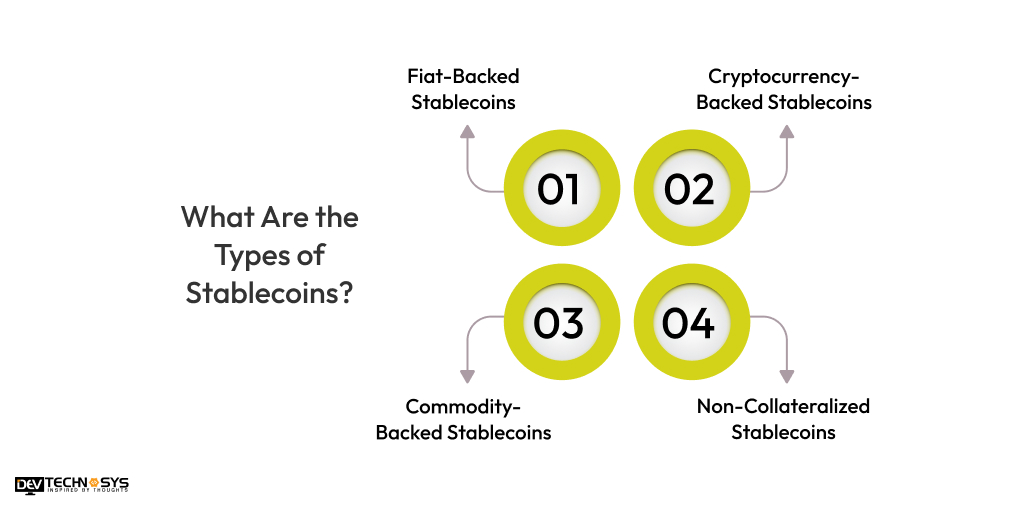
1. Fiat-Backed Stablecoins
These are the most common types. “Fiat” means traditional money like dollars, euros, or yen. Fiat-backed stablecoins are supported by real money kept in a bank. For every stablecoin in circulation, there is an equal amount of money saved somewhere. For example, if a company issues 1 million stablecoins, it should have 1 million US dollars saved in a bank. This helps the coin stay at $1.
- Examples: USDC, USDT (Tether), BUSD
2. Cryptocurrency-Backed Stablecoins
Instead of using dollars or euros, these stablecoins are backed by other cryptocurrencies like Ethereum. Since crypto prices go up and down a lot, these stablecoins are usually over-collateralized. That means you have to lock in more value than you get. For example, you might need to deposit $150 worth of Ethereum to create $100 worth of stablecoins. This extra value helps protect against price drops.
- Examples: DAI, sUSD
3. Commodity-Backed Stablecoins
These stablecoins are backed by physical things like gold, silver, or even oil. They work similarly to fiat-backed ones but are tied to the value of a real-world asset. So, if the price of gold goes up, the value of the stablecoin might also rise. These coins let people invest in commodities using digital tokens.
- Examples: PAXG (backed by gold), Tether Gold (XAUT)
4. Non-Collateralized Stablecoins
These are a bit different. They don’t use money or assets to back their value. Instead, they use smart computer programs (algorithms) to control the supply and demand. If the price goes too high, the system releases more coins. If it drops too low, it burns (removes) some coins. The idea is to keep the price balanced, kind of like how central banks manage the money supply.
- Examples: Ampleforth (AMPL), Terra (formerly UST)
Step-by-Step Process of Stablecoin Development
Building a stablecoin platform is a complex but achievable task that requires a combination of blockchain development, financial expertise, legal compliance, and security. Let’s check out the process to develop a stablecoin platform.
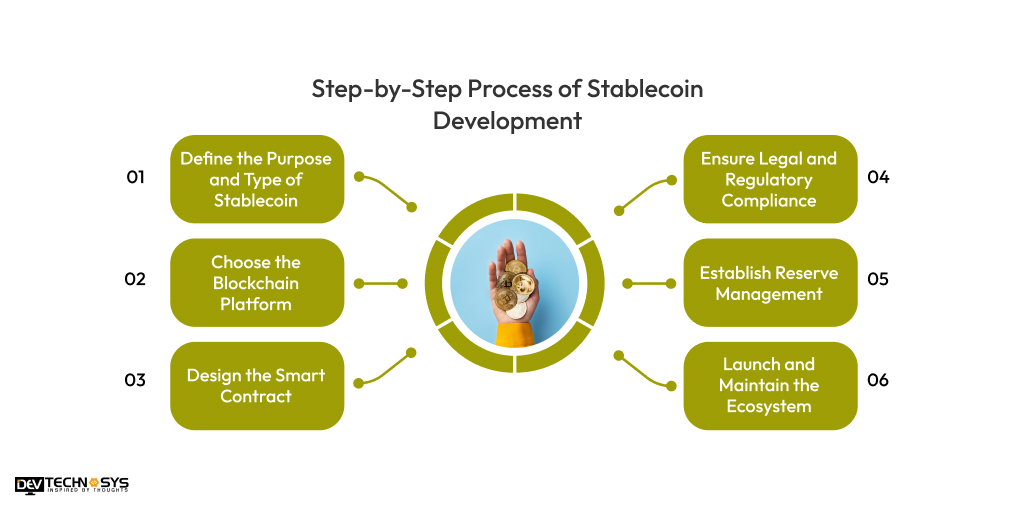
1. Define the Purpose and Type of Stablecoin
The first step in developing a stablecoin is to clearly define its purpose. Will it be used for fast payments, cross-border transactions, trading, or something else? Then, choose the type of stablecoin you want to build.
There are three main types: fiat-collateralized (backed by real money like USD), crypto-collateralized (backed by other cryptocurrencies), and algorithmic (stabilized by code without any reserve). Your choice will affect how the coin is designed, regulated, and maintained.
2. Choose the Blockchain Platform
Next, decide which blockchain your stablecoin will run on. Many the best stablecoin development services choose Ethereum because of its wide adoption and smart contract features, but other bitcoin development platforms like Smart Chain, Solana, or Polygon can also be used.
Your choice will depend on factors such as speed, transaction fees, scalability, and community support. This is a crucial step because it impacts the coin’s functionality and user experience.
3. Design the Smart Contract
After choosing the blockchain, you’ll need to design and write a smart contract—the code that controls how your stablecoin works. This includes setting up how coins are issued and redeemed, who can mint or burn tokens, and how the value stays stable.
For fiat-backed stablecoins, the blockchain development services provider will also need to connect the smart contract to a reserve system (like a bank account or custodian) that holds real assets. It’s important to thoroughly test this code for bugs and security vulnerabilities.

4. Ensure Legal and Regulatory Compliance
Stablecoins often deal with real money, which means legal compliance is critical. You must follow the rules of the countries where your coin will be used. This could include anti-money laundering (AML) checks, know-your-customer (KYC) procedures, and financial reporting.
Consulting legal experts is highly recommended to avoid future legal issues. Some jurisdictions may require licenses to operate or manage fiat reserves.
5. Establish Reserve Management
If your end to end stablecoin development is backed by fiat or crypto assets, you need a clear and transparent system to manage those reserves. This involves working with trusted custodians (like banks or crypto vaults) to hold the collateral and ensure that every coin issued is backed properly.
Regular audits should be performed by third-party firms to maintain trust. For algorithmic stablecoins, this step involves setting up the mechanism that will maintain price stability automatically.
6. Launch and Maintain the Ecosystem
Finally, once the smart contract is tested and the reserves are secured, you can launch your stablecoin. But the work doesn’t stop there. You’ll need to continuously maintain the system, update the code if necessary, and build partnerships to grow adoption.
Creating wallets, integrations with exchanges, and user-friendly interfaces will help your stablecoin gain trust and usage in the market.
Key Features of Stablecoin Development
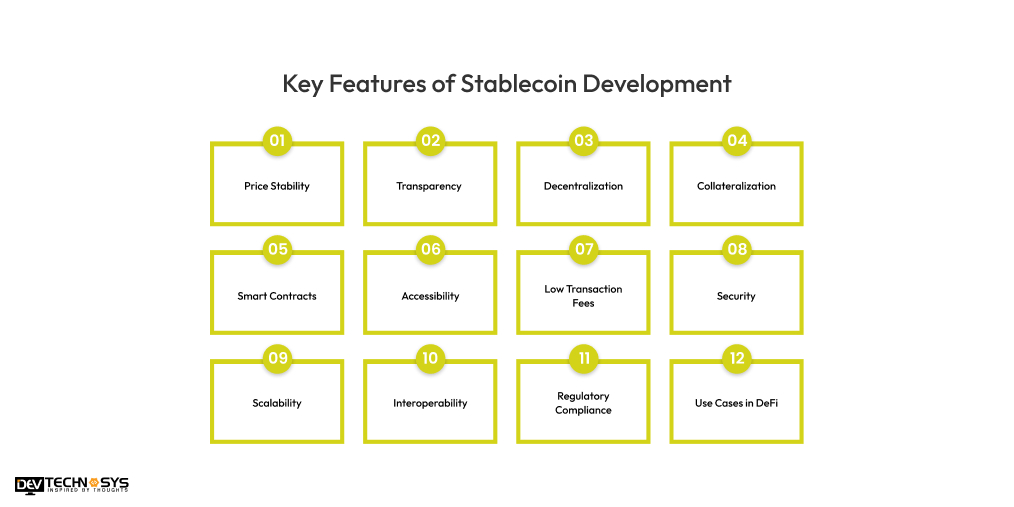
To create a stablecoin, it involves creating cryptocurrencies that are pegged to stable assets like fiat currencies or commodities to reduce volatility. You can integrate the below features in your stablecoin platform.
1. Price Stability
Stablecoins are primarily designed to maintain a stable value. They are typically pegged to stable assets like the US Dollar, Euro, or even commodities like gold, making them less volatile compared to cryptocurrencies like Bitcoin.
2. Transparency
Most stablecoins are built on blockchain technology, which is transparent. This means that transactions are visible and can be tracked in real-time, providing more trust to users.
3. Decentralization
Some stablecoins are decentralized, meaning no central authority or organization controls them. This is important for users who want to avoid centralized control and the risks that come with it.
4. Collateralization
Many stablecoins are backed by collateral, such as fiat currency (like USD) or crypto assets (like Ethereum). This ensures the stablecoin’s value is secured and tied to real-world assets.
5. Smart Contracts
Stablecoins often use smart contracts, which are self-executing contracts with the terms directly written into code. These ensure the stability mechanisms work automatically, helping maintain the coin’s peg.
6. Accessibility
Stablecoins are easy to access for anyone with an internet connection. They can be bought, sold, or transferred globally, making them more accessible compared to traditional financial systems.
7. Low Transaction Fees
Using stablecoins often comes with lower transaction fees compared to traditional banking or credit card systems. This is particularly useful for international transfers, where fees can add up quickly.
8. Security
You should hire dedicated developers who integrate stablecoins built on blockchains that use encryption and other security measures to ensure user transactions and balances are safe from hacking or fraud.
9. Scalability
Many stablecoins are built on scalable blockchain platforms, which means they can handle a large volume of transactions efficiently. This is essential for them to be used in a wide range of applications, from everyday purchases to large-scale business operations.
10. Interoperability
Stablecoins can be used across various blockchain platforms. This means that users can transfer them between different digital ecosystems without significant barriers, making them versatile for a range of uses.
11. Regulatory Compliance
As stablecoins are increasingly used in the financial system, many are being developed with regulatory compliance in mind. This ensures they meet legal requirements, providing more confidence for users and regulators alike.

12. Use Cases in DeFi
Stablecoins are crucial for decentralized finance (DeFi) applications. They allow users to participate in lending, borrowing, and trading without the risk of price fluctuations, making them a stable foundation for financial services in the crypto space.
What Are the Benefits of Stablecoin Development?
If you make a stablecoin, it brings several important benefits to the world of finance, particularly as it seeks to improve the usability and stability of digital currencies. Should you invest in blockchain app development? To know the answer, look at the benefits of stablecoin development services below:
1. Faster and Cheaper Transactions
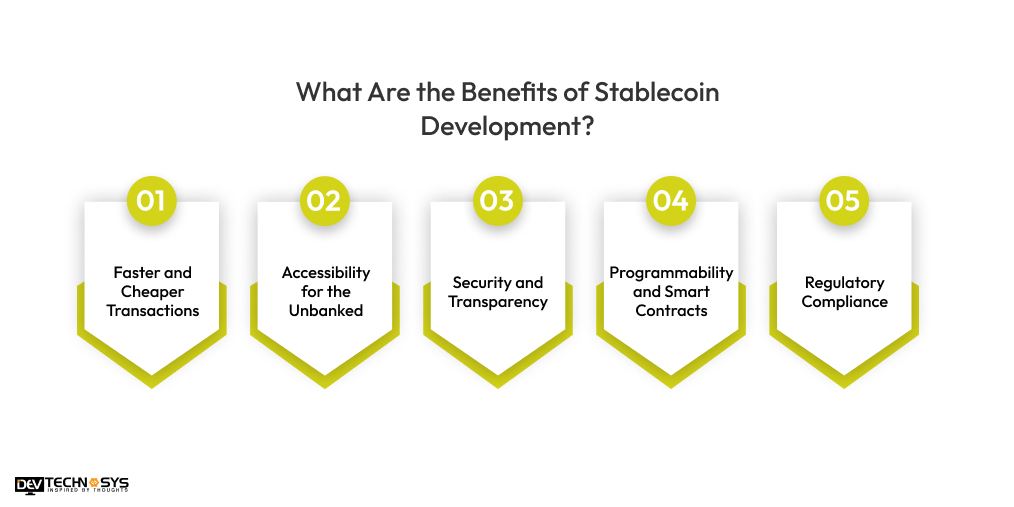
Stablecoins can be transferred quickly and cheaply compared to traditional banking systems. Cross-border payments, for example, can be done within minutes and at a fraction of the cost of international wire transfers.
This is particularly beneficial for businesses and individuals who need to send money across borders or make payments without waiting for lengthy processing times and high fees associated with traditional banking.
2. Accessibility for the Unbanked
Stablecoins offer a solution for people who don’t have access to traditional banking services. Many people around the world still don’t have a bank account, and stablecoins provide a way for them to participate in the digital economy.
As long as they have access to a smartphone and the internet, you can hire blockchain developer in Dubai, UAE to use Ethereum stablecoin development for transactions, saving, and even receiving remittances, improving financial inclusion globally.
3. Security and Transparency
Blockchain technology, which powers stablecoins, provides a secure and transparent way to conduct transactions. Every stablecoin transaction is recorded on a public ledger, allowing anyone to verify the transaction history.
This reduces the risk of fraud or manipulation and enhances trust in the system. Moreover, blockchain technology’s decentralized nature means that no single party can control or alter the transactions, offering greater security compared to traditional financial systems.
4. Programmability and Smart Contracts
Stablecoins can be integrated into smart contracts, which are self-executing contracts with the terms of the agreement directly written into code. This enables automation and efficiency in a wide range of stablecoin development solution clone applications, such as lending, insurance, and decentralized finance (DeFi).
Smart contracts reduce the need for intermediaries, cut down on processing time, and make transactions more efficient. By using stablecoins in these contracts, users can avoid the volatility seen with other cryptocurrencies.
5. Regulatory Compliance
As governments and financial authorities around the world seek to regulate digital currencies, stablecoins provide a way to ensure compliance with existing financial regulations.
Since stablecoins are typically backed by real-world assets and are pegged to a stable value, they are often subject to more oversight than traditional cryptocurrencies. This makes them more attractive to businesses and investors who want to engage with digital currencies but need assurance that the digital assets comply with the law.
How Much Does It Cost To Build a Stablecoin?
The stablecoin development cost can range between $10,000 – $25,000. However, the cost to build a stablecoin varies depending on the project requirements. The Blockchain app development cost depends on the features, blockchain platform, and level of security.
If you want to develop a basic version on Ethereum or other blockchains it may cost around $8,000 to $15,000. However, if you go for more advanced stablecoins, then the stablecoin development clone cost can be much more due to legal fees and ongoing regulatory requirements.
Thus, you will need to consult with the best stablecoin development company about the actual cost. It cost depends heavily on the project’s goals, location, and technical complexity. Now let’s look at the factors affecting the cost o develop a stablecoin.
1. Type of Stablecoin
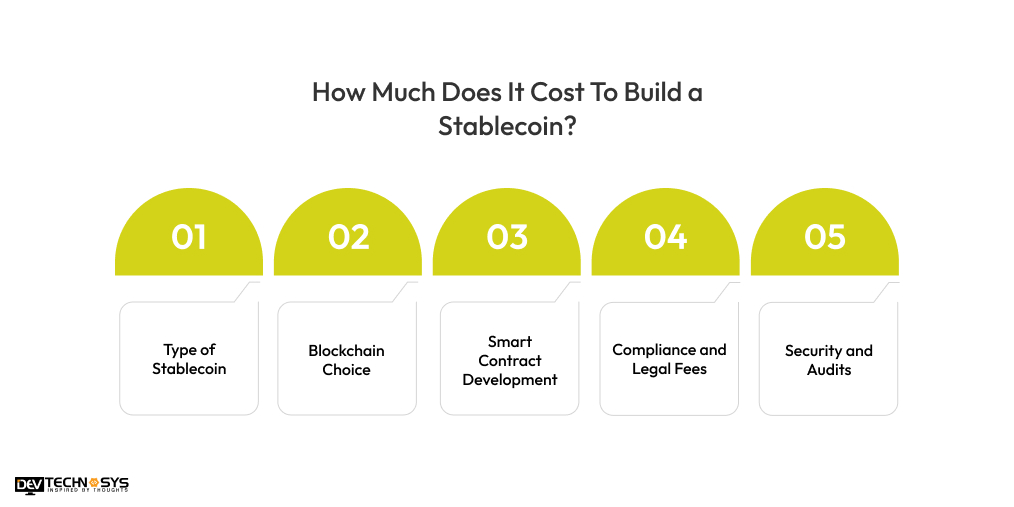
There are different kinds of stablecoins, some are backed by fiat money like USD, others by crypto, and some use algorithms. Fiat-backed stablecoins require bank partnerships and legal compliance, which can cost more. Algorithmic stablecoins, while cheaper to set up, need strong technical best blockhain development services to manage their complexity.
Type of Stablecoin |
Estimated Cost Range |
| Fiat-Collateralized (Basic) | $8,000 – $15,000 |
| Crypto-Collateralized (Simple) | $12,000 – $20,000 |
| Commodity-Backed (Basic) | $10,000 – $18,000 |
| Algorithmic (Basic) | $15,000 – $25,000 |
2. Blockchain Choice
The platform you build on like Ethereum, Solana, or a custom blockchain, affects both cost and performance. Public blockchains may come with high transaction fees, while building your own blockchain gives more control but adds significant stablecoin clone development and maintenance costs.
Feature |
Ethereum |
Solana |
Tron |
| Scalability | Ongoing upgrades (ETH 2.0/The Merge) aim to improve scalability, but current limitations exist. | Higher throughput and faster transaction speeds compared to Ethereum currently. | High transaction throughput, but centralization concerns exist. |
| Developer Availability | Large and mature developer community. | Growing stablecoin developer community, but smaller than Ethereum’s. | Significant developer community, including those familiar with Solidity. |
| Ecosystem & Tools | The richest and most mature ecosystem with extensive tools and infrastructure. | A growing ecosystem with increasing DeFi and NFT activity. | Large ecosystem, particularly for stablecoins and high-volume transactions. |
3. Smart Contract Development
Stablecoins run on smart contracts, self-executing code that controls how the coin works. Writing secure, bug-free contracts takes a skilled blockchain development company. More complexity means more development time and higher costs. Expect to spend thousands to tens of thousands of dollars here for an Ethereum stablecoin development solution.
Cost Factor |
Estimated Cost |
| Basic Business Logic | $5,000 – $7,000 |
| Advanced Smart Contract | $7,000 – $15,000 |
| Specialized Business Logic | Up to $15,000+ |
4. Compliance and Legal Fees
Handling real money means playing by financial rules. You’ll likely need to consult with legal experts, register with regulators, and set up Know Your Customer (KYC) and Anti-Money Laundering (AML) systems. These legal steps are essential but can cost tens or even hundreds of thousands of dollars. Also, the cost to hire token developers will affect the whole development cost.
Category |
Estimated Cost (USD) |
| Initial Legal Consultation | $2,000 – $5,000 |
| Compliance Framework Setup | $3,000 – $7,000 |
| Legal Documentation | $2,000 – $6,000 |
| Regulatory Filings & Advice | $1,000 – $4,000 |
| Contingency & Miscellaneous Legal | $0 – $3,000 |
5. Security and Audits
To protect users and prevent hacks, your platform needs strong security. This includes code audits, bug bounties, and continuous monitoring. Third-party audits by reputable firms can be expensive, but skipping them is risky.
Service |
Description |
Estimated Cost |
| Smart Contract Audit (Initial) | Comprehensive security review of the stablecoin’s smart contracts to identify vulnerabilities. | $5,000 – $15,000 |
| Penetration Testing | Simulated cyberattacks to identify weaknesses in the stablecoin’s infrastructure. | $3,000 – $8,000 |
| Security Consultation | Expert advice on security best practices and implementation. | $1,000 – $2,000 |
| Regular Security Audits | Periodic reviews to ensure ongoing security and identify new vulnerabilities. | $4,000 – $10,000 |

Final Thoughts
Stablecoin development offers a unique opportunity to create a reliable and secure digital currency that bridges the gap between traditional finance and the blockchain world. With careful planning, regulatory compliance, and the right technology, businesses can build stablecoins that meet the needs of users worldwide.
Thus, if you’re looking for an amazing stablecoin development solution, partnering with an experienced blockchain app development company can ensure the process is smooth, efficient, and scalable, setting you up for success in this rapidly evolving market.
Frequently Asked Questions
1. How Much Does It Cost To Build A Stablecoin?
The cost to create a stablecoin can range from $8,000 to over $25,000 depending on factors like blockchain choice, smart contract complexity, security audits, regulatory compliance, and the level of customization required.
2. How Long Does It Take To Develop A Stablecoin?
Developing a stablecoin typically takes between 2 to 5 months. Timelines vary based on the development approach, regulatory requirements, tokenomics, platform integrations, and smart contract testing.
3. How to Develop a Stablecoin?
- Choose the Type
- Select a Blockchain Platform
- Smart Contract Development
- Collateral Management
- Compliance Layer
- Testing & Security Audits
- Launch & Monitor
4. What Are the Benefits of Stablecoin?
- Price Stability: Pegged to stable assets (USD, EUR, Gold)
- Cross-Border Transactions: Fast and low-cost global transfers
- Programmability: Integrate into DeFi protocols and smart contracts
- Financial Inclusion: Accessible to unbanked populations
- Liquidity Provision: Enables stable trading pairs on crypto exchanges
5. How to Monetize Your Stablecoin?
- Transaction Fees
- Treasury Yield
- DeFi Integrations
- Partnerships with Exchanges and Wallets
- Cross-Border Remittance Services
- Tokenized Assets
- Ecosystem Development