






Key Takeaways:
-
- Different types of AI-based technologies are used to transform the pet care applications.
- Offering real-world examples that integrated artificial intelligence in their application to streamline their operations and tasks.
- There are many challenges that occur during the integration of AI in pet care apps and provide their solutions.
In 2025, the pet care industry is undergoing a remarkable transformation, driven by the rapid rise of artificial intelligence.
From personalized nutrition plans and real-time health monitoring to behavior tracking and virtual vet consultations. AI-powered pet care apps are revolutionizing how we care for our furry companions.
These smart solutions offer pet owners unprecedented insights into their pets’ well-being, enabling proactive care and deeper bonds.
Whether it’s detecting early signs of illness through subtle behavioral changes or managing daily routines with intelligent automation, AI is making pet parenting more intuitive, efficient, and responsive than ever before.
In this dynamic blog, we will explore the role of AI in pet care apps in 2025 and other related information.
Let’s take the first step!
Market Statistics of AI-Powered Pet Care Applications
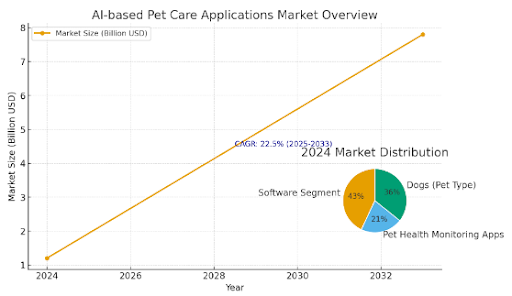
- As per the global report, the AI-based pet care applications were valued at around $1.2 billion in 2024; it is expected to grow to around $7.8 billion by the end of 2033.
- The AI-powered pet care applications are projected to grow with a Compound Annual Growth Rate of 22.5% from 2025 to 2033.
- According to the segment-wise, the software segment of pet care holds the highest revenue share, around 65% in 2024.
- In a recent study, pet health monitoring applications were recorded to generate the largest market share, accounting for 32% during the forecast period.
- As per the pet type, dogs represent the largest pet type that holds the highest market revenue of 54%.
Role of AI in Pet Care Applications
The AI technology provides a wide variety of features and services for pet care applications that provide flexibility and convenience for both such as users and businesses. So, let’s take the useful role of AI in pet care app development and figure out the best ones:
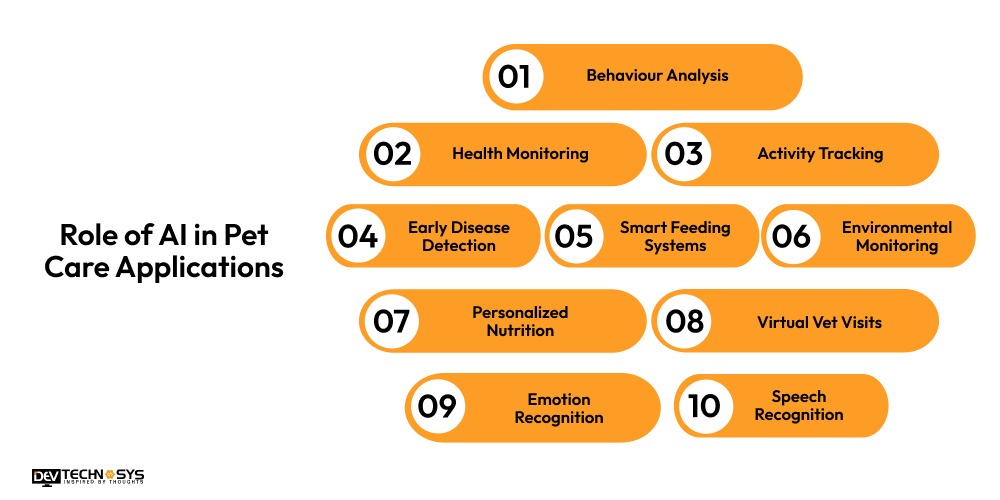
1. Behaviour Analysis
The role of AI in pet care apps helps users to analyze their pets’ behaviour by tracking movements, daily activity, vocalizations, facial expressions, stress, and anxiety. It helps users to early detect their pet’s behaviour and provide training and environment accordingly. These can lead to better emotional outcomes and offer them personalized recommendations.
2. Health Monitoring
AI-powered wearables help to track the health status of their pets by observing the vital signs such as oxygen level, heart rate, sleeping patterns, and temperature. These have the ability of wearable pet health tracking and alert pet owners before it becomes a big issue. So, these health monitoring systems enhance the pet’s well-being and ensure timely health checkups are conducted.
3. Activity Tracking
Moving to the third role of artificial intelligence in pet care apps, it can observe the pets’ daily activities, such as running, walking, sleeping, and resting. It provides pet owners with a report of daily exercise and helps the pet do the right amount of exercise to become fit and healthy. If pets are not more active, then an AI-based activity tracking system provides a routine exercise plan and eliminates lifestyle issues.
4. Early Disease Detection
Develop a pet care app with AI that can analyze health data and symptoms to predict potential diseases early. By comparing current data with historical trends, AI flags unusual signs and suggests possible conditions. The AI symptom checker for pets enables early veterinary visits and treatment, increasing recovery chances and reducing healthcare costs over time.
5. Smart Feeding Systems
AI-powered smart feeders automatically dispense the right amount of food based on a pet’s age, weight, and activity level. These systems prevent overfeeding, track eating habits, and alert owners to irregularities. By adapting to a pet’s changing needs, they ensure consistent nutrition, promote healthy weight, and support overall well-being with minimal human intervention.
6. Environmental Monitoring
AI-driven environmental monitoring systems track factors like temperature, humidity, and air quality in a pet’s surroundings. They alert owners when conditions become unsafe or uncomfortable, helping prevent heat stress or respiratory issues.
Some smart systems can automatically adjust lighting, ventilation, or climate to maintain optimal comfort. This ensures pets remain healthy and stress-free, even when owners are away or unaware of sudden changes.

7. Personalized Nutrition
Let’s talk about personalized nutrition, AI analyzes the pet’s age, breed, weight, activity time or level, and health conditions to offer them personalized diet plans. With the help of AI-based personalized nutrition, you can track the feed habits, feed type, ingredients needed, and adjust the portion.
This helps pets to maintain their health condition, balance nutrition, manage allergies, and ensure that they suit every pet’s dietary requirements.
8. Virtual Vet Visits
AI-powered pet care smartphone app monitors the pet’s symptoms and directly sends them to the vet to assess their health condition without requiring a physical visit. These virtual vet consultation pet apps can offer pre-consultation and suggest potential health issues, categorizing them as either emergency or non-emergency cases.
This virtual vet visit is more accessible in remote areas where vet clinics are not located, which can reduce the need for vet visits and save time on travel.
9. Emotion Recognition
With the help of AI-based pet care applications, users can recognize a pet’s emotion by observing their facial expression, behavior patterns, vocalization, and daily activity time. It helps dog owners know how they can respond to their pet as per their current emotional status, such as fear, anxiety, stress, and many more.
As we discussed earlier with a mobile app development company, the system can alert pet owners when a pet’s mental health condition is deteriorating, and owners can treat it accordingly.
10. Speech Recognition
Moving to the last role of AI in pet care apps, it help pet owners to understand their pet’s language by translating it into human language. These translations make it easier for pet owners to know what their pet is feeling, such as hungry, sick, and distressed. This can break the communication gap between pets and their owners, and it can enhance the experience of interaction with the pet.
AI-Based Pet Care Apps: Real-World Examples
Before integrating AI in pet care applications, you must know about the existing AI-based pet care apps, how they are performing, and how their operations are working smoothly. So, let’s take a look at the top pet care apps in Middle East:
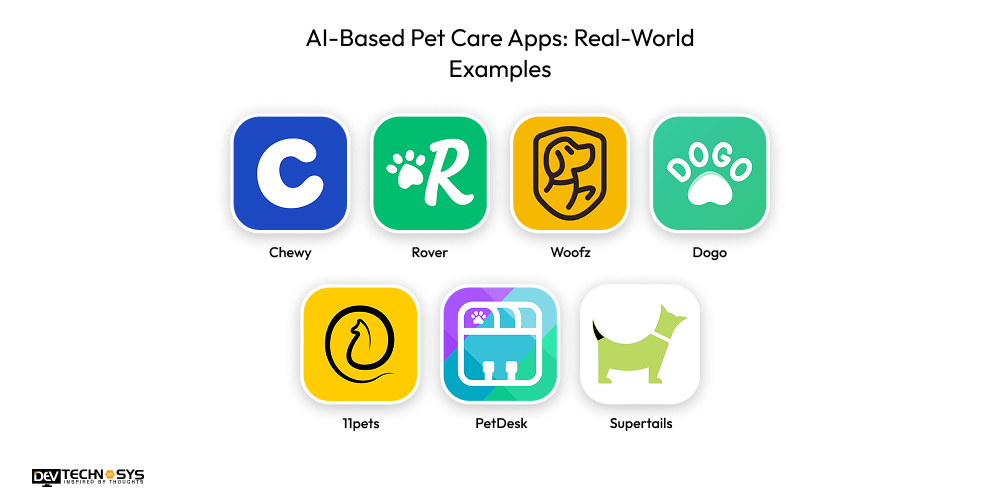
1. Chewy
Chewy is a popular pet supply app offering a wide range of food, toys, and healthcare products. It features autoship options, 24/7 customer support, and personalized recommendations. Convenient and reliable, Chewy simplifies pet shopping with fast delivery and helpful tools for managing recurring pet care needs.
2. Rover
Rover connects pet owners with trusted sitters, walkers, and groomers. With detailed profiles, real-time GPS tracking, and secure payments, it ensures safe and personalized care. Ideal for busy pet parents, Rover provides peace of mind when you’re away from your furry friend for short or extended periods.
3. Woofz
Woofz is a smart pet care app that focuses on dog training and behavior improvement through interactive lessons and progress tracking. The app offers daily training routines, helpful tips, and motivational challenges. Tailored for all breeds and ages, it makes dog training accessible and enjoyable for both new and experienced dog owners.
4. Dogo
Dogo is a dog training app with step-by-step instructions, a built-in clicker, and progress tracking. It provides personalized training plans based on breed, age, and behavior goals. Whether teaching basic commands or advanced tricks, Dogo supports positive reinforcement techniques and bonding between dog and owner.
5. 11pets
11pets is one of the best AI pet health monitoring apps that tracks medical records, grooming schedules, medications, and vaccinations. With smart reminders and data logs, it helps ensure your pet’s health needs are never missed. Suitable for pet parents and professionals, it’s a reliable tool for organized and consistent care.
6. PetDesk
PetDesk is an AI pet app that manages your pet’s health with features like appointment scheduling, medication reminders, and digital record-keeping. It syncs with many veterinary clinics, making communication easier. Designed for convenience, PetDesk helps you stay on top of your pet’s healthcare needs without juggling paperwork or missed appointments.
7. Supertails
Supertails is an all-in-one app offering pet products, training, and online vet consultations. Focused on convenience and expert support, it’s ideal for modern pet parents looking to manage health, behavior, and supplies in one place. It simplifies everyday pet care through a trusted, tech-driven approach.

5 Best Use Cases
There are various types of use cases that are helpful for users and also for businesses. So, let’s take a look at the best use cases:
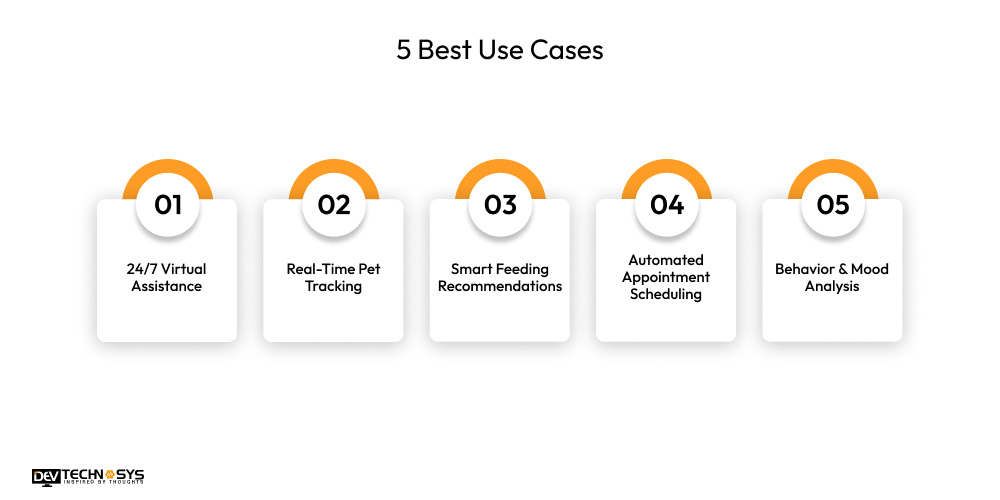
1. 24/7 Virtual Assistance
The AI-powered chatbots provide instant responses to users’ queries about their pet’s health. It uses Natural Language Processing(NLP) to enable these bots to provide preliminary diagnoses, suggest treatments, or recommend when to visit a vet. The AI veterinary assistant saves time and money for pet owners while offering peace of mind.
2. Real-Time Pet Tracking
With the help of AI-enhanced GPS and motion sensors, pet care apps can easily detect unusual activity or suspicious findings, and then they send alert messages to pet owners. It provides real-time insights, behaviour predictions, location history, and more. It can enhance the user’s experience and increase user engagement.
3. Smart Feeding Recommendations
AI generates custom diet plans based on pet breed, age, weight, allergies, and activity level. It adapts recommendations as the pet grows or gains/loses weight. This use case mainly ensures that pets get the right meal at the right time, and it can easily balance the nutritional portion.
4. Automated Appointment Scheduling
The artificial intelligence records all the appointment data, such as vaccination, normal checkups, grooming, vet visits, and more. It can reschedule automatically based on the missed appointments, availability, personalized pet care recommendations, and more. So, these can help pet owners to streamline their operations, and no need to schedule an appointment manually.
5. Behavior & Mood Analysis
AI analyzes pet behaviors through video, audio, and sensor data to identify signs of stress, anxiety, or aggression. According to the artificial intelligence development company, the app can suggest environmental changes, training tips, or even calming routines, enhancing the emotional well-being of pets through consistent monitoring.
Which AI-Powered Technologies are Used to Build Pet Care Applications?
In pet care applications, robust AI-powered technologies are used to build applications with futuristic functionalities and services. So, let’s explore the modern technologies that help businesses to streamline operations and tasks:
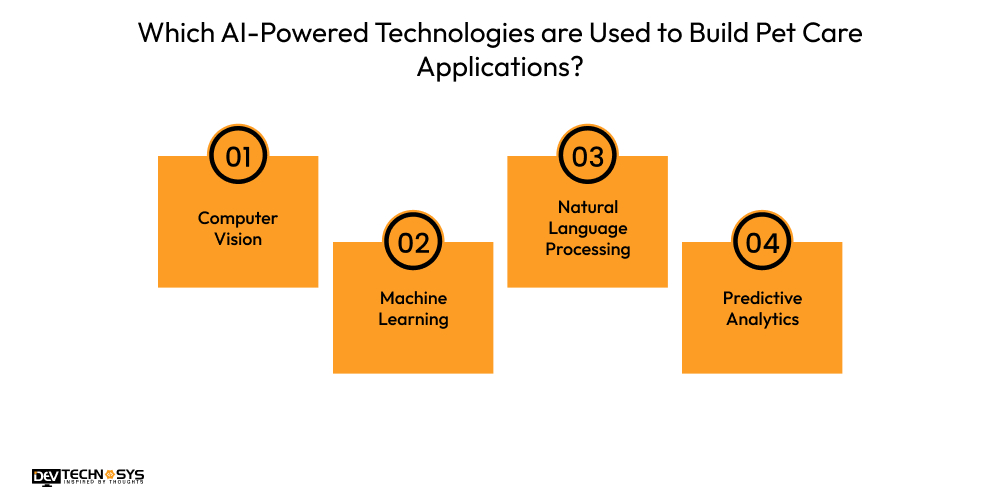
1. Computer Vision
The computer vision technology offers video and images to detect the pet’s breed, age, monitor health conditions, skin conditions, and observe posture. It includes behaviour tracking, real-time activity monitoring, and health diagnosis. It helps users to get more accurate information and easily interact without human intervention.
2. Machine Learning
The machine learning algorithms have the ability to observe the huge pet data, such as habits, behaviors, sleeping patterns, daily activities, and personalize care. With the help of this useful data, businesses can provide customized or personal recommendations to enhance the user experience.
3. Natural Language Processing
Natural Language Processing(NLP) allows chatbots to respond in local languages to pet owners’ queries and easily understand their concerns. Processing the text or audio inputs, the AI pet application provides instant response, symptom checkers, and many more; it can increase the user’s engagement.
4. Predictive Analytics
The predictive analytics predicts the future health conditions and other habit changes of a pet by observing the historical data. With the help of forecast trends and risk factors, AI provides care recommendations that can easily lead to healthy lifestyles and eliminate emergencies.
Why Businesses Integrate AI in Pet Care Apps?
Integrating AI in pet care app development services is one of the lucrative opportunities for businesses to start streamlining operations and ensure user engagement. Let’s observe the various benefits of AI in pet care applications:
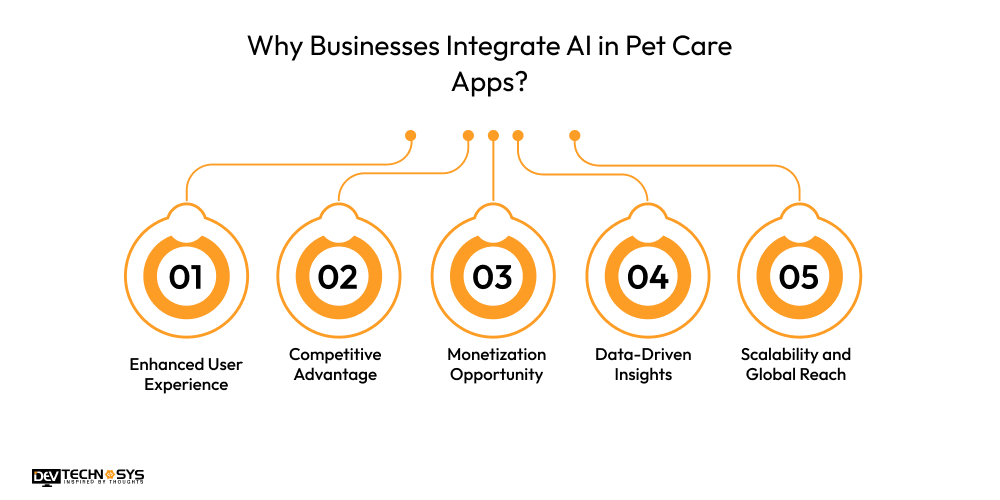
1. Enhanced User Experience
Users can access advanced functionality and services in AI-powered pet care apps, including AI chatbots, personalized health tips, smart feeding suggestions, and more. This mainly leads to higher user engagement and satisfaction.
2. Competitive Advantage
The integration of AI in pet care applications can easily gain a competitive advantage compared to traditional applications. It includes various premium features such as real-time pet tracking, smart feeding, and automated appointment scheduling.
3. Monetization Opportunity
Build a pet care app like Tractive GPS with AI offers various monetization opportunities to help businesses increase their sales and valuation. It involves subscription plans, a freemium model, in-app purchases, advertisements, and transaction fees.
4. Data-Driven Insights
Integrating artificial intelligence in pet care applications. It has the ability to analyze or observe the pet’s valuable data, such as mood behaviour, preferences, demographics, sleeping patterns, and monitor daily activity. Offering personalized recommendations to enhance the overall experience.
5. Scalability and Global Reach
With the help of unique features, it can easily reach global users, and pet owners can track their pet’s location from anywhere or anytime. The AI-based applications have a higher number of operations running, they can easily handle all operations without affecting on overall performance.
Significant Challenges When Integrating AI in Pet Care Apps
It’s common that challenges occur when integrating artificial intelligence in pet care applications. Let’s examine the challenges and their solutions:
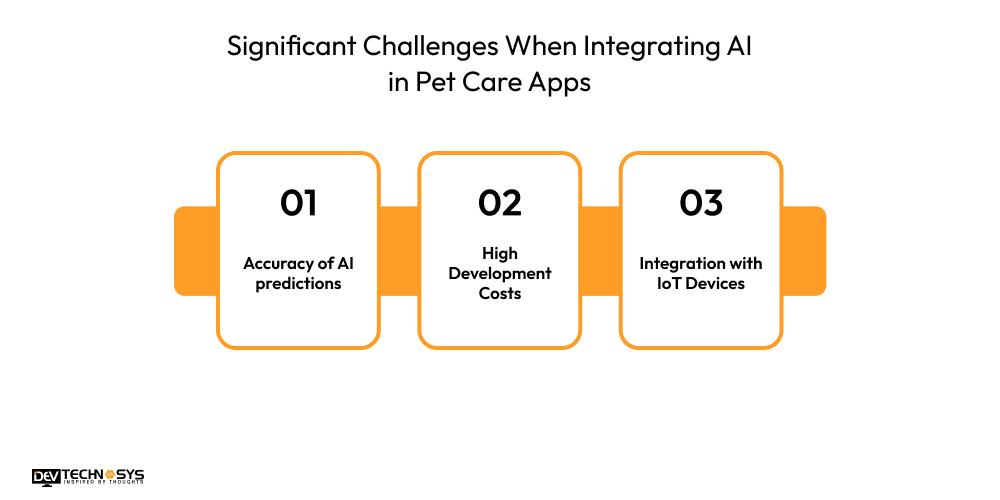
1. Accuracy of AI predictions
The incorrect report of the health diagnosis of a pet can lead to serious concern, and it can become a big issue. The accuracy of AI predictions must be higher because pets cannot verbally explain their health condition.
2. High Development Costs
Building and training accurate, real-time AI models, especially those using computer vision, NLP, or predictive analytics, requires significant time, resources, and skilled talent. This can be expensive for startups or small businesses.
3. Integration with IoT Devices
The future of pet care apps often relies on data from smart collars, feeders, cameras, etc. Ensuring seamless integration, compatibility, and real-time processing across multiple devices and manufacturers can be technically complex.

Conclusion
In this informative blog, we talked in detail about the role of AI in pet care apps and what technologies are must-use to create high-quality applications. We hope you have cleared all your doubts regarding the integration of AI in pet care apps and how it can be beneficial in this modern world.
Do you want to integrate artificial intelligence in pet care apps? Share your project requirements with a pet care app development company to receive AI-powered applications at a cost-effective budget.
Frequently Asked Questions
1. What is the Role of AI in Pet Care Apps?
The role of AI in pet care apps enables personalized health monitoring, behavior analysis, symptom detection, and smart recommendations, thereby enhancing pet well-being and streamlining care routines.
2. Do AI Pet Care Apps Support Different Species And Breeds?
Yes, AI pet care apps in 2025 support various species and breeds by using specialized datasets to deliver tailored health insights, behavior tracking, and care recommendations specific to each pet type.
3. Can AI Detect Early Signs Of Chronic Diseases Like Diabetes Or Arthritis?
Yes, artificial intelligence has the ability to detect early signs of chronic diseases like diabetes or arthritis. It provides alert messages based on the higher glucose data, appetite shifts, and more from sensors.
4. What AI-Based Technologies are Used to Develop AI Pet Care Apps?
There are many robust AI-based technologies that are used to develop AI-powered pet care applications:
- Machine Learning
- Computer Vision
- Natural Processing Language
- IoT devices
- Predictive Analysis