





Key Takeaways:
-
- App development time and cost in 2026 typically range from 1 month to 12+ months, with $8,000 to $30, depending on complexity, features, and scalability requirements.
- Basic apps can be built quickly, while medium and complex apps require more time due to integrations, backend systems, and advanced functionalities.
- Choosing cross-platform development can significantly reduce time compared to building separate native apps.
- Factors like UI/UX design, APIs, team expertise, and testing play a crucial role in determining the final timeline.
- Following an MVP-first approach helps launch faster and allows businesses to improve the app based on real user feedback.
Building an app in 2026 isn’t just about writing code; it’s about crafting a seamless digital experience that users love. But one question every entrepreneur asks is: How long does it take to build an app in 2026? The answer isn’t one-size-fits-all. From simple MVPs that launch in a few months to complex, feature-rich platforms that take a year or more, timelines vary based on design, functionality, integrations, and scalability goals.
With modern technologies like AI, low-code tools, and cloud infrastructure accelerating development, the process is faster than ever, but still requires careful planning. Whether you’re building a startup app or an enterprise solution, understanding realistic timelines can save you time, money, and frustration. Let’s break down how long does it take to build an app and the factors that affect the MVP app development timelines in 2026.
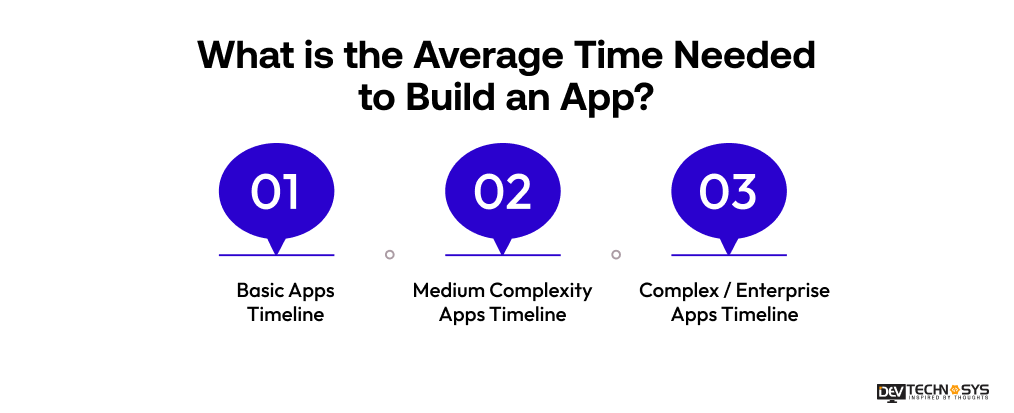
What is the Average Time Needed to Build an App?
How long does it take to build an app in 2026? Well, the average time to build an app in 2026 largely depends on its complexity, features, platform, and development approach. On average, app development can take anywhere from a few weeks to several months. Here’s a realistic breakdown:
1. Basic Apps Timeline
Simple apps with limited features, such as calculators, to-do lists, or basic informational apps, usually take 1 to 3 months. Simple mobile app development services involve minimal UI/UX design, no complex backend, and limited integrations, making them quicker to design, develop, and deploy.
2. Medium Complexity Apps Timeline
Time to develop a mobile app with user authentication, application programming interface (API), dashboards, or payment gateways typically takes 3 to 6 months. Examples include fitness apps, food delivery apps, or eCommerce platforms. These require structured backend development, database management systems (DBMS), and seamless third-party integrations.
3. Complex / Enterprise Apps Timeline
For those curious about how long does it take to build an app in 2026, remember that highly advanced apps like fintech platforms, social media apps, or enterprise-grade solutions can take 6 to 12+ months. These apps involve real-time features, AI integration, high-level security, scalability, and rigorous testing before launch. We suggest to hire app developers for fast development, especially for complex apps.
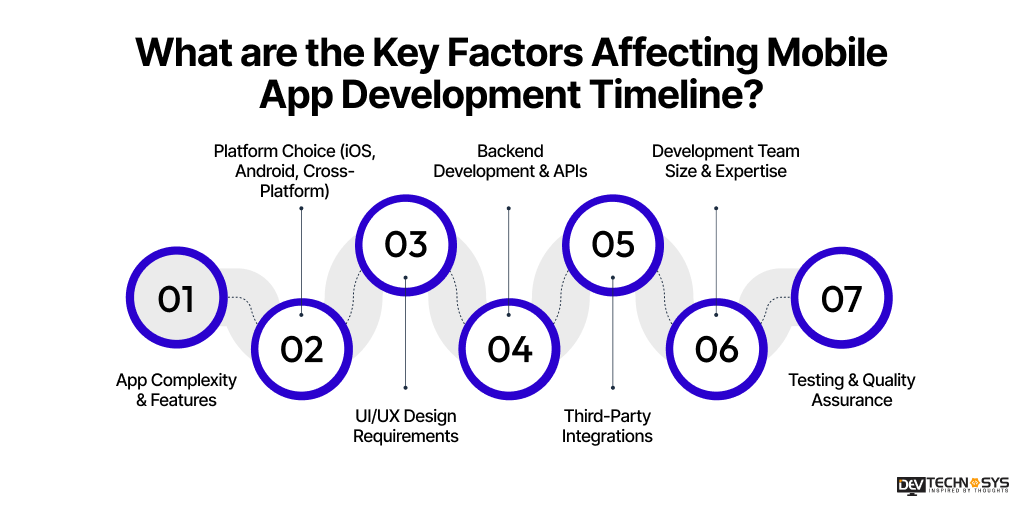
What are the Key Factors Affecting Mobile App Development Timeline?
The mobile app development timeline is influenced by multiple technical and strategic factors that determine how quickly an app moves from idea to launch. Here are some of the key factors that can significantly influence the mobile app development duration:
1. App Complexity & Features
Time required to build a custom mobile app can highly depend on app complexity. Simple apps with basic features take less time, while advanced apps with AI, real-time updates, or multiple user roles require extensive coding, integrations, and testing, significantly increasing the overall timeline and development effort.
2. Platform Choice (iOS, Android, Cross-Platform)
Choosing between iOS, Android, or cross-platform development directly impacts timelines. Native apps require separate development cycles for each platform, doubling effort, while cross-platform frameworks like Flutter or React Native reduce on demand app development time by enabling a shared codebase across multiple platforms.
3. UI/UX Design Requirements
Highly interactive and visually rich designs increase the app development timeline for startups. The custom app design and development phases require more time for research, wireframing, prototyping, and user testing. Custom animations, intuitive navigation, and responsive layouts increase design complexity, requiring multiple iterations to ensure a seamless and engaging user experience across devices.
4. Backend Development & APIs
Apps requiring strong backend infrastructure take longer to build. Setting up servers, databases, authentication systems, and APIs involves complex architecture planning. Real-time data synchronization, cloud integration, and scalability requirements further extend the timeline, especially for apps handling large user bases or sensitive data.
5. Third-Party Integrations
Integrating external services like payment gateways, maps, analytics, or social logins can add to the custom app development timeline estimate. Each integration requires configuration, testing, and security validation. Delays may occur due to API limitations, documentation issues, or compatibility challenges with existing app architecture.
6. Development Team Size & Expertise
An experienced and well-structured team that provides mobile app development services in UAE can significantly speed up development, while a smaller or less experienced team may take longer. Efficient collaboration between developers, designers, and project managers ensures faster delivery, whereas miscommunication or lack of expertise can lead to delays and rework.
7. Testing & Quality Assurance
Thorough testing is essential but time-consuming. It involves functional testing, performance testing, security checks, and bug fixing. Apps must be tested across multiple devices and operating systems, and repeated iterations are often required to ensure stability, usability, and a flawless user experience before launch.
Step-by-Step App Development Timeline Breakdown
Building a mobile app is a structured process that unfolds in clearly defined stages, each contributing to the final product’s quality and performance. Let’s see how long does it take to build an app in 2026 step by step. Understanding these stages of mobile app development timeline helps businesses plan efficiently and allocate resources wisely.
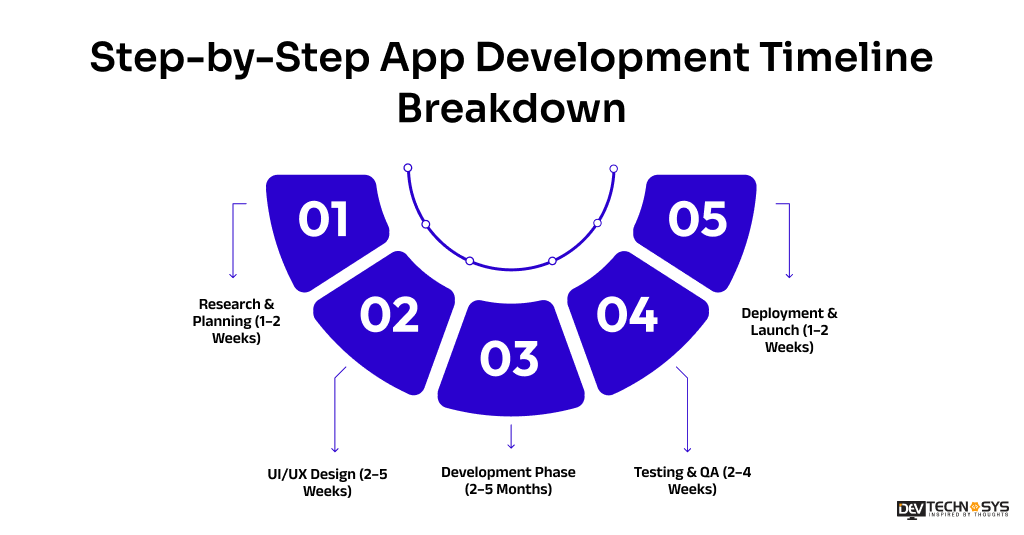
1. Research & Planning (1–2 Weeks)
This initial phase involves market research, competitor analysis, defining app goals, and finalizing core features, which can influence how long it take to launch an app. Clear documentation, wireframes, and project scope are created to avoid confusion later, ensuring a solid foundation for smooth development and minimizing costly revisions.
2. UI/UX Design (2–5 Weeks)
The UI/UX design timeline for apps is around 2 to 5 weeks. Designers focus on creating intuitive interfaces, user journeys, and interactive prototypes. This stage includes wireframing, visual design, and usability testing to ensure the app is engaging, responsive, and aligned with user expectations across different devices and screen sizes.
3. Development Phase (2–5 Months)
This is the most time-intensive stage, where frontend and backend development take place. Developers build features, integrate APIs, and ensure functionality. The app development timeline 2026 varies depending on complexity, platform choice, and scalability requirements, with continuous iterations and improvements throughout the mobile app development process.
4. Testing & QA (2–4 Weeks)
Quality assurance ensures the app performs flawlessly. This phase includes functional testing, performance checks, bug fixing, and security validation. Testing is conducted across multiple devices and platforms to identify issues early and ensure a stable, secure, and user-friendly application.
5. Deployment & Launch (1–2 Weeks)
In this final stage, the app is prepared for release on platforms like app stores. It includes final checks, compliance verification, and submission approvals. Post-launch monitoring is also essential for tracking performance, fixing initial bugs, and ensuring a smooth user experience.
Note: For more detailed insights into the mobile app development services and timeline, feel free to check our portfolio.
How Long Does It Take to Build Different Types of Apps?
The time required to build an app varies depending on its type, functionality, and level of complexity. Different app categories demand unique features, integrations, and performance requirements, which directly impact the overall development timeline.
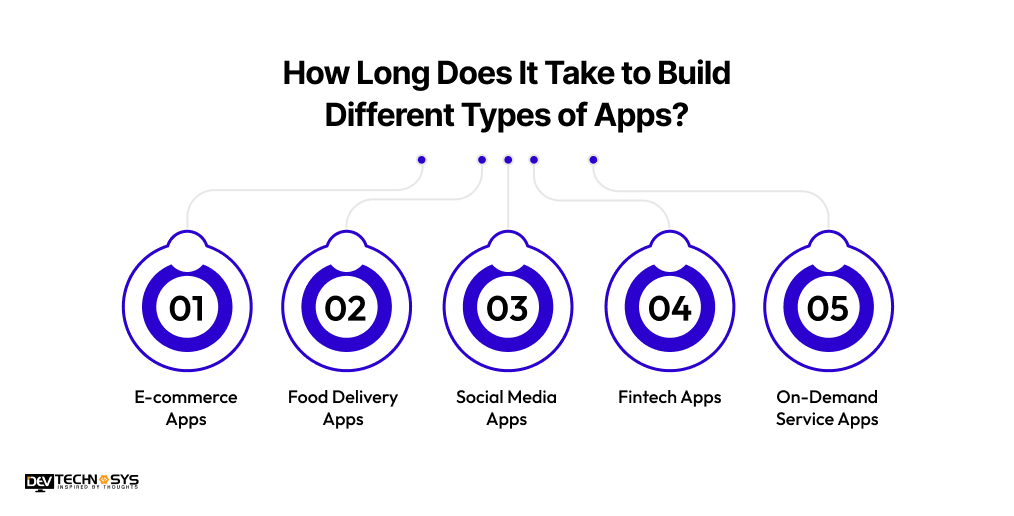
1. E-commerce Apps
How long does it take to build an app in 2026 for the e-commerce industry? The custom ecommerce app development typically take 3 to 6 months, depending on features and scale. These apps require seamless navigation, secure transactions, and a smooth user experience to ensure higher conversions and customer retention. Scalability and performance optimization are also crucial as product listings and user traffic grow over time.
Key pointers:
- Product catalog and inventory management system
- Secure payment gateway integration
- User accounts and order tracking
- Advanced search and filtering options
- Optional features like AI recommendations and multi-vendor support
2. Food Delivery Apps
Food delivery apps usually take 4 to 7 months due to real-time functionalities and multiple user panels. Efficient coordination between customers, restaurants, and delivery partners is essential for success. Integration of live tracking and instant updates significantly increases the duration of professional app development services.
Key pointers:
- Real-time order tracking with GPS integration
- Multiple panels (user, restaurant, delivery agent)
- Push notifications for order updates
- Secure and fast payment processing
- Route optimization for delivery efficiency
3. Social Media Apps
Social media apps take around 6 to 12+ months because of complex features and scalability requirements. They need robust backend systems to handle large volumes of user data and interactions. Continuous feature updates and user engagement tools further extend development timelines.
Key pointers:
- Real-time messaging and notifications
- Media sharing (images, videos, live streaming)
- User profiles and engagement features (likes, comments)
- Strong backend for scalability and performance
- Advanced privacy and data security controls
4. Fintech Apps
Fintech app development phases and timeline generally require 6 to 12 months or more due to strict security and compliance standards. These apps must ensure safe financial transactions and protect sensitive user data. Frequent audits and adherence to evolving financial regulations can also impact development timelines.
Key pointers:
- End-to-end data encryption and security protocols
- Regulatory compliance (KYC, GDPR, etc.)
- Real-time transaction processing
- Fraud detection and risk management systems
- Integration with banking APIs and payment networks
5. On-Demand Service Apps
On-demand apps typically take 4 to 8 months to build. These apps focus on connecting users with service providers in real-time while ensuring smooth booking and service delivery. Maintaining real-time synchronization between multiple users adds to the technical complexity and increases the time required to develop mobile apps.
Key pointers:
- Real-time booking and tracking features
- Service provider and user dashboards
- In-app chat and communication tools
- Flexible payment options and billing system
- Rating and review system for trust building

5 Ways to Speed Up App Development in 2026
Speeding up app development in 2026 is essential for staying competitive in a fast-moving digital landscape. By adopting the right strategies, tools, and development approach, businesses can significantly reduce time-to-market without compromising on quality.
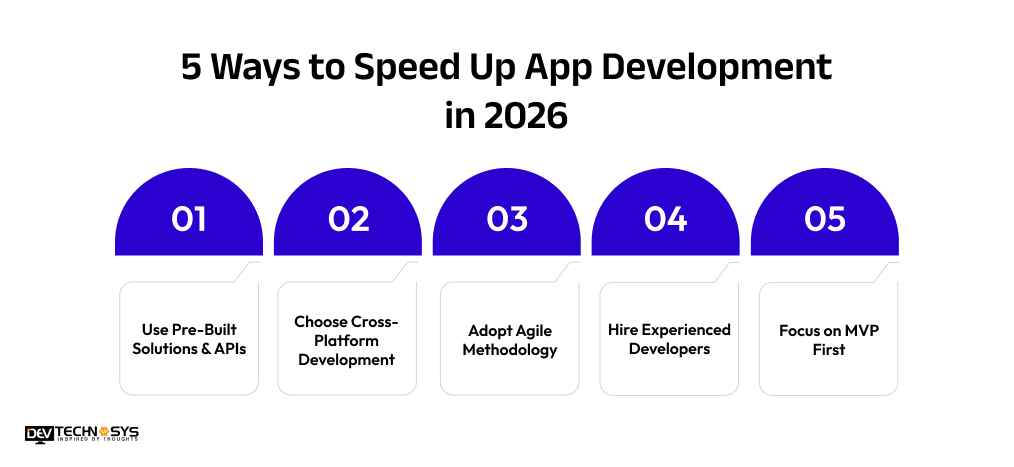
1. Use Pre-Built Solutions & APIs
Leveraging ready-made components, SDKs, and APIs helps reduce development time significantly. Instead of building features from scratch, developers can integrate existing mobile app development solution, especially for payments, authentication, and analytics, accelerating the overall development process.
2. Choose Cross-Platform Development
Using frameworks like Flutter or React Native allows developers to write a single codebase for both iOS and Android. This approach minimizes cross-platform app development time, effort, and ensures faster deployment across multiple platforms simultaneously.
3. Adopt Agile Methodology
Agile development focuses on iterative progress, continuous feedback, and flexibility. By breaking the project into smaller sprints, teams can quickly identify issues, implement changes, and deliver functional features faster without waiting for the entire app to be completed.
4. Hire Experienced Developers
A skilled and experienced development team can streamline workflows, avoid common mistakes, and implement best practices efficiently. Their expertise ensures faster problem-solving, better code quality, and quicker project completion.
5. Focus on MVP First
Building a Minimum Viable Product (MVP) allows businesses to launch with essential features first. This approach reduces initial development time, enables early user feedback, and helps prioritize future updates based on real user needs.
What are the Common Mistakes That Delay App Development?
App development delays often stem from avoidable mistakes that disrupt workflows and increase complexity. Identifying these common pitfalls early helps businesses streamline processes, improve efficiency, and ensure a faster, smoother path from development to launch.
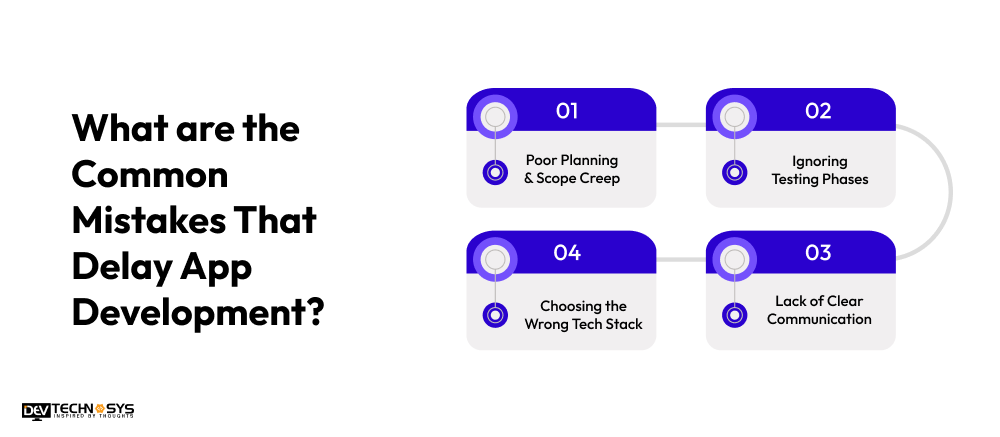
1. Poor Planning & Scope Creep
Lack of proper planning often leads to unclear goals, missed requirements, and frequent changes during development. Scope creep, adding new features without proper evaluation, disrupts workflows, increases mobile app development cost, and forces repeated revisions, ultimately delaying the project timeline and reducing overall efficiency.
2. Ignoring Testing Phases
Overlooking testing or delaying it until the end can cause critical bugs to go unnoticed. Fixing these issues later becomes time-consuming and expensive, leading to project delays. Continuous testing ensures better performance, stability, and a smoother user experience at launch.
3. Choosing the Wrong Tech Stack
Selecting an unsuitable technology stack can create long-term challenges, including poor performance, limited scalability, and integration issues. This often leads to rework or migration during development, slowing progress and increasing both time and development costs significantly.
4. Lack of Clear Communication
Ineffective communication between team members and stakeholders can result in misunderstandings, unclear requirements, and frequent changes. This leads to delays, duplicated efforts, and inefficient workflows, ultimately impacting project timelines and reducing the overall productivity of the development team.

Conclusion
Building an app in 2026 is no longer just about coding; it’s about strategic planning, choosing the right technologies, and executing efficiently. The development timeline can range from a few weeks to over a year, depending on complexity, features, and integrations.
With the help of a top mobile app development company like Dev Technosys, you can significantly reduce time-to-market while maintaining quality. Our dedicated mobile app developers focus on MVP development, leveraging modern frameworks, and avoiding common pitfalls, to speed up the development process.
FAQs
Q1. How Long Does it Take to Build an App in 2026?
A simple app with basic features generally takes around 1 to 3 months to develop, while a complex app can take up to 10+ months. The timeline may vary based on design complexity, minor integrations, and the efficiency of the development team handling the project.
Q2. What are the Key Factors Affecting App Development Time?
App development time depends on several factors, including app complexity, feature requirements, platform selection, UI/UX design, third-party integrations, and the expertise of the development team involved in building and managing the application.
Q3. Can App Development Be Completed Faster?
Yes, app development can be accelerated by using pre-built APIs, cross-platform frameworks, and focusing on a Minimum Viable Product (MVP). Efficient planning, agile practices, and experienced developers also help reduce overall development time.
Q4. How Long Does It Take To Build A Complex App?
Complex or enterprise-level apps usually take 6 to 12+ months to build. The timeline depends on advanced features such as real-time functionality, AI integration, scalability requirements, and the security measures involved in development.
Q5. Does Platform Choice Impact Development Time?
Yes, platform choice plays a crucial role in development time. Native apps for iOS and Android require separate development efforts, while cross-platform solutions use a single codebase, reducing time, cost, and overall development complexity.