



 Tarun Nagar
 Key Takeaways:
-
- The cost to build a taxi app like Lyft ranges broadly, but typically falls between $8,000 and $30,000+, depending on features, platforms, region, and team expertise.
- Core features driving the taxi app development cost are complexity, technology stack, team size, backend structure, integrations (maps, payments), and maintenance.
- Monetization models vary from commission-based to subscription, advertising, surge pricing, and partnerships.
Ride-hailing services have revolutionized transportation over the past decade. Companies like Uber, Lyft, Grab, and Didi have re-engineered how people commute, creating immense value for customers and drivers alike. Given their success, many entrepreneurs and businesses aim to build a similar app like Lyft.
A common question for builders is: How much does it cost to develop a taxi app like Lyft?
The answer isn’t straightforward; it depends on numerous variables. These variables include features, design complexity, development location, number of platforms, backend infrastructure, third-party services, and more.
This article gives a complete breakdown of the taxi app development cost, key influencing factors, types of taxi apps, popular examples, ways to reduce expenses, and how these apps generate revenue.
What Is the Average Cost to Develop a Taxi App Like Lyft?
The average cost to create a taxi app like Lyft ranges between $18,000 and $30,000. The final mobile app development cost varies depending on features, platform selection, backend infrastructure, and real-time functionalities.
- A basic MVP taxi app includes user registration, ride booking, GPS tracking, and payment integration. The cost to build a ride-hailing app with MVP typically ranges between $8,000 and $15,000 with limited customization.
- A mid-range taxi app includes driver apps, ride scheduling, ratings, notifications, and basic admin controls. The cost to make a Taxi App Like Lyft with fewer advancements is between $15,000 and $22,000, balancing functionality, performance, and moderate scalability.
- A fully-featured taxi app includes driver apps, admin dashboards, surge pricing, and advanced analytics. The advanced Lyft-like app development cost ranges between $22,000 and $30,000 based on scalability requirements.
The development timelines of the taxi apps usually range from 4 to 7+ months. This timeline depends on feature complexity and platform support.
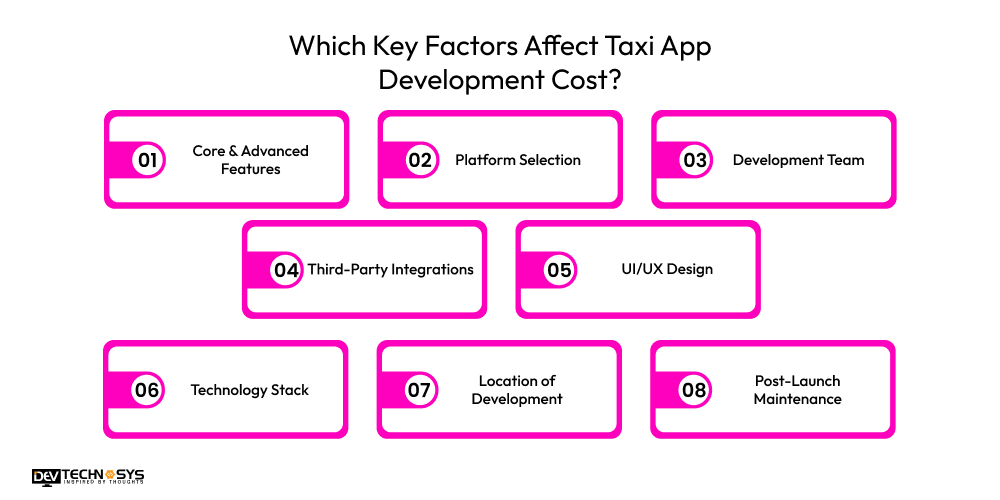
Which Key Factors Affect Taxi App Development Cost?
Taxi app development costs depend on multiple technical, operational, and business-driven decisions. Be it team structure or platform selection and long-term maintenance, each factor directly influences budget, timelines, and scalability. Understanding these Lyft app development cost factors helps businesses plan efficiently, avoid overruns, and build a competitive ride-hailing solution.
1. Core & Advanced Features
Basic features like ride booking, driver matching, and payments define the initial baseline of the cost to build a Taxi App Like Lyft. Advanced features like surge pricing, ride scheduling, and in-app chat increase development time. Premium features enhance user experience but raise the overall taxi booking app development cost. Real-time features require a stronger backend architecture and continuous data synchronization.
Feature Type |
Description |
Estimated Cost (USD) |
| Basic Ride Booking | Core functionality allowing riders to book and track rides in real-time. | $1,000 – $2,500 |
| Advanced Features | Includes surge pricing, ride scheduling, and multi-stop journeys. | $3,000 – $5,500 |
| Safety & Extras | SOS button, driver verification, in-app chat, and rating systems. | $5,500 – $8,000 |
2. Platform Selection
The cost to create a taxi app like Lyft varies for Android, iOS, and web multi-platform solutions separately. Cross-platform frameworks reduce development time by sharing code across platforms. Separate rider, driver, and admin apps significantly increase the cost to develop a taxi booking app.
Native apps offer better performance but require higher development budgets. Platform choice directly impacts scalability and future expansion costs.
Platform Option |
Description |
Estimated Cost (USD) |
| Single Platform (iOS) | Develop the app only for iOS users, reducing initial development cost. | $8,000 – $12,000 |
| Single Platform (Android) | Develop only for Android users, popular in emerging markets. | $8,500 – $13,000 |
| Cross-Platform | Deploy for both iOS and Android using Flutter or React Native frameworks. | $15,000 – $30,000 |
3. Development Team
The team’s experience directly impacts development speed, quality, and overall taxi booking app development services cost. Hiring freelancers, in-house developers, or agencies significantly changes pricing and management effort. An experienced team minimizes rework, bugs, and long-term maintenance expenses.
Agencies provide end-to-end delivery but come at higher upfront costs. Smaller teams may reduce costs but extend development timelines.
Team Model |
Description |
Cost Impact (USD) |
| Freelancer | Independent developers are hired for specific tasks or modules. | $3,000 – $5,000 |
| In-House Team | Dedicated internal developers, designers, and project managers. | $5,000 – $9,000 |
| Development Agency | Full-cycle team including project manager, QA, and support staff. | $10,000 – $14,000 |
4. Third-Party Integrations
Taxi apps rely heavily on third-party APIs for maps, payments, notifications, and analytics. Integrations with Google Maps or other add functionality but increase the cost of the taxi booking app development solution. Real-time GPS tracking and routing APIs significantly impact backend development efforts. Some APIs include recurring usage or licensing fees. Poorly optimized integrations can affect app performance and scalability.
Integration Type |
Description |
Estimated Cost (USD) |
| Payment Gateways | Secure online payment integration for credit/debit cards and wallets. | $500 – $1,200 |
| Maps & Navigation APIs | Real-time GPS tracking and route optimization via Google Maps or Mapbox. | $800 – $2,000 |
| Push Notifications | Alerts, ride updates, and promotional notifications via Firebase/OneSignal. | $1,500 – $3,500 |
5. UI/UX Design
Simple UI designs reduce cost but may limit user engagement and retention. Custom UI/UX improves usability, branding, and conversion rates but requires additional design effort. Animations, micro-interactions, and personalized dashboards further increase the design complexity and cost of on-demand app development services.
User-centric design improves ratings and customer loyalty. High-quality UX often reduces long-term support and redesign expenses.
Design Type |
Description |
Estimated Cost (USD) |
| Basic Design | Simple interface with essential screens for riders and drivers. | $2,500 – $4,000 |
| Interactive Design | Advanced UI with animations, easy navigation, and intuitive UX flows. | $4,500 – $7,500 |
| Premium Design | Custom graphics, branding, and personalized experience for premium users. | $8,000 – $10,000 |
6. Technology Stack
Choosing the right tech stack affects performance, scalability, and long-term maintenance. Modern cloud-based architectures increase upfront cost but improve reliability and scalability. Open-source technologies reduce licensing fees while maintaining robust application performance.
Advanced stacks support real-time data processing and high traffic loads. Poor technology choices can increase future migration of car rental app development solutions.
Stack Type |
Description |
Estimated Cost (USD) |
| Standard Stack | Common backend and frontend technologies for basic app functionality. | $2,000 – $4,000 |
| Advanced Stack | Includes scalable backend, microservices, and advanced database options. | $4,500 – $7,000 |
| Cutting-Edge Stack | AI features, real-time analytics, and predictive algorithms. | $8,000 – $10,000 |
7. Location of Development
Developer hourly rates vary based on geographic location and market demand. North America and Europe have higher mobile app development solutions costs compared to Asia and Eastern Europe. Time zones, communication, and compliance requirements also influence project efficiency and cost.
Outsourcing reduces expenses but requires strong project management. Cultural alignment impacts collaboration and delivery speed when you cost to Develop a Taxi App Like Lyft.
Region |
Description |
Estimated Cost (USD) |
| Asia / Eastern Europe | Lower hourly rates; cost-effective for startups and mid-level apps. | $1,000 – $2,500 |
| Middle East / Africa | Balanced cost and quality; moderate rates for regional app deployment. | $2,500 – $4,000 |
| North America / Europe | Premium rates with high-quality development and experienced teams. | $4,500 – $6,000 |
8. Post-Launch Maintenance
Ongoing maintenance ensures app stability, security updates, and performance optimization. Typically, the cost to maintain an app is 15–20% of the initial development investment annually. Scaling infrastructure and adding features increase long-term operational expenses. Regular updates improve app store rankings and user trust. Ignoring maintenance leads to performance issues and higher churn rates.
Maintenance Type |
Description |
Estimated Cost (USD) |
| Basic Support | Minor bug fixes, updates, and server monitoring. | $800 – $1,500 |
| Standard Maintenance | Regular updates, performance optimization, and security patches. | $1,800 – $2,800 |
| Premium Support | 24/7 monitoring, feature upgrades, and dedicated support for large apps. | $3,000 – $4,000 |
How Much Do Different Types of Taxi Apps Cost?
Taxi apps vary widely in complexity, features, and pricing depending on their target audience and use case. Understanding different app types helps every taxi booking business in the UAE plan budgets, development timelines, and operational strategies effectively.
1. Basic Taxi Booking App
- These apps support standard ride booking with fixed pricing and limited customization.
- Focuses on GPS tracking, payments, and basic driver-rider communication for a seamless booking experience.
- Requires minimal backend infrastructure, reducing initial development cost and maintenance effort.
- Ideal for small startups testing market demand with essential ride-hailing features.
App Package |
Description |
Estimated Cost (USD) |
| Starter | Simple ride-booking app with GPS tracking and basic payment integration. | $10,000 – $14,000 |
| Standard | Includes driver ratings, push notifications, and a basic admin panel. | $14,500 – $18,000 |
| Advanced | Adds ride history, scheduled rides, and in-app chat for better usability. | $18,500 – $22,000 |
2. Ride-Hailing App Like Lyft
- Advanced apps support dynamic pricing, driver ratings, promotions, and multi-city operations.
- Requires scalable backend systems to manage high user demand and real-time ride matching in Android and iOS app development services.
- Includes advanced features like in-app chat, notifications, and loyalty programs for engagement.
- Supports analytics dashboards to track driver performance, user trends, and revenue metrics.
App Package |
Description |
Estimated Cost (USD) |
| Basic | Real-time ride booking, GPS, and simple payment options. | $12,000 – $16,000 |
| Intermediate | Includes surge pricing, ride sharing, and driver ratings. | $16,500 – $20,000 |
| Premium | Advanced features like multi-stop rides, loyalty programs, and analytics. | $20,500 – $25,000 |
3. Corporate Taxi App
- Corporate taxi apps manage employee rides, invoices, and centralized billing systems.
- Provides admin controls to monitor rides, expenses, and employee travel compliance efficiently.
- Integrates reporting dashboards for analytics, budgeting, and expense optimization.
- Offers secure authentication, data privacy, and enterprise-level access management features.
App Package |
Description |
Estimated Cost (USD) |
| Basic Corporate | Core ride-booking for employees with a simple reporting dashboard. | $8,000 – $12,000 |
| Standard | Adds in-app payments, scheduling, and employee ride tracking. | $12,500 – $16,000 |
| Advanced | Premium admin panel, analytics, corporate billing, and support. | $16,500 – $21,000 |
4. Bike Taxi or Micro-Mobility App
- These apps support short-distance travel with simplified pricing and lightweight features.
- Focuses on GPS tracking, quick booking, and real-time ride updates for small trips.
- Requires lower infrastructure and fewer server resources compared to full-scale ride-hailing apps.
- Generally, a mobile app development company makes such apps for urban markets needing last-mile mobility and cost-effective solutions.
App Package |
Description |
Estimated Cost (USD) |
| Basic | Simple bike or scooter booking with GPS and payments. | $14,000 – $18,000 |
| Standard | Includes route optimization, ride history, and driver ratings. | $18,500 – $23,000 |
| Advanced | Features like real-time fleet management, surge pricing, and analytics. | $23,500 – $28,000 |
5. Luxury or Premium Taxi App
- Premium apps offer high-end vehicles, concierge services, and personalized ride experiences.
- Includes booking of luxury cars, driver preferences, and in-app customer support.
- Requires integration with premium payment gateways, loyalty programs, and advanced ride analytics.
- Appeals to niche audiences willing to pay more for comfort, safety, and convenience.
App Package |
Description |
Estimated Cost (USD) |
| Basic | High-end taxi booking with premium vehicle options and simple payments. | $10,000 – $15,000 |
| Standard | Adds driver verification, VIP support, and loyalty programs. | $15,500 – $22,000 |
| Advanced | Includes ride scheduling, multi-stop luxury rides, and advanced analytics. | $22,500 – $30,000 |
How Much Do Popular Taxi Apps Like Lyft Cost to Build?
A Lyft clone app development requires combining advanced technology, smooth design, and seamless functionality. Such apps must support real-time tracking, secure payments, and instant communication for both drivers and riders. The development cost of a taxi booking app varies widely depending on features, backend, security, and platform complexity.
1. DiDi
DiDi is an iOS and Android app development that connects millions of riders to drivers with real-time GPS tracking and intelligent route optimization. It includes features like ride scheduling, in-app payments, driver ratings, safety alerts, and multi-service options for convenience.
The platform uses AI to predict demand, reduce waiting times, and optimize ride assignments efficiently. It also integrates loyalty programs, ride history, and customer support to ensure superior user experiences.
Feature |
Estimated Hours |
Estimated Cost (USD) |
| User Registration & Profiles | 50–80 | $1,500 – $2,500 |
| Ride Booking & GPS Tracking | 80–120 | $2,000 – $4,000 |
| Driver Dashboard & Ratings | 60–100 | $1,500 – $3,000 |
| Payment Integration & Wallets | 50–90 | $1,500 – $2,800 |
| Notifications & Alerts | 40–70 | $1,000 – $1,800 |
| Admin Panel & Analytics | 60–100 | $2,000 – $4,000 |
| Overall Development Cost | 340–560 hours | $10,000 – $22,000 |
2. Uber
Uber provides instant ride-hailing with multiple ride categories, transparent pricing, and detailed driver profiles for safety. The app integrates surge pricing, in-app communication, digital receipts, and live location sharing for seamless experiences.
It offers advanced features like Uber Pool, subscription-based rides, and multi-stop journey planning for flexibility. Users can track driver performance, rate rides, and access 24/7 customer support for trust and reliability.
Feature |
Estimated Hours |
Estimated Cost (USD) |
| User Registration & Profiles | 60–90 | $1,800 – $3,000 |
| Ride Booking & Real-Time GPS | 90–140 | $2,500 – $4,500 |
| Driver Dashboard & Ratings | 70–110 | $2,000 – $3,500 |
| Payment & Subscription Management | 60–100 | $1,800 – $3,000 |
| Surge Pricing & Dynamic Fares | 70–110 | $2,000 – $3,500 |
| Admin Panel & Analytics | 80–120 | $2,500 – $4,500 |
| Overall Development Cost | 430–670 hours | $12,000 – $25,000 |
3. Grab
Grab serves Southeast Asia with ride-hailing, food delivery, and digital payment solutions in a single platform. It offers scheduled rides, multiple payment methods, loyalty programs, driver ratings, and live tracking for reliability.
The app provides additional services like GrabMart, parcel delivery, and GrabPay for seamless digital transactions. AI-driven route optimization ensures shorter ride durations while promoting safety and fuel efficiency for drivers.
Feature |
Estimated Hours |
Estimated Cost (USD) |
| User Registration & Profiles | 50–80 | $1,200 – $2,500 |
| Ride Booking & GPS Tracking | 80–120 | $2,000 – $4,000 |
| Multi-Service Integration | 60–100 | $1,500 – $3,000 |
| Payment Gateway Integration | 50–90 | $1,200 – $2,500 |
| Notifications & Alerts | 40–70 | $1,000 – $1,800 |
| Admin Panel & Analytics | 70–120 | $2,000 – $4,200 |
| Overall Development Cost | 350–580 hours | $8,000 – $24,000 |

4. Ola
Ola provides diverse ride options in India, including cars, auto-rickshaws, and bikes, through a user-friendly interface. The platform supports in-app payments, ride tracking, safety alerts, surge pricing, and driver ratings for accountability.
It offers Ola Select memberships, corporate rides, and EV-friendly vehicles to meet varied customer demands. In-app support, fare estimates, and transparent driver information enhance convenience, trust, and overall service quality.
Feature |
Estimated Hours |
Estimated Cost (USD) |
| User Registration & Profiles | 60–100 | $2,000 – $3,500 |
| Ride Booking & GPS Tracking | 100–150 | $3,000 – $5,000 |
| Driver Dashboard & Ratings | 80–120 | $2,000 – $4,000 |
| Payment Integration & Wallets | 70–110 | $2,000 – $3,500 |
| Surge Pricing & Dynamic Fares | 80–120 | $2,500 – $4,500 |
| Admin Panel & Analytics | 90–140 | $3,500 – $6,500 |
| Overall Development Cost | 480–740 hours | $15,000 – $27,000 |
5. Bolt
Bolt focuses on fast, affordable, and eco-friendly rides, including scooters, electric cars, and standard vehicles. The app features live tracking, secure payments, driver reviews, promotions, and in-app support for smooth journeys.
Bolt allows drivers to access flexible schedules, incentives, and route suggestions to maximize efficiency and earnings. It also integrates loyalty rewards, vehicle options, and safety tools like SOS buttons for rider and driver security.
Feature |
Estimated Hours |
Estimated Cost (USD) |
| User Registration & Profiles | 60–90 | $1,800 – $3,000 |
| Ride Booking & Real-Time GPS | 90–140 | $2,500 – $4,500 |
| Driver Dashboard & Ratings | 70–110 | $2,000 – $3,500 |
| Payment & Wallet Integration | 60–100 | $1,800 – $3,200 |
| Surge Pricing & Promotions | 80–120 | $2,500 – $4,500 |
| Admin Panel & Analytics | 90–140 | $2,500 – $5,300 |
| Overall Development Cost | 450–700 hours | $13,000 – $28,000 |
How to Reduce Taxi App Development Cost in 2026?
Reducing taxi app development costs in 2026 requires strategic planning, technology choices, and smart budgeting. It focuses on efficient frameworks, scalable infrastructure, and phased development. It can significantly lower the taxi booking app price without compromising quality. Adopting proven methods ensures faster deployment and higher ROI for both startups and established businesses.
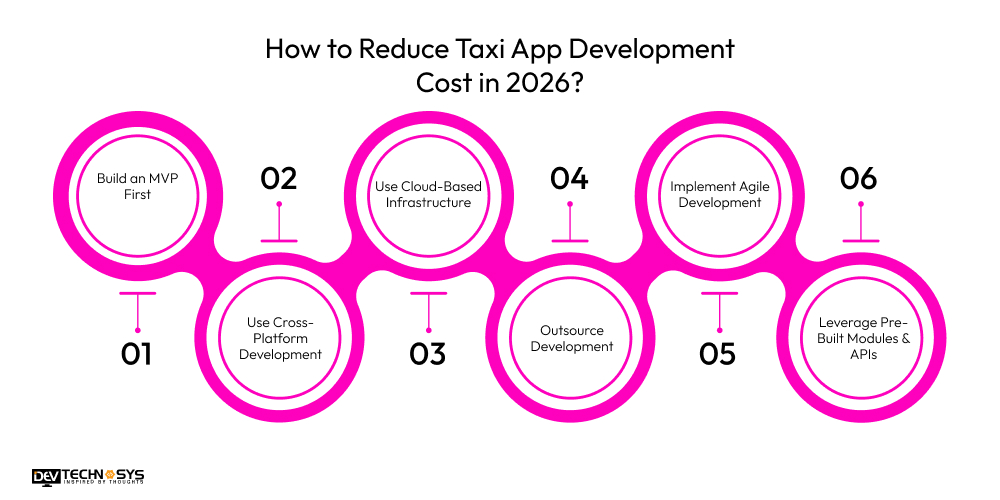
1. Build an MVP First
A hybrid app development company builds a minimum viable product allows startups. It helps them test core ideas with minimal financial investment. In this, essential features are included first, while additional functionalities can be added later based on user feedback. This approach reduces initial costs, validates demand, and prevents overspending on unnecessary features early.
2. Use Cross-Platform Development
Frameworks like Flutter or React Native enable simultaneous Android and iOS app deployment efficiently. They reduce development time, minimize separate coding efforts, and significantly cut overall project expenses. Cross-platform apps maintain consistent performance and user experience across multiple devices without additional costs.
3. Use Cloud-Based Infrastructure
Cloud solutions provide scalable, pay-as-you-go hosting, eliminating expensive on-premise servers and maintenance. They handle traffic spikes efficiently, ensuring smooth app performance even during peak demand periods. Cloud infrastructure allows startups to pay only for the resources they actually use, saving the ride-hailing app development cost.
5. Outsource Development
When you hire on-demand app developer team, it reduces infrastructure, recruitment, and ongoing employee expenses considerably. It provides flexibility to scale the team up or down based on the requirements of the project. Accessing global talent ensures high-quality development while keeping the overall cost to develop a Taxi App Like Lyft low.
5. Implement Agile Development
Using agile methodology yu can build an app like Lyft that ensures iterative development, early testing, and faster feedback incorporation. It helps reduce expensive rework by identifying issues during early development stages. Agile workflows optimize team productivity, streamline processes, and cut overall project duration and cost to make a Taxi App Like Lyft.
6. Leverage Pre-Built Modules & APIs
Using pre-built components, SDKs, and APIs avoids having to develop everything from scratch, saving time. Third-party APIs for payments, maps, and notifications accelerate delivery and reduce technical complexity. This approach ensures reliable functionalities without additional investment in custom development for common features.
Which Hidden Costs Most Taxi App Founders Ignore?
Many founders underestimate costs beyond initial development and launch. Driver onboarding, verification, and compliance require ongoing operational investment. Many taxi app founders focus on cab booking app development cost but often overlook these hidden expenses that impact profitability. Learning all potential expenditures ensures smoother operations and better financial planning from day one.
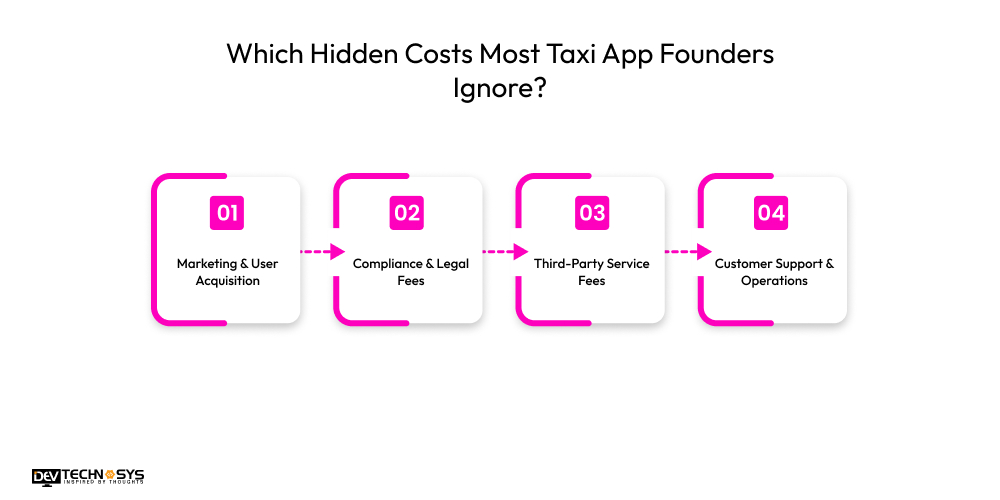
1. Marketing & User Acquisition
Building an app is just the first step; acquiring active users demands targeted marketing strategies. It includes expenses for paid campaigns, influencer promotions, and referral programs, which can quickly surpass development costs if unplanned. Many founders fail to allocate sufficient budget for continuous marketing to grow their user base.
2. Compliance & Legal Fees
Taxi apps must comply with local regulations, insurance requirements, and data privacy laws. It involves legal consultations, licensing fees, and compliance audits, which are often overlooked during initial budgeting. Failure to meet regulatory standards can result in fines, service suspensions, or expensive lawsuits.
3. Third-Party Service Fees
Integrating services like payment gateways, mapping APIs, and SMS notifications involves recurring subscription or transaction fees. These costs increase with app scale and user activity but are frequently underestimated during planning. Ignoring such fees may reduce profit margins and affect the app’s overall sustainability.
4. Customer Support & Operations
Providing 24/7 support, handling complaints, and managing driver-rider coordination add ongoing operational expenses. Investments in call centers, chatbots, and CRM software are necessary to maintain service quality. Many founders underestimate the human and technological resources required to ensure smooth daily operations.
What are the Money-Making Models to Generate Revenue From Taxi Apps?
Taxi apps offer multiple revenue streams beyond basic ride fees to maximize profitability and growth. The right money-making model ensures steady income, scalable operations, and long-term sustainability for app founders. These various monetization strategies help startups optimize earnings without compromising user satisfaction.
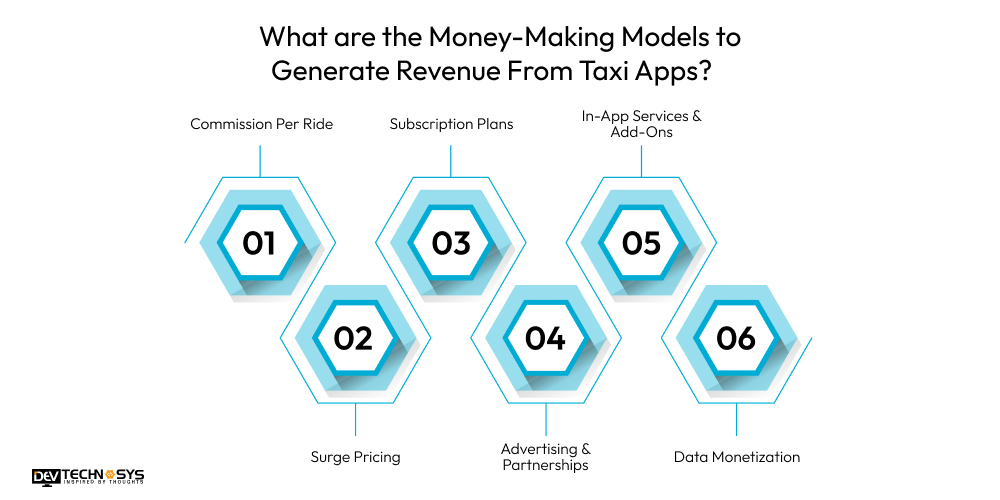
1. Commission Per Ride
The platform earns a fixed percentage from each ride completed by drivers, forming the primary revenue source. This model scales easily with increased ride volumes, ensuring predictable income for both small and large operations. It motivates platform growth while maintaining affordability for riders and fair earnings for drivers.
2. Surge Pricing
Fare rates increase during peak hours or high-demand periods, boosting platform profitability significantly. Dynamic pricing balances rider demand and driver supply while incentivizing drivers to operate during busy times. Users may pay more temporarily, but the approach ensures ride availability and maximizes revenue efficiently.
3. Subscription Plans
Drivers or riders pay monthly or yearly fees for premium features, discounts, or priority access. The subscriptions generate predictable, recurring revenue while encouraging customer loyalty and consistent app usage. The model also provides opportunities for value-added services, enhancing the platform’s overall profitability.
4. Advertising & Partnerships
In-app advertisements, local promotions, and strategic brand collaborations offer additional income streams. Partners can target relevant riders or drivers without altering ride pricing or user experience significantly. This method diversifies revenue sources and strengthens the app’s market presence through cross-promotions and sponsorships.
5. In-App Services & Add-Ons
Apps can sell additional services like ride insurance, airport pickups, or luggage handling for extra fees. It offers value-added features, increases average revenue per ride, and enhances customer convenience. Such add-ons encourage user engagement and differentiate the app from competitors in a crowded market.
6. Data Monetization
Aggregated, anonymized data on rider behavior, traffic trends, and city mobility can be sold to businesses. Urban planners, advertisers, or logistics companies may pay for insights without compromising user privacy. Data monetization provides a passive revenue stream while leveraging the platform’s extensive operational intelligence.

Conclusion
In 2026, launching a taxi app requires more than just development; it demands a strategic approach to both cost management and revenue generation. Understanding hidden expenses, such as maintenance, legal compliance, and marketing, ensures founders avoid unexpected financial setbacks.
At the same time, implementing diverse monetization models like commission-based earnings, surge pricing, subscriptions, in-app services, and data monetization helps maximize profitability. Combining smart cost-saving measures with multiple revenue streams allows taxi apps to remain competitive, scalable, and sustainable.
Ultimately, success depends on balancing user experience, operational efficiency, and innovative monetization strategies. It ensures long-term growth and a strong foothold in the highly competitive ride-hailing market. For a premium success, you can reach out to the top taxi booking app development company.
Frequently Asked Questions
1. How Much Does It Cost to Develop a Taxi App Like Lyft?
Developing a taxi app can cost between $8,000 and $30,000, depending on complexity and features. Advanced functionalities such as surge pricing, real-time tracking, multiple payment options, and safety tools increase development expenses. Custom designs and cross-platform deployment also influence the final investment required for the project.
2. How Long Does It Take to Build a Taxi App?
Basic taxi apps typically require 5–7 months to develop, while feature-rich apps may take over seven months. Development timelines are influenced by coding complexity, API integrations, testing, debugging, and app store approval processes. Adding advanced functionalities or multi-platform support can further extend the overall development duration.
3. What Is the Maintenance Cost for Taxi Apps?
Annual maintenance usually costs 15–20% of the initial development investment, covering ongoing technical support. This includes updates, bug fixes, server management, security patches, and performance optimization. Regular maintenance ensures smooth operation, user satisfaction, and longevity of the taxi app in a competitive market.
4. What Are the Must-Have Features in a Taxi App?
Essential features include ride booking, real-time GPS tracking, in-app payments, and driver ratings. Admin dashboards, notifications, and reporting tools help monitor operations efficiently. Adding safety features, ride history, and scheduling options enhances user trust and overall app experience.
5. What Factors Affect Taxi App Development Cost?
Development cost depends on team size, app complexity, required features, and UI/UX design quality. Additional factors include tech stack choices, third-party integrations, compliance, scalability, and security requirements. The geographical location of the development team and post-launch support services also influences total project expenditure.