



 Tarun Nagar
 Key Takeaways:
-
- The cost to develop a food delivery app like Bolt Food starts from $8,000 to $15,000 for a basic MVp. whereas, advanced food delivery app development costs up to $30,000 and higher, depending on features and functionalities.
- Define revenue streams such as delivery fees, commissions, and subscriptions to ensure long-term profitability and sustainability.
- Launch an MVP first with essential features like ordering, tracking, and payments, then scale gradually based on real user feedback and demand.
- Food delivery platforms UAE & KSA integrate Essential Features like GPS tracking (Google Maps API, Mapbox API), multiple payment options, notifications, and ratings to enhance usability and engagement.
Hungry for success in the fast-growing food delivery market? Building an app like Bolt Food is more than just connecting users with restaurants; it’s about delivering speed, convenience, and a delightful digital experience. From real-time order tracking and seamless payments to smart recommendations and lightning-fast delivery, every element plays a crucial role in keeping users engaged and satisfied.
As customer expectations rise and competition intensifies, creating a feature-rich, scalable, and user-friendly app becomes essential for standing out. In this blog, we’ll guide you through the complete process to build a food delivery app like Bolt Food, from ideation and must-have features to tech stack and launch strategies, helping you turn your food delivery app idea into a thriving, revenue-generating platform.
What is the Bolt Food App?
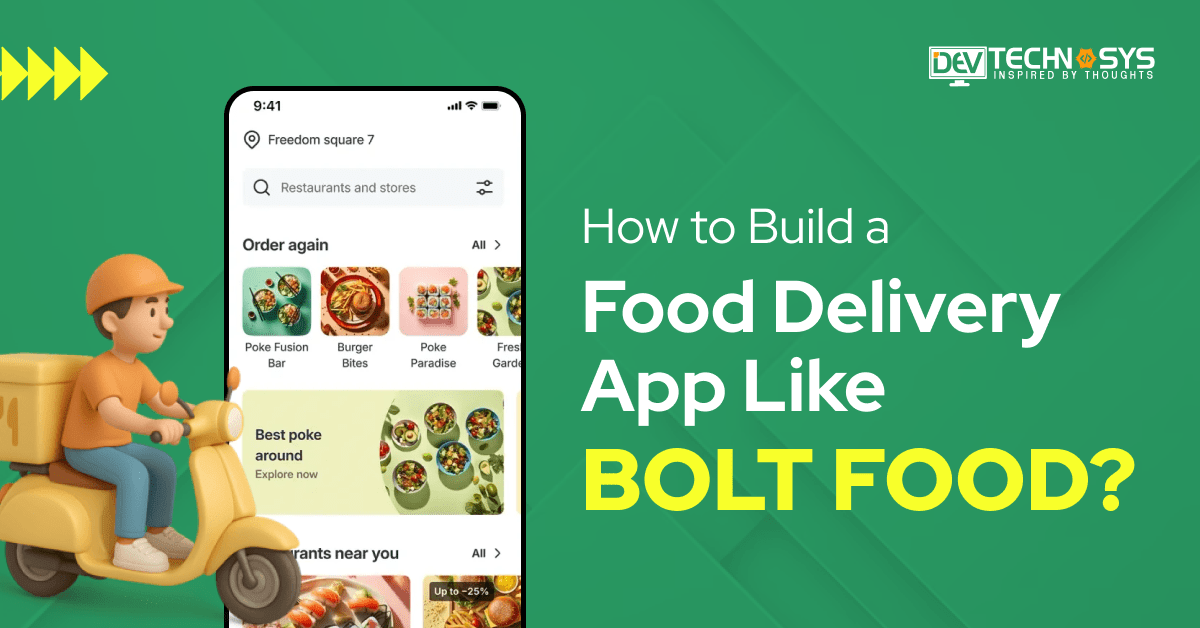
Bolt Food is a fast and reliable food and grocery delivery service developed by the European super-app Bolt. It enables users to order meals from local restaurants and everyday essentials from nearby stores through iOS and Android devices.
Online food ordering apps GCC offers a seamless experience with features like real-time order tracking, allowing users to monitor their delivery from preparation to doorstep. With its quick delivery network and user-friendly interface, Bolt Food has become a popular choice for hassle-free food and grocery ordering.
Food Delivery App Market Insights
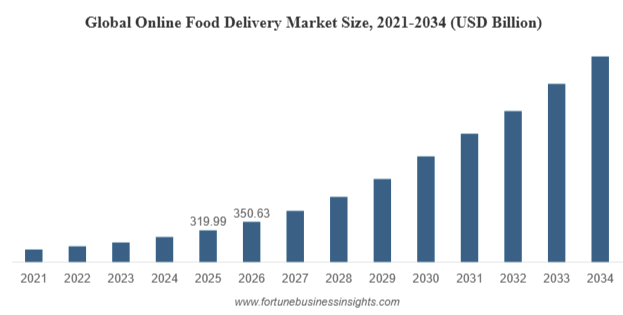
- The global online food delivery market size was valued at USD 319.99 billion in 2025.
- The market is projected to grow from USD 350.63 billion in 2026 to USD 728.83 billion by 2034, exhibiting a CAGR of 9.58% during the forecast period.
- Asia-Pacific dominates the global Online Food Delivery Market Share with 34%, driven by high population density, increasing urbanization, and high mobile internet usage.
- Online payment accounts for 68% of the online food delivery market share, making it the dominant payment mode globally.
- Websites account for 26% of the online food delivery market share and remain an essential ordering channel for desktop users, corporate clients, and scheduled orders.
How Does a Food Delivery App Like Bolt Food Work?
A food delivery app like Bolt Food operates through a seamless interaction between users, restaurants, delivery partners, and the platform backend to ensure quick and efficient order fulfillment.
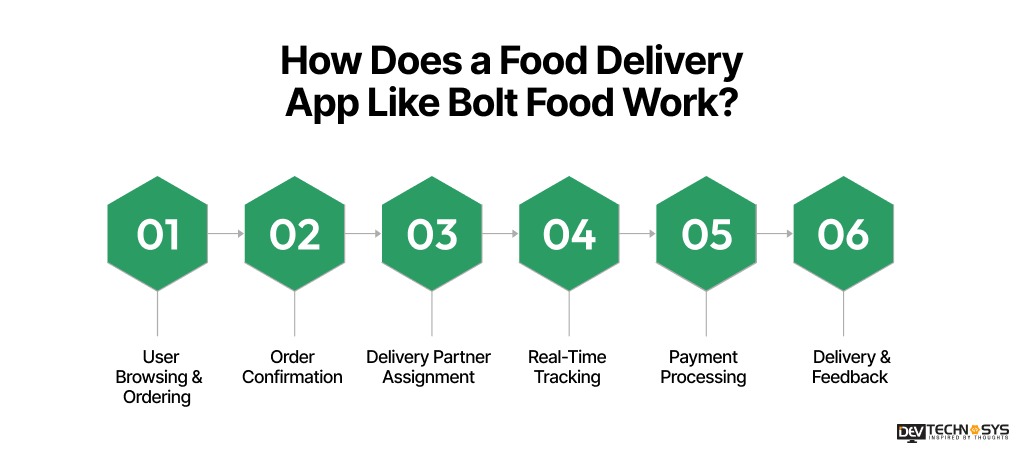
- User Browsing & Ordering: Users open the app, explore nearby restaurants, browse menus, and place orders based on preferences, ratings, and delivery time.
- Order Confirmation: Once the order is placed, the restaurant receives it instantly and starts preparing the food while the system confirms availability and estimated delivery time.
- Delivery Partner Assignment: Food delivery apps Middle East automatically assigns a nearby delivery executive using GPS and smart algorithms to ensure faster pickups and deliveries.
- Real-Time Tracking: Users can track their order live, from preparation to dispatch and final delivery, enhancing transparency and trust.
- Payment Processing: Payments are handled securely through multiple options like cards, wallets, or cash on delivery, ensuring a smooth checkout experience.
- Delivery & Feedback: The delivery partner picks up the order and delivers it to the customer’s doorstep, after which users can rate their experience and provide feedback.
What are the 10 Most Popular Bolt Food Alternatives You Can Consider in 2026?
The food delivery market in 2026 is highly competitive, with several platforms offering fast delivery, diverse restaurant options, and seamless user experiences. According to a top restaurant mobile app development company, If you’re exploring alternatives to Bolt Food, the list of Bolt Food alternatives mentioned below can help you.
| App | Launch Year | Ratings | Platforms |
| Talabat | 2004 | 4.5 | iOS, Android, Web |
| Deliveroo | 2013 | 4.6 | iOS, Android, Web |
| Careem Food | 2019 | 4.5 | iOS, Android |
| Noon Food | 2021 | 4.3 | iOS, Android |
| OpenTable | 1998 | 4.7 | iOS, Android, Web |
| Jahez | 2016 | 4.4 | iOS, Android |
| Postmates | 2011 | 4.5 | iOS, Android |
| ChatFood | 2018 | 4.1 | iOS, Android, Web |
| InstaShop | 2015 | 4.6 | iOS, Android |
| Locale | 2022 | 4.2 | Android |
1. OpenTable
Primarily known for restaurant reservations, OpenTable is among the top meal delivery apps MENA region that supports food ordering and delivery in select regions. It connects users with a wide network of restaurants, offering reviews, availability, and seamless booking. Its strong global presence and trusted brand make it a valuable alternative for dining and ordering experiences.
2. Talabat
Talabat is among the leading top food delivery apps UAE offering a vast selection of restaurants and stores. With real-time tracking, multiple payment options, and fast delivery services, this Bolt Food clone app provides a reliable and convenient user experience across several countries in the region. To similar app like Bolt Food or Talabat, contact an experienced app development company.
3. Jahez
Jahez is a Saudi-based food delivery platform gaining popularity for its efficient logistics and strong local restaurant partnerships. It offers quick delivery, easy ordering, and a user-friendly interface. The app focuses on enhancing customer satisfaction through reliable service and expanding coverage in key Middle Eastern markets. If you wish to create a similar platform like Jahez, then contact top experts at providing food delivery app development services.
Industry Insights: According to companiesmarketcap.com Jahez international company (TADAWUL: 6017) is a leading Saudi Arabian food tech platform with a market cap of roughly 2.4B SAR ($0.66B USD) as of March 2026.
4. Deliveroo
Deliveroo is a globally recognized food delivery service operating in multiple countries, known for its premium restaurant partnerships and fast delivery network. This Bolt Food clone app offers real-time tracking, subscription services, and curated dining options, making it a strong alternative for users seeking quality and convenience in food delivery.
5. Postmates
Postmates, now integrated with Uber Eats in many regions, provides food, grocery, and essentials delivery services. This Bolt Food clone app stands out for its wide delivery categories, flexible ordering, and on-demand logistics. Apps like Postmates ensures quick deliveries and a seamless user experience, making it a versatile alternative to Bolt Food.
How to Build a Food Delivery App Like Bolt Food from Scratch?
Building a food delivery app like Bolt Food requires careful planning, smart technology choices, and a seamless user experience. Here are the simple steps to create a food delivery app like Bolt Food from scratch.
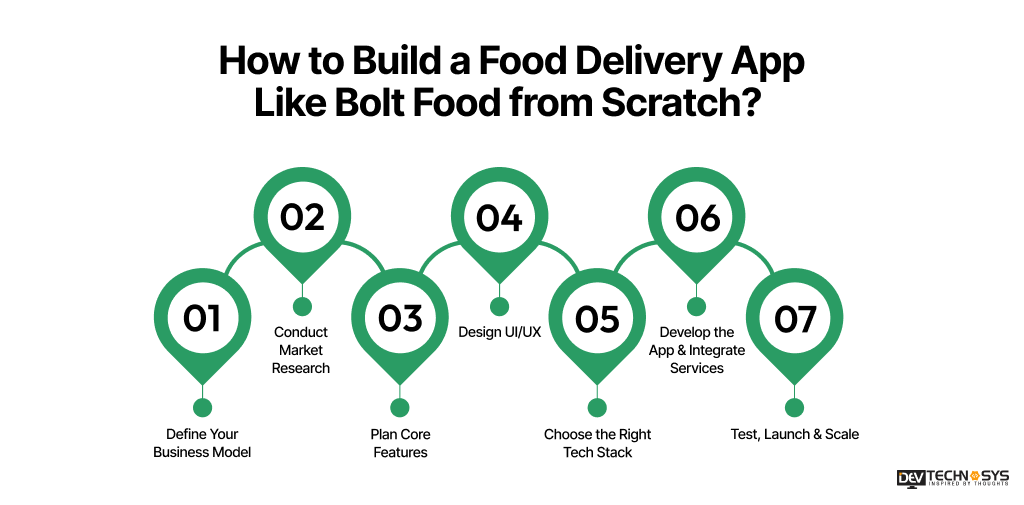
1. Define Your Business Model
Start the process to build a food delivery app like Bolt Food by clearly defining your revenue model to ensure long-term profitability. Options include delivery fees, restaurant commissions, and subscriptions. Decide whether the platform will focus solely on food, groceries, or a combination. Aligning service type with pricing and target audience is essential for success in a competitive market.
2. Conduct Market Research
Food delivery app development solution providers conduct thorough market research to identify opportunities and challenges. Study competitors like Zomato, Talabat, and Deliveroo, analyze regional demand, and understand user preferences. Focus on popular cuisines, delivery speed, and price expectations. Insights from research guide feature selection, pricing strategy, and marketing approaches to attract and retain customers.
Industry Insights: Global Growth Insights states that the global food delivery market reached $268 billion in 2025 and is projected to grow significantly, showing strong demand for digital ordering platforms.
3. Plan Core Features
To create a food delivery app like Bolt Food, outline essential features for all users and administrators. For users, include restaurant search, ordering, payments, and real-time tracking. It is crucial to include essential functionalities for three user panels:
- User App: browse restaurants, place orders, track delivery, and pay seamlessly.
- Delivery App: accept orders, navigate efficiently, and track earnings.
- Admin Panel: monitor orders, manage users, track payments, and view analytics.
For delivery partners, provide order acceptance, navigation, and earnings tracking. For admins, enable order management, analytics, and payment monitoring. Proper feature planning ensures efficiency, usability, and scalability.
4. Design UI/UX
A seamless, mobile-first user experience is crucial for engagement. Build a food delivery app like Bolt Food that focus on intuitive navigation, minimal clicks, and clear workflows. Provide real-time updates, notifications, and a visually appealing interface. Prioritize accessibility and speed to reduce friction, ensuring customers enjoy a smooth, enjoyable, and consistent experience across devices.
5. Choose the Right Tech Stack
Your mobile app development company will select technologies that support scalability, speed, and security. For frontend, use React Native or Flutter; backend can be Node.js or Django. Databases like PostgreSQL or MongoDB handle large amounts of user data. Integrate APIs for maps, payments, and push notifications to enhance functionality and reliability.
| Layer | Technology Options |
| Frontend (App) | React Native, Flutter |
| Backend | Node.js, Django |
| Database | PostgreSQL, MongoDB |
| Payment Integration | Stripe, PayPal, Razorpay |
| Maps & GPS | Google Maps API, Mapbox |
| Push Notifications | Firebase Cloud Messaging, OneSignal |
| Cloud Hosting | AWS, Google Cloud, Azure |
6. Develop the App & Integrate Services
Food delivery app development company in UAE to start developing an MVP including essential features, then expand functionality gradually. Integrate third-party services like Stripe/PayPal, Google Maps, SMS, and cloud services for scalability. Agile development ensures timely delivery and flexibility, while seamless integration enables smooth operations, secure payments, and accurate real-time tracking.
7. Test, Launch & Scale
Conduct extensive functional, performance, and security testing before launch. Start in one city or region, gather user feedback, and refine features. Gradually expand to other locations, onboard more restaurants, and optimize logistics. Continuous updates, analytics monitoring, and user engagement strategies ensure sustainable growth and competitive advantage.
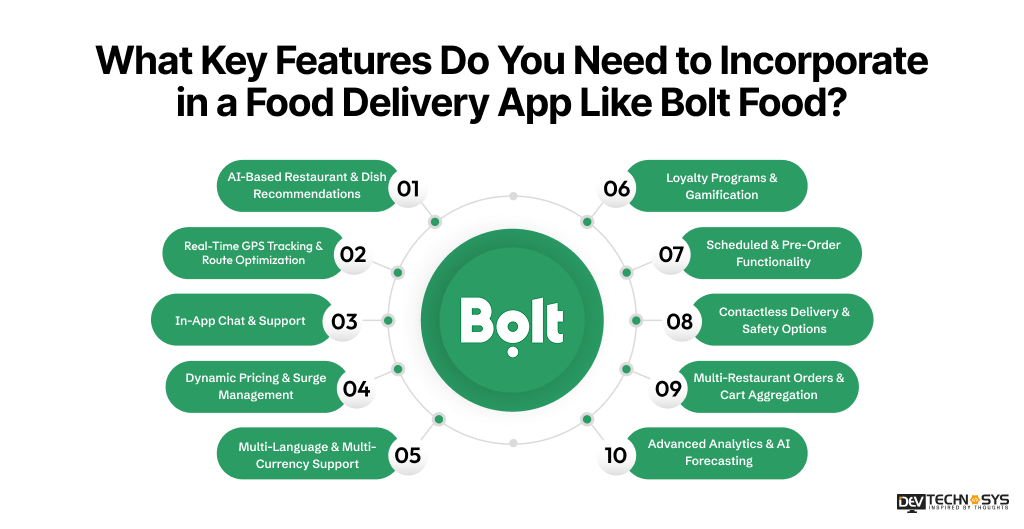
What Key Features Do You Need to Incorporate in a Food Delivery App Like Bolt Food?
Building a successful food delivery app like Bolt Food requires integrating features that ensure convenience, speed, and seamless user experience. The right set of functionalities helps streamline operations, improve customer satisfaction, and boost overall engagement.
| User Panel | Restaurant Panel | Driver Panel | Admin Panel |
| Register/Login | Manage menu & pricing | Accept/reject orders | Manage users, restaurants & drivers |
| Browse restaurants & menu | Accept/reject orders | GPS navigation & route | Monitor orders & deliveries |
| Place orders | Track & update order status | Pickup & delivery updates | Manage payments & commissions |
| Real-time order tracking | Analytics & reports | Earnings dashboard | Analytics & reports |
| Multiple payment options | Promotions & discounts | Notifications & availability | Push notifications & feedback |
| Ratings & reviews | Respond to reviews | In-app support | Manage content & offers |
| Favorites & wishlists | Inventory management | Order history | Overall platform monitoring |
1. AI-Based Restaurant & Dish Recommendations
Use artificial intelligence to analyze user preferences, past orders, and popular trends, offering personalized restaurant and dish suggestions. This increases order frequency, enhances user experience, and helps users discover new options tailored to their tastes.
Industry Insights: 360 market updates states that Over 68% of urban users actively use food delivery apps monthly, making feature-rich, user-friendly platforms critical for engagement and retention.
2. Real-Time GPS Tracking & Route Optimization
Provide live tracking of deliveries with GPS and route optimization for drivers. It reduces delivery time, ensures transparency, improves customer satisfaction, and helps drivers select the fastest routes based on traffic and location data.
3. In-App Chat & Support
Best food delivery apps Saudi Arabia Enable users, restaurants, and drivers to communicate directly through secure in-app chat. Real-time messaging improves issue resolution, reduces delays, and enhances customer support, ensuring smooth interactions during ordering, preparation, or delivery.
4. Dynamic Pricing & Surge Management
Implement dynamic pricing based on demand, location, and delivery volume. Surge pricing ensures driver availability during peak hours while balancing profitability and user satisfaction, encouraging timely deliveries without overwhelming operational capacity.
5. Multi-Language & Multi-Currency Support
Build a food delivery app like Bolt Food that support multiple languages and currencies to target global or regional markets. It increases accessibility, enhances user experience, and attracts international users while simplifying payments and localization for diverse audiences.
6. Loyalty Programs & Gamification
Incorporate reward points, referral bonuses, and gamified challenges to encourage repeat usage. Loyalty programs increase retention, boost engagement, and incentivize users to explore new restaurants or order more frequently through the platform.
7. Scheduled & Pre-Order Functionality
App like OpenTable uses pre order feature which allow users to schedule orders in advance for specific times or days. Pre-order functionality helps restaurants manage workflows efficiently, ensures timely deliveries, and accommodates users who plan ahead for meals or events.
8. Contactless Delivery & Safety Options
Provide contactless delivery choices and safety features for both users and drivers. This includes delivery instructions, real-time notifications, and digital confirmation to enhance trust, ensure hygiene, and meet modern safety expectations.
9. Multi-Restaurant Orders & Cart Aggregation
Enable users to add items from multiple restaurants into a single order. Cart aggregation streamlines ordering, increases convenience, and improves average order value, offering a seamless experience even when multiple cuisines are ordered in a single delivery.
10. Advanced Analytics & AI Forecasting
Use AI-driven analytics to predict order trends, peak demand hours, and popular items. Restaurants and platform admins can optimize inventory, manage staffing, and improve operational efficiency, while enhancing user experience through data-driven insights.
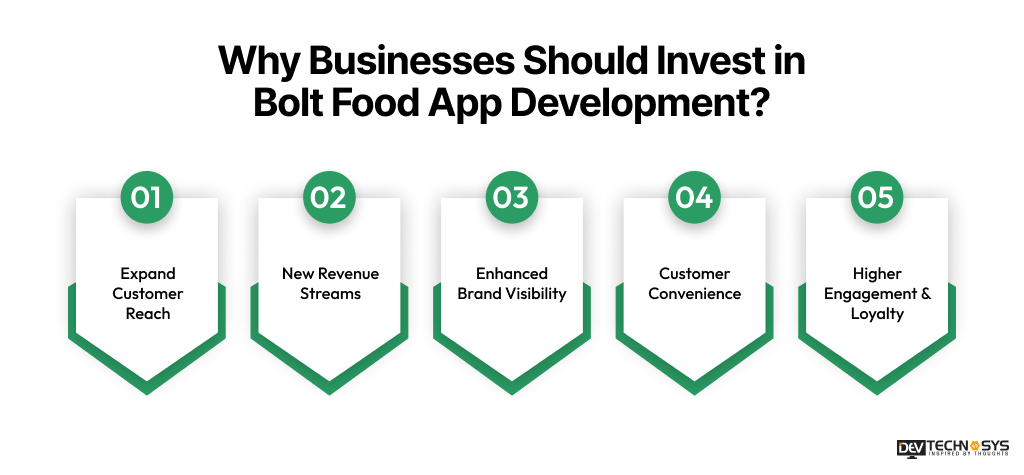
Why Businesses Should Invest in Bolt Food App Development?
Investing in a food delivery app like Bolt Food allows businesses to tap into the booming on-demand market. It offers opportunities to increase revenue, expand customer reach, and provide a seamless, tech-driven ordering experience.
1. Expand Customer Reach
Creating a food delivery app allows businesses to reach customers beyond their physical locations. By offering online ordering, users from different areas can easily browse menus, place orders, and enjoy convenience, significantly increasing potential sales and visibility.
2. New Revenue Streams
Apps like Bolt Food open multiple income channels, including delivery fees, restaurant commissions, in-app advertising, and subscription services. This diversified approach ensures businesses can monetize effectively while capturing additional value from both users and partner restaurants.
3. Enhanced Brand Visibility
Having a dedicated food delivery app boosts brand recognition and digital presence. Frequent user interactions, push notifications, and promotional campaigns keep the brand top-of-mind, helping businesses stand out in a competitive on-demand food delivery market.

4. Customer Convenience
Apps provide seamless ordering with features like real-time tracking, multiple payment methods, and saved preferences. Convenience encourages users to order more frequently, creating a smooth and enjoyable experience that builds trust and satisfaction over time.
5. Higher Engagement & Loyalty
Integrating loyalty programs, rewards, and personalized offers keeps users engaged and incentivizes repeat purchases. By tailoring experiences to user preferences, businesses can improve retention, foster brand loyalty, and encourage customers to explore new restaurants or menu items.
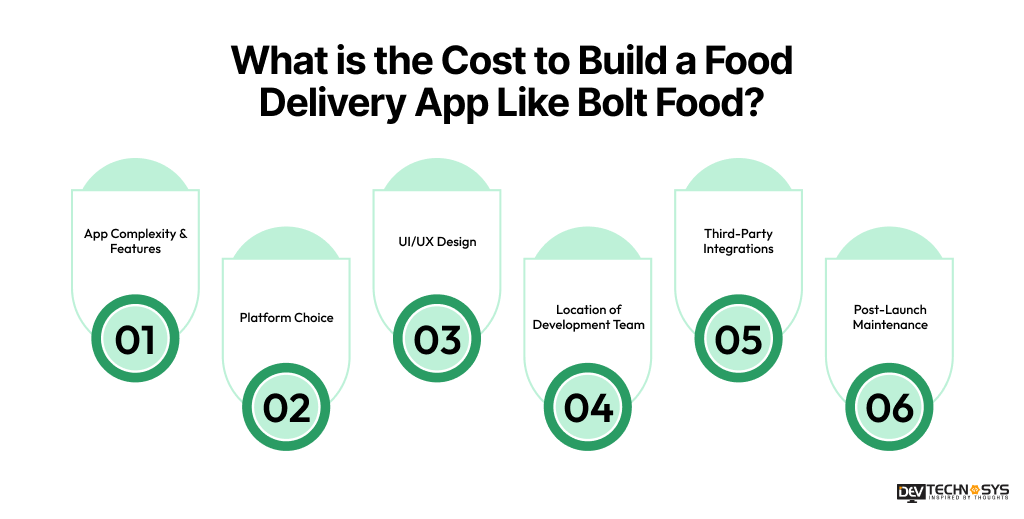
What is the Cost to Build a Food Delivery App Like Bolt Food?
The cost to develop a basic food delivery app like Bolt Food ranges from $8,000 to $30,000. This estimate covers an MVP with essential features like user registration, restaurant listing, order placement, real-time tracking, and basic payment integration.
- The food delivery app development cost will be $8,000 to $15,000 for simple app with core functionalities for a single platform (iOS or Android).
- The cost to build an app like Bolt Food will be $15,000 to $22,000 with mid-complexity level that contain basic as well as some complex features and functionalities.
- The cost to build an app like Bolt Food ranges from $22,000 to $30,000+ with advanced MVP for both platforms, including delivery tracking, multiple payment options, ratings & reviews, and basic admin and driver dashboards.
The final cost to create an app like Bolt Food may increase with additional advanced features such as AI recommendations, multi-restaurant orders, dynamic pricing, loyalty programs, and third-party integrations. Choosing the right tech stack and development team also impacts the overall budget.
1. App Complexity & Features
The more advanced features your app has, such as AI recommendations, multi-restaurant ordering, dynamic pricing, and loyalty programs, the higher the mobile app development cost will be. A simple MVP with core functionalities is far less expensive than a feature-rich platform. Here’s the table showcasing the cost to build an app like Bolt Food based on feature complexity.
| Feature Level | Estimated Cost |
| Basic MVP | $2,000 – $3,000 |
| Moderate | $3,000 – $4,500 |
| Advanced | $4,500 – $6,000+ |
2. Platform Choice
Developing for a single platform (iOS or Android) is cheaper, while building for both platforms increases the cost to develop an app like Bolt Food and development time. Cross-platform frameworks like Flutter or React Native can reduce expenses while enabling simultaneous deployment on multiple platforms.
| Platform | Estimated Cost |
| Single Platform | $8,000 – $12,000 |
| Both Platforms | $12,000 – $15,000 |
| Cross-Platform | $15,000 – $20,000 |
3. UI/UX Design
A custom, intuitive design with seamless navigation, animations, and responsive layouts requires more Bolt Food app development cost and timeline compared to pre-designed templates. Investing in high-quality UI/UX enhances user engagement, satisfaction, and long-term retention for your app. Here’s the table highlighting the cost to develop an app like Bolt Food based on design type.
| Design Type | Estimated Cost |
| Template-Based | $3,000 – $5,000 |
| Custom Design | $5,000 – $8,000 |
| Premium UX | $8,000 – $10,000 |
4. Location of Development Team
Development costs vary depending on team location. North America and Western Europe charge higher rates than Asia or Eastern Europe. Hire food delivery app developers offshore may reduce development expenses but may require careful project management to maintain quality and timelines.
| Location | Hourly Rate (USD) |
| North America | $50 – $90+ |
| Western Europe | $40 – $80 |
| Eastern Europe | $30 – $70 |
5. Third-Party Integrations
Integrating APIs for maps, payment gateways, push notifications, and analytics increases the cost to create an app like Bolt Food. Each integration requires additional coding, testing, and maintenance, making the app more functional but also more resource-intensive and time-consuming to develop.
| Integration Type | Estimated Cost |
| Payment Gateway | $500 – $2,000 |
| Maps & Navigation | $500 – $1,500 |
| Notifications | $200 – $800 |
| Analytics | $300 – $1,000 |
6. Post-Launch Maintenance
Ongoing maintenance, including bug fixing, performance optimization, and updates—is essential for smooth operation. The cost to maintain an app depends on app complexity, user base growth, and frequency of feature upgrades, but it ensures long-term reliability and customer satisfaction.
| Maintenance Type | Estimated Cost (USD) |
| Basic | $500 – $800 |
| Medium | $800 – $1,200 |
| Advanced | $1,200 – $1,800 |
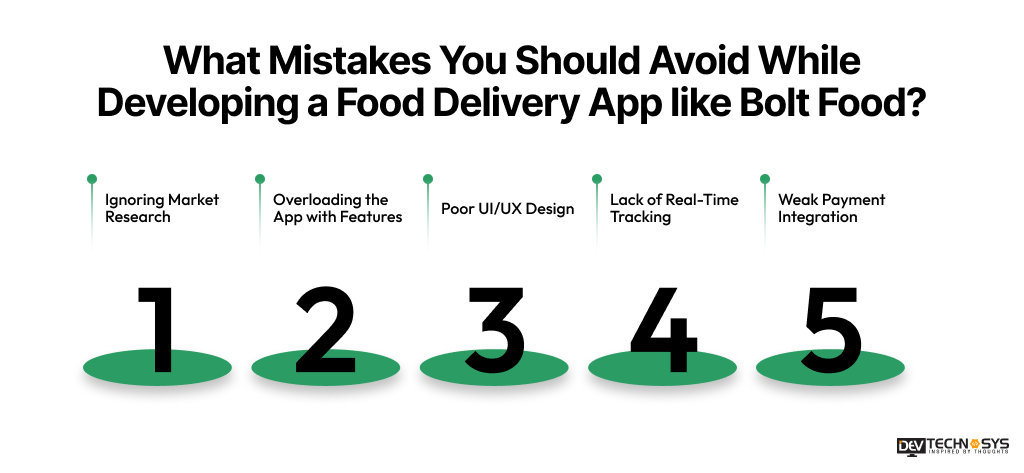
What Mistakes You Should Avoid While Developing a Food Delivery App like Bolt Food?
Building a food delivery app like Bolt Food can be highly rewarding, but common mistakes can impact performance and user experience. Identifying these pitfalls early helps businesses save time, reduce costs, and build a reliable platform.
1. Ignoring Market Research
Skipping proper market research can result in building an app that doesn’t meet user needs. Understanding customer behavior, competitor strategies, and market demand is essential for creating a relevant and successful food delivery platform.
2. Overloading the App with Features
Adding too many features at the initial stage increases complexity, cost, and confusion. Instead of launching a heavy app, focus on building a simple MVP and gradually introduce advanced features based on real user feedback.
3. Poor UI/UX Design
Bolt Food app development with complicated and cluttered interface can frustrate users and reduce engagement. A clean, intuitive, and fast design ensures smooth navigation, improves user satisfaction, and encourages customers to complete orders without confusion or delays.
4. Lack of Real-Time Tracking
Without accurate real-time tracking, users may feel uncertain about their orders. Your hybrid app development company should provide live GPS tracking to build transparency, improves trust, and enhances the overall delivery experience, which is crucial for customer satisfaction and retention.
5. Weak Payment Integration
Limited or insecure payment options can lead to cart abandonment and lost revenue. Integrating multiple secure payment methods ensures flexibility, builds trust, and provides users with a seamless checkout experience across different preferences.

Conclusion
Building a food delivery app like Bolt Food requires careful planning, a strong tech stack, and a user-focused design. By integrating advanced features, seamless payments, real-time tracking, and personalized recommendations, businesses can enhance customer experience, increase engagement, and generate multiple revenue streams. If you want to develop a similar app to Bolt Food, contact Dev Technosys, a leading food delivery app development company in the Middle East. Stay tuned for more updates.
FAQs
Q1. How Much Does It Cost To Develop A Food Delivery App Like Bolt Food?
The cost to build a food delivery app like Bolt Food ranges from $8,000 to $15,000 for a basic MVP. A fully-featured, advanced app with AI recommendations, multiple integrations, and analytics can cost $30,000+ or more, depending on complexity and location.
Q2. How Long Does It Take To Build A Food Delivery App?
Developing an MVP typically takes 4 to 6 months. Adding advanced functionalities, integrating third-party services, rigorous testing, and polishing the UI/UX can extend the development timeline to 8 to 12 months, depending on team size and project complexity.
Q3. Which Platforms Should I Launch On First?
To maximize user reach, it’s recommended to launch simultaneously on iOS and Android platforms. Web or desktop versions can be added later for online ordering. Cross-platform frameworks like Flutter or React Native can simplify simultaneous development.
Q4. What Are Essential Features For A Food Delivery App?
Develop a food delivery app like Bolt Food with essential features and strategies to make your food delivery app stand out in a competitive market:
- User registration & profile
- Restaurant & menu browsing
- Real-time order tracking
- Multiple payment options
- Ratings, reviews, and push notifications
- Delivery partner management & admin analytics
Q5. How Can I Make My App Stand Out From Competitors?
Here are the most effective strategies and advanced features to differentiate your food delivery app and attract loyal users in a competitive market:
- AI-based recommendations & personalized suggestions
- Loyalty programs, rewards, and gamification
- Multi-restaurant orders and dynamic pricing
- Clean, fast, and intuitive UX design
- Seamless checkout and real-time notifications