





Key Takeaways:
-
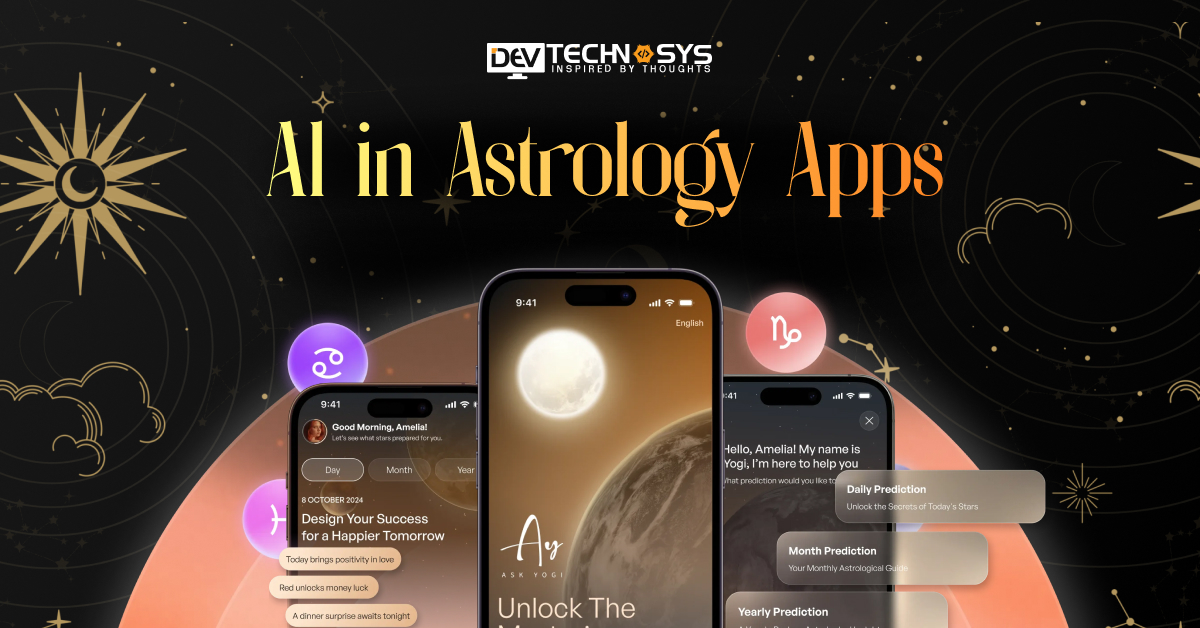
- The integration of AI enhances user engagement in astrology apps by delivering personalized, data-driven insights with ease and accuracy.
- AI-powered tools analyze birth charts, user behavior, and preferences to recommend tailored horoscopes, readings, and astrological content.
- Real-world applications of AI in astrology apps help developers and businesses understand user needs and optimize app performance.
- Challenges arise in balancing traditional astrological beliefs with AI predictions, requiring thoughtful design and ethical considerations.
The advent of Artificial Intelligence has allowed astrology applications in the Middle East to diversify starting from the year 2025.
Traditionally, ancient astrology was a ritualistic practice that has since then evolved to encompass tech innovations.
Complex algorithms and user databases, along with birth charts and celestial patterns, are deciphered in the blink of an eye, allowing horoscopes and horoscopic astrology to be done in real-time. From incorporating regional languages to supporting the cultural modifications, AI has made astrology more user-friendly to the youth in the area.
AI-based astrology applications provide wisdom to users on love, professions, and even destiny, fast replacing real-life companions.
This combination of tradition with new-age tech is a first in the region and serves to redefine the interaction with astrology in the Middle East.
Present and Future Market Projections of Astrology Applications
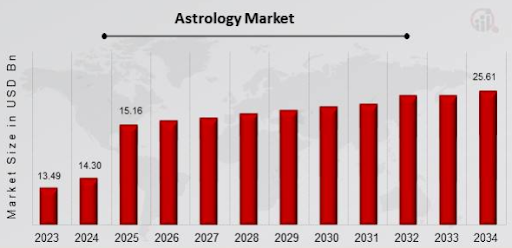
- According to Market Research Future, the astrology applications market is valued at approximately $14.30 billion in 2024.
- In a ground-level report, the astrology and horoscope applications market is projected to grow to around $25.61 billion by the end of 2034.
- The astrology market is expected to increase with a Compound Annual Growth Rate(CAGR) of 6% during the forecast period.
- As we look at the segment-wise growth, the love astrology segment market is recording the highest growth in 2024.
- North America holds the highest revenue-generating region in astrology applications in 2025.
What is the Role of AI in Astrology Apps?
Artificial Intelligence plays a crucial role in astrology app development that offers various advanced features and services, making operations easier for users and businesses. So, let’s take a look at the various roles of Artificial Intelligence in astrology apps:
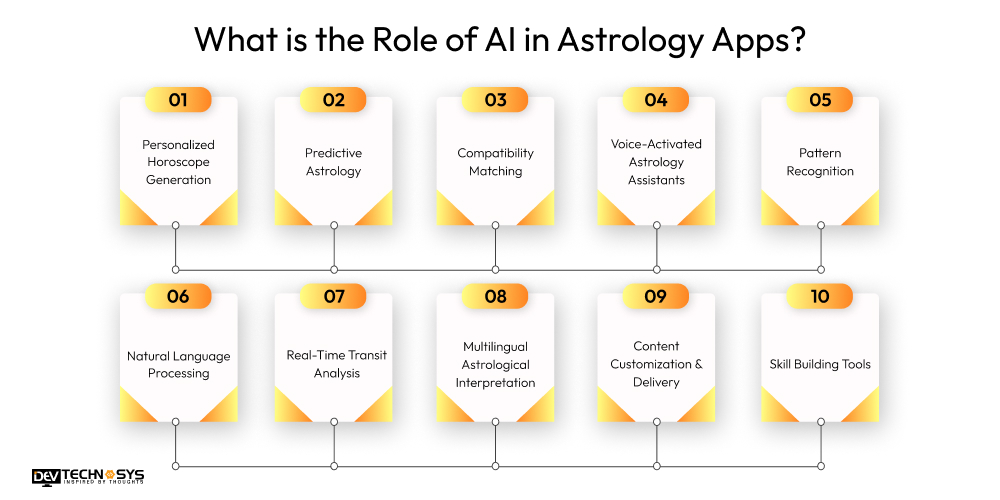
1. Personalized Horoscope Generation
AI analyzes birth details and planetary data to generate highly personalized horoscopes. It considers individual birth charts, current transits, and patterns to tailor daily, weekly, or monthly predictions. Unlike generic horoscopes, AI-driven ones reflect unique life paths, enhancing relevance and engagement. This automation offers users consistent and customized insights with minimal effort.
2. Predictive Astrology
Using machine learning, AI forecasts significant life events by studying historical planetary alignments and their outcomes. It predicts trends in relationships, career, finances, and health by correlating transits with previous user experiences. This enables more accurate, data-backed predictions than traditional methods alone. So, these predicative astrology AI-based tools can enhance the users’ experience and predict their future insights.
3. Compatibility Matching
The artificial intelligence compares the astrology between partners with the help of birth charts. It mainly uses synastry, pattern analysis, and composite charts to identify the relationship challenges and strengths. The compatibility matching works on the users’ feedback and outcomes; this can enhance the matching quality. It can observe the various important data of users, such as birth charts, habits, and behaviours.
4. Voice-Activated Astrology Assistants
The voice-activated astrology assistants make it easy for users to know their horoscopes and predict their future lives. Users can ask for the daily horoscope and insights with the help of voice commands, and they can perform multiple tasks and operations. AI uses Natural Language Processing(NLP) and recognition to generate meaningful astrology data and understand complex language in a comfortable way.
5. Pattern Recognition
AI in astrology Android app development services utilize pattern recognition on a vast scale, enabling astrology app consultants to predict accurate future insights and other important information. It can analyze or observe the millions of user charts to identify new trends and ways in which users’ mood, behaviour, and lifestyle affect their astrology data. This pattern recognition method makes it more adaptable to astrological data and offers more real-time insights.
6. Natural Language Processing
Natural Language Processing (NLP) enables users to ask astrology-related questions in simple or plain language and receive a response in the same language. This can be a beneficial opportunity for beginners to understand the working process, and it can make the app more engaging and conversational. AI can use this technique in complex operations to transform them into an easy way.
7. Real-Time Transit Analysis
Artificial Intelligence allows real-time monitoring of planetary transits and monitors their effects on individual users, and that’s how sudden change can happen. It can also track the celestial movements and how these can impact the daily lives and the user’s natal chart. This can help users to prepare themselves for a major event and emotional shifts in their future lives. So, it can speed up the AI accuracy and scale the astrology services.
8. Multilingual Astrological Interpretation
AI with multilingual astrological interpretation can provide flexibility and convenience for users to receive the astrological data in various types of languages and cultural relevance. It also helps to adjust certain important interpretations, such as metaphors, tones, and terminology, to suit local astrology traditions, while also reaching global audiences. These can enhance the user’s experience to get the astrological response in their local or hometown language.
9. Content Customization & Delivery
The AI delivers astrological content based on the users’ preferences, behaviours, habits, feedback, engagement patterns, and more. There are various types of content that are offered by AI, such as videos, audio, text, and others that suit users’ needs and preferences. This can send personalized recommendations and notifications, and relevant astrological content. So, these can maximize the retention and stratification of users.
10. Skill Building Tools
The astrology app development services with AI help users build their skills and increase their learning paths. It offers various ways for skill building, such as quiz competitions, AI-recommended topics, exercises, readings, and more. After that, it can track their progress report, quiz results, and many more to identify how much their skills have grown in astrology. So, this is mainly functioning as a private astrology tutor; it can help users a lot to gain knowledge.
Real-World Examples: AI in Astrology Apps
AI is revolutionizing astrology apps by delivering hyper-personalized horoscopes, real-time chart analysis, and predictive insights. From Co-Star to The Pattern, machine learning enhances user experience with tailored guidance based on astronomical data.
1. The Pattern
The Pattern uses AI to analyze birth chart data and deliver deep psychological insights. Unlike traditional horoscope apps, it focuses on emotional patterns and relationships. The app creates highly personalized timelines and guides based on users’ natal charts, helping people understand life themes, behavior cycles, and compatibility without relying on standard zodiac forecasts.
2. Co‑Star
Co‑Star combines AI with NASA’s real-time astronomical data to generate hyper-personalized horoscopes. It interprets birth charts using machine learning to provide brutally honest, socially shareable insights. The app also compares users’ charts to friends’ for compatibility. Its AI tailors daily readings based on unique planetary alignments and personal astrological signatures.
3. Nebula
Nebula is a spiritual wellness app that blends AI with astrology, numerology, and tarot. It generates daily horoscopes, compatibility reports, and future forecasts by analyzing user data and birth charts. AI helps personalize insights, manage predictions, and adapt suggestions across topics like relationships, career, and health. Nebula also offers AI-enhanced psychic readings.
4. Faladdin
Faladdin uses AI and image recognition to deliver mystical readings, including coffee cup readings, tarot, and horoscopes. Users submit a photo (e.g., of coffee grounds), which the AI interprets using trained algorithms. App like Faladdin combines astrology with fortune-telling traditions, offering daily insights and future predictions through a conversational, AI-powered fortune-teller experience.
5. Chani
Chani merges astrology with mindfulness using AI to generate personalized horoscopes, rituals, and meditations. Based on users’ birth charts, it delivers spiritual and emotional guidance tailored to weekly planetary movements. AI helps create evolving self-care plans, aligning practices like journaling and breathwork with astrological timing for healing, growth, and reflection.
6. Taqdeer AI
Taqdeer AI offers users spiritual life guidance rooted in both astrology and numerology. The app uses AI to identify patterns across user inputs, historical celestial movements, and local events. Designed for a Middle Eastern audience, it respects cultural sensitivities while providing empowering predictions about love, career, and destiny.
7. Hayat Stars
Hayat Stars uses AI to combine modern astrological models with traditional Arab beliefs about constellations and fate. If businesses develop an astrology app, it provides real-time celestial event alerts and their interpreted impact. The app’s predictive engine learns from user feedback to improve reading accuracy over time.
10 Best Use Cases
Learn how AI improves astrology apps in the Middle East by giving personalized horoscopes, local language support, real-time updates, and advice for well-being. AI makes astrology easier to use, more accurate, and helpful for people in the region.
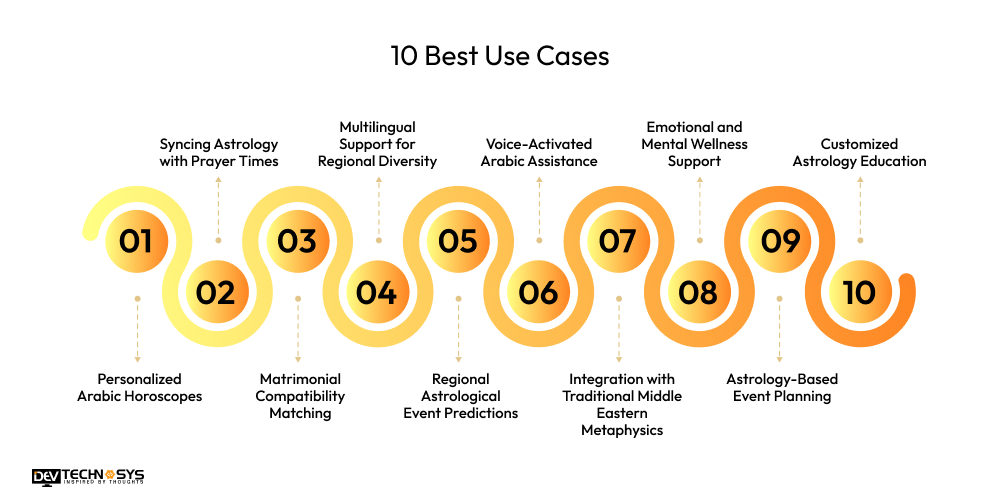
1. Personalized Arabic Horoscopes
AI delivers personalized horoscopes in Arabic, incorporating regional cultural values and astrological traditions. This localization makes astrology more relevant and engaging for Middle Eastern users, enhancing user trust and satisfaction through culturally tailored content.
2. Syncing Astrology with Prayer Times
AI integrates Islamic prayer schedules with planetary transits, helping users harmonize spiritual practices and astrological insights. This fusion supports users in aligning their daily rituals with favorable cosmic timings, creating a unique blend of faith and astrology.
3. Matrimonial Compatibility Matching
AI analyzes birth charts for relationship compatibility according to Middle Eastern matrimonial customs, aiding match-making decisions. It respects cultural sensitivities and traditions, providing personalized relationship advice to support family-approved partnerships.
4. Multilingual Support for Regional Diversity
AI-powered apps deliver astrology content in Arabic, English, and French, catering to the linguistically diverse Middle East. This broad language support ensures accessibility and inclusivity, attracting a wider user base across different countries.
5. Regional Astrological Event Predictions
AI assesses how regional celestial events impact users in the Middle East, offering forecasts aligned with local environmental and cultural contexts. This localized insight increases the practical relevance of predictions for everyday life and decision-making.
6. Voice-Activated Arabic Assistance
AI enables voice-controlled astrology guidance in various Arabic dialects, making the app more interactive and user-friendly. This technology is especially helpful for users who prefer verbal communication or have limited literacy.
7. Integration with Traditional Middle Eastern Metaphysics
AI combines astrology with regional metaphysical practices like numerology and palmistry, creating a comprehensive spiritual toolkit. This blend honors local heritage and offers users holistic insights beyond just planetary influences.
8. Emotional and Mental Wellness Support
AI analyzes planetary transits alongside user mood data to provide culturally sensitive emotional wellness tips. According to the astrology app development company, this approach supports mental health by linking astrology with personalized coping strategies.
9. Astrology-Based Event Planning
AI alerts users about auspicious dates for weddings, business launches, and religious ceremonies based on astrological transits. This helps individuals plan important events in harmony with the favorable cosmic energies respected in the region.
10. Customized Astrology Education
AI personalizes astrology learning paths in Arabic, addressing different knowledge levels while respecting Middle Eastern cultural perspectives. This educational feature helps users deepen their understanding and appreciation of astrology in a culturally relevant way.
Why Entrepreneurs Integrate AI in Astrology Applications?
The demand for AI is increasing day by day, and most entrepreneurs integrate AI into their projects or applications to streamline their business operations. That’s why AI integration in astrology applications one of a necessity to gain a competitive advantage and perform astrology-related operations. So, let’s take a look at the various benefits:
- Enhanced Accuracy
- Personalized Recommendations
- Scalability
- Competitive Advantage
- Cost Efficiency
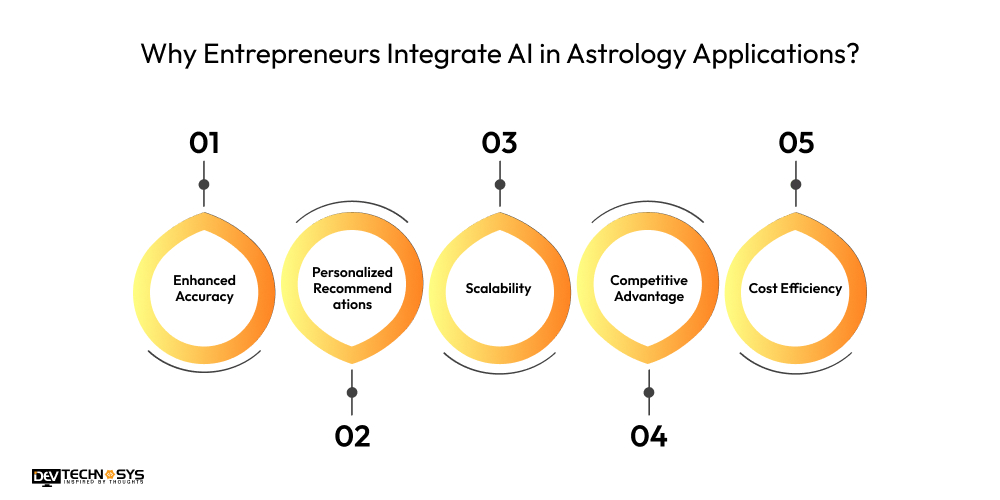
1. Enhanced Accuracy
The artificial intelligence can observe the large volume of users’ astrological data that is missed by human or manual astrologers. It can increase the chances of accurate forecasting and predictions. With the help of machine learning, AI continuously improves the astrological data, and it can also increase the users’ trust and engagement.
2. Personalized Recommendations
Let’s move to the second benefit. Top astrology apps in Middle East can offer personalized recommendations to users based on behalf of their pattern engagement, daily activities, birth chart, and more. This personalized service can offer unique horoscopes and predictions depending on their current life situation and other important events.
3. Scalability
In the third business benefit, AI enables astrology applications to handle a higher number of operations smoothly and manage users’ data. With the help of AI handling data processing and prediction tasks automatically, applications can scale operations without performance degradation. It can maintain the actual speed of applications and manage the high-level of data easily.
4. Competitive Advantage
The astrology applications with AI integration can offer an opportunity to gain a competitive advantage because they can be different from traditional astrology apps. It offers advanced features such as personalized recommendations, multilingual support, real-time insights, and many more. As we discussed earlier with a mobile app development company in UAE, these AI-powered astrology apps offer businesses flexibility in automating their operations.
5. Cost Efficiency
In the fifth benefit, AI-based astrology offers highly automated operations such as customer support, data analysis, and content creation. These operations eliminate the larger team requirements and speed up processes, and identify more areas for innovation and growth. These cost saving helps startups to expand their business into various regions.
What AI-Based Technologies Are Used to Develop Astrology Apps?
There are various types of AI-based technologies used to develop astrology applications. It includes ML, NLP, virtual assistants, and more; these help businesses build a successful astrology app. So, let’s take a look at the robust AI-powered technologies:
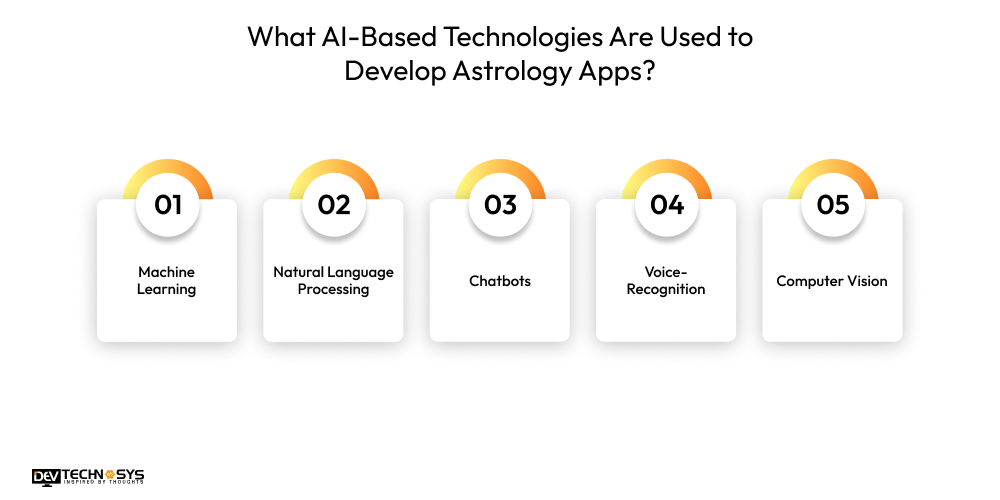
1. Machine Learning
With the help of machine learning, businesses can observe or analyze the users’ personalized data to offer them personalized horoscopes and astrological data. It helps to identify the new patterns and improve prediction accuracy for real-time insights.
2. Natural Language Processing
Natural Language Processing(NLP) allows astrology apps to understand human queries in their local language and respond to them in the same language. It is a powerful virtual assistant to transform the complex text into easy-to-read or simply understandable conversations.
3. Chatbots
The AI-powered chatbots help users receive real-time horoscopes and astrological data. Users can ask for their future insights, and they respond with immediate effect in a detailed conversation. It can improve the user engagement and reduce human intervention or astrologers.
4. Voice-Recognition
The voice-recognition enables users to ask horoscope and astrological-related questions with the help of voice commands. It is mainly for those who always prefer hands-free or audio–based interactions. So, it can increase the overall user base and attract these features to them.
5. Computer Vision
Computer Vision in astrology apps enables visual analysis of user-submitted images, such as palmistry scans, facial features, or aura photos. AI interprets these visuals to generate metaphysical insights. So, these can verify the real image and protect from image fraud.
Major Challenges When Integrating AI in Astrology Apps
When using AI in horoscope and astrology apps, there are various challenges faced. It consists of higher development costs, privacy issues, and more. So, let’s take a look at the major challenges:
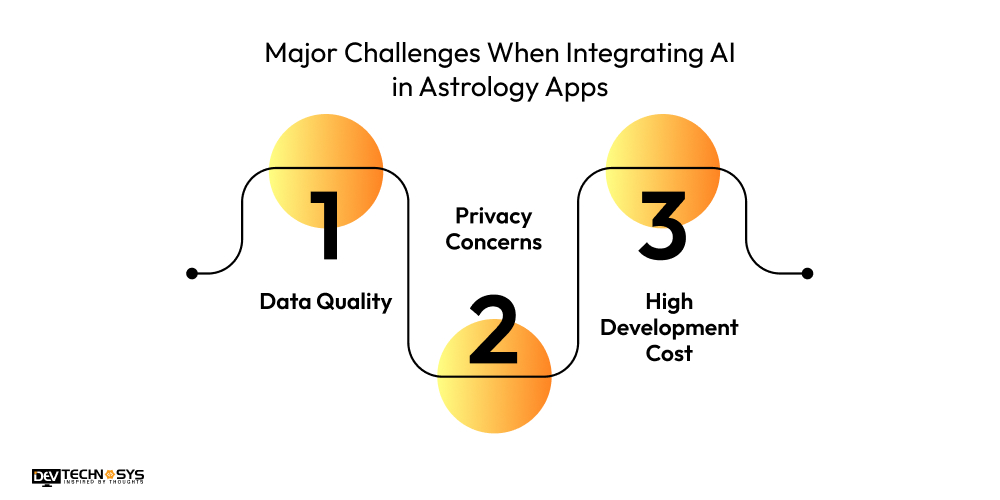
1. Data Quality
The data quality means that incorrect birth dates and user data insights can lead to wrong predictions and astrological data. AI needs clean and organized user data; if it does not exist, then it only offers misleading horoscopes and personalized data insights. So, it can be a major challenge when integrating AI in astrology iOS app development services.
2. Privacy Concerns
The AI systems store the users’ sensitive information for predictions and astrology data, such as birth charts, patterns of engagement, habits, behaviours, and daily activities. It can be a serious concern for users that unauthorized individuals can access data and exploit vulnerabilities.
3. High Development Cost
The cost of developing, integrating, and maintaining AI systems is expensive; it is mainly used to provide personalized recommendations and advanced features. So, entrepreneurs need to maintain the overall development budget and need to sacrifice some of the new innovations at an early stage.
Future Trends of AI in Astrology Apps
In the coming years, various strategies and trends are expected to emerge, offering more enhanced services. Let’s explore the future of astrology apps:
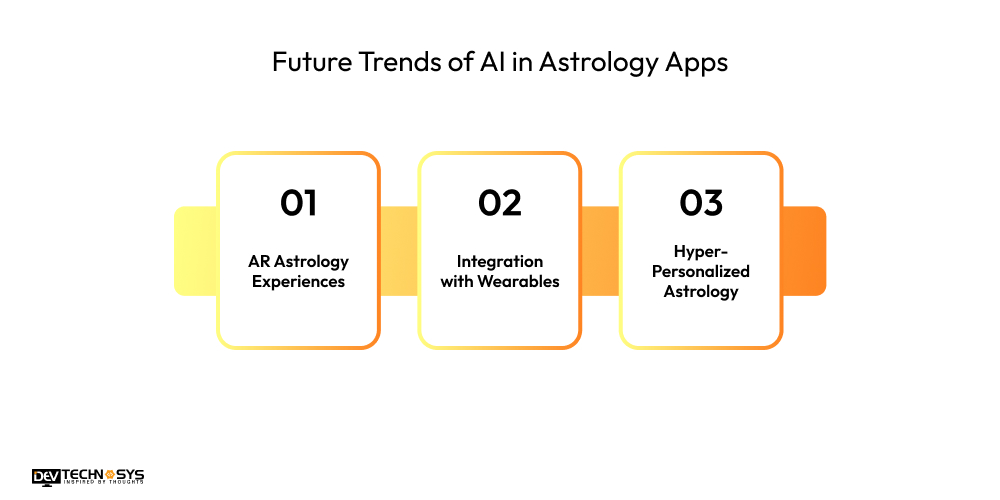
1. AR Astrology Experiences
The Augmented Reality(AR) enhances the astrology experiences through immersive birth charts, tarot readings, and constellation mapping. It enables users to interact with planetary alignments in a 3D view and connect with virtual astrologers via immersive visuals.
2. Integration with Wearables
The astrology applications integrate with wearables such as smartwatches to get personalized and biometric data, such as sleep, mood, and stress. It offers holistic insights and personalized wellness advice, this can increase the convenience of users.
3. Hyper-Personalized Astrology
Hyper-personalized astrology uses AI to deliver uniquely tailored predictions by analyzing a user’s birth chart, behavior, preferences, and life events. It moves beyond generic horoscopes to provide insights that feel highly relevant, specific, and aligned with individual experiences.

Conclusion
AI is expected to transform astrology apps in the Middle East in 2025 by adding value in personalization, accuracy, and engagement. With the ongoing growth in the adoption of digital channels, users look for astrology solutions that are digital and culturally appropriate. Machine learning, NLP, and predictive analytics are examples of AI technologies that enable users to interact in a meaningful way with their spiritual advisors. This presents new avenues for a business in the region. Developing astrology business solutions that are relatable to contemporary users in the Middle East means collaborating with a skilled artificial intelligence development company to ensure the solutions are scalable.
Frequently Asked Questions
1. Why is AI Gaining Popularity in Astrology Apps Across The Middle East?
AI is gaining popularity in astrology apps across the Middle East due to rising digital adoption and demand for personalization. Youthful users seek modern, tech-driven insights that align with traditional beliefs and cultural values.
2. Can AI Replace Human Astrologers In The Middle East?
AI cannot replace human astrologers in the Middle East. It enhances accuracy and efficiency but lacks cultural sensitivity, intuition, and spiritual depth. Human insight remains essential in interpreting astrology within traditional and religious contexts.
3. How Are Businesses Monetizing AI Astrology Apps?
Businesses monetize AI astrology apps through subscriptions, in-app purchases, personalized readings, and premium features. They also earn revenue from ads, virtual consultations, and selling astrology-based products like crystals, reports, or compatibility tools tailored to user profiles.
4. How Do Users Interact With AI in Astrology Apps?
Users interact with AI in astrology apps through chatbots, voice assistants, and personalized dashboards. These features provide real-time horoscopes, answer queries, and deliver tailored predictions, creating an engaging and intuitive user experience that feels interactive and responsive.
5. Can AI Predict Career Or Relationship Success In These Apps?
AI can analyze astrological patterns and user data to offer insights on career and relationship potential. While not guaranteed predictions, it provides personalized guidance based on trends, compatibility, and historical correlations.