







Key Takeaways:
-
- The global crypto trading platform market is projected to grow from $54.1 billion in 2025 to $200.5 billion by 2035, highlighting strong long-term industry growth.
- Businesses can choose from centralized, decentralized, P2P, or hybrid exchange models based on their target audience and business objectives.
- Essential features such as crypto wallets, real-time trading, KYC verification, and advanced security systems are critical for platform success.
- The cost to build a cryptocurrency exchange app typically ranges from $8,000 to $40,000+, depending on complexity, features, and security requirements.
- Long-term success depends on scalability, regulatory compliance, liquidity management, and a seamless user experience that builds user trust and engagement.
The Middle East is rapidly emerging as one of the most influential regions in the global digital asset economy, driven by progressive regulations, rising investor interest, and strong blockchain adoption. Businesses and startups are increasingly exploring opportunities in crypto trading ecosystems as demand for secure and scalable platforms continues to grow across the region.
This shift has created a strong need for advanced trading infrastructures where enterprises can efficiently enter the digital finance space. Many companies now aim to build a cryptocurrency exchange app to capture this fast-growing market and offer seamless trading experiences to users. However, developing such platforms requires deep expertise in blockchain architecture, security frameworks, and high-performance trading systems.
With the right approach to cryptocurrency exchange app development, businesses can launch secure, scalable, and compliant platforms tailored for modern digital finance. This makes expert-driven development essential for long-term success in the evolving crypto economy.
What is a Cryptocurrency Exchange App?
A cryptocurrency exchange app is a digital trading platform that allows users to buy, sell, and exchange cryptocurrencies such as Bitcoin, Ethereum, and stablecoins. These platforms are built through advanced cryptocurrency exchange app development frameworks that integrate blockchain networks, trading engines, and wallet systems.
The core purpose of an exchange app is to provide a secure and efficient environment where users can execute trades in real time. Businesses that aim to build a crypto trading app must ensure that the system supports high-speed order execution, deep liquidity pools, and strong encryption mechanisms.
There are two major categories of exchanges: centralized and decentralized. Centralized platforms act as intermediaries, while decentralized platforms enable peer-to-peer trading without intermediaries. Both models require different architectural approaches in blockchain exchange platform development.
Cryptocurrency Exchange Industry in the Middle East
The cryptocurrency industry is experiencing significant growth worldwide, creating new opportunities for businesses planning to create a cryptocurrency exchange app. As digital assets become more widely accepted, the demand for secure and reliable trading platforms continues to increase across both retail and institutional markets.
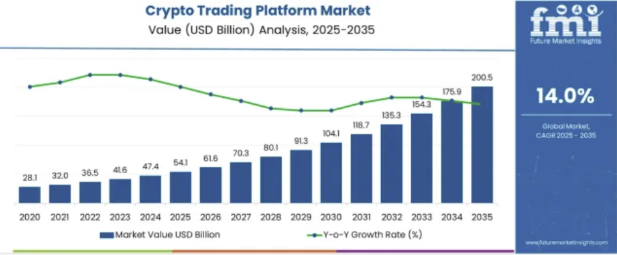
- The global crypto trading platform market is projected to grow from USD 54.1 billion in 2025 to USD 200.5 billion by 2035, reflecting strong long-term demand for cryptocurrency trading solutions.
- While web-based platforms currently dominate the market, mobile-first solutions are gaining traction as users seek convenient access to digital asset trading anytime and anywhere.
- Growing involvement from financial institutions, investment firms, and regulated entities is driving higher trading volumes and improving market credibility.
- The increasing adoption of blockchain technology, decentralized finance (DeFi), and digital asset ecosystems is creating demand for advanced cryptocurrency trading platforms with enhanced security, transparency, and scalability.
- Countries such as the UAE, Bahrain, and Saudi Arabia are actively supporting blockchain innovation and fintech growth.
How Does a Cryptocurrency Exchange App Work?
A cryptocurrency exchange app combines trading infrastructure, wallet management, liquidity systems, and security mechanisms to facilitate seamless digital asset transactions. Understanding this workflow is essential for businesses planning to launch a reliable exchange platform.
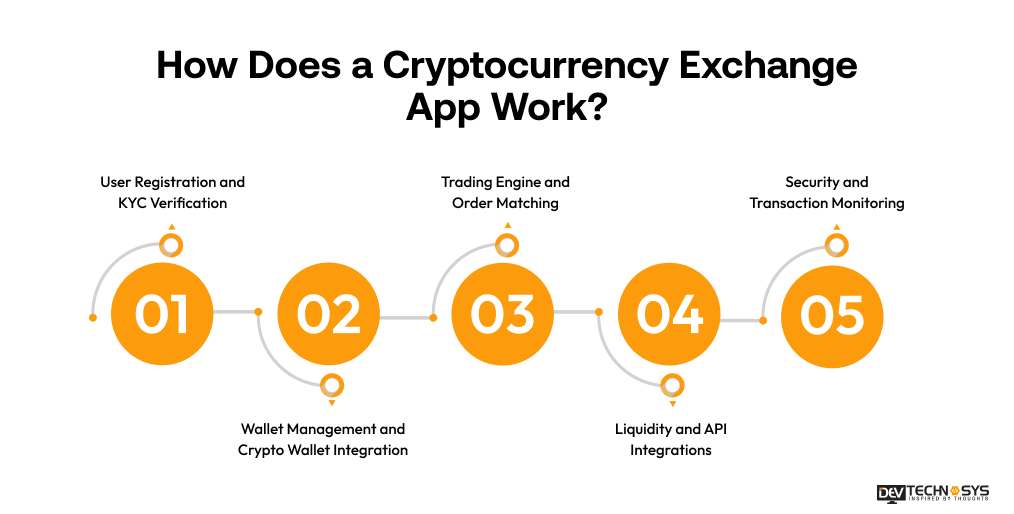
1. User Registration and KYC Verification
Users begin by creating an account and completing KYC verification. This process helps confirm identities, prevent fraud, and ensure compliance with regulatory requirements before trading activities can begin.
2. Wallet Management and Crypto Wallet Integration
Once verified, users can deposit, store, and withdraw cryptocurrencies through integrated wallets. Effective crypto wallet integration allows exchanges to support multiple digital assets while maintaining secure fund management.
3. Trading Engine and Order Matching
The trading engine serves as the backbone of the platform. It processes buy and sell orders, matches trades in real time, and updates market prices. A fast and efficient engine is critical for delivering a smooth trading experience.
4. Liquidity and API Integrations
Liquidity ensures users can execute trades quickly without major price fluctuations. To improve market depth and platform functionality, exchanges often use crypto exchange API integration to connect with liquidity providers, payment gateways, and market data services.
5. Security and Transaction Monitoring
Every transaction is protected through multiple security layers. A secure blockchain-based exchange system typically includes encryption, multi-factor authentication, transaction monitoring, and fraud detection tools to safeguard user assets and maintain trust in the platform.
Quote
According to Brian Armstrong, “On-chain is the new online.” He believes blockchain technology will have a transformative impact similar to the internet, creating new opportunities for ownership, payments, and financial services.
Types of Crypto Exchange Apps
When planning to build a cryptocurrency exchange app, selecting the right model is critical because it defines architecture, liquidity flow, and regulatory complexity. Different business models require different approaches to make a cryptocurrency exchange app, especially in the Middle East, where compliance is strict.
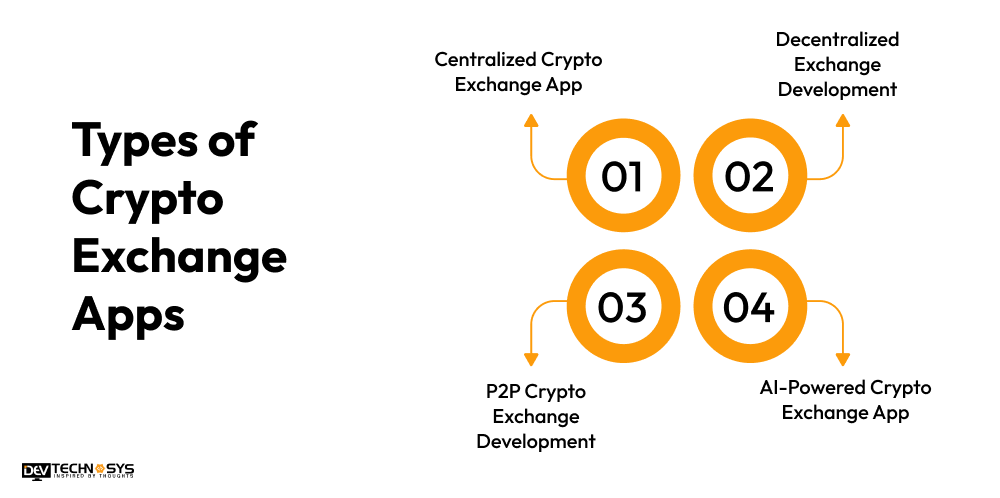
1. Centralized Crypto Exchange App
A centralized crypto exchange app acts as an intermediary between buyers and sellers. It provides high liquidity, faster execution, and better user experience. Most global platforms use this model because it supports large-scale trading and institutional participation.
2. Decentralized Exchange Development
In decentralized exchange development, users trade directly through smart contracts without intermediaries. This model enhances transparency and reduces custody risks but may face liquidity challenges compared to centralized systems.
3. P2P Crypto Exchange Development
P2P platforms allow users to trade directly with each other using escrow systems. This model is popular in emerging markets and offers flexible payment options, especially where banking restrictions exist.
4. AI-Powered Crypto Exchange App
AI-powered platforms use predictive analytics, trading bots, and automated risk systems. These platforms are becoming a key trend in modern crypto investment app development, offering smarter trading decisions and improved efficiency.
Why Businesses Are Investing in Cryptocurrency Exchange App Development
The growing adoption of digital assets and blockchain technology has created significant opportunities for entrepreneurs and enterprises worldwide. As trading activity continues to increase, many organizations are choosing to build a cryptocurrency exchange app to capitalize on this expanding market.
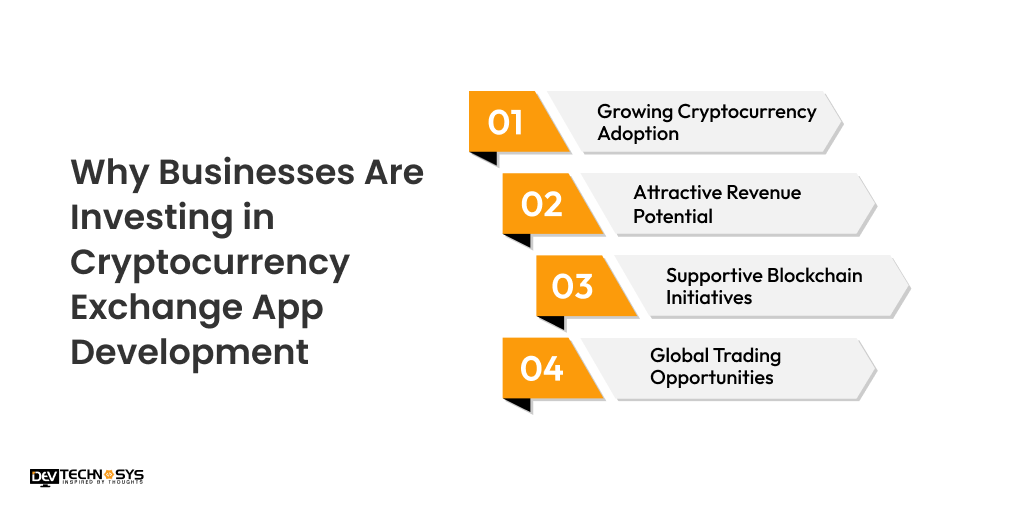
1. Growing Cryptocurrency Adoption
Cryptocurrencies are becoming more widely accepted by both retail and institutional investors. This growing user base is driving demand for secure and accessible trading platforms across global markets.
2. Attractive Revenue Potential
Cryptocurrency exchanges can generate revenue through multiple channels, including trading fees, listing fees, premium subscriptions, and staking services, making them an appealing long-term business model.

3. Supportive Blockchain Initiatives
Countries across the Middle East, particularly the UAE and Saudi Arabia, are investing in blockchain innovation and digital transformation programs. These initiatives are creating favorable conditions for cryptocurrency exchange app development.
4. Global Trading Opportunities
Unlike traditional financial markets, cryptocurrency markets operate 24/7. This enables businesses to serve users worldwide, access international liquidity, and expand their reach beyond regional boundaries.
Step-by-Step Process to Build a Cryptocurrency Exchange App
Building a successful cryptocurrency exchange requires careful planning, robust technology, and strict security measures. Following a structured development approach helps businesses launch a scalable platform that delivers a seamless trading experience while meeting regulatory and operational requirements.
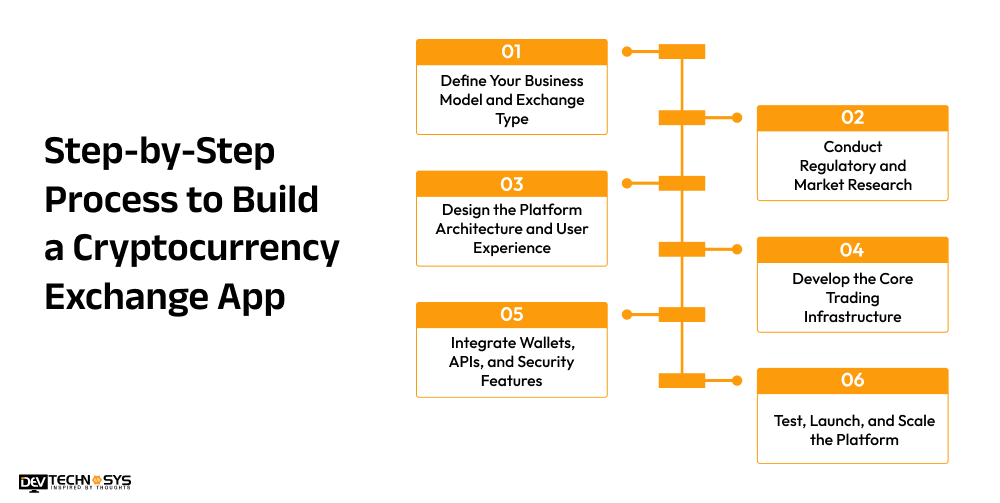
1. Define Your Business Model and Exchange Type
The first step is to identify your target audience, revenue model, and preferred exchange type. Whether you plan to launch a centralized, decentralized, or hybrid platform, these decisions will influence the platform’s features, architecture, and compliance requirements.
2. Conduct Regulatory and Market Research
Before development begins, businesses should evaluate regional regulations, licensing requirements, and competitor offerings. Understanding compliance obligations early helps reduce legal risks and ensures smoother operations after launch.
3. Design the Platform Architecture and User Experience
An intuitive interface is essential for attracting and retaining users. Effective crypto exchange UI/UX design focuses on simple navigation, real-time market visibility, and a streamlined trading process across web and mobile platforms.
4. Develop the Core Trading Infrastructure
The development team builds the trading engine, wallet system, admin panel, and user management modules. This stage forms the foundation of the platform and supports all trading activities.
5. Integrate Wallets, APIs, and Security Features
Secure crypto wallet integration allows users to manage digital assets efficiently, while crypto exchange API integration connects the platform with liquidity providers, payment gateways, and market data services. Security mechanisms such as encryption, multi-factor authentication, and transaction monitoring should also be implemented at this stage.
6. Test, Launch, and Scale the Platform
Before going live, the platform must undergo extensive testing to identify performance, security, and usability issues. Many businesses partner with a professional cryptocurrency exchange app development company to accelerate deployment, improve scalability, and ensure long-term platform success.
Industry Insight
According to Chainalysis research, crypto growth in the UAE is increasingly fueled by large institutional transactions, with institutional transfer volumes growing significantly year-over-year.
Essential Features Required to Build a Cryptocurrency Exchange App
The success of any cryptocurrency exchange depends heavily on the features it offers. Beyond basic trading functionality, modern platforms must provide security, usability, and advanced trading capabilities to attract and retain users. Businesses looking to build a cryptocurrency exchange app should focus on features that improve user experience while supporting operational efficiency and regulatory compliance.
User Features
1. Account Registration and Authentication: A secure onboarding process with email verification, multi-factor authentication, and KYC verification helps protect user accounts and meet compliance requirements.
2. Multi-Currency Wallet Support: Users should be able to store, send, receive, and manage multiple cryptocurrencies through integrated wallet functionality within the platform.
3. Real-Time Market Data and Trading: Live price updates, market charts, order books, and instant trade execution enable users to make informed trading decisions.
4. Portfolio and Transaction Management: A comprehensive dashboard allows users to monitor holdings, track transaction history, and evaluate portfolio performance in real time.
5. Admin Features: User and Transaction Management: Administrators need centralized tools to manage user accounts, review transactions, and monitor platform activities efficiently.
6. Compliance and Reporting Tools: Built-in compliance systems simplify KYC, AML monitoring, audit tracking, and regulatory reporting processes.
7. Liquidity and Risk Management: Admin panels should provide visibility into liquidity levels, trading volumes, and potential risks to maintain smooth platform operations.
Advanced Features
1. AI-Powered Trading Capabilities: An AI-powered crypto exchange app can offer market insights, trading recommendations, fraud detection, and predictive analytics to improve decision-making. Exploring the growing role of AI in cryptocurrency exchange apps to enhance platform performance and user engagement.
2. Copy Trading and Automated Trading Bots: These features allow users to replicate successful trading strategies or automate trades based on predefined conditions.
3. Staking and Yield Generation: Staking services enable users to earn rewards on idle crypto assets, creating additional engagement opportunities.
4. Cross-Platform Accessibility: A modern mobile crypto exchange application should deliver a consistent experience across smartphones, tablets, and web platforms, ensuring users can trade whenever and wherever they choose. Selecting hybrid app development services is the way to gt.
Security and Compliance Requirements for a Cryptocurrency Exchange App
Security and regulatory compliance are critical factors in the success of any cryptocurrency exchange platform. Businesses looking to build a cryptocurrency exchange app must implement robust protection mechanisms while ensuring adherence to regional regulations. A strong security and compliance framework helps protect user assets, maintain trust, and support long-term platform growth.
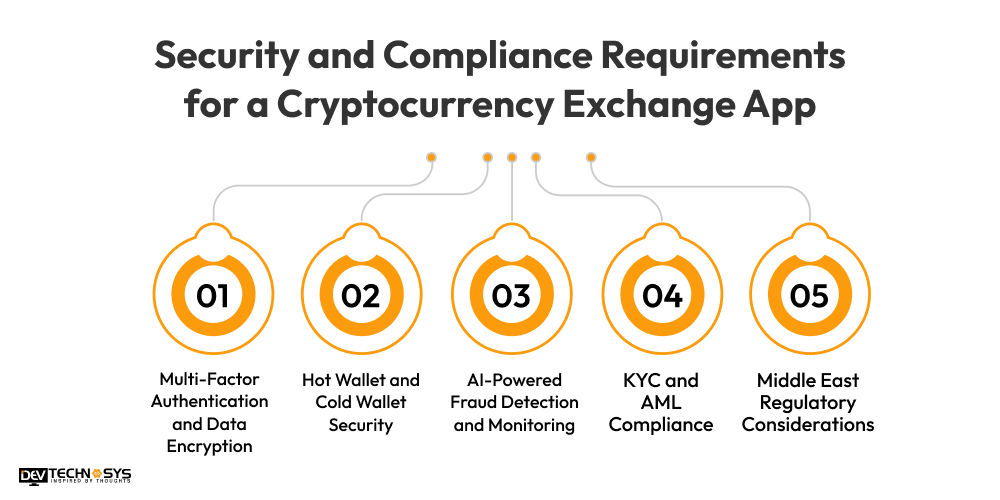
1. Multi-Factor Authentication and Data Encryption
User accounts should be protected through multi-factor authentication (MFA), requiring additional verification beyond passwords. Combined with end-to-end encryption, these measures help safeguard sensitive information, transaction data, and account credentials from unauthorized access.
2. Hot Wallet and Cold Wallet Security
A secure cryptocurrency exchange app typically uses both hot and cold wallets to manage digital assets. Hot wallets facilitate day-to-day trading activities, while cold wallets store the majority of funds offline, reducing exposure to cyber threats. This approach strengthens the overall security of a secure blockchain-based exchange system.
3. AI-Powered Fraud Detection and Monitoring
An AI-powered crypto exchange app can identify suspicious transactions, unusual login patterns, and potential fraud attempts in real time. Advanced monitoring systems enable exchanges to respond quickly to security threats while improving risk management and operational efficiency.
4. KYC and AML Compliance
Know Your Customer (KYC) and Anti-Money Laundering (AML) procedures help verify user identities and monitor financial activities. These compliance measures reduce fraudulent behavior, support regulatory requirements, and form an essential part of modern crypto exchange security solutions.
5. Middle East Regulatory Considerations
Regulatory frameworks for cryptocurrency businesses continue to evolve across the Middle East. The UAE has introduced dedicated virtual asset regulations through VARA, while Bahrain has established a supportive framework for digital asset businesses.
Saudi Arabia is also expanding its blockchain and fintech ecosystem. Businesses should evaluate local licensing, reporting, and compliance obligations before launching an exchange platform in any jurisdiction.

Cryptocurrency Exchange App Development Cost in 2026
The cost to create a cryptocurrency exchange app depends on several factors, including exchange type, feature complexity, security requirements, compliance needs, and third-party integrations. Businesses should carefully evaluate their requirements before planning a development budget, as costs can vary significantly based on the scope of the project. If you’re looking for a detailed breakdown of the cost to build a cryptocurrency exchange app, understanding the key cost drivers is essential.
Average Cost to Build a Cryptocurrency Exchange App
| Development Complexity | Key Features Included | Estimated Cost |
| Basic Exchange Platform | User registration, KYC verification, crypto wallet integration, buy/sell functionality, basic trading dashboard, transaction history, admin panel, and essential security features | $8,000 – $15,000 |
| Mid-Level Exchange Platform | Everything in the basic version, plus advanced trading charts, multiple cryptocurrencies, payment gateway integration, liquidity management, push notifications, analytics dashboard, and enhanced security controls | $15,000 – $22,000 |
| Advanced Exchange Platform | Everything in the mid-level version plus AI-powered trading features, staking, copy trading, NFT support, multi-chain compatibility, high-performance trading engine, advanced compliance tools, and enterprise-grade security infrastructure | $22,000 – $40,000+ |
The final budget depends on the number of supported cryptocurrencies, trading functionality, security infrastructure, and regulatory requirements.
Cost Breakdown by Development Stage
| Development Stage | Key Deliverables / Features | Estimated Cost |
| UI/UX Design | User journey mapping, wireframes, trading dashboard design, wallet interface, responsive layouts, and interactive prototypes | $1,000 – $3,000 |
| Frontend Development | User registration screens, trading interface, portfolio dashboard, wallet management pages, real-time market charts, and mobile responsiveness | $2,000 – $5,000 |
| Backend Development | User management, database architecture, order processing, transaction management, API development, admin panel, and business logic implementation | $3,000 – $8,000 |
| Trading Engine Development | Order matching engine, market order processing, liquidity management, trade execution, price updates, and high-volume transaction handling | $2,000 – $7,000 |
| Security Integration | Multi-factor authentication, encryption, KYC/AML systems, fraud detection, wallet security, access controls, and risk monitoring tools | $1,500 – $5,000 |
| Testing & Quality Assurance | Functional testing, security testing, performance testing, bug fixing, compatibility testing, and pre-launch quality validation | $1,000 – $3,000 |
Factors Affecting Cryptocurrency Exchange App Development Cost
1. Exchange Type
The cost of development varies depending on whether you develop a cryptocurrency exchange app using a centralized, decentralized, or hybrid model. A centralized crypto exchange app typically requires extensive backend infrastructure, while decentralized platforms may involve complex smart contract development.
2. Feature Complexity
Advanced capabilities such as AI-powered trading, staking, copy trading, NFT support, and portfolio analytics increase development time and overall project costs.
3. Security Requirements
Security is a major investment area for cryptocurrency exchanges. Features such as multi-factor authentication, encryption, fraud detection systems, and compliance monitoring significantly influence development expenses.
4. Third-Party Integrations
Integrating payment gateways, liquidity providers, market data feeds, and banking services requires additional development effort and testing, which can increase the project budget.
5. Maintenance and Updates
Ongoing maintenance, performance optimization, security patches, and feature enhancements should be included in long-term planning. These recurring blockchain app development costs help ensure platform stability and scalability as the user base grows.
Top Cryptocurrency Exchange Apps to Benchmark Before Development
Studying established cryptocurrency exchanges can help businesses understand market expectations, security standards, user experience requirements, and revenue opportunities. Before you build a crypto trading app, analyzing successful platforms can provide valuable insights into the features and capabilities users expect from a modern exchange.
| Platform | Platform Availability | Exchange Type | Approx. Downloads* | Key Strength |
| Binance | Android, iOS, Web | Centralized | 100M+ | High liquidity and extensive trading tools |
| Coinbase | Android, iOS, Web | Centralized | 10M+ | Beginner-friendly experience and compliance focus |
| Kraken | Android, iOS, Web | Centralized | 5M+ | Strong security and institutional trading services |
| Bybit | Android, iOS, Web | Centralized | 10M+ | Advanced derivatives and copy trading features |
| OKX | Android, iOS, Web | Hybrid Ecosystem | 10M+ | Web3 integration and multi-chain support |
| KuCoin | Android, iOS, Web | Centralized | 10M+ | Large selection of cryptocurrencies |
| Bitget | Android, iOS, Web | Centralized | 10M+ | Social trading and copy trading ecosystem |
| Crypto.com | Android, iOS, Web | Centralized | 10M+ | Integrated crypto payment solutions |
| Gate.io | Android, iOS, Web | Centralized | 5M+ | Diverse digital asset marketplace |
| MEXC | Android, iOS, Web | Centralized | 5M+ | Broad token availability and fast listings |
1. Binance
Binance is known for its deep liquidity, broad cryptocurrency support, and extensive trading ecosystem. The platform offers spot trading, futures, staking, and NFT services, making it a strong benchmark for businesses seeking to build a feature-rich exchange.
2. Coinbase
Coinbase focuses on simplicity, security, and regulatory compliance. Its intuitive interface makes cryptocurrency trading accessible to beginners while maintaining enterprise-grade security standards and institutional services that enhance platform credibility.
3. Kraken
Kraken has built its reputation around security, transparency, and reliability. The platform offers advanced trading features, institutional-grade services, and strong compliance practices, making it a popular choice among professional and institutional traders.
4. Bybit
Bybit is recognized for its advanced trading tools, derivatives marketplace, and copy trading capabilities. Businesses planning to develop a cryptocurrency exchange app like Bybit can learn from its focus on performance, trading efficiency, and user engagement.
5. OKX
OKX combines traditional exchange functionality with Web3 capabilities, decentralized finance integrations, and multi-chain support. Its ecosystem demonstrates how modern exchanges are evolving beyond basic trading into comprehensive digital asset platforms.
Industry Insights
According to industry discussions and regulatory updates, anti-money laundering (AML), Know Your Customer (KYC), transaction monitoring, and proof-of-funds verification are becoming critical requirements for crypto businesses operating in the Gulf region.
Revenue Models for a Cryptocurrency Exchange App
A successful cryptocurrency exchange relies on multiple revenue streams to ensure long-term profitability and business growth. Beyond facilitating trades, modern exchanges generate income through value-added services that enhance the user experience and increase platform engagement. Understanding these monetization strategies is essential when planning cryptocurrency exchange app development.
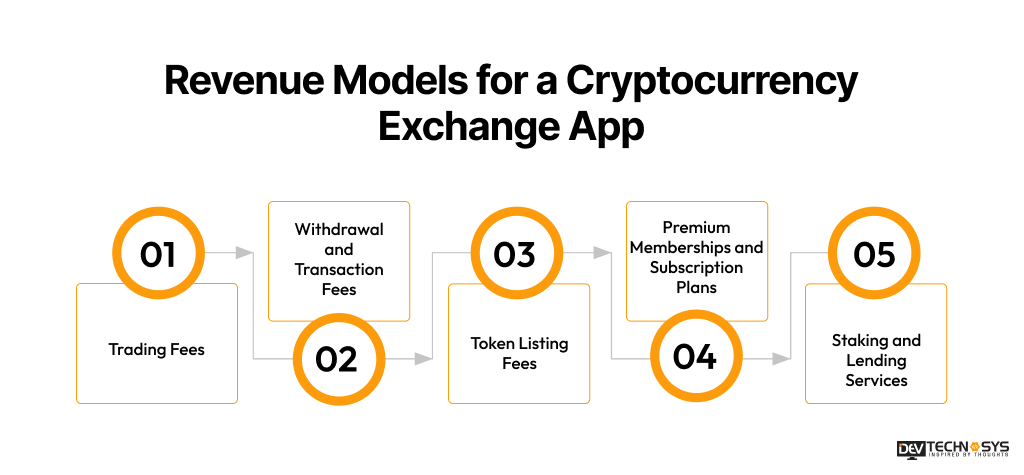
1. Trading Fees
Trading fees are the primary source of revenue for most cryptocurrency exchanges. Platforms typically charge a small percentage on every buy and sell transaction, creating a consistent income stream as trading volume grows.
2. Withdrawal and Transaction Fees
Exchanges often charge fees when users withdraw cryptocurrencies or fiat funds from their accounts. These fees help cover operational expenses, network costs, and transaction processing requirements.
3. Token Listing Fees
Many exchanges generate revenue by charging blockchain projects to list their tokens on the platform. Listing services provide new projects with visibility while expanding the exchange’s digital asset offerings.
4. Premium Memberships and Subscription Plans
Premium plans may include advanced trading tools, lower transaction fees, exclusive market insights, and enhanced customer support. These subscription-based services create recurring revenue opportunities.
5. Staking and Lending Services
Cryptocurrency exchanges can also earn revenue through staking and lending programs. By offering users opportunities to generate passive income on their digital assets, exchanges increase engagement while creating additional profit channels.

Technology Stack for Cryptocurrency Exchange App Development
Selecting the right technology stack is essential for building a secure, scalable, and high-performance cryptocurrency exchange. The technologies used directly impact platform speed, trading efficiency, security, and long-term maintenance.
Businesses planning blockchain exchange platform development should choose technologies that can support real-time transactions, high user volumes, and future scalability requirements. Companies seeking a comprehensive blockchain development solution should prioritize scalability, security, and seamless third-party integrations when selecting technologies for their exchange platform.
| Technology Layer | Technologies | Purpose |
| Frontend Development | React.js, Next.js, Angular, Vue.js | Creates responsive user interfaces, trading dashboards, portfolio views, and real-time market displays. |
| Mobile App Development | Flutter, React Native, Swift (iOS), Kotlin (Android) | Enables cross-platform or native mobile applications with seamless trading experiences. |
| Backend Development | Node.js, Python, Java, .NET | Handles business logic, transaction processing, user authentication, and API management. |
| Trading Engine | Java, C++, Node.js | Processes buy and sell orders, manages order matching, and supports high-frequency trading operations. |
| Blockchain Networks | Ethereum, Solana, Polygon, BNB Chain, Avalanche | Facilitates cryptocurrency transactions, token management, and smart contract execution. |
| Smart Contract Development | Solidity, Rust, Vyper | Develops and deploys secure smart contracts for decentralized functionalities. |
| Database Management | PostgreSQL, MongoDB, MySQL, Redis | Stores user data, transaction records, wallet information, and platform analytics. |
| Crypto Wallet Integration | MetaMask, Trust Wallet, WalletConnect, Coinbase Wallet | Supports secure cryptocurrency storage, deposits, withdrawals, and asset management. |
| Crypto Exchange API Integration | Binance API, Coinbase API, CoinMarketCap API, TradingView API | Connects the platform with liquidity providers, market data feeds, and trading tools. |
| Cloud Infrastructure | AWS, Microsoft Azure, Google Cloud Platform | Provides scalable hosting, storage, backup, and disaster recovery capabilities. |
| Security Technologies | OAuth 2.0, JWT, SSL/TLS, MFA, Firewalls | Protects user accounts, transactions, APIs, and platform infrastructure. |
| DevOps & Monitoring | Docker, Kubernetes, Jenkins, Grafana, Prometheus | Supports continuous deployment, system monitoring, and performance optimization. |
Future Trends Shaping Cryptocurrency Exchange Apps in 2026
The cryptocurrency industry continues to evolve rapidly, with new technologies transforming how digital assets are traded, managed, and integrated into financial ecosystems. Understanding these future trends of cryptocurrency exchange apps can help organizations make smarter development and investment decisions.
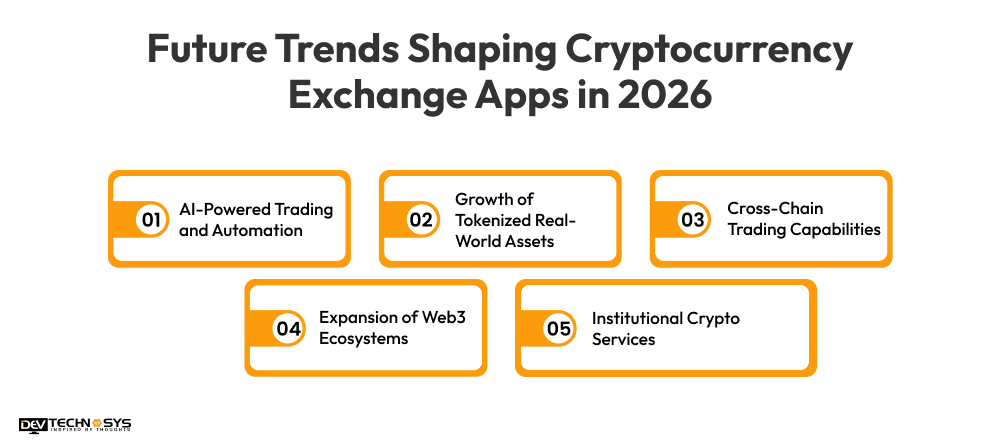
1. AI-Powered Trading and Automation
An AI-powered crypto exchange app can deliver personalized trading insights, automated strategies, fraud detection, and predictive market analysis. As artificial intelligence becomes more sophisticated, exchanges will increasingly use AI to improve trading efficiency and user engagement.
2. Growth of Tokenized Real-World Assets
Tokenization is expanding beyond cryptocurrencies to include real estate, commodities, stocks, and other physical assets. This trend is expected to create new trading opportunities and attract a broader range of investors.
3. Cross-Chain Trading Capabilities
Users increasingly expect seamless access to assets across multiple blockchain networks. Cross-chain technologies help exchanges improve interoperability, liquidity, and asset accessibility without requiring users to switch between platforms.
4. Expansion of Web3 Ecosystems
The rise of decentralized applications, digital identities, and blockchain-based ownership models is encouraging exchanges to integrate Web3 services directly into their platforms, creating more comprehensive user experiences.
5. Institutional Crypto Services
As institutional adoption grows, exchanges are introducing advanced custody solutions, compliance tools, and enterprise-grade trading services. These developments are reshaping decentralized exchange development and driving innovation across the broader digital asset ecosystem.
Conclusion
The Middle East continues to emerge as a promising market for cryptocurrency innovation, creating significant opportunities for businesses looking to build a cryptocurrency exchange app. From selecting the right exchange model and implementing advanced features to ensuring strong security and regulatory compliance, every stage of development plays a crucial role in long-term success.
To develop a cryptocurrency exchange app that attracts users and remains competitive, businesses must focus on scalability, performance, and trust. Investing in a secure cryptocurrency exchange app with robust technology infrastructure can improve user retention and operational efficiency. Partnering with an experienced team and choosing the right cryptocurrency exchange app development solution can help transform your vision into a reliable and future-ready trading platform.
Frequently Asked Questions (FAQs)
Q1. How Long Does It Take to Build a Cryptocurrency Exchange App?
The development timeline typically ranges from 3 to 9 months, depending on the platform’s complexity, security requirements, supported cryptocurrencies, compliance features, and third-party integrations. Custom exchanges with advanced trading functionality usually require more development and testing time.
Q2. What is the Average Cost of Cryptocurrency Exchange App Development?
The cost of cryptocurrency exchange app development generally ranges from $8,000 to $40,000+, depending on the exchange type, feature set, security infrastructure, technology stack, and regulatory requirements. Enterprise-grade platforms often require additional investment for scalability and compliance.
Q3. Which Type of Cryptocurrency Exchange is Best for Startups?
Most startups begin with a centralized exchange because it offers better liquidity management, easier user onboarding, and simplified administration. However, the ideal model depends on business goals, target audience, compliance requirements, and long-term growth strategy.
Q4. What Security Features Should a Cryptocurrency Exchange App Include?
A cryptocurrency exchange should include multi-factor authentication, end-to-end encryption, hot and cold wallet management, KYC and AML verification, fraud detection systems, transaction monitoring, and regular security audits to protect user funds and sensitive information.
Q5. Can a Cryptocurrency Exchange App Support Multiple Cryptocurrencies and Blockchain Networks?
Yes. Modern cryptocurrency exchanges can support multiple cryptocurrencies and blockchain networks through wallet integrations, API connections, and multi-chain infrastructure. This approach improves asset availability, attracts more users, and enhances trading opportunities across different ecosystems.