





Key Takeaways:
-
- REDTAG is designed for users in the Middle East and Asia, providing a user-friendly interface for browsing, purchasing, and managing, with Google Play and Apple App Store.
- A similar app like REDTAG works by combining a smooth user journey with smart backend systems to deliver a fast, personalized shopping experience.
- There are various factors required to build an app like REDTAG, ranging from market research and competitor analysis to advanced technology selection and feature planning.
- The REDTAG app development cost is $8,000 to $25,000, depending on factors like features, platform choice, UI/UX design, and development location.
Shopping apps are changing how people discover, compare, and buy fashion online, and brands like REDTAG are leading this shift. Building a REDTAG clone app is not just about listing products; it’s about creating a smooth, fast, and personalized shopping experience. From easy navigation and secure payments to smart recommendations and real-time order tracking, every feature helps keep users engaged.
In 2026, shoppers expect convenience, speed, and mobile-first design more than ever. Whether you are a fashion retailer or a growing brand, having your own shopping app helps you connect directly with customers, boost loyalty, and increase sales.
Our guide explains how to build a shopping app like REDTAG, covering key features, technology choices, development steps, and cost considerations, to help you plan, launch, and grow a modern, customer‑first fashion shopping app in the Middle East.
What is the REDTAG App?
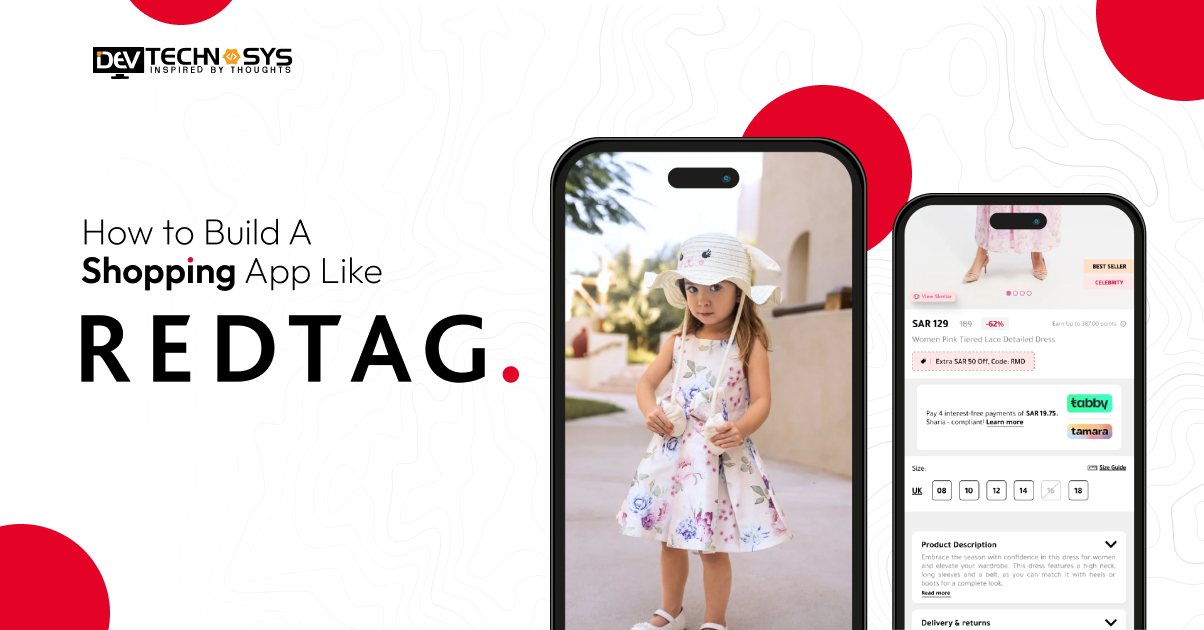
The REDTAG App is an online shopping platform for fashion and homeware, offering over 12,000 styles for men, women, and children, along with accessories and beauty products. It is designed for users in the Middle East and Asia, providing a user-friendly interface for browsing, purchasing, and managing, with Google Play and Apple App Store, features including secure payments and easy returns.
Shopping App Market Insights Every Brand Should Know
- The global shopping application market size is projected to reach from USD 1,466.56 million in 2025 to USD 4,378.78 million by 2033, growing at a CAGR of 14.23% during the forecast period (2025-2033).
- North America had a dominant position in the market and was responsible for more than 30% of the revenue share.
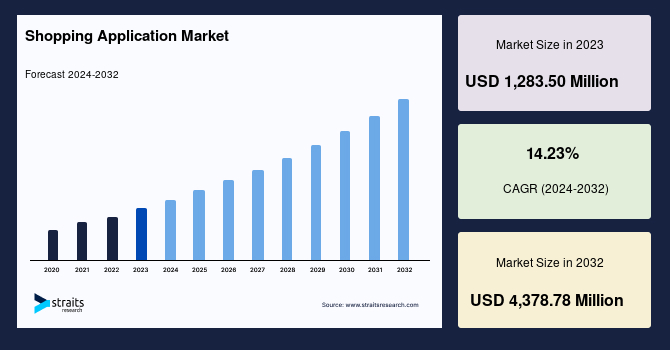
- The Shopping Application Market has seen the most substantial growth rate in the Asia Pacific.
- Some of the top industry players in the Shopping Application Market are Apple Inc., Google LLC, Microsoft Corporation, Amazon Inc., Gameloft SE, Netflix Inc., Practo, fit, Ubisoft Entertainment, Xiaomi Corp., etc.
User Journey Explained: How REDTAG-Like Shopping Apps Work?
REDTAG-like shopping apps work by combining a smooth user journey with smart backend systems to deliver a fast, personalized shopping experience. Here’s how the flow typically works:
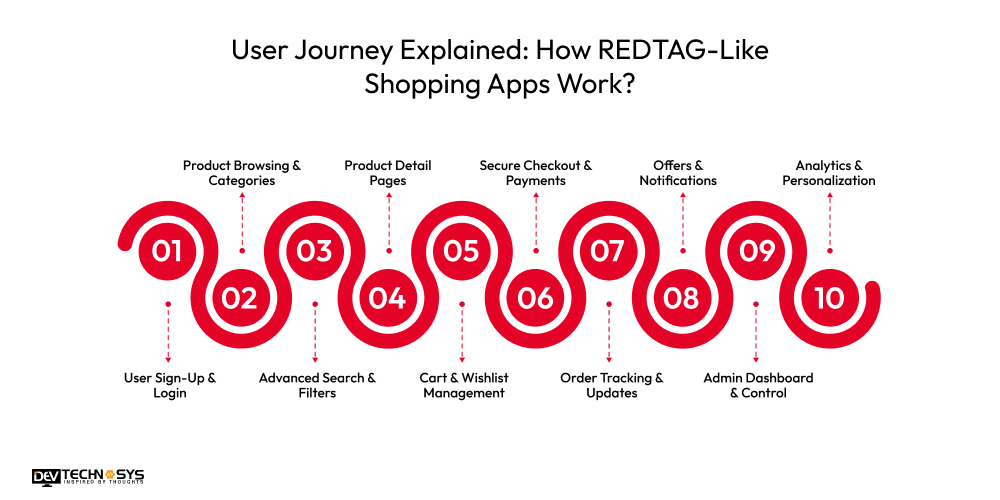
1. User Sign-Up & Login
Users can quickly create an account via email, phone number, or social login, making onboarding smoother, reducing drop-off rates, and ensuring secure authentication and personalized account setup.
2. Product Browsing & Categories
Products are neatly organized into categories and subcategories, making it easy for users to explore collections, new arrivals, and trending items with visually appealing layouts and curated recommendations.
3. Advanced Search & Filters
Smart search and filters help users narrow results by price, size, color, brand, or popularity for faster product discovery, improving navigation efficiency, and enhancing the overall shopping experience.

4. Product Detail Pages
Each product page displays high-quality images, detailed descriptions, size guides, pricing, discounts, and customer reviews to support informed buying decisions and build trust before completing purchases.
5. Cart & Wishlist Management
Through a mobile fashion marketplace app, users can add products to the cart, save items to wishlists, or edit quantities before checkout, allowing better purchase planning.
6. Secure Checkout & Payments
The app supports multiple secure payment options, including cards, wallets, UPI, and cash on delivery, for user convenience, ensuring encrypted transactions and a smooth order confirmation process.
7. Order Tracking & Updates
Real-time order tracking lets users monitor order status from confirmation to delivery, with timely notifications, estimated delivery dates, and transparent logistics updates.
8. Offers & Notifications
Push notifications inform users about order updates, seasonal sales, exclusive deals, and personalized discounts, helping boost engagement, retention, and repeat purchase behavior.
9. Admin Dashboard & Control:
Admins manage inventory, pricing, promotions, orders, and customer data through a centralized backend system that ensures operational efficiency and real-time business monitoring.
10. Analytics & Personalization
User behavior and purchase data are analyzed to deliver personalized recommendations, increase engagement, and optimize marketing campaigns effectively.
What are the 10 Best Shopping Apps Like REDTAG Making Waves in 2026?
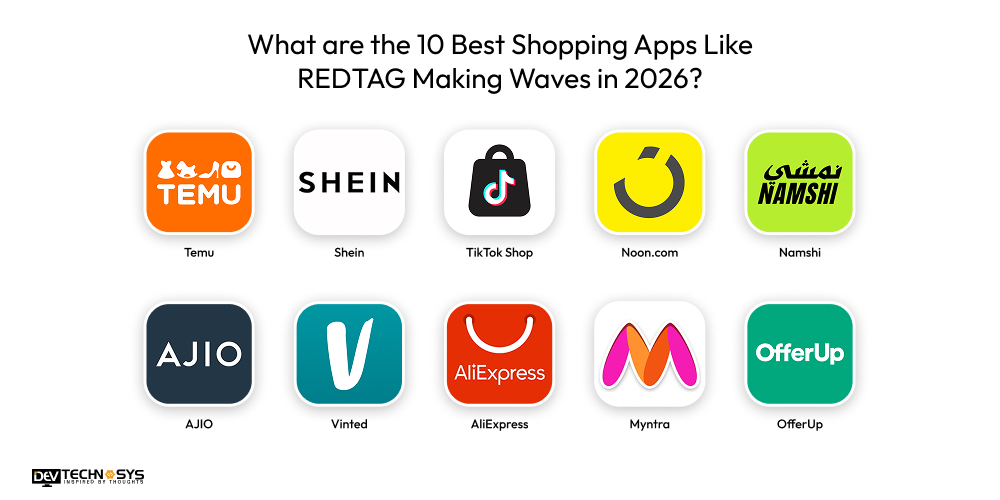
In 2026, the shopping app landscape is more competitive and innovative than ever, with dynamic platforms redefining how people buy fashion, electronics, and lifestyle products. Here are the top 10 best REDTAG alternatives to explore in 2026.
App |
Launch Year |
Avg. Rating |
Downloads |
Platform Availability |
| Temu | 2022 | 4.6 | 1B+ | iOS, Android, Web |
| Shein | 2008 | 4.7 | 500M+ | iOS, Android, Web |
| TikTok Shop | 2023 | 4.4 | 100M+ | iOS, Android |
| Noon.com | 2017 | 4.3 | 50M+ | iOS, Android, Web |
| Namshi | 2011 | 4.4 | 10M+ | iOS, Android, Web |
| AJIO | 2016 | 4.3 | 50M+ | iOS, Android, Web |
| Vinted | 2008 | 4.5 | 100M+ | iOS, Android, Web |
| AliExpress | 2010 | 4.5 | 500M+ | iOS, Android, Web |
| Myntra | 2007 | 4.4 | 100M+ | iOS, Android, Web |
| OfferUp | 2011 | 4.3 | 10M+ | iOS, Android |
Beyond REDTAG, several mobile marketplaces are gaining rapid popularity due to seamless user experiences, deep personalization, and global reach. Among the 10 top REDTAG clone apps listed above, here are the 5 most trusted and widely globally popular shopping apps.
1. Temu
Temu is a popular, low-cost online marketplace owned by PDD Holdings that offers a vast range of heavily discounted products directly from manufacturers. REDTAG clone app, like TEMU, operates globally and offers electronics, fashion, and home goods. It is known for extremely low prices and aggressive,, sometimes gamified, marketing, including coupons and free gifts for referrals.
It includes categories such as clothing, electronics, home decor, beauty, and tools. To create a similar multi‑vendor marketplace like Temu, approach a top MVP development company in Dubai.
Industry Fact: According to Digital Marketing Insights, Temu is one of the top digital advertisers on Meta and Google, with ad spend expected to reach nearly $3 billion by 2025.
2. Shein
The SHEIN app is a leading global online fashion and lifestyle retailer offering ultra-affordable, on-demand, and trendy clothing, accessories, home goods, and beauty products. It utilizes an AI-driven, real-time supply chain to launch thousands of new items daily, targeting young consumers in over 160 countries.
Online apparel store app like Shein frequently offers sales of up to 90% off and 30% off for first-time users. To create a shopping app like CHICME or Shein, approach a top app development provider.
3. AliExpress
The AliExpress app is a global, mobile-first marketplace connecting consumers directly with third-party sellers, primarily from China, offering millions of products at competitive prices. It ranges from electronics to fashion. Key features include personalized recommendations, flash deals, secure in-app payments, and real-time order tracking.
Industry Insight: Statista states that, as of late 2025 and early 2026, the AliExpress app is a global e-commerce powerhouse with over 200 million active shoppers, facilitating transactions from over 100,000 international merchants across 220+ countries.
4. AJIO
AJIO is a premier Indian online fashion and lifestyle shopping app by Reliance Retail, offering curated apparel, footwear, accessories, and home goods for men, women, and kids. It features exclusive international brands (ASOS, GAP, Superdry), indie artisan collections, and high-quality in-house labels.
The app is available for iOS and Android. Hybrid app development like Ajio is a complex task that requires specialized expertise.
5. Vinted
Vinted is a leading online marketplace app for buying, selling, and swapping second-hand clothing, accessories, and, increasingly, home goods. Sellers generally pay zero commission on sales, making it a popular choice for clearing out wardrobes. As one of the top REDTAG alternatives, it is geared towards promoting a circular economy (second-hand first) and is for users over 18 or minors with parental supervision.
Industry Insight: As Business of Apps reported, Vinted reported over 800 million items listed on its marketplace.
Is REDTAG App Development Worth It for Businesses?
In 2026, investing to build an AI shopping app like REDTAG can be a game-changer for businesses looking to expand their digital presence. With mobile commerce growing rapidly, such apps help brands boost sales, enhance customer engagement, and stay competitive in a mobile-first market.
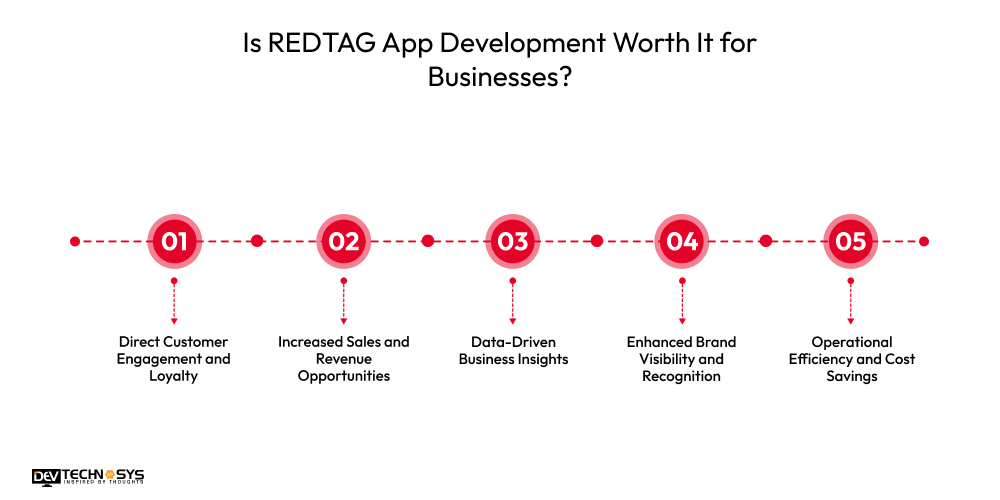
1. Direct Customer Engagement and Loyalty
Having a dedicated shopping app enables brands to interact directly with customers, bypassing third-party marketplaces. Features like push notifications, loyalty programs, and personalized offers help retain customers, improve engagement, and build long-term brand loyalty.
2. Increased Sales and Revenue Opportunities
Businesses should invest to create a shopping app like REDTAG because it provides multiple avenues to boost sales. Personalized product recommendations, flash sales, in-app discounts, and easy checkout options encourage repeat purchases and higher average order values, directly impacting overall revenue.
3. Data-Driven Business Insights
The role of artificial intelligence in mobile app development is really crucial as it helps shopping apps collect valuable data, including browsing habits, purchase history, and preferences. These insights allow brands to optimize marketing campaigns, design targeted promotions, manage inventory efficiently, and make informed product decisions.
4. Enhanced Brand Visibility and Recognition
REDTAG alternatives installed on a customer’s device keep the brand top-of-mind. Exclusive app offers, notifications, and in-app content increase brand visibility, strengthen brand perception, and foster a sense of exclusivity among users.
5. Operational Efficiency and Cost Savings
It is beneficial to create a shopping app like REDTAG as it streamlines backend processes, including inventory management, order tracking, and supply chain coordination. This automation reduces errors, minimizes operational costs, and ensures faster order processing and fulfillment.
How to Develop a Shopping App Like REDTAG: Development Process Explained
There are various factors required to build an app like REDTAG, ranging from market research and competitor analysis to advanced technology selection and feature planning. Here’s the simple explanation on entire development process in simple steps.
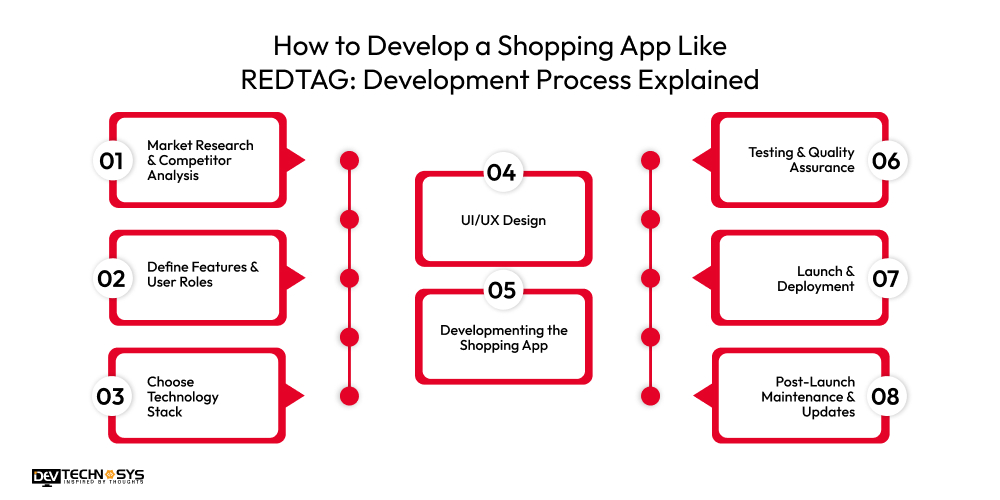
1. Market Research & Competitor Analysis
Before you hire dedicated developers in the Middle East, start by thoroughly understanding your target audience, including their shopping preferences, pain points, and digital behaviors. Analyze existing competitors like REDTAG, Shein, Temu, and AliExpress to study their features, pricing strategies, marketing approaches, and customer engagement methods.
This insight helps you identify market gaps, discover opportunities for differentiation, and prioritize features that will help you develop an app like REDTAG that stands out in a competitive landscape.
2. Define Features & User Roles
The next step to develop an app like REDTAG is defining features and user roles. Clearly outline the essential features for your app, such as product catalogs, advanced search and filters, personalized recommendations, shopping cart, wishlist, secure payment options, real-time order tracking, and push notifications.
Define user roles: Customers for shopping, Admins for managing inventory, pricing, and promotions, Sellers if you are building a multi-vendor marketplace, and Delivery Personnel for logistics. Properly defining roles ensures smooth functionality and scalability of the app.
3. Choose Technology Stack
Decide whether to develop a native app for iOS and Android using Swift and Kotlin or a cross-platform app using frameworks like Flutter or React Native. To build the best shopping apps in UAE, experts need to select backend technologies such as Node.js, Python, or PHP, and choose databases like MySQL or MongoDB.
Integrate secure payment gateways like Stripe, PayPal, or Razorpay, and consider cloud hosting solutions to ensure scalability, security, and reliability of your app as your user base grows.
4. UI/UX Design
Your mobile app development company in Sharjah must focus on creating an intuitive, visually appealing, and mobile-first interface that enhances user experience. Design wireframes and prototypes to plan the layout, navigation flow, product pages, and checkout process.
Prioritize speed, convenience, and simplicity to ensure users can browse products, add to cart, and complete purchases without friction. A seamless and engaging design encourages repeat usage and boosts user retention.
5. Developmenting the Shopping App
As stated by the top experts in mobile app development services in Dubai, there are two main stages in mobile app development: front-end and back-end development.
- Front-End Development: To develop an app like REDTAG, developers build the user interface that customers interact with. If you choose cross-platform development, a single codebase can be used to build the app for both iOS and Android. However, with native development, separate apps must be developed for the Apple App Store and Google Play Store, which can increase development time and cost.
- Back-End Development: This is the backbone of your app, managing all communication between the front-end interface and the servers. A well-structured backend is crucial to develop a shopping app like REDTAG. It ensures seamless data transfer, smooth performance, and secure transactions.
6. Testing & Quality Assurance
Conduct comprehensive testing across multiple stages, including functional testing, usability testing, performance testing, security audits, and compatibility checks across devices and operating systems. Identify and resolve bugs, optimize app speed, ensure reliable notifications, and confirm that all payment and tracking systems work flawlessly to deliver a seamless, trustworthy experience to users.
7. Launch & Deployment
Prepare your app for release by submitting it to the Apple App Store and Google Play Store, following all platform guidelines. Set up servers, configure databases, implement monitoring tools, and ensure the app’s performance, load times, and security are optimal. A smooth launch strategy, combined with pre-launch marketing campaigns, helps attract initial users and generate positive traction.
9. Post-Launch Maintenance & Updates
Continuously monitor app performance, user behavior, and feedback to identify areas for improvement. Release regular updates to add new features, enhance security, fix bugs, and improve overall performance.
Implement marketing strategies in your lifestyle retail app. It may include push notifications, referral programs, seasonal campaigns, and loyalty rewards to maintain user engagement, drive repeat purchases, and sustain long-term growth.
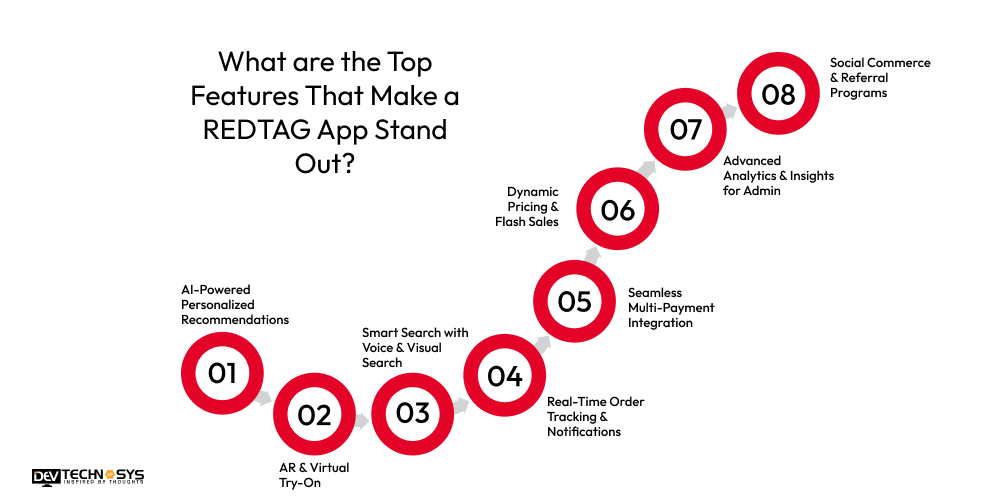
What are the Top Features That Make a REDTAG App Stand Out?
Features play a crucial role in determining the success of your shopping app. Here’s the list of advanced features that can enhance the performance of your shopping app and drive engagement.
1. AI-Powered Personalized Recommendations
To develop shopping app like OUNASS, use machine learning to analyze user behavior, browsing patterns, and purchase history to provide highly relevant product suggestions. This feature not only improves user engagement but also increases the likelihood of repeat purchases by offering what the customer really wants.
2. AR & Virtual Try-On
Allow users to virtually try on clothing, accessories, or home products using augmented reality, creating an immersive shopping experience. This reduces purchase hesitation and lowers return rates by helping users make more confident buying decisions.
3. Smart Search with Voice & Visual Search
Enable users to search products using voice commands or by uploading images of items they like. This advanced search capability makes finding products faster, more intuitive, and highly user-friendly, especially for mobile shoppers.
4. Real-Time Order Tracking & Notifications
Provide live tracking of orders along with push notifications for shipping updates, delivery time changes, and special promotions. Keeping users informed at every stage of the purchase builds trust and enhances overall customer satisfaction.
5. Seamless Multi-Payment Integration
Support multiple secure payment options, including credit/debit cards, digital wallets, UPI, international payments, and buy-now-pay-later services. Offering flexible payment methods caters to a broader audience and reduces cart abandonment rates.

6. Dynamic Pricing & Flash Sales
Implement real-time dynamic pricing, seasonal discounts, and limited-time flash sales to encourage impulse buying. This strategy not only boosts sales during peak seasons but also keeps users engaged with exciting offers.
7. Advanced Analytics & Insights for Admin
The global fast‑fashion app provides detailed dashboards for admins to track sales trends, customer behavior, inventory, and marketing campaign performance. Access to actionable insights helps businesses optimize operations, reduce stock issues, and improve strategic decision-making.
8. Social Commerce & Referral Programs
Integrate social sharing, user reviews, and referral rewards to develop an App like Kenzz. Social features increase app visibility and engagement. Encouraging users to share products or invite friends helps grow the user base organically while enhancing brand loyalty.
How Much Does it Cost to Build an App Like REDTAG?
The REDTAG app development cost is $8,000 to $25,000, depending on factors like features, platform choice, UI/UX design, development location, and more. The basic eCommerce app development cost with simple features and functionalities will be around $8,000 to $25,000.
Adding advanced features and functionalities like real-time order tracking and dynamic pricing will increase the shopping app development cost in Saudi Arebia to $25,000 or more.
Development Area |
Estimated Cost (USD) |
| Planning & Research | $1,500 – $3,000 |
| UI/UX Design | $2,000 – $4,000 |
| Frontend Development | $4,000 – $7,000 |
| Backend Development | $5,000 – $9,000 |
| Payment Integration | $1,500 – $3,000 |
| Admin Panel | $2,000 – $4,000 |
| Testing & Launch | $1,500 – $3,000 |
Now that we have discussed the average cost, let’s see the factors that impact the cost to build a shopping app like RedTAG.
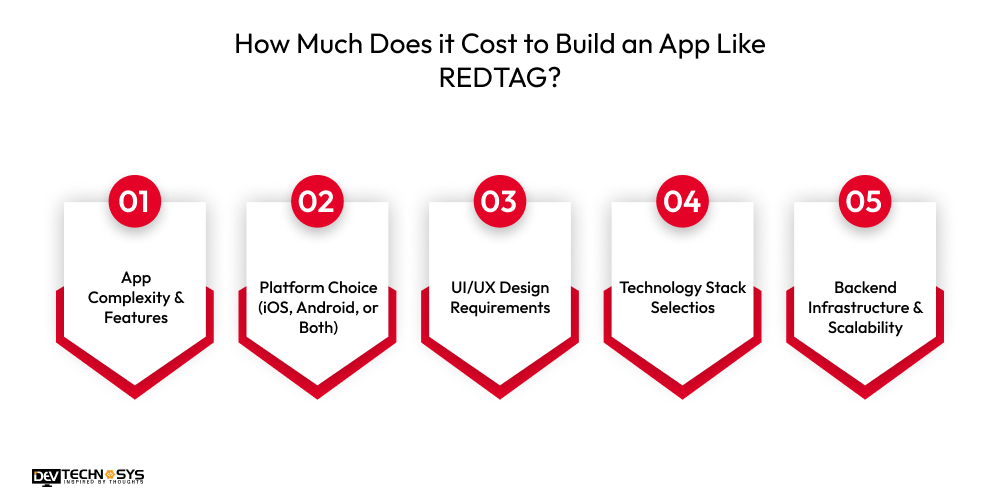
1. App Complexity & Features
The number and sophistication of features directly influence development cost. Basic features like product listings, cart, and checkout are affordable, while advanced capabilities such as AI-driven recommendations, AR try-ons, real-time order tracking, and personalization significantly increase effort, testing time, and overall cost to develop an app like RAGRAG.
Cost Impact: Low to Very High
App Type |
Features Included |
Estimated Cost (USD) |
| Basic MVP | Product listing, cart, checkout | $4,000 – $6,000 |
| Mid-Level App | Filters, wishlist, payments, tracking | $6,800 – $8,000 |
| Advanced App | AI recommendations, AR try-ons, analytics | $8,500 – $10,000 |
2. Platform Choice (iOS, Android, or Both)
Building an app for a single platform reduces shopping app development time and cost. Developing for both iOS and Android increases expenses, especially with native development. Cross-platform frameworks like Flutter or React Native help lower costs by using a single codebase while still supporting multiple platforms.
Cost Impact: Medium to High
Platform |
Development Scope |
Estimated Cost (USD) |
| Single Platform | iOS or Android only | $8,000 – $12,000 |
| Cross-Platform | Flutter / React Native | $10,000 – $16,000 |
| Native (Both) | Separate iOS + Android apps | $18,000 – $25,000 |
3. UI/UX Design Requirements
Simple and clean UI designs cost less, while custom animations, interactive elements, and highly polished visuals require more design hours and revisions. A premium user experience improves engagement but adds to the overall development investment. The table below highlights the cost to develop a shopping app like Joomon the basis of design level.
Cost Impact: Medium
Design Level |
What’s Included |
Estimated Cost (USD) |
| Basic UI | Standard layouts, minimal branding | $1,500 – $2,500 |
| Custom UI | Branded visuals, smooth navigation | $2,500 – $4,000 |
| Premium UI | Animations, micro-interactions | $4,000 – $6,000 |
4. Technology Stack Selection
The choice of frontend frameworks, backend languages, databases, and third-party tools affects the scalability, performance, and cost of building top shopping apps in Dubai. Mature and widely used technologies are more cost-effective, while advanced or newer stacks may increase initial costs but offer better long-term scalability.
Cost Impact: Medium
Tech Stack Type |
Use Case |
Estimated Cost (USD) |
| Standard Stack | Common frameworks & databases | $3,000 – $5,000 |
| Scalable Stack | Cloud-ready, high-performance | $5,000 – $8,000 |
| Advanced Stack | AI, analytics, automation tools | $8,000 – $12,000 |
5. Backend Infrastructure & Scalability
The cost to develop a shopping app like REDTAG also depends on backend infrastructure. A basic backend supports limited users and features, while a scalable backend capable of handling high traffic, multiple sellers, real-time updates, and secure transactions requires more development time and higher infrastructure costs.
However, this investment is critical for the long-term growth and stability of your Middle‑East lifestyle retail app.
Cost Impact: High
Backend Level |
Capacity |
Estimated Cost (USD) |
| Basic Backend | Limited users, simple operations | $3,000 – $5,000 |
| Scalable Backend | High traffic, order management | $5,000 – $8,000 |
| Enterprise Backend | Multi-seller, real-time sync | $8,000 – $12,000 |
How Shopping Apps Like REDTAG Make Money: Top Monetization Strategies?
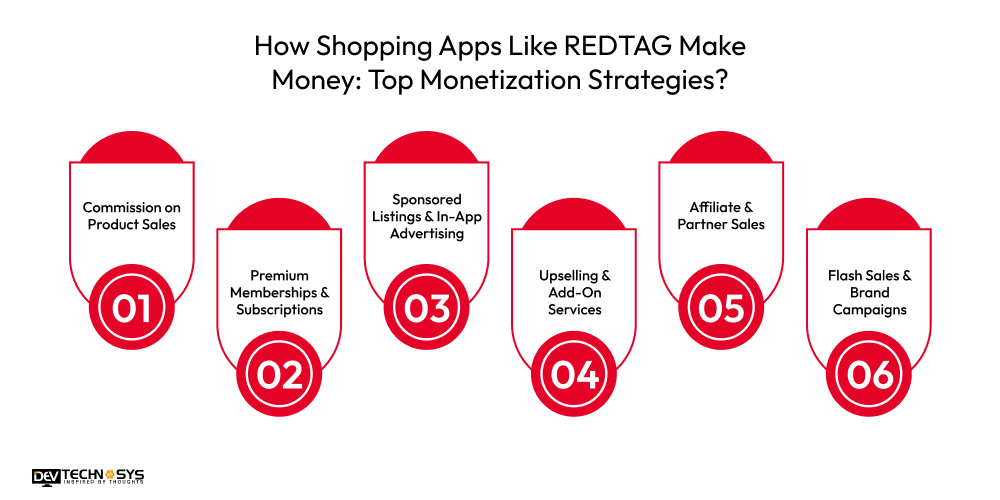
Shopping apps like REDTAG generate revenue through multiple smart monetization models designed to maximize sales and user engagement. From commissions and premium memberships to advertising and flash sales, these strategies help apps turn high traffic into consistent income while offering value to both shoppers and sellers.
1. Commission on Product Sales
Shopping apps earn a fixed percentage from every successful transaction completed on the platform. As seller volume and order frequency increase, commission-based revenue scales naturally, making it a reliable and long-term income model for fashion and retail shopping apps.
2. Premium Memberships & Subscriptions
Apps offer paid memberships that unlock exclusive discounts, early sale access, faster deliveries, or loyalty rewards. This recurring revenue model improves customer retention while ensuring predictable monthly or yearly income for the business.
3. Sponsored Listings & In-App Advertising
Brands pay to promote their products through featured listings, banners, or homepage placements. As app traffic grows, advertising becomes a high-margin revenue stream while helping sellers boost visibility and conversions within a competitive marketplace.
4. Upselling & Add-On Services
Shopping apps generate extra revenue by offering add-ons such as express delivery, gift wrapping, or extended return periods. These optional services increase average order value without requiring additional users or major marketing investments.
5. Affiliate & Partner Sales
Apps collaborate with third-party brands and earn commissions by redirecting users to partner products or services. This strategy expands product variety and generates passive income without managing inventory or logistics directly.
6. Flash Sales & Brand Campaigns
Apps partner with brands to run limited-time sales and exclusive promotions. These campaigns drive urgency, increase user engagement, and allow apps to earn promotional fees or higher commissions during high-traffic sales events.
What Future Trends Shaping Shopping Apps After 2026?
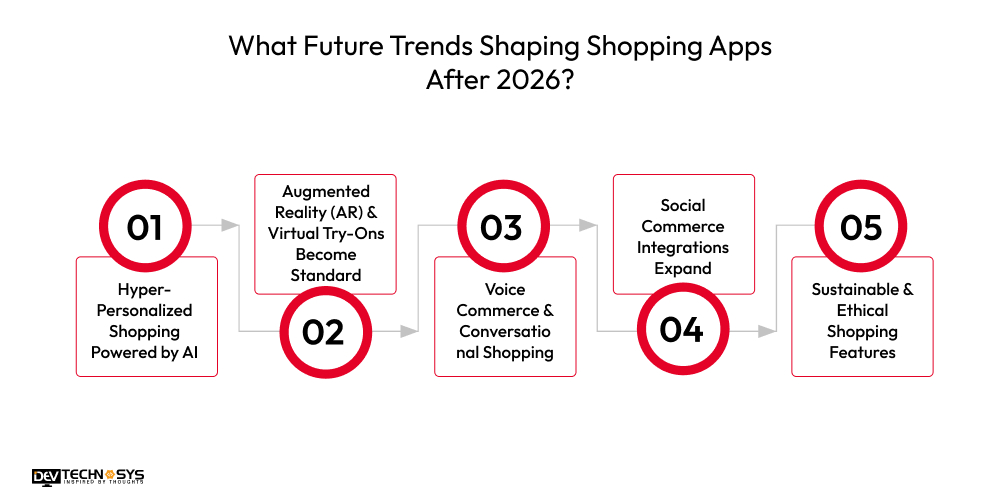
The landscape of shopping apps is evolving rapidly, driven by innovations in AI, immersive technologies, and personalized commerce. Beyond 2026, success will depend on how well apps blend cutting-edge tech with convenience, safety, and emotional engagement. Below are the key trends set to redefine mobile shopping in the coming years:
1. Hyper-Personalized Shopping Powered by AI
AI will move from simple recommendations to deeply personalized experiences that adapt in real time. Predictive algorithms will analyze user behavior to curate individual home screens, offer dynamic pricing, provide tailored offers, and enable personal shopping assistants, making discovery effortless and highly relevant.
2. Augmented Reality (AR) & Virtual Try-Ons Become Standard
AR will enable shoppers to virtually try on clothing, accessories, and even home décor before purchasing. This reduces return rates, boosts confidence, and creates a more interactive and engaging user journey that blends digital convenience with tactile exploration. Developers frequently use AR and virtual try-on to build a shopping app like REDTAG.
3. Voice Commerce & Conversational Shopping
Voice-activated shopping assistants will grow significantly, allowing users to search, compare, and purchase products using natural speech. Chat-based commerce powered by advanced AI bots will also facilitate 24/7 customer support and guided shopping experiences.
4. Social Commerce Integrations Expand
Build a shopping app like REDTAG that blurs the lines with social media as users discover and shop directly through social feeds, influencer livestreams, and shoppable videos. Community-driven features like real-time reviews, shared wishlists, and group buys will enhance engagement and trust.
5. Sustainable & Ethical Shopping Features
Consumers are increasingly conscious of environmental impact and ethical sourcing. Shopping apps will offer visibility into product sustainability scores, carbon footprints, and ethical certifications, empowering buyers to make values-aligned purchases.

Conclusion
Building a shopping app like REDTAG requires more than just listing products; it’s about delivering speed, convenience, affordability, and a seamless mobile-first experience. In 2026 and beyond, businesses that invest in personalization, performance, and user trust will stand out in the competitive eCommerce market.
Whether you start with an MVP or a full-scale app, a well-planned development approach ensures long-term growth, customer loyalty, and strong return on investment. For seamless development, contact a top shopping app development company in USA, such as Dev Technosys, and stay tuned for more informative updates.
FAQs
1. How Long Does it Take to Build a Shopping App Like REDTAG?
Developing a REDTAG-like shopping app typically takes 3 to 6 months, depending on app complexity, features, and platform choice. An MVP with core features can be built faster, while advanced apps with AI and custom UI require more development time.
2. What is the Estimated Cost to Build an App Like REDTAG?
The cost usually ranges between $15,000 and $25,000 for a mid-level app. Pricing depends on features, design complexity, backend scalability, integrations, and whether you choose cross-platform or native development.
3. Should I Choose Native or Cross-Platform Development?
Cross-platform development is more cost-effective and faster to launch, using a single codebase for iOS and Android. Native development offers better performance but is more expensive and time-consuming, making cross-platform ideal for startups.
4. What Features are Essential in a REDTAG-like Shopping App?
Key features include product catalogs, smart search and filters, secure payments, order tracking, push notifications, wishlists, admin dashboards, and user-friendly checkout. Advanced features like AI recommendations and flash sales further enhance engagement.
5. How do Shopping Apps Like REDTAG Make Money?
They generate revenue through commissions on sales, premium memberships, sponsored listings, in-app ads, flash sales, and affiliate partnerships. Combining multiple monetization strategies helps maximize profitability.