





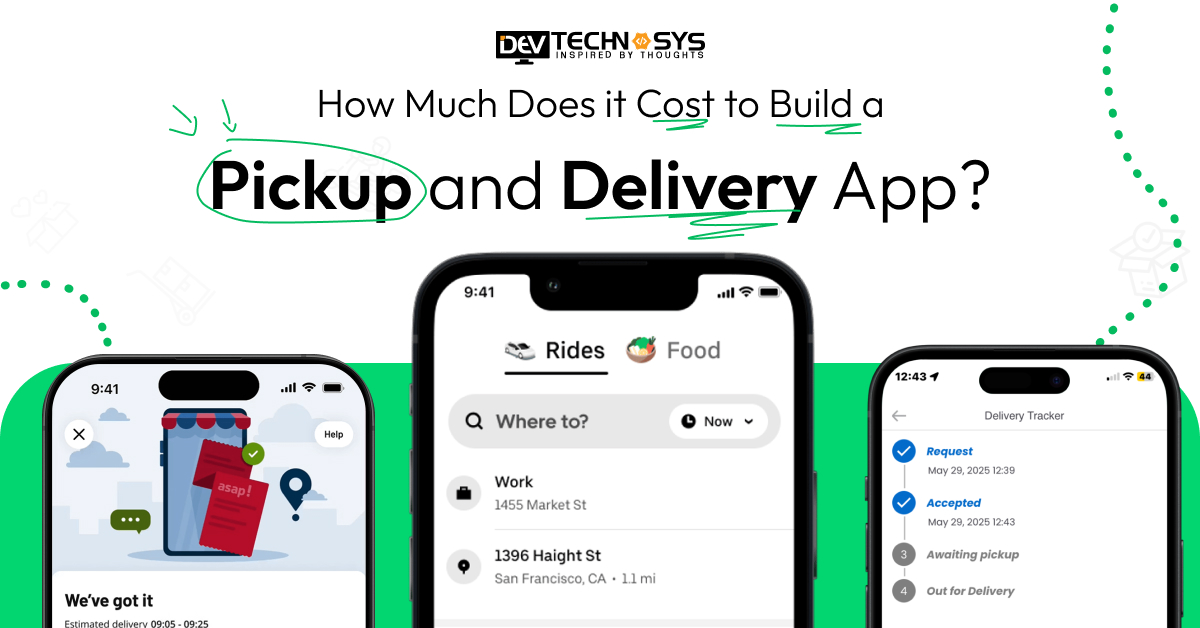
Lives have been made easier in 2026 thanks to high-tech pickup and delivery apps. These apps play a vital role in making the pickup and delivery of food, groceries, parcels, and consignments more convenient.
The demand for pickup and delivery apps has skyrocketed in recent years. According to Grandview Research, the global same-day pickup and delivery market size is expected to reach USD 29.82 billion by 2030. It shows how rapidly businesses are investing in this industry.
But one thing that every business should consider before stepping into investing in pickup and delivery app development is the cost. Yes, cost is a crucial factor to consider, and that’s why we decided to address this topic in today’s blog.
This blog will explain the cost to build a pickup and delivery app in the Middle East, along with other essential cost-related factors, as well as monetization methods used for pickup and delivery apps. So, without wasting any more time, let’s dive in!
Pickup and Delivery App Market Analysis
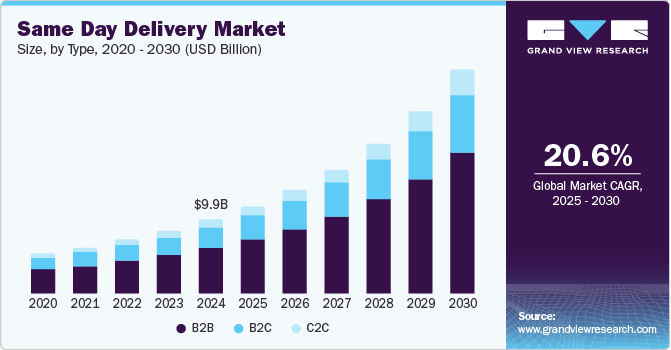
- The global same-day delivery market size was estimated at USD 9.90 billion in 2024 and is projected to reach USD 29.82 billion by 2030, growing at a CAGR of 6% from 2025 to 2030.
- The North American same-day delivery market held a dominant 6% share in 2024.
- The U.S. same-day delivery market dominated the North American market in 2024.
- By type, the B2B segment accounted for 5% of the market in 2024.
- By mode of transportation, airways accounted for5% of the market in 2024.
What are the Top 10 Pickup and Delivery Apps to Consider in 2026?
Before we dive into the pickup and delivery mobile app development cost, let’s take a look at the 10 best pickup and delivery apps you can explore in 2026. Take a look:
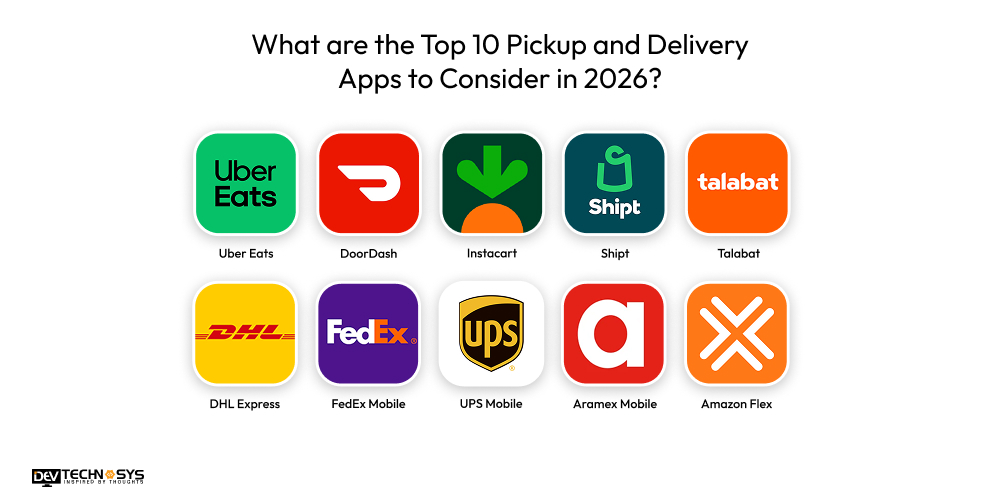
| App | Launch Year | Ratings | Downloads | Platform Availability |
| Uber Eats | 2014 | 4.8 | 100M+ | iOS, Android, Web |
| DoorDash | 2013 | 4.5 | 50M+ | iOS, Android, Web |
| Instacart | 2012 | 4.6 | 50M+ | iOS, Android |
| Shipt | 2017 | 4.5 | 10M+ | iOS, Android |
| Talabat | 2004 | 4.8 | 10M+ | iOS, Android, Web |
| DHL Express | 1998 | 4.7 | 10M+ | iOS, Android |
| FedEx Mobile | 1971 | 4.3 | 10M+ | iOS, Android |
| UPS Mobile | 1907 | 4.2 | 10M+ | iOS, Android |
| Aramex Mobile | 1982 | 4.5+ | 5M+ | iOS, Android |
| Amazon Flex | 2015 | 4.0 | 10M+ | iOS, Android |
What is The Cost to Build a Pickup and Delivery App?
The cost to build a pickup and delivery app can range from $8,000 to $25,000. The basic food delivery app development cost with simple features will be up to $15,000.
However, adding advanced functionalities like AI-powered recommendations, real-time tracking, and push notification features may increase the cost to build a pick-up and delivery app to $25,000 or even higher.
Here’s the table showcasing the cost to develop a pickup and delivery app with a development timeline.
| App Type | Estimated Cost | Development Timeline |
| Basic App (order, tracking, payments) | $8,000 – $12,000 | 2–3 months |
| Mid-Level App (GPS tracking, notifications) | $12,000 – $18,000 | 3–4 months |
| Advanced App (admin panel, analytics) | $18,000 – $25,000 | 4–5 months |
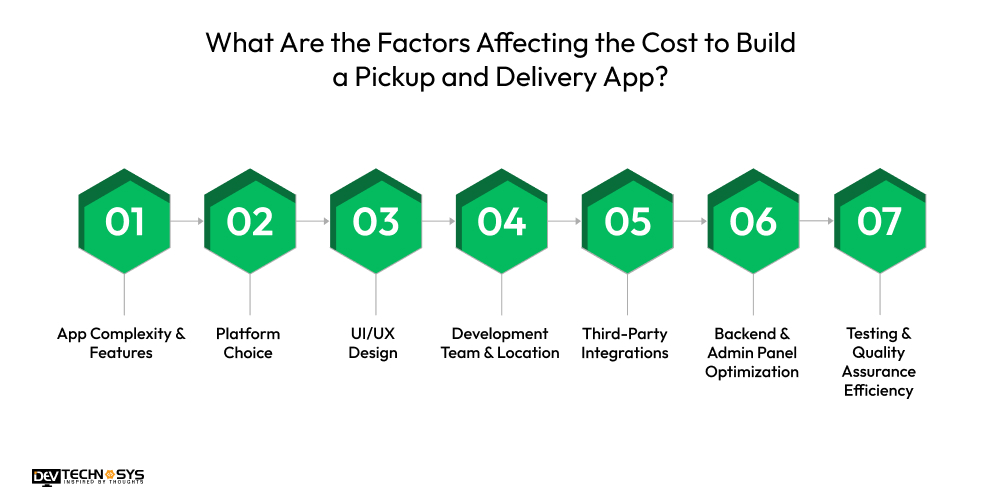
What Are the Factors Affecting the Cost to Build a Pickup and Delivery App?
The cost to develop a best pickup and delivery app in Middle East hinges on various factors like features, platform choice, third-party integrations, UI/UX design, and more. Here are some of the prominent factors affecting grocery delivery app development costs.
1. App Complexity & Features
App complexity and features can significantly impact the cost to develop a pickup and delivery app. Basic apps with features like payment, order, and tracking cost less.
In comparison, the advanced features include AI routing, voice search, loyalty programs, and multiple user roles, which can hike up the cost of pickup and delivery app development in Middle East.
| Feature Complexity | Cost Range | Development Timeline |
| Basic (user login, simple order, tracking) | $8,000 – $12,000 | 4 – 6 weeks |
| Medium (in-app payments, notifications, ratings) | $12,000 – $18,000 | 6 – 10 weeks |
| Advanced (real-time GPS, route optimization) | $18,000 – $25,000 | 10 – 14 weeks |
2. Platform Choice
The cost to build a pickup and delivery app differs depending on the platform choice you make. Native platform costs more, whereas the cost for cross-platform (like React Native/Flutter) pickup and delivery app development is not very high. So, if you are trying to save up on costs, go for a cross-platform app.
| Platform | Cost Range | Development Timeline |
| iOS only | $8,000 – $15,000 | 5 – 8 weeks |
| Android only | $8,000 – $15,000 | 5 – 8 weeks |
| Cross-Platform (iOS + Android) | $15,000 – $25,000 | 8 – 12 weeks |
3. UI/UX Design
Custom, intuitive, and high-quality designs take more time, which impacts the cost to create a pickup and delivery app. Custom designs, high-end animation and graphics, created by skilled designers, can indefinitely increase the cost of developing the best pickup and delivery app in Middle East but improve retention.
| Design Complexity | Cost Range | Development Timeline |
| Basic template-based design | $1,000 – $3,000 | 1 – 2 weeks |
| Custom design & branding | $3,000 – $6,000 | 2 – 4 weeks |
| Interactive & animated UI/UX | $5,000 – $8,000 | 3 – 5 weeks |
4. Development Team & Location
The cost to develop a halal food finder app can vary based on the development team and location. The hourly rates can differ significantly in the regions.
North American teams are the most expensive, while the cost of hiring teams in Eastern Europe or India offers significant savings. So, approach the development providers within your budget range.
| Team & Location | Cost Range | Development Timeline |
| Freelancers | $8,000 – $12,000 | 4 – 8 weeks |
| Small agency | $12,000 – $18,000 | 6 – 10 weeks |
| Experienced agency | $18,000 – $25,000 | 8 – 14 weeks |
5. Third-Party Integrations
Third-Party Integrations is a factor that can impact the total cost to build a pick-up and delivery app in Dubai. APIs for maps (Google Maps), payments (Stripe), and notifications (Twilio) add upfront integration costs and recurring fees.
The table below highlights the cost to create a pickup and delivery app in Dubai.
| Integration Type | Cost Range | Development Timeline |
| Payment gateways | $1,000 – $2,500 | 1 – 2 weeks |
| Maps & GPS tracking | $1,500 – $3,000 | 1 – 3 weeks |
| SMS/Email notifications | $500 – $1,500 | 1 week |
| Analytics & CRM | $1,000 – $2,000 | 1 – 2 weeks |
6. Backend & Admin Panel Optimization
Simplify server-side logic and design a custom and simple admin panel. Focus on essential app features first, then scale gradually.
This strategy reduces development time, lowers the initial cost to develop a pickup and delivery app, and enables more flexible future upgrades without major rework.
| Complexity Level | Cost Range | Development Timeline |
| Basic panel | $2,000 – $4,000 | 2 – 3 weeks |
| Medium | $4,000 – $6,500 | 3 – 5 weeks |
| Advanced | $6,500 – $10,000 | 4 – 6 weeks |
7. Testing & Quality Assurance Efficiency
Prioritize automated testing tools and focus on critical devices and OS versions initially. Hire dedicated developers to perform QA processes, catch major bugs early, minimize time and cost to create a pickup and delivery app that does not require repeated fixes while maintaining app reliability.
| QA Level | Cost Range | Development Timeline |
| Basic testing | $1,000 – $2,000 | 1 – 2 weeks |
| Standard testing | $2,000 – $3,500 | 2 – 3 weeks |
| Extensive testing | $3,500 – $5,000 | 3 – 4 weeks |
What Are the Hidden Costs in Pickup and Delivery App Development?
Although the total cost of pickup and delivery app development in Middle East can be affected due to the hidden fees, these are the additional expenses that are not covered in the main app development cost. Let’s see what these hidden factors are:
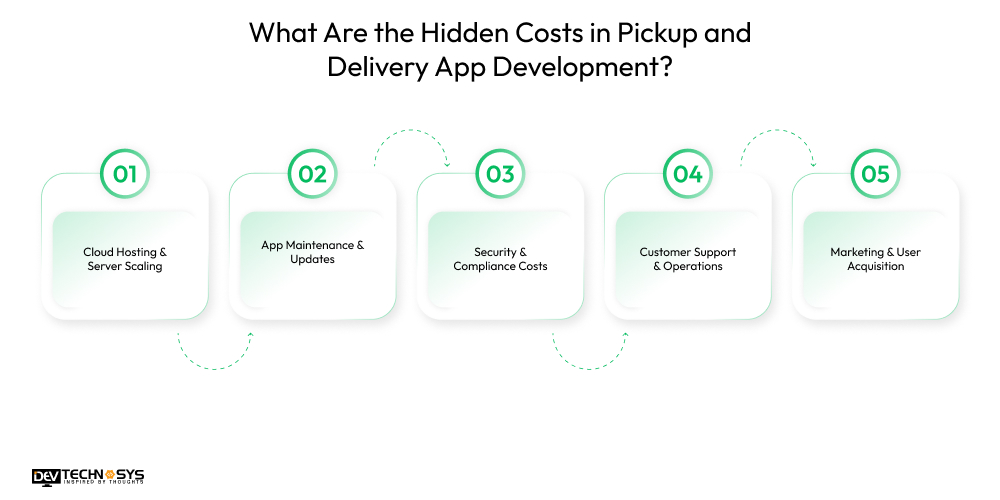
1. Cloud Hosting & Server Scaling
As user demand increases, server resources, bandwidth, and database storage must scale accordingly. Cost of creating cloud infrastructure rises steadily, especially with the addition of features like real-time tracking, order updates, and peak-hour traffic burdens.
| Service Type | Cost Range | Implementation Timeline |
| Basic hosting | $500 – $1,500 | 1 week |
| Scalable cloud server | $1,500 – $3,500 | 1 – 2 weeks |
| High-availability setup | $3,500 – $6,000 | 2 – 3 weeks |
2. App Maintenance & Updates
Regular updates are required to fix bugs, enhance security, improve performance, and ensure OS compatibility. Ongoing maintenance expenses can reach 15–25% of the initial development cost annually. For better results, hire mobile app developers who provide top-notch maintenance services after launch.
| Maintenance Level | Cost Range | Timeline |
| Basic updates | $1,000 – $2,500/year | Ongoing, monthly |
| Standard updates | $2,500 – $5,000/year | Ongoing, quarterly |
| Premium support | $5,000 – $8,000/year | Ongoing, continuous |
3. Security & Compliance Costs
Incorporating data encryption, fraud prevention, secure authentication, and regulatory compliance (PCI-DSS, GDPR) requires additional tools, audits, and expert support. All these additions lead to an increase in the pickup-and-deliver app development price.
| Security Requirement | Cost Range | Timeline |
| Basic SSL & data encryption | $500 – $1,500 | 1 week |
| GDPR/PCI/Digital compliance | $1,500 – $3,500 | 1 – 2 weeks |
| Advanced security audits & penetration testing | $3,500 – $6,000 | 2 – 3 weeks |
4. Customer Support & Operations
Staffing, CRM tools, and training are required to handle refunds, run support teams, and employ delivery partners. These expenses are rarely included in the early cost to make a pickup and delivery app, but are essential for user retention.
| Support Level | Cost Range | Timeline |
| Email-based support (manual) | $1,000 – $2,000 | 1 week to set up |
| Live chat & ticketing system | $2,000 – $4,000 | 1 – 2 weeks |
| 24/7 customer service with integrated CRM | $4,000 – $6,000 | 2 – 3 weeks |

5. Marketing & User Acquisition
Launching the app demands spending on ads, promotions, referral rewards, and partnerships. According to a top iPhone app development company, Customer acquisition costs can increase app development expenses if not strategically planned or optimized early.
Here’s the table explaining the pickup and delivery app development cost based on marketing activity.
| Marketing Activity | Cost Range | Timeline |
| Basic social media & referral campaigns | $1,000 – $3,000 | 2 – 4 weeks |
| Paid ads (Google, Facebook, Instagram) | $3,000 – $6,000 | 2 – 6 weeks |
| Full-scale launch campaign & influencer marketing | $6,000 – $10,000 | 4 – 8 weeks |
What are the Tips to Reduce the Pickup and Delivery App Development Cost?
Now that we have learned the factors that increase the cost, let’s take a step further and explore the factors that can help reduce the final development budget. Here are some of the major cost-reducing factors to consider:
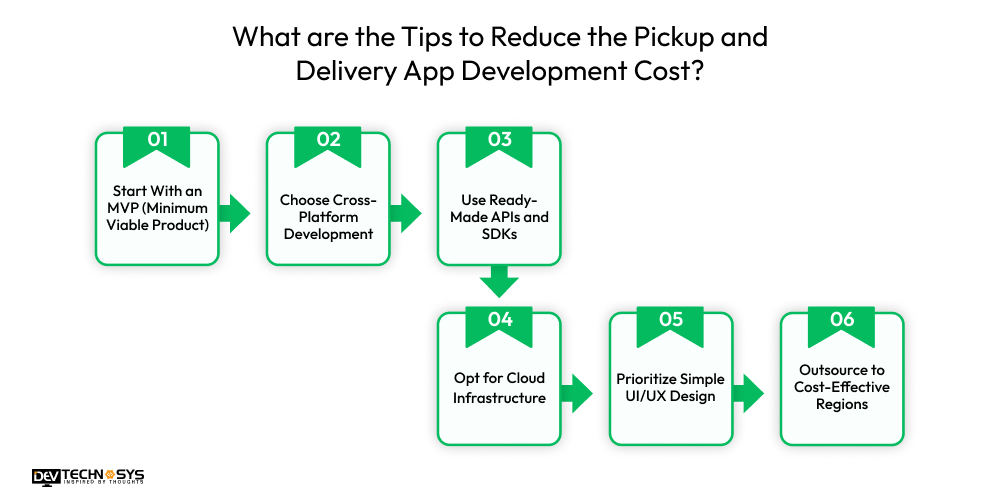
1. Start With an MVP (Minimum Viable Product)
Focus on building only the essential features such as order placement, real-time tracking, and secure payment processing. Launching an MVP allows you to validate your business idea without committing a large budget upfront.
It helps identify user preferences early and reduces the risk of spending money on features that may not add value.
| Development Scope | Included Features | Estimated Cost | Timeline |
| MVP Build | User login, order placement, tracking, | $6,000 – $10,000 | 4–6 weeks |
| Full App (Later Phase) | Advanced analytics, loyalty, automation | $10,000 – $14,000 | 10–14 weeks |
2. Choose Cross-Platform Development
Instead of developing separate apps for Android and iOS, use cross-platform frameworks like Flutter or React Native. These tools enable you to write a single codebase that works on both platforms, which reduces the pickup and delivery app development cost and time, minimizes the number of developers needed, and lowers testing costs.
| Platform Strategy | Technology Used | Estimated Cost | Timeline |
| Native Apps | Swift (iOS) + Kotlin (Android) | $18,000 – $25,000 | 10–14 weeks |
| Cross-Platform | Flutter / React Native | $12,000 – $18,000 | 7–10 weeks |
3. Use Ready-Made APIs and SDKs
Instead of building every feature from scratch, leverage third-party APIs and SDKs for core functionalities such as maps and navigation, payment gateways, push notifications, and analytics.
This approach drastically reduces development effort, minimizes bugs, and accelerates app deployment. Using proven APIs also ensures reliability and compliance with industry standards.
| Integration Type | Example Services | Estimated Cost | Timeline |
| Payment Gateways | Stripe, Razorpay, PayPal | $10,000 – $15,000 | 6–9 weeks |
| Maps & Tracking | Google Maps, Mapbox | Included | Faster delivery |
| Notifications | Firebase, Twilio | Included | Reduced setup time |
4. Opt for Cloud Infrastructure
Cloud-based services like AWS, Google Firebase, or Microsoft Azure eliminate the need for heavy upfront investments in physical servers. You only pay for the computing resources you actually use, and scaling is flexible as your user base grows.
This approach not only reduces initial infrastructure costs but also lowers long-term maintenance expenses.
| Infrastructure Type | Cloud Provider | Estimated Cost | Setup Time |
| On-Premise Servers | Physical hosting | $15,000 – $20,000 | 3–4 weeks |
| Cloud Hosting | AWS, Firebase, Azure | $8,500 – $15,000 | 1–2 weeks |
5. Prioritize Simple UI/UX Design
A clean, intuitive interface is more effective and budget-friendly than overly complex visuals or animations. Focus on usability, easy navigation, and quick access to core functions. Avoid unnecessary custom graphics or elaborate interactions that increase design and development time.
| Design Level | Design Elements | Estimated Cost | Timeline |
| Basic UI | Standard layouts, minimal branding | $8,000 – $12,000 | 1–2 weeks |
| Advanced UI | Custom animations, micro-interactions | $14,000 – $19,000 | 3–5 weeks |
6. Outsource to Cost-Effective Regions
Hiring experienced developers from offshore or nearshore locations can significantly reduce pickup and delivery app development cost without compromising quality. Countries with lower development rates often provide highly skilled teams capable of delivering projects efficiently.
Outsourcing also allows you to scale your team on demand, avoid long-term employment costs, and leverage expertise that might be expensive locally, providing a cost-effective, flexible solution for app development.
| Team Location | Hourly Rate | Estimated Cost | Timeline |
| Local / Onshore | $80–$120/hr | $18,000 – $25,000 | 8–14 weeks |
| Offshore / Nearshore | $25–$50/hr | $10,000 – $18,000 | 6–10 weeks |
What Monetization Strategies Can be Used for Pickup and Delivery Apps?
Monetization is crucial for every business, whether big or small. Here are the top monetization strategies implemented by app development experts to generate revenue from pickup and delivery apps. Take a look:
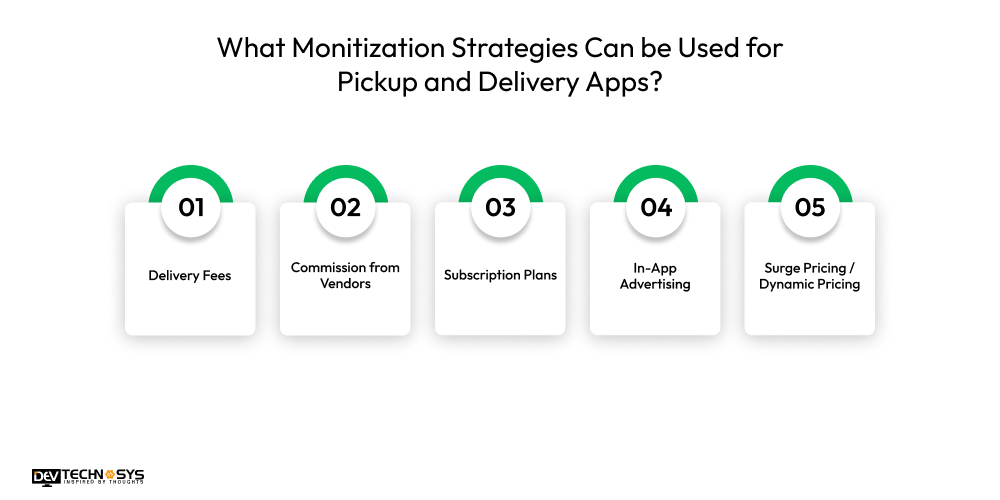
1. Delivery Fees
Charge users a fixed or variable fee for each delivery based on distance, order size, or urgency. Premium or express delivery options can increase revenue while maintaining affordability for regular customers, creating a reliable and scalable income stream.
2. Commission from Vendors
Take a percentage of every order processed through the app from partnered restaurants, stores, or service providers. This ensures consistent revenue as your platform grows, while encouraging vendors to increase order volume to benefit from app exposure and higher sales.
3. Subscription Plans
Offer subscription packages for users or vendors. Users can enjoy benefits like free deliveries, discounts, or priority service, while vendors gain premium visibility, analytics tools, and promotional features. Subscriptions create predictable recurring revenue and strengthen long-term platform loyalty.
4. In-App Advertising
Display targeted ads, banners, or sponsored listings within the app. Vendors and third-party brands can pay for promotions, increasing their visibility. Advertising generates additional revenue without charging users directly, making it a non-intrusive yet effective monetization method.
5. Surge Pricing / Dynamic Pricing
Implement higher fees during peak hours, busy days, or special events. Dynamic pricing balances supply and demand, encourages more drivers or couriers to be active, and increases revenue opportunities without permanently increasing base delivery costs for standard users.
Conclusion
In this blog, we learnt about the cost of creating a pickup and delivery app. The cost to develop a Pickup and Delivery app varies widely based on features, complexity, platform choice, and development region.
If you are a business looking to learn more about the cost to build a pickup and delivery app, contact Dev Technosys, a top mobile app development company with years of experience creating scalable pickup and delivery applications according to your budget.
FAQs
Q1. How Much Does It Cost To Develop A Basic Pickup And Delivery App?
A basic app with core features like order placement, real-time tracking, and secure payments typically costs between $8,000 and $12,000. Costs change depending on platform choice, development region, and minor UI/UX customizations.
Q2. How Much Does A Fully-Featured, Advanced App Cost?
Advanced apps with AI-based routing, loyalty programs, multi-language support, robust admin dashboards, and real-time analytics typically cost $18,000 to $25,000, based on complexity, platform choice, backend optimizations, and overall design and development effort.
Q3. Does Platform Choice Affect App Development Cost?
Yes, platform selection significantly affects cost. Developing iOS or Android individually is cheaper initially, while building a cross-platform app increases upfront costs but reduces overall time, maintenance, and long-term development efforts.
Q4. Are There Hidden Costs In App Development?
Yes, hidden costs include cloud hosting, server scaling, app maintenance, security compliance, customer support, and marketing or user acquisition. These are essential for smooth operations and long-term sustainability but are often overlooked during initial budgeting.
Q5. How Can I Reduce The Development Cost?
You can lower costs by starting with an MVP, using cross-platform development, integrating ready-made APIs, opting for cloud infrastructure, prioritizing simple UI/UX, and outsourcing to cost-effective regions without compromising app quality.