





Key Takeaways:
-
- By 2030, the global market for tokenized real estate will reach up to $3 trillion and represent 15% of the real estate assets.
- The future includes AI-driven valuations, Token-Based property ownership, tokenized REITs, cross-chain trading, stablecoin payments, and institutional adoption, making real estate investment more global, liquid, and transparent.
- Key risks of real estate tokenization include regulatory uncertainty, smart contract vulnerabilities, liquidity limitations, market volatility, and cybersecurity threats.
- Real estate asset tokenization distributes income automatically through smart contracts based on token holdings. Payments are usually sent in stablecoins or cryptocurrencies, ensuring transparency, speed, and proportional profit sharing.
Real estate tokenization in 2026 is reshaping how property ownership, investment, and liquidity work in global markets. By leveraging blockchain technology and smart contracts, physical assets like residential, commercial, and industrial properties can be converted into digital tokens, enabling fractional ownership and borderless investment opportunities.
This innovation reduces entry barriers for investors, increases transparency, and improves market liquidity compared to traditional real estate systems.
As institutional adoption grows and regulatory frameworks mature, tokenized real estate is emerging as a mainstream investment model rather than a niche concept. This property tokenization guide explores how it works, its benefits, risks, and future potential in 2026.
What is Real Estate Tokenization?
Real estate tokenization is the process of converting ownership rights in a physical property into digital tokens recorded on a blockchain. Each token represents a fractional share of the asset, allowing multiple investors to own, trade, and benefit from the same property without purchasing it outright. These tokens are governed by smart contracts that define ownership rights, profit distribution, and compliance rules.
In simple terms, it turns illiquid real estate assets into digital, divisible, and tradable investments. This makes investing in real estate marketplaces more accessible, transparent, and efficient, while enabling faster transactions and broader participation by global investors.
Answer a few quick questions and our experts will share a tailored project estimate.
Real Estate Tokenization Market Stats
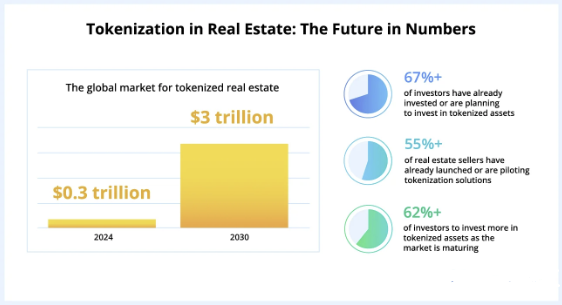
- By 2030, the global market for tokenized real estate will reach up to $3 trillion and represent 15% of the real estate assets under management, ScienceSoft’s research team predicts.
- For 10 years, asset owners in the US have been ranking real estate as the best long-term investment.
- By 2026, institutional investors expect to allocate 5.6% and HNW individuals, 8.6% of their portfolio to tokenized assets.
- Both HNW investors (49%) and institutional investors (56%) cite real estate as their second most attractive tokenized asset investment option.
Difference Between Traditional Real Estate Investing and Tokenized Real Estate
Traditional real estate investing and tokenized real estate differ fundamentally in ownership structure, accessibility, liquidity, and transaction efficiency. In traditional real estate investing, ownership is tied to physical property and recorded through legal documentation. Investors typically need significant capital, and transactions involve multiple intermediaries such as brokers, banks, and legal advisors. The process is slow, often taking weeks or months, and selling property is difficult due to low liquidity and high transaction friction.
In tokenized real estate, ownership is represented by digital tokens issued on a blockchain. Each token reflects a fractional share of the property, allowing investors to enter with much smaller amounts of capital. Transactions are executed through smart contracts, reducing reliance on intermediaries and enabling faster, more automated transfers. Blockchain development solution providers use this model to improve liquidity, support global participation, and enhance transparency through immutable on-chain records.
Feature |
Traditional Real Estate Investing |
Tokenized Real Estate |
| Ownership Structure | Full or partial physical ownership via legal documents | Fractional ownership via blockchain-based digital tokens |
| Investment Entry | High capital required | Low capital enables fractional investment |
| Accessibility | Limited to local/regional investors | Global access for investors |
| Liquidity | Low; property sale takes weeks or months | High; tokens can be traded quickly on digital platforms |
| Transaction Speed | Slow due to legal and brokerage processes | Fast and automated via smart contracts |
| Intermediaries | High dependency on brokers, banks, and lawyers | Minimal intermediaries due to blockchain automation |
| Transparency | Limited, dependent on records and institutions | High transparency via an immutable blockchain ledger |
| Ownership Transfer | Complex legal procedures | Instant or near-instant token transfers |
| Dividends/Returns | Rental income is distributed manually | Automated profit distribution via smart contracts |
| Market Hours | Restricted by real estate market cycles | 24/7 global trading is possible |
| Risk Level | Market and liquidity risks | Includes tech, regulatory, and smart contract risks |
| Fractional Ownership | Difficult and limited | Native feature of tokenization |
What are the Types of Assets That Can Be Tokenized?
A wide range of real-world assets can be tokenized using blockchain technology, as long as their ownership rights and value can be legally structured and digitally represented. For a real estate management platform, tokenization is expanding investment opportunities across multiple asset classes.
- Residential Properties: Apartments, villas, condominiums, and housing units can be tokenized to enable fractional ownership and rental income sharing among multiple investors.
- Commercial Real Estate: Office buildings, retail spaces, co-working hubs, and shopping malls are popular for tokenization due to their high and stable cash flow potential.
- Industrial Properties: Warehouses, logistics centers, manufacturing facilities, and industrial parks can be tokenized to attract institutional and global investors.
- Land and Development Projects: Raw land, construction sites, and under-development properties can be tokenized to raise early-stage capital from multiple investors.
- Hospitality Assets: Hotels, resorts, and vacation properties can be divided into tokens, allowing investors to earn revenue from bookings and occupancy rates.
- Real Estate Investment Trusts (REITs) and Funds: Traditional real estate funds can be tokenized to improve liquidity and enable easier trading of fund shares.
- Infrastructure Assets: Asset tokenization for large-scale projects such as highways, energy plants, and transportation hubs generates long-term value.
Industry Insights
CoinBase reports that the total tokenized real-world asset (RWA) market reached ~$19.3B by Q1 2026, growing over 250% in 15 months.
How Does Real Estate Tokenization Work?
Before choosing property management software development services, UAE businesses must understand the working of a real estate tokenization platform. Real estate tokenization converts property ownership into digital tokens on a blockchain, allowing investors to buy and trade fractional shares of real estate assets. The process typically involves the following steps:
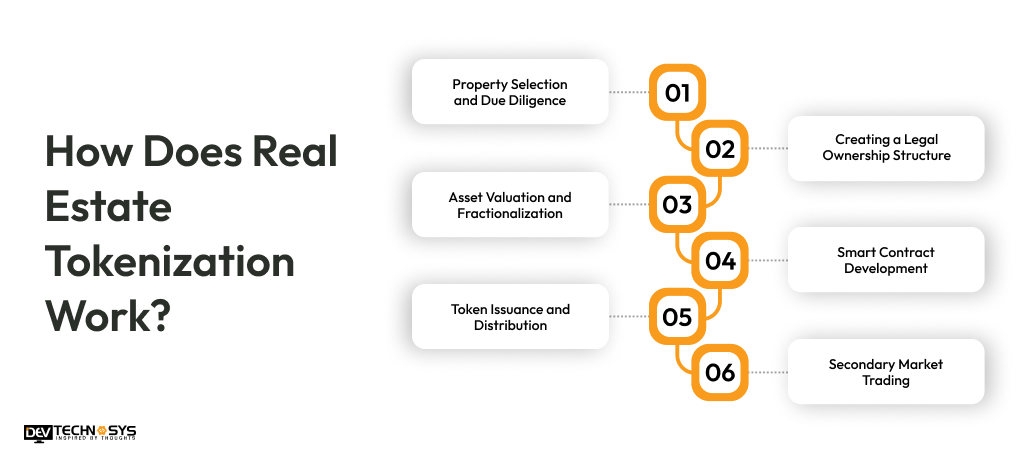
- Property Selection and Due Diligence: A property is chosen and thoroughly evaluated to verify its ownership, legal status, financial performance, and market value.
- Creating a Legal Ownership Structure: A legal entity, such as an SPV or LLC, is established to hold the property and represent investor ownership rights.
- Asset Valuation and Fractionalization: The property’s value is assessed and divided into multiple digital tokens, enabling fractional ownership.
- Smart Contract Development: Smart contracts are created to automate ownership transfers, profit distributions, and compliance requirements.
- Token Issuance and Distribution: Tokens are issued on a blockchain and offered to investors through a tokenization platform after KYC/AML verification.
- Secondary Market Trading: Investors can buy and sell tokens on approved marketplaces, providing greater liquidity than traditional real estate investments.
Real Estate Tokenization Models Explained
According to experts offering end-to-end real estate tokenization services, real estate tokenization can be structured in several ways depending on how investors participate and earn returns. The most common models include:
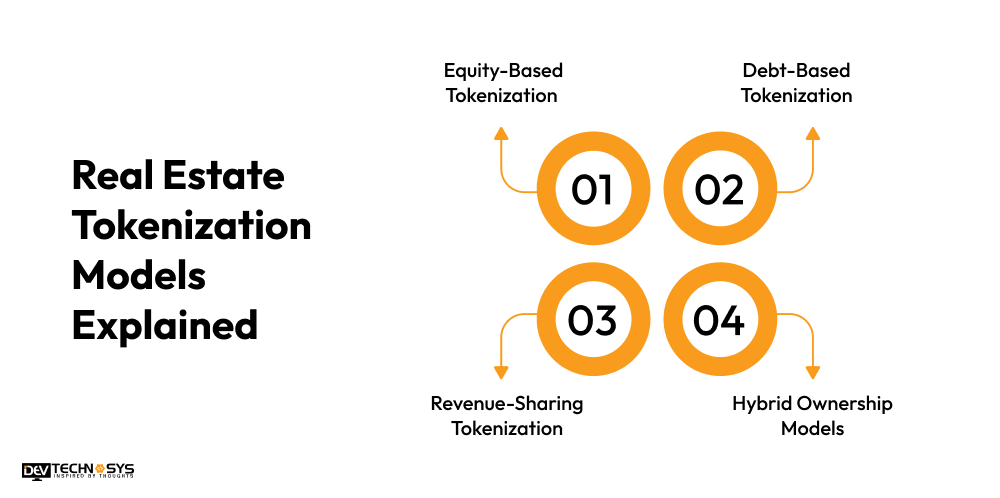
1. Equity-Based Tokenization
In this model, tokens represent ownership shares in a property or the entity holding the asset. Investors earn returns through rental income, property appreciation, and profit-sharing. It is the closest equivalent to traditional property ownership.
2. Debt-Based Tokenization
Here, tokens represent a loan or debt investment rather than ownership. This model is best for on-demand app development to meet specific business needs. Investors provide capital to property owners or developers and receive fixed interest payments over a predetermined period. This model offers predictable returns with lower ownership involvement.
3. Revenue-Sharing Tokenization
Investors receive a portion of the revenue generated by the property, such as rental income, hotel bookings, or commercial leasing profits. Token holders benefit from the asset’s cash flow without necessarily holding direct ownership rights.
4. Hybrid Ownership Models
Hybrid models combine elements of equity and debt tokenization. Investors may receive both ownership benefits, such as appreciation potential, and fixed income payments. This approach offers greater flexibility and can be tailored to specific investment goals.
Which Model Generates the Highest Investor Returns?
There is no single model that guarantees the highest returns, as profitability depends on factors such as property performance, digital assets, market conditions, risk tolerance, security tokens, and investment duration. However, every tokenization service company knows that each model offers a different risk-reward profile.
Tokenization Model |
Return Potential |
Risk Level |
Primary Income Source |
| Equity-Based Tokenization | High | High | Rental income + Property appreciation |
| Debt-Based Tokenization | Moderate | Low to Moderate | Fixed interest payments |
| Revenue-Sharing Tokenization | Moderate to High | Moderate | Revenue generated by the property |
| Hybrid Ownership Models | High | Moderate to High | A combination of fixed income and asset appreciation |
Industry Insights
‘Based on EY Global Institutional Survey, Over 86% of institutional investors now have exposure or plans for digital assets, including tokenized RWAs.’
Legal and Regulatory Framework for Real Estate Tokenization
A strong legal and regulatory framework is essential to build a cryptocurrency exchange app, as tokenized properties often fall under both real estate and securities laws. Proper compliance protects investors, reduces legal risks, and ensures smooth platform operations.
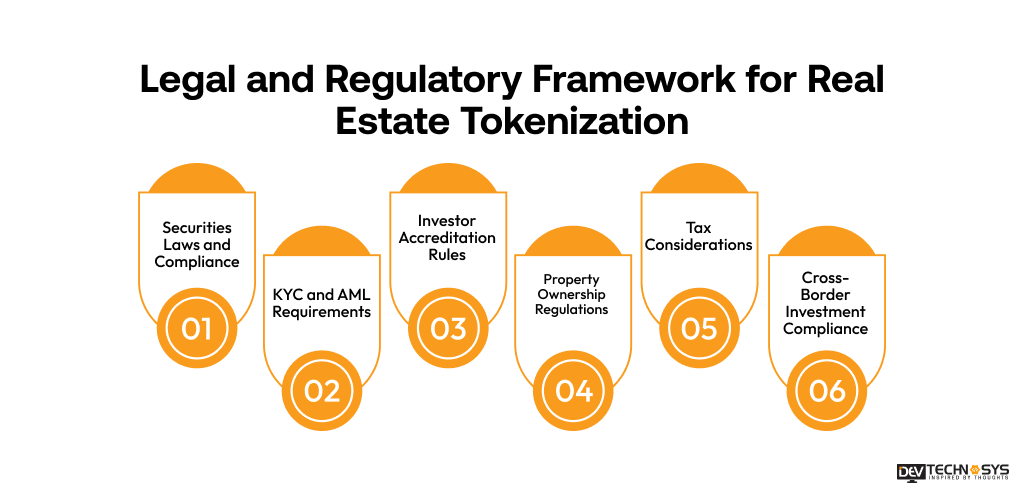
1. UAE Data Protection Law
A real estate investment platform should be developed while following important security protocols to safeguard user data. This ensures that users can update or delete data. Issuers must comply with securities regulations, disclosure requirements, fundraising rules, and investor protection standards.
2. KYC and AML Requirements
Security token exchange development involves implementing Know Your Customer (KYC) and Anti-Money Laundering (AML) procedures to verify investor identities and prevent fraud, money laundering, and other financial crimes. These security token development measures are mandatory in most regulated markets.
3. Investor Accreditation Rules
Some jurisdictions restrict certain tokenized offerings to accredited or qualified investors. Platforms must verify investor eligibility based on regulatory requirements such as income, net worth, or investment experience.
4. Property Ownership Regulations
The underlying asset is typically held through legal structures such as SPVs, trusts, or LLCs. This ensures clear ownership rights, legal enforceability, and protection for token holders. This regulation might affect the cost to build a real estate app but is worth it to improve the credibility of a business.
5. Tax Considerations
Tokenized real estate investments may be subject to capital gains, rental income, dividends, and property taxes. Tax obligations vary by jurisdiction and should be considered before launching or investing.
6. Cross-Border Investment Compliance
Global participation requires compliance with foreign ownership laws, securities regulations, sanctions screening, and tax requirements across multiple jurisdictions.
Why Legal Compliance Matters:
Real estate tokenization platform development involves ensuring effective legal compliance. It ensures investor trust, attracts institutional capital, minimizes regulatory risks, and supports the long-term growth of real estate tokenization platforms.
Key Features of a Real Estate Tokenization Platform
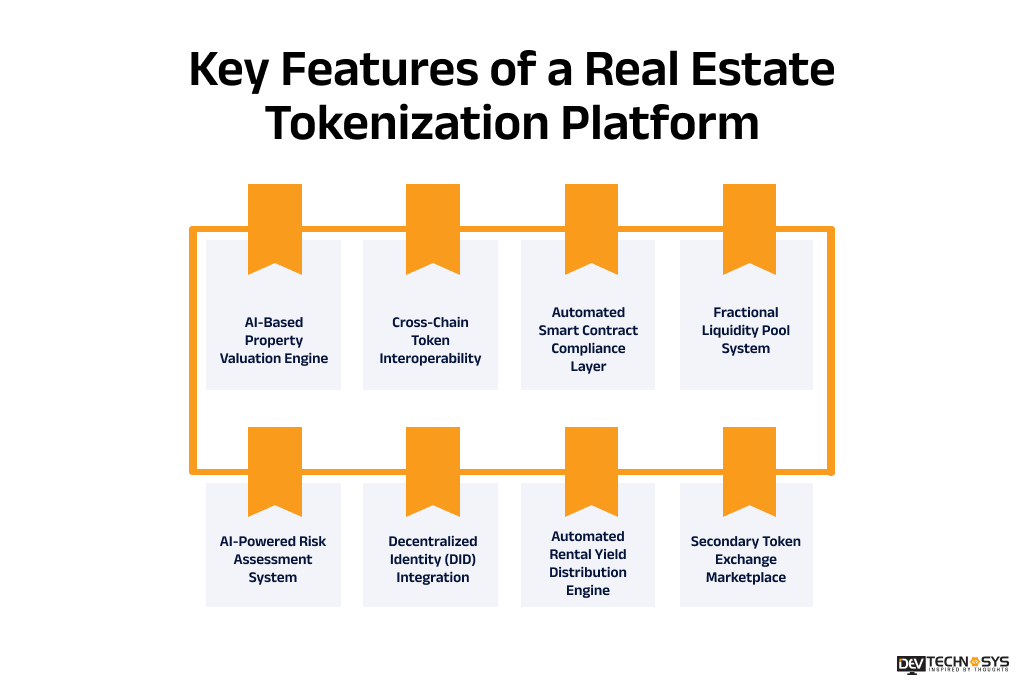
Here are the essential and advanced features required in a real estate tokenization platform. All these features play a crucial role in shaping the platform and improving its performance.
Investor Dashboard (User Panel) |
Issuer Panel (Asset Owner) |
Admin Panel (Management Dashboard) |
| KYC/AML Verification | asset tokenization solutions and Tools | User Management System |
| Portfolio Overview | Property Listing Management | KYC/AML Approval System |
| Investment Marketplace | Investor Management | Platform Monitoring |
| Fractional Ownership Tracking | Fundraising Dashboard | Smart Contract Oversight |
| Dividend & Rental Income Tracking | Revenue Distribution Control | Dispute Resolution System |
| Secondary Market Trading | Compliance Management | Fee & Revenue Management |
| Transaction History | Asset Performance Analytics | Security & Risk Monitoring |
1. AI-Based Property Valuation Engine
AI in real estate uses machine learning models to analyze tokenization trends, location data, rental yields, and historical pricing to deliver highly accurate, real-time property valuations, enabling better investment decisions and reducing pricing risk.
2. Cross-Chain Token Interoperability
Enables real estate tokens to be transferred and traded across multiple blockchain networks, improving liquidity, expanding investor reach, and reducing dependency on a single blockchain ecosystem or infrastructure.
3. Automated Smart Contract Compliance Layer
Ensures every transaction automatically adheres to jurisdiction-based regulations, investor eligibility rules, and securities laws using programmable compliance logic embedded directly into smart contracts.
4. Fractional Liquidity Pool System
Aggregates tokenized real estate assets into liquidity pools, allowing investors to exit positions instantly while maintaining market stability and improving capital flow efficiency across the ecosystem.
5. AI-Powered Risk Assessment System
Continuously evaluates market volatility, tenant risk, property performance, and regulatory changes to generate dynamic risk scores for each tokenized asset, helping investors make informed decisions.
6. Decentralized Identity (DID) Integration
Develop a real estate mobile app that provides secure, blockchain-based identity verification that allows users to control their personal data while ensuring seamless KYC/AML compliance across multiple platforms without repeated onboarding.
7. Automated Rental Yield Distribution Engine
Distributes rental income instantly to token holders based on ownership percentage using smart contracts, eliminating manual processing delays and ensuring transparent, error-free profit allocation.
8. Secondary Token Exchange Marketplace
A built-in trading system where investors can buy, sell, or swap real estate tokens in real time, increasing liquidity and enabling price discovery for tokenized property assets.
Benefits of Real Estate Tokenization for Investors
Property owners and developers can leverage tokenization to unlock liquidity, attract investors, and streamline fundraising efforts through real estate mobile app development.
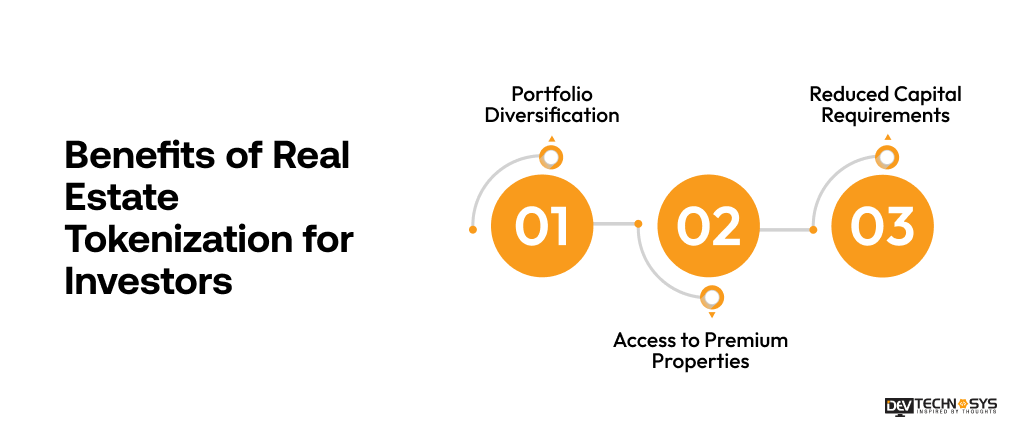
1. Portfolio Diversification: Investors can spread their capital across multiple properties, locations, and asset types instead of concentrating funds in a single investment. This helps reduce risk and improve portfolio stability.
2. Access to Premium Properties: Tokenization allows investors to own fractions of high-value commercial buildings, luxury residences, hotels, and other premium assets that would otherwise require substantial capital.
3. Reduced Capital Requirements: Traditional real estate often demands large upfront investments. Tokenization lowers entry barriers by enabling fractional ownership, allowing investors to participate with significantly smaller amounts.
Benefits of Real Estate Tokenization for Property Owners and Developers
Property owners and developers can leverage tokenization to unlock liquidity, attract investors, and streamline fundraising efforts.
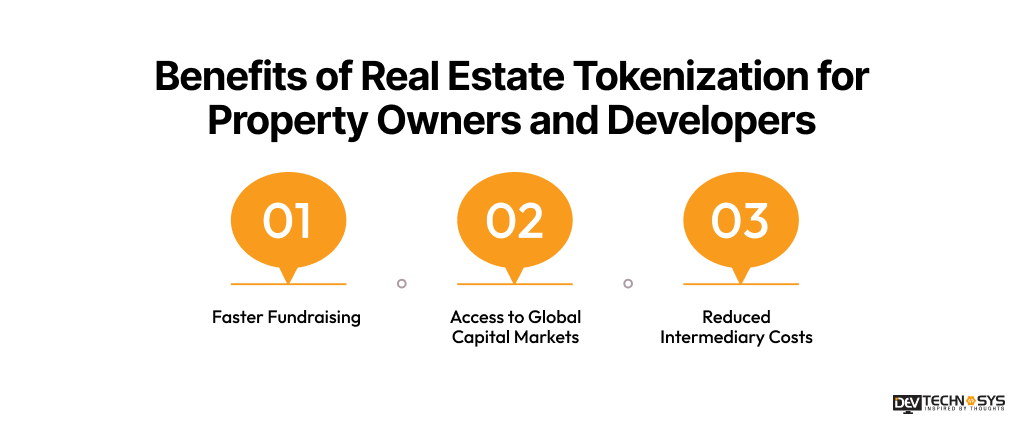
- Faster Fundraising: By dividing properties into digital tokens, owners can raise capital from a broader investor base more quickly than through traditional financing methods.
- Access to Global Capital Markets: Tokenization removes geographical barriers, enabling developers to attract investors from different countries and expand their funding opportunities.
- Reduced Intermediary Costs: Blockchain-based transactions reduce reliance on brokers, agents, and other intermediaries, lowering administrative expenses and improving overall fundraising efficiency.
Challenges and Risks of Real Estate Tokenization
According to experts who offer real estate app development solutions, the key challenges in making real estate tokenization involve:
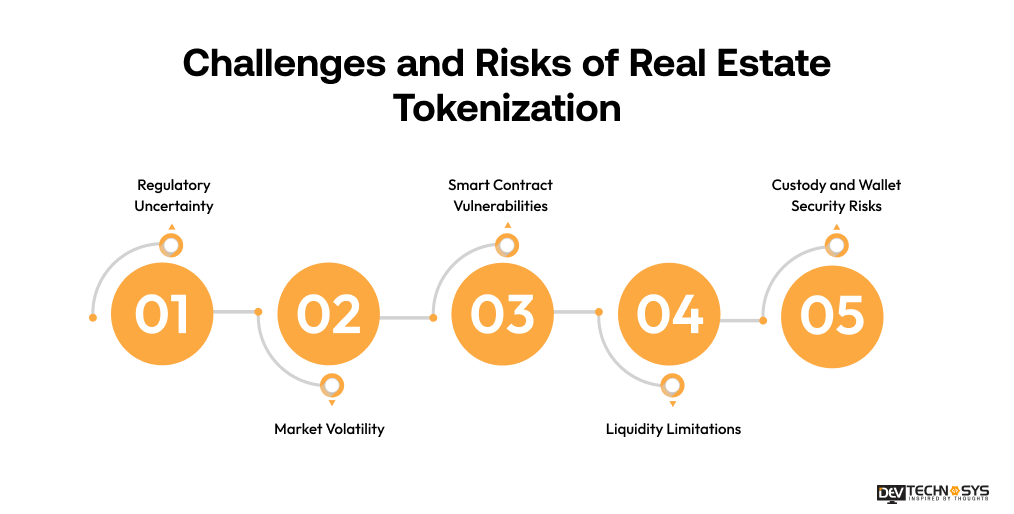
1. Regulatory Uncertainty
Real estate tokenization operates at the intersection of property law and securities regulation, which varies across jurisdictions. Evolving regulations and a lack of global standardization can delay launches, restrict investor participation, and create legal ambiguity for platforms.
2. Market Volatility
Although real estate is traditionally stable, tokenized assets can be influenced by crypto market sentiment, investor speculation, and secondary trading dynamics, leading to short-term price fluctuations that may not reflect underlying property value.
3. Smart Contract Vulnerabilities
Bugs, coding errors, or poorly audited smart contracts can lead to fund loss, unauthorized access, or system exploitation. Since blockchain transactions are irreversible, security audits and formal verification are critical.
4. Liquidity Limitations
While tokenization improves liquidity compared to traditional real estate, secondary markets may still lack sufficient buyers, especially for niche or low-demand properties, making quick exits difficult in some cases.
5. Custody and Wallet Security Risks
Investors must securely manage private keys and digital wallets. Loss of credentials, phishing attacks, or exchange hacks can result in irreversible loss of tokenized assets. UAE businesses must hire Android app developer in Dubai to solve such a challenge and improve operations.
Real Estate Tokenization vs REITs: Which Investment Model is Better?
Both real estate tokenization and REITs (Real Estate Investment Trusts) allow investors to gain exposure to real estate without directly owning property, but they differ significantly in structure, flexibility, and technology.
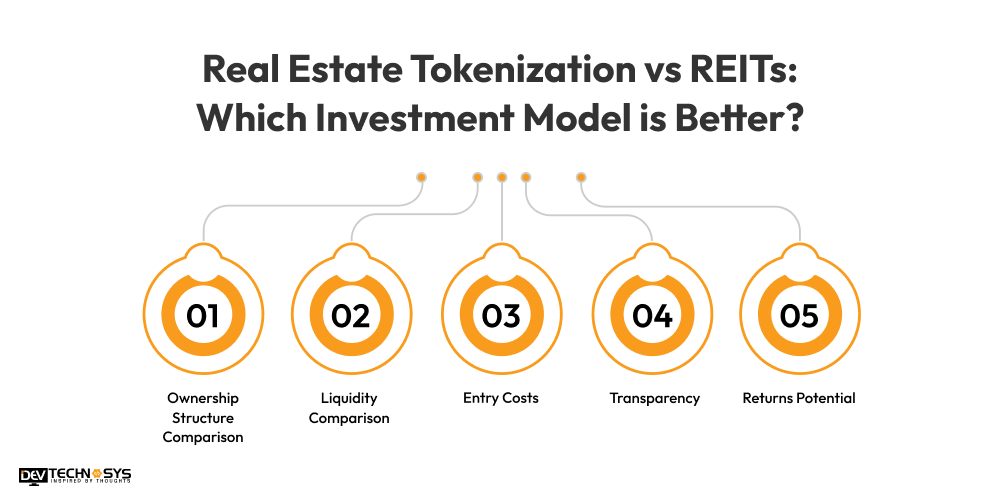
1. Ownership Structure Comparison
REITs represent shares in a managed real estate fund controlled by institutions. In contrast, tokenization enables direct fractional ownership of specific properties through blockchain-based digital tokens, offering more granular asset-level exposure.
2. Liquidity Comparison
REITs are traded on stock exchanges with high liquidity during market hours. Tokenized real estate offers potential 24/7 trading on secondary marketplaces, but liquidity depends on platform adoption and investor demand.
3. Entry Costs
REITs typically have very low entry costs through public markets. Tokenization also allows fractional investment, often with similarly low or even lower minimum investment thresholds depending on the platform.
4. Transparency
REITs rely on institutional reporting and periodic disclosures. A tokenization platform provides greater transparency through blockchain-based records, in which ownership and transactions are recorded on immutable ledgers in real time.
5. Returns Potential
REIT returns are generally stable but moderate due to diversified holdings. Tokenized real estate can offer higher returns tied to specific high-performing assets but may carry more variability based on individual property performance.
Industry Insights:
‘Boston Consulting Group estimates tokenized illiquid assets could reach $16T by 2030 (RWA segment projection).’
Real Estate Tokenization vs Traditional Property Investment
Traditional property investment has long been considered a stable wealth-building method, but it comes with high entry barriers, slow transactions, and limited liquidity. Real estate tokenization is emerging as a modern alternative for developers who provide real estate app development services because it leverages blockchain technology to make property ownership more accessible, transparent, and flexible. Converting physical assets into digital tokens enables fractional ownership and global participation.
This comparison highlights how both models differ across key factors such as accessibility, cost, liquidity, and ownership structure.
Factor |
Traditional Property Investment |
Real Estate Tokenization |
| Investment Accessibility | Requires high capital, making entry difficult for small or retail investors | Enables fractional ownership with low entry barriers for wider participation |
| Transaction Costs | High due to broker fees, legal charges, registration, and intermediaries | Lower due to smart contracts and reduced reliance on intermediaries |
| Ownership Flexibility | Full or partial ownership with complex legal transfer processes | Highly flexible fractional ownership via digital tokens |
| Global Reach | Mostly limited to local or domestic investors due to legal and procedural constraints | Global investor participation is enabled through blockchain networks |
| Asset Liquidity | Low liquidity; property sales take weeks or months | Higher liquidity with faster buying and selling through tokenized marketplaces |
What are the Types of Real Estate Assets Suitable for Tokenization?
Real estate tokenization can be applied across multiple property categories that have clear ownership, stable valuation, and income potential, making them suitable for fractional investment and blockchain-based trading.
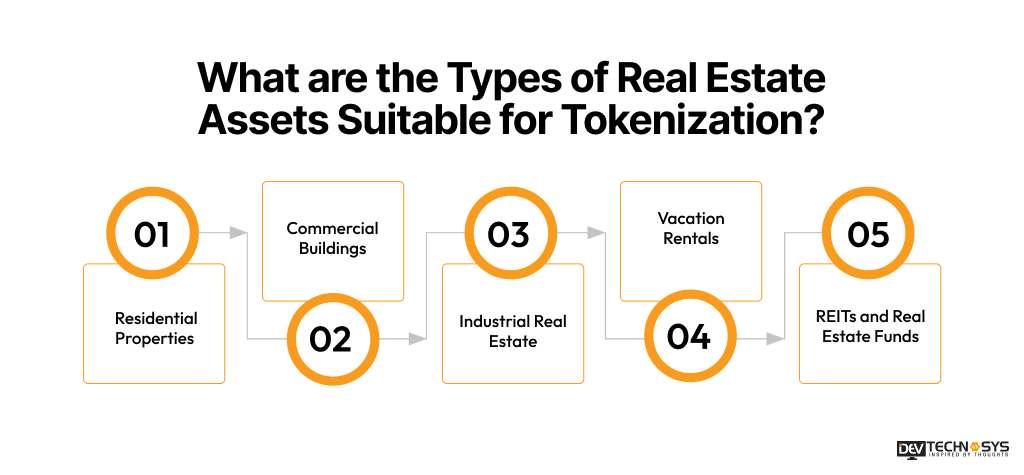
1. Residential Properties
Residential assets like apartments, villas, and condominiums are commonly tokenized, enabling fractional ownership and rental income sharing. They attract retail investors due to steady demand, predictable cash flow, and relatively lower entry barriers compared to commercial properties.
2. Commercial Buildings
Office spaces, retail complexes, co-working hubs, and shopping malls are ideal for tokenization due to long-term lease agreements and stable rental yields. These assets often attract institutional investors seeking consistent income and diversified exposure to commercial real estate markets.
3. Industrial Real Estate
Warehouses, logistics hubs, manufacturing units, and industrial parks are well-suited for tokenization because of strong demand from e-commerce and supply chain expansion. They typically offer long-term contracts, lower vacancy risk, and stable cash flow performance. Implementing trending IT solutions can be beneficial for businesses to streamline workflows.
4. Vacation Rentals
Hotels, resorts, and short-term rental properties can be tokenized to allow investors to earn income based on occupancy rates and seasonal demand. These assets often provide higher returns but may involve greater variability in revenue streams.
5. REITs and Real Estate Funds
Existing REITs and real estate funds can be tokenized to improve liquidity and enable fractional trading of fund shares. This approach enhances accessibility, transparency, and simplifies investment in diversified real estate portfolios.
What are the Real-World Examples of Real Estate Tokenization Platforms?
Several real estate tokenization platforms are already using blockchain technology to enable fractional ownership, improve liquidity, and provide global access to property investments.
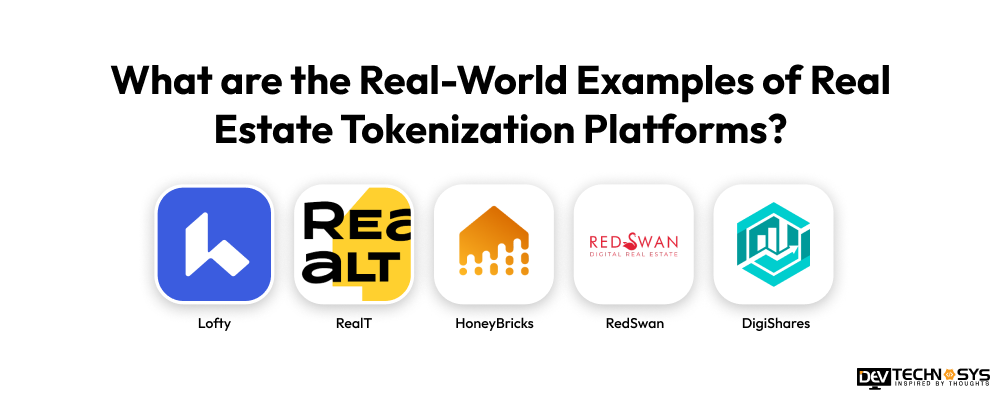
1. Lofty
Lofty is a blockchain-based platform that allows users to buy fractional shares of rental properties and earn daily rental income. It focuses on making real estate investment highly liquid, transparent, and accessible to retail investors.
2. RealT
RealT enables investors to purchase tokenized U.S. real estate properties and earn rental income distributed in cryptocurrency. It is known for simplifying property investment through blockchain-based fractional ownership.
3. HoneyBricks
HoneyBricks offers fractional ownership in institutional-grade real estate deals. It focuses on accredited investors and provides professionally managed assets with transparent blockchain-backed reporting.
4. RedSwan
RedSwan specializes in tokenizing large-scale commercial real estate assets, giving investors access to institutional-quality properties that were traditionally difficult to invest in.
5. DigiShares
DigiShares provides white-label infrastructure for real estate tokenization platforms. It helps companies issue, manage, and trade security tokens while ensuring regulatory compliance and scalability.
Technology Stack Required for Real Estate Tokenization Platforms
Building a real estate tokenization platform requires a powerful and secure technology stack that combines blockchain infrastructure, smart contracts, compliance systems, and scalable backend architecture. This stack ensures transparency, automation, and trust in managing digital property ownership and transactions.
Layer |
Technology Components |
| Blockchain Technology | Ethereum, Polygon, Solana, Avalanche |
| Smart Contract Development | Solidity, Rust, Vyper |
| Token Standards | ERC-20, ERC-721, ERC-1400, ERC-3643 |
| Backend Development | Node.js, Python, Java, Go |
| Frontend Development | React, Next.js, Vue.js |
| Database Layer | PostgreSQL, MongoDB, Redis |
| Cloud Infrastructure | AWS, Google Cloud, Azure |
| Identity & Compliance | KYC/AML APIs, Onfido, Jumio |
| Wallet Integration | MetaMask, WalletConnect, Coinbase Wallet |
| Security Layer | Smart contract audits, encryption, multi-sig wallets |
Cost to Build a Real Estate Tokenization Platform in 2026
The cost to build a real estate tokenization platform in 2026 ranges from $30,000 to $1,50,000, depending on features, design, developers’ location, and tech-stack. The cost to build a cryptocurrency exchange app with basic features starts from $30,000 and ranges up to $70,000. The Mid-Level esal estate tokenization platform cost is around $70,000 to $100,000.
Platform Type |
Estimated Cost (2026) |
Development Timeline |
| Basic MVP Platform | $30,000 – $70,000 | 2 – 4 months |
| Mid-Level Commercial Platform | $70,000 – $100,000 | 4 – 6 months |
| Enterprise-Grade Platform | $100,000 – $1,50,000+ | 6+ months |
The cost to build a real estate tokenization platform with advanced features like an AI-based property valuation engine and cross-chain token interoperability can exceed to $1,50,000+. There are various other reasons that impact the cost to hire token developers, including the location of developers, features, tech-stack, maintenance, and more.

Future Trends Shaping Real Estate Tokenization in 2026 and Beyond
Real estate tokenization is rapidly evolving as blockchain, AI, and institutional finance converge. These real estate app development trends are expected to redefine how properties are valued, traded, and owned globally.
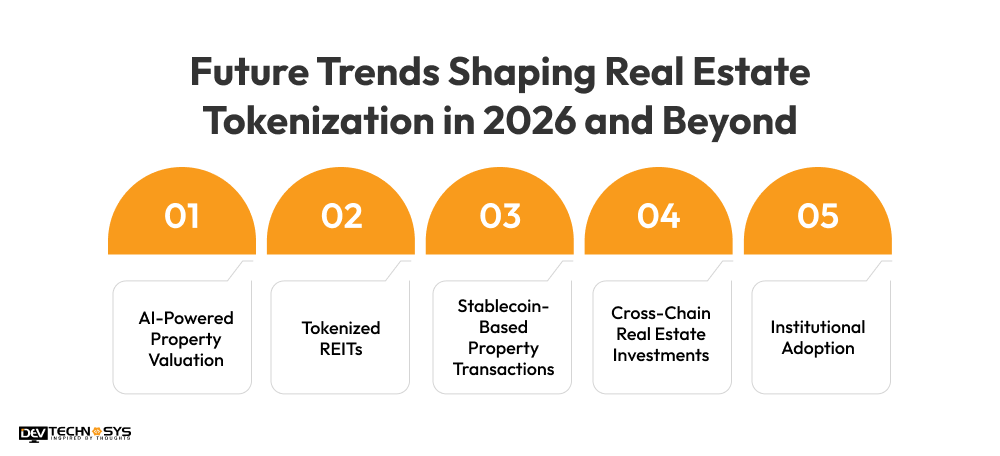
1. AI-Powered Property Valuation
Artificial intelligence will increasingly be used to assess property value using real-time market data, rental trends, location analytics, and macroeconomic indicators, improving accuracy and reducing human bias in investment decisions.
2. Tokenized REITs
Traditional REITs are expected to evolve into blockchain-based tokenized REITs, enabling fractional ownership with higher liquidity, real-time settlements, and improved transparency compared to conventional fund structures.
3. Stablecoin-Based Property Transactions
Stablecoins will simplify cross-border real estate payments by reducing currency volatility, enabling faster settlements, and eliminating reliance on traditional banking intermediaries for international property investments.
4. Cross-Chain Real Estate Investments
Future platforms will support interoperability across multiple blockchain networks, allowing investors to trade and transfer property tokens seamlessly between ecosystems, increasing liquidity and global accessibility.
5. Institutional Adoption
Large financial institutions, asset managers, and real estate firms are expected to adopt tokenization for fundraising, asset management, and portfolio diversification, driving mainstream acceptance and regulatory maturity in the sector.
Conclusion
Real estate tokenization in 2026 is transforming property investment by enabling fractional ownership, global access, and improved liquidity through blockchain technology. It bridges traditional real estate with decentralized finance, offering a more transparent, efficient, and accessible investment ecosystem for investors.
If you are a business looking to build a real estate tokenization platform for your business, contact Dev Technosys, a top real estate app development company. With 15 years of industry expertise and 270+ workforce strength, we specialize in delivering secure, scalable, and blockchain-powered Web3 real estate solutions tailored for modern real estate businesses.
FAQs
Q1. What is Real Estate Tokenization?
Real estate tokenization is the process of converting property ownership into digital tokens on a blockchain, enabling fractional ownership, easier trading, and improved liquidity while maintaining legal rights through structured entities like SPVs or trusts.
Q2. Is Real Estate Tokenization Legal in 2026?
Yes, but legality depends on jurisdiction. Most regions classify tokens as securities, requiring compliance with securities laws, KYC/AML rules, investor accreditation, and proper legal structuring of underlying real estate assets.
Q3. How Does Tokenized Real Estate Generate Returns?
Investors earn returns through rental income, property appreciation, and profit-sharing mechanisms. Smart contracts automate distribution, ensuring transparent and proportional payouts based on the number of tokens held by each investor.
Q4. How to Launch a Real Estate Tokenization Platform Successfully
To launch a real estate tokenization platform successfully, you need to:
- Define Business Model
- Choose Jurisdiction
- Select Blockchain Network
- Ensure Legal Compliance
- Develop and Audit Smart Contracts
- Launch Investor Marketplace
- Scale with Global Expansion
Q5. Which Blockchain is Best For Real Estate Tokenization?
Besides Ethereum real estate tokenization, Polygon, Avalanche, and Solana are commonly used due to their scalability, smart contract support, and ecosystem maturity. The choice depends on cost efficiency, transaction speed, and regulatory compatibility requirements.