





Key Takeaways:
-
-
- Build crypto asset software that is secure, fast, and fully compliant with regulations.
- Include multi-currency wallets, portfolio tracking, trading, and user-friendly analytics dashboards.
- Integrate with exchanges, DeFi platforms, and payment gateways for real-time transactions.
- Add AI insights, risk assessment tools, and automated portfolio rebalancing features.
- Use a reliable technology stack with blockchain, cloud services, and strong encryption protocols.
- Monetize using subscriptions, transaction fees, premium analytics, or enterprise licensing models.
-
Crypto is not just a trend but a fast-moving digital economy. Millions of users now hold multiple digital assets across wallets and exchanges, from early adopters investing in Bitcoin to developers building ecosystems on Ethereum. That’s where crypto asset management software comes in. Think of it as a smart financial command center for digital assets.
Whether you’re building for retail investors, hedge funds, fintech startups, or crypto exchanges, a well-designed asset management platform can turn chaos into clarity. In this guide, we’ll break down how to build crypto asset management software. We will discuss key features, the tech stack, security essentials, compliance needs, and development costs. So, let’s dive straight into them.
What is Crypto Asset Management Software?
Crypto asset management software serves as a financial dashboard for digital assets, enabling better visibility, smarter investment decisions, and enhanced security for cryptocurrency investors and institutions. Crypto Asset management software has tools that automate portfolio tracking, risk analysis, and performance reporting, often integrating DeFi protocols for yield generation.
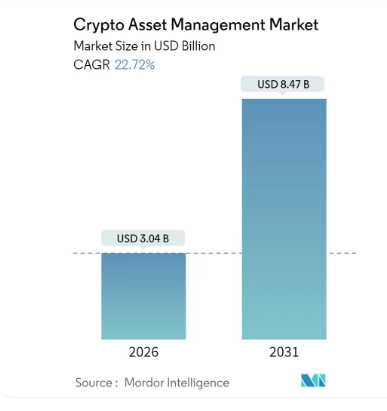
Crypto Asset Management Market Size
- The crypto asset management market size was USD 3.04 billion in 2026 and is forecast to reach USD47 billion by 2031, registering a 22.72% CAGR.
- Institutional inflows now set daily price discovery, evidenced by a USD 40 billion first-year asset haul at BlackRock’s iShares Bitcoin Trust.
- By end-user industry, BFSI held 81% share in 2025, whereas healthcare is anticipated to rise at a 24.20% CAGR through 2031.
- By user type, institutional investors held a 37% share in 2025, and corporate treasuries are set to grow at a 23.91% CAGR through 2031.
How Does Crypto Management Software Operate?
Users link their wallets and exchange accounts through secure API keys or credentials. The software fetches real-time data on balances, transactions, and market prices, ensuring all digital assets are connected and accessible from a single platform.
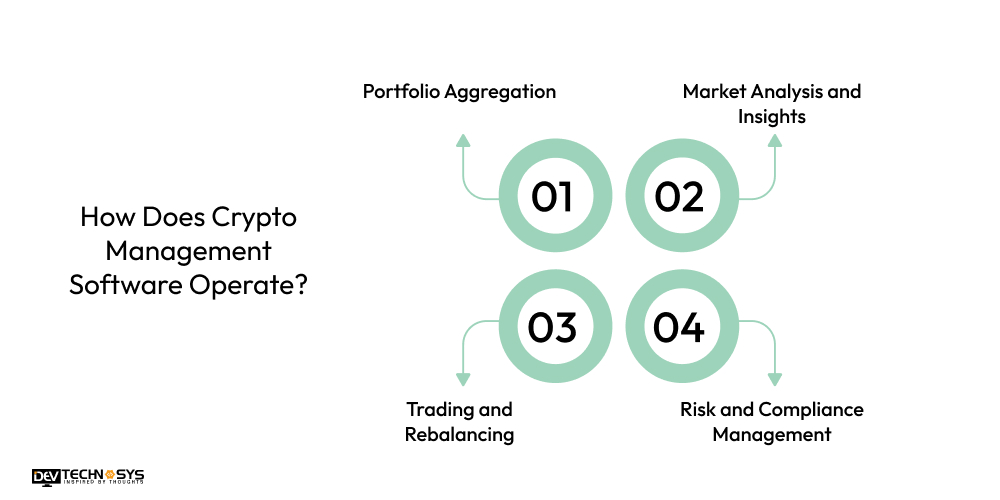
1. Portfolio Aggregation
The software consolidates assets from multiple wallets and exchanges into one dashboard. It displays total portfolio value, coin allocation, transaction history, and performance trends, providing users with a clear, unified view of all their cryptocurrency investments in real-time.
2. Market Analysis and Insights
Built-in analytics track market performance, trading volumes, and price volatility. Advanced platforms offer AI-driven forecasts, technical indicators, and trend analysis, enabling investors to make informed decisions and optimize portfolio allocation according to market conditions.
3. Trading and Rebalancing
Users can execute trades directly through the software on supported exchanges. Automated rebalancing adjusts asset allocation based on predefined strategies, helping maintain the desired risk profile and portfolio diversification without manual intervention.

4. Risk and Compliance Management
The software monitors portfolio exposure to volatile assets and potential risks. It generates tax reports, transaction logs, and compliance documentation, ensuring that investors meet regulatory requirements while maintaining a secure, legally compliant crypto portfolio.
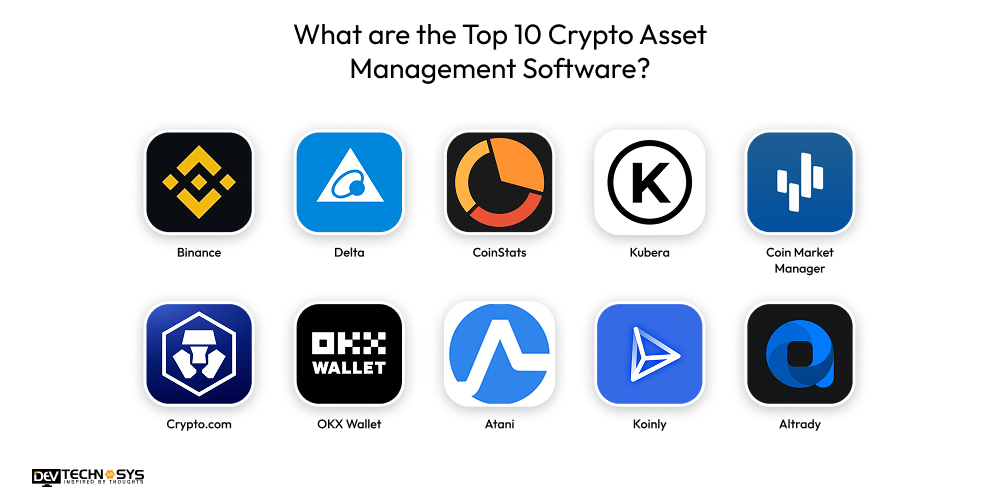
What are the Top 10 Crypto Asset Management Software?
Top cryptocurrency portfolio management software for 2026 includes versatile platforms like CoinStats, CoinTracker, Koinly, and 3Commas. All the top cryptocurrency exchange apps in the Middle East listed offer tracking, automated trading, tax reporting, and DeFi integration.
Software |
Type |
Key Features |
| Binance | Exchange + Tracker | Portfolio tracking, trading, wallet sync |
| Delta | Tracker | Tracks 7,000+ coins, alerts, multi-asset view |
| CoinStats | Tracker | Wallet/exchange sync, analytics, alerts |
| Kubera | Wealth Tracker | Tracks crypto + traditional assets, DeFi, NFTs |
| Coin Market Manager | Pro Tracker | Exchange API analytics, performance metrics |
| Crypto.com | App + Tracker | Dashboard, portfolio management, earnings |
| OKX Wallet | Wallet/Tracker | Multi-chain asset management, earning tools |
| Atani | Desktop Tracker | Multi-exchange trading + portfolio alerts |
| Koinly | Tax & Portfolio | Portfolio tracking + crypto tax reporting |
| Altrady | Trading & Management | Multi-exchange trading + portfolio management |
The world of cryptocurrency is growing rapidly, making it essential for investors to manage multiple assets efficiently. Here are the top 5 cryptocurrency portfolio management software making waves in the Middle East, helping various businesses manage digital assets.
1. Binance
Binance is the world’s largest cryptocurrency exchange with high liquidity, over 600+ coins and 1,500+ trading pairs, plus spot, futures, staking, wallet, and earn features. Its integrated portfolio dashboard lets users monitor and manage assets, earnings, and performance with global reach and deep market access. If you want to build crypto asset management software like Binance, then hire professional developers.
2. Delta
Delta is a multi‑asset portfolio tracker that supports thousands of cryptocurrencies plus stocks, ETFs, forex, NFTs, and more. It provides real‑time prices, profit/loss analytics, watchlists, news feeds, and cross‑device sync. Delta is best for diversified investors who track both traditional and crypto assets.
3. CoinStats
CoinStats consolidates crypto, NFT, and DeFi holdings from 300+ wallets, 400+ exchanges, and 100+ blockchains into a single dashboard with real‑time pricing, alerts, P&L tracking, news feeds, and tax reporting. It’s ideal for users seeking broad cross‑platform visibility and multi‑protocol insights.
4. Kubera
Kubera is a holistic wealth tracker that aggregates crypto, traditional investments, bank accounts, and real estate into a single view. It offers real‑time valuations, global account sync, and estate planning tools, making it best for high‑net‑worth individuals managing total net worth, including digital assets.
5. Coin Market Manager
Coin Market Manager focuses on advanced portfolio analytics for active traders. It connects to exchange APIs, imports trade history, and delivers deep performance metrics, profit/loss breakdowns, and trade journaling insights.
Best for serious traders optimizing strategies through detailed analytics rather than simple balance tracking. We suggest consulting with a top digital asset management platform development provider before proceeding with development.
Industry Insights: According to Sharical Insights, the broader crypto asset management market is experiencing a high CAGR, driven by increased institutional adoption.
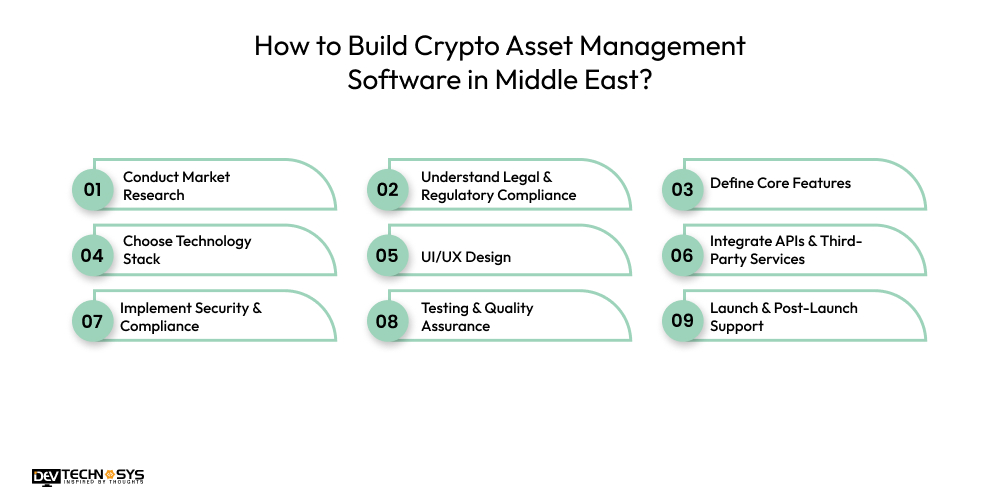
How to Build Crypto Asset Management Software in Middle East?
Building crypto asset management software in the Middle East requires blending advanced technology with regional regulatory compliance. Such platforms help investors and businesses securely track, analyze, and optimize their cryptocurrency holdings, while offering trading and portfolio analytics tailored to the Middle Eastern market.
1. Conduct Market Research
The process to develop a cryptocurrency exchange app in Middle East begins by analyzing the Middle Eastern crypto landscape, identifying key users like retail investors, institutional clients, and high-net-worth individuals. Study competitors such as Binance, Delta, and CoinStats to understand features, gaps, and market trends. Assess demand for portfolio tracking, DeFi integration, trading tools, and tax reporting within the region.
Industry Insights: Industry Research states that Asia‑Pacific accounts for 30.2 percent of the Crypto Asset Management Market, closely rivaling North America.
2. Understand Legal & Regulatory Compliance
Ensure your software complies with local regulations in countries like the UAE, Bahrain, and Saudi Arabia. Implement AML (Anti-Money Laundering), KYC (Know Your Customer), and data protection policies. Obtain necessary licenses if offering custodial services or trading facilities, and maintain transparency and legal compliance to gain the trust of users and regulators.
3. Define Core Features
Develop essential features, including multi-wallet portfolio aggregation, real-time trading, automated rebalancing, P&L analytics, tax reporting, alerts for price changes or unusual activity, and multi-chain DeFi tracking. Focus on user-centric functionality to ensure both retail and institutional clients can securely and efficiently manage their crypto assets on a single platform.
Industry Insights: According to a report by Market View Research, crypto asset management features align with industry trends, with portfolio management and analytics tools dominating software usage and revenue.
4. Choose Technology Stack
If you want to build crypto asset management software, select a robust tech stack: backend frameworks. It includes: Node.js, Python, or Java; frontend frameworks such as React, Angular, or Vue.js; databases such as PostgreSQL or MongoDB; and blockchain APIs for Ethereum, Bitcoin, or Solana.
Your digital asset management solution provider will use cloud hosting (AWS, Azure, Google Cloud) that meets regional compliance and scalability requirements.
5. UI/UX Design
Design intuitive dashboards for portfolio overviews, trading, and analytics. Ensure mobile responsiveness, clear data visualization, and multilingual support (Arabic and English). Focus on user experience for both individual and institutional users, allowing effortless navigation, actionable insights, and real-time monitoring of investments across multiple wallets and exchanges.
6. Integrate APIs & Third-Party Services
Connect to global and regional exchange APIs like Binance, OKX, or CoinMENA for trading and portfolio syncing. Incorporate price feeds, DeFi protocols, and fiat-crypto payment gateways. Third-party integrations enhance functionality, allow real-time updates, and provide seamless trading and management experiences for users in the Middle Eastern market.
7. Implement Security & Compliance
Apply end-to-end encryption, secure cloud storage, multi-factor authentication, and role-based access controls. Conduct audit logging and regular security audits to prevent unauthorized access. Ensure compliance with local regulations, and consider international standards like ISO or GDPR for users outside the region to maintain trust and protect sensitive financial data.
8. Testing & Quality Assurance
Perform thorough testing, including unit, integration, and performance tests, to ensure stability and scalability. Conduct penetration testing and vulnerability assessments to secure digital assets. Test web and mobile platforms under high-traffic conditions to deliver seamless performance, prevent downtime, and ensure a reliable experience for all users.
9. Launch & Post-Launch Support
Start with a minimum viable product (MVP) to gather user feedback and validate features. Gradually enhance the platform with advanced functionality. Offer 24/7 customer support, particularly for institutional clients. Regular updates and feature additions improve user retention and demonstrate commitment to service quality in the Middle Eastern crypto market.
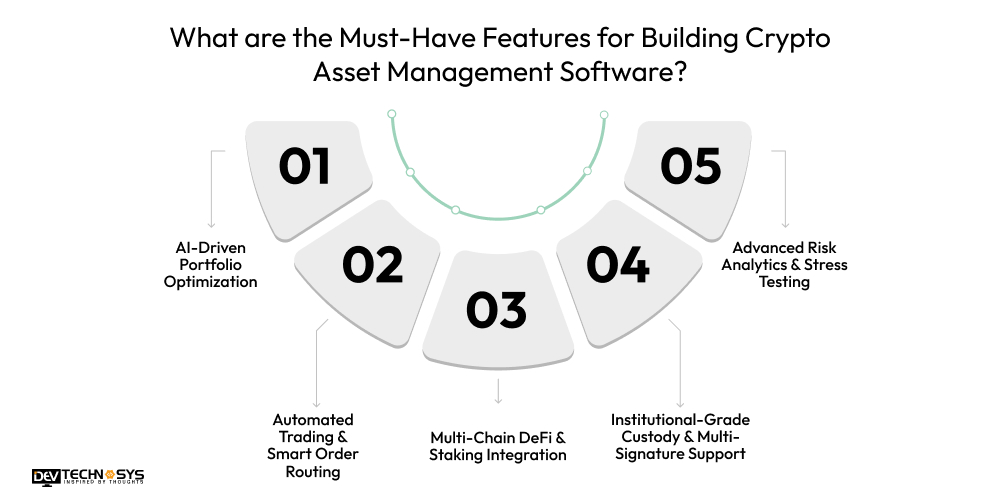
What are the Must-Have Features for Building Crypto Asset Management Software?
Crypto asset management software is designed to help investors and institutions efficiently track, manage, and optimize their digital assets. Below are the must-have features essential for building a reliable and scalable cryptocurrency exchange development solution.
User Panel |
Admin Panel |
Analytics & Reporting Panel |
| Portfolio aggregation | User & role management | Real-time performance dashboards |
| Real-time tracking & P/L analytics | Transaction monitoring | Advanced profit/loss reports |
| Trading & automated rebalancing | Subscription & revenue management | Asset allocation insights |
| Alerts & notifications | Risk & fraud monitoring | Downloadable tax & financial reports |
1. AI-Driven Portfolio Optimization
The role of AI in cryptocurrency exchange apps includes analyze market trends, volatility, and historical performance. Automatically suggests or executes portfolio rebalancing strategies to maximize returns while maintaining the user’s preferred risk level.
2. Automated Trading & Smart Order Routing
Enables algorithmic trading strategies, including stop-loss, take-profit, and grid trading. Smart order routing ensures trades are executed at the best available price across multiple exchanges, improving liquidity and reducing slippage.

3. Multi-Chain DeFi & Staking Integration
Allows users to track DeFi investments, liquidity pools, yield farming, and staking rewards across different blockchains. Provides real-time yield insights and risk metrics for participation in decentralized finance.
4. Institutional-Grade Custody & Multi-Signature Support
Enterprise crypto asset management platform offers secure digital asset storage with multi-signature wallet functionality, role-based permissions, and segregated accounts. Ideal for hedge funds, asset managers, and enterprises requiring enhanced governance and asset protection.
5. Advanced Risk Analytics & Stress Testing
Includes volatility tracking, Value-at-Risk (VaR) calculations, exposure analysis, and scenario-based stress testing. Helps investors evaluate potential losses under different market conditions and make data-driven risk management decisions.
Read also: How Much Does ERP Software Development Cost?
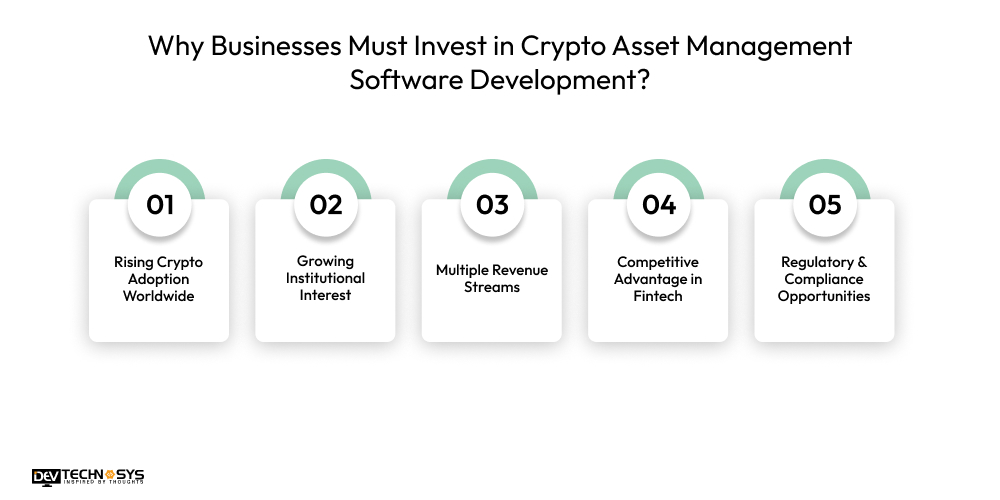
Why Businesses Must Invest in Crypto Asset Management Software Development?
Cryptocurrency is rapidly transforming the global financial ecosystem, creating new opportunities for businesses. To stay competitive and capitalize on this growth, companies must invest in custom crypto asset management software that enables data-driven digital asset management.
1. Rising Crypto Adoption Worldwide
Cryptocurrency is one of the future trends of cryptocurrency exchange apps. it is growing among retail investors, institutions, and enterprises. Businesses investing in crypto asset management software can tap into this expanding market, offering structured portfolio tools that meet increasing demand for secure, professional digital asset management solutions.
2. Growing Institutional Interest
Institutional investors, hedge funds, and fintech companies are entering the crypto space. Businesses that want to develop a cryptocurrency exchange app like Bybit would require secure custody, advanced analytics, compliance tools, and reporting systems. Developing a crypto asset management platform positions businesses to serve high-value institutional clients and generate recurring enterprise revenue.
3. Multiple Revenue Streams
A crypto and Blockchain asset management system enables diversified monetization models, including subscription plans, transaction fees, performance-based fees, premium analytics, and API access. This creates sustainable and scalable revenue opportunities in a rapidly evolving financial ecosystem.
4. Competitive Advantage in Fintech
Offering crypto portfolio management services enhances a company’s fintech portfolio. It strengthens brand positioning as an innovative and forward-thinking business, helping attract tech-savvy investors and partners in competitive digital finance markets.
5. Regulatory & Compliance Opportunities
As governments introduce clearer crypto regulations, compliant asset management platforms gain trust and credibility. Investing early allows businesses to build secure, regulation-ready infrastructure and establish themselves as reliable players in the digital asset ecosystem.
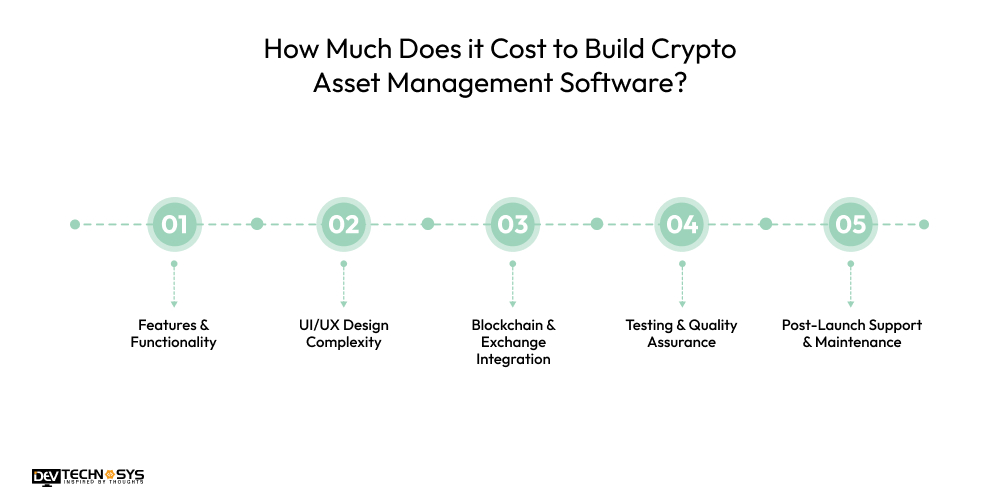
How Much Does it Cost to Build Crypto Asset Management Software?
Building crypto asset management software generally costs between $8,000 and $12,000+, depending on complexity, features, security requirements, and regulatory compliance. A basic MVP (Minimum Viable Product) typically ranges from $15,000 to $22,000 and covers core portfolio tracking, wallet integration, and essential dashboards.
App Type |
Estimated Cost |
Best For |
| Basic Portfolio Tracker (Web App) | $8,000 to $12,000 | Startups, individual investors |
| Mobile App (iOS or Android ) | $12,000 to $18,000 | Retail investors |
| Cross-Platform Mobile App | $15,000 to $22,000 | Growing fintech startups |
| Web + Mobile MVP | $20,000 to $30,000 | SMEs & crypto startups |
An advanced, enterprise-grade DeFi portfolio management platform with AI-driven analytics, multi-chain integration, automated trading, institutional custody, and enterprise-level security can cost over $30,000 due to higher development time and infrastructure requirements. Now, let’s look at the major factors that affect the cost to build crypto asset management software.
1. Features & Functionality
According to a top mobile app development company, advanced modules like AI-driven analytics, multi-chain DeFi tracking, automated trading, and tax reporting require more development effort.
The basic cost to develop a blockchain-based asset management system will be on the lower end, whereas an enterprise-grade DeFi portfolio management platform with multiple advanced features will require higher budgets due to complexity and technical integration.
Feature Complexity |
Estimated Cost |
| Basic Crypto Asset Management Software | $2,000 – $5,000 |
| Intermediate Crypto Asset Management Software | $5,000 – $8,000 |
| Advanced Crypto Asset Management Software | $8,000 – $10,000+ |
2. UI/UX Design Complexity
Designing an intuitive, visually rich interface with interactive dashboards, real-time charts, and multilingual support takes more time and expertise, which impacts the cost to develop a cryptocurrency exchange app. Complex UI/UX increases development costs but enhances adoption, engagement, and user satisfaction across retail and institutional clients.
Design Level |
Estimated Cost |
| Basic | $3,000 – $6,000 |
| Intermediate | $7,000 – $10,000 |
| Advanced | $10,000 – $15,000 |
3. Blockchain & Exchange Integration
Connecting multiple wallets, exchanges, and blockchain networks adds development complexity. Each API integration and real-time data feed requires coding, testing, and maintenance, which increases project duration and costs, especially for platforms supporting several crypto networks simultaneously.
Integration Scope |
Estimated Cost |
| Single Exchange / Wallet | $1,500 – $4,000 |
| Multiple Exchanges / Wallets | $5,000 – $7,000 |
| Multi-Chain & DeFi | $7,000 – $11,000+ |
4. Testing & Quality Assurance
Comprehensive testing, including unit, integration, performance, and security audits, ensures reliability and stability. Thorough QA requires additional time, skilled resources, and repeated iterations, which directly increases development costs but reduces post-launch risks.
Testing Type |
Estimated Cost |
| Basic QA | $800 – $1,500 |
| Intermediate QA | $1,500 – $3,500 |
| Advanced QA & Security Audit | $3,500 – $7,000 |
5. Post-Launch Support & Maintenance
Ongoing updates, server maintenance, bug fixes, and feature enhancements are crucial for smooth operation and user retention. Budgeting for continuous support and maintenance is a major cost factor that ensures long-term platform success and reliability.
Support Level |
Estimated Cost |
| Basic | $850 – $1,500 / month |
| Intermediate | $1,500 – $3,500 / month |
| Advanced | $3,500 – $7,000+ / month |
What are the Monetization Strategies for Crypto Asset Management Software?
Crypto asset management software offers multiple opportunities for businesses to generate revenue while providing value to investors. Effective monetization strategies combine subscription models, transaction fees, premium features, partnerships, and enterprise solutions to maximize profitability and growth.
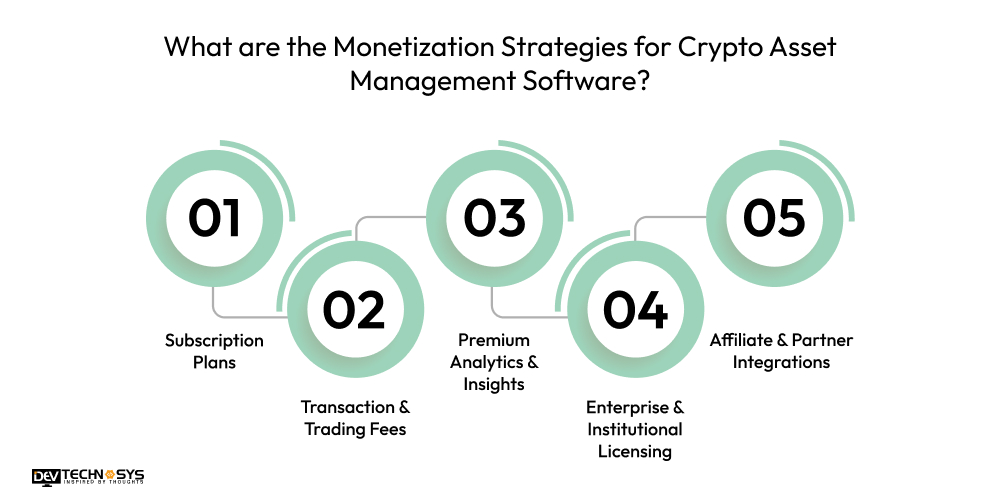
1. Subscription Plans
Offer tiered subscription models, such as basic, premium, and enterprise, where users pay monthly or annually to access portfolio tracking, advanced analytics, automated trading tools, and detailed reporting dashboards. Recurring subscriptions provide predictable revenue and encourage user retention, while higher-tier plans unlock more advanced, value-added features.
2. Transaction & Trading Fees
Charge a small fee per trade or transaction executed on the platform, whether automated or manual. This monetization model aligns revenue with platform activity, ensuring growth scales with usage and incentivizes platforms to provide liquidity, fast execution, and seamless trading experiences.
3. Premium Analytics & Insights
Offer advanced analytics and insights as a premium service, including AI-driven portfolio optimization, DeFi tracking, staking, and yield analytics, and automated tax reporting. Users pay extra for actionable insights, risk management tools, and enhanced decision-making capabilities, particularly attractive to serious investors or institutional clients.
4. Enterprise & Institutional Licensing
Develop customized solutions for hedge funds, crypto funds, and institutional investors, including multi-user dashboards, API access, compliance modules, and advanced reporting. Licensing fees are higher due to tailored features and dedicated support, creating a strong B2B revenue stream while targeting high-value clients.
5. Affiliate & Partner Integrations
Generate revenue through affiliate programs or partnerships with crypto exchanges, DeFi protocols, or payment gateways. Platforms earn commissions on trades, staking, or investments made through integration links, providing a passive revenue stream while enhancing the platform’s ecosystem and user value proposition.
Why Dev Technosys Makes a Difference for Crypto Asset Management Software?
As a top crypto asset management software company, Dev Technosys stands out as a trusted partner for building crypto asset management software, combining deep industry expertise with cutting-edge technology. Our solutions are secure, scalable, and tailored to meet the needs of both retail and institutional investors.
Key Differentiator |
How It Adds Value |
| Extensive Industry Expertise | Deep understanding of crypto, fintech, and regulatory requirements enables robust, compliant, and scalable platform development. |
| Custom, Feature-Rich Solutions | Tailored platforms with portfolio tracking, multi-exchange integration, automated trading, AI analytics, and DeFi support meet diverse client needs. |
| Advanced Security & Compliance | Implements encryption, multi-factor authentication, multi-signature wallets, and AML/KYC measures, ensuring asset protection and regulatory adherence. |
| Scalable & Future-Ready Architecture | Cloud-based, scalable backend with multi-chain blockchain support allows platforms to handle high transaction volumes and grow with market demand. |
| End-to-End Support | Full lifecycle support, including UI/UX design, testing, deployment, and post-launch maintenance, ensures smooth operation and long-term reliability. |
Conclusion
Building crypto asset management software requires careful planning, robust technology, and regulatory compliance. By combining portfolio tracking, multi-exchange integration, and strong security measures, businesses can create platforms that meet both retail and institutional needs.
With the right cryptocurrency exchange development company, such as Dev Technosys, companies can tap into the rapidly growing Middle Eastern and global crypto markets, delivering secure and feature-rich solutions that drive adoption and investor trust.
FAQs
Q1. How Much Does It Cost To Develop Crypto Asset Management Software?
The cost to develop crypto asset management software depends on app complexity. A basic MVP ranges from $8,000 to $15,000, while advanced enterprise platforms with AI, multi-chain integration, automated trading, and institutional features can exceed $30,000, depending on functionality and customization. Investing in a scalable and secure solution early can save costs on future upgrades and compliance.
Q2. Which Features Are Essential For Crypto Asset Management Software?
Essential features include portfolio aggregation, multi-wallet and exchange integration, real-time tracking, P/L analytics, automated trading, alerts, reporting tools, and admin dashboards, ensuring smooth management, analytics, and an enhanced user experience for investors. Including advanced analytics and reporting can help attract institutional clients and boost platform adoption.
Q3. How Long Does It Take To Develop Crypto Asset Management Platform?
The timeline for crypto asset management software development varies depending on complexity. A basic MVP can take 8 to 12 weeks, while a full-featured, enterprise-grade platform with AI analytics, multi-chain support, DeFi integration, and automated trading may take 6 to 12 months to develop. Iterative development with MVP testing can shorten time-to-market and validate features with real users.
Q4. How Can Businesses Ensure Security In Crypto Asset Management Software?
Security requires end-to-end encryption, multi-factor authentication, multi-signature wallets, regular audits, and AML/KYC compliance to protect user assets, meet regulatory requirements, and establish trust for both retail and institutional investors. Regular updates and monitoring enhance the platform’s long-term credibility.
Q5. Can This Software Be Customized For Middle Eastern Regulations?
Yes. Platforms can integrate regional compliance measures, Sharia-compliant investment options, and local payment gateways, thereby ensuring adherence to regulatory frameworks in the UAE, Bahrain, Saudi Arabia, and other Middle Eastern countries. Customizing for local regulations increases user trust and opens opportunities in highly regulated markets.