





Key takeaways:
-
- To build an app like Noon in the UAE requires an eCommerce architecture, secure payment, advanced logistics, and regulations & compliance.
- Core features include product discovery, seller onboarding, order management, real-time delivery tracking, secure payments, and multi-language support.
- The cost to develop an app like Noon typically ranges from $8,000 to $30,000, depending on feature complexity, platform choice, seller modules, and backend scalability
- Startups can make an app like Noon by focusing on niche categories, faster local deliveries, private-label products, AI-driven personalization, and loyalty programs.
With just a few taps, users browse products, compare prices, place orders, track deliveries in real time, and make secure digital payments. Behind the scenes, apps like Noon operate on cloud infrastructure, inventory management systems, payment gateways, and logistics APIs.
As eCommerce adoption accelerates in the Middle East, especially in the UAE, entrepreneurs are increasingly exploring opportunities to build apps like Noon. However, Noon app development is not about copying; it is about reliability, seller trust, logistics efficiency, and customer experience.
This guide explains everything you need to know to create an app like Noon in UAE. From understanding the platform and its features to development steps, costs, monetization strategies, and long-term scalability.
What Is the Noon App?
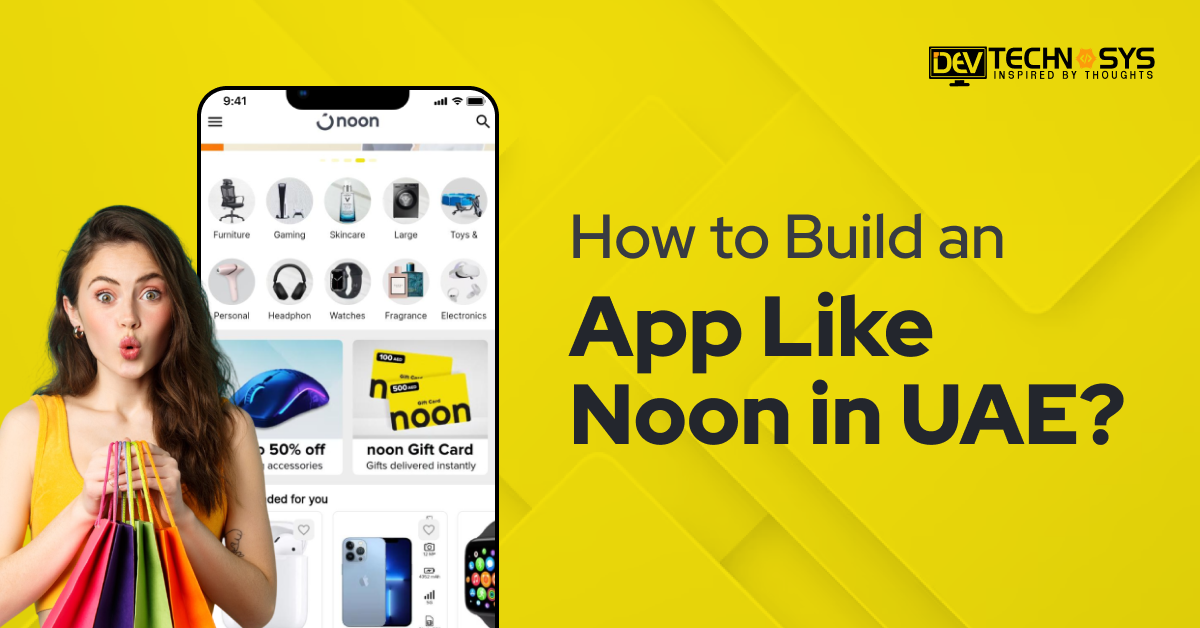
Noon is a leading eCommerce marketplace operating across the Middle East, including the UAE, Saudi Arabia, and Egypt. It allows users to buy electronics, fashion, groceries, beauty products, home essentials, and private-label goods through a unified digital platform.
Launched in 2017, Noon combines third-party sellers, in-house inventory, and advanced logistics to provide fast deliveries, competitive pricing, and localized shopping experiences. The app supports multiple payment options, real-time order tracking, and region-specific promotions.
Noon focuses heavily on local sellers, Arabic-first UX, and same-day or next-day delivery, making it highly relevant for UAE consumers. Its ecosystem integrates sellers, warehouses, delivery partners, and customers into one scalable digital commerce platform.
Key Features Offered by Noon
- Product search and category-based browsing
- Seller marketplace with onboarding and dashboards
- Secure payments and localized checkout options
- Real-time order and delivery tracking
- Returns, refunds, and customer support
- Multi-language and multi-currency support
Industry Insight: It is forecasted to grow from around USD 3.3 billion in 2024 to approximately USD 6.73 billion by 2030 with a CAGR of 12.6%.: MarketNtel Advisor
How Does an App Like Noon Work?
A Noon-like eCommerce app integrates product catalogs, seller management, payments, logistics, and customer support into one seamless digital workflow. Understanding this end-to-end process is essential before grocery delivery app development.
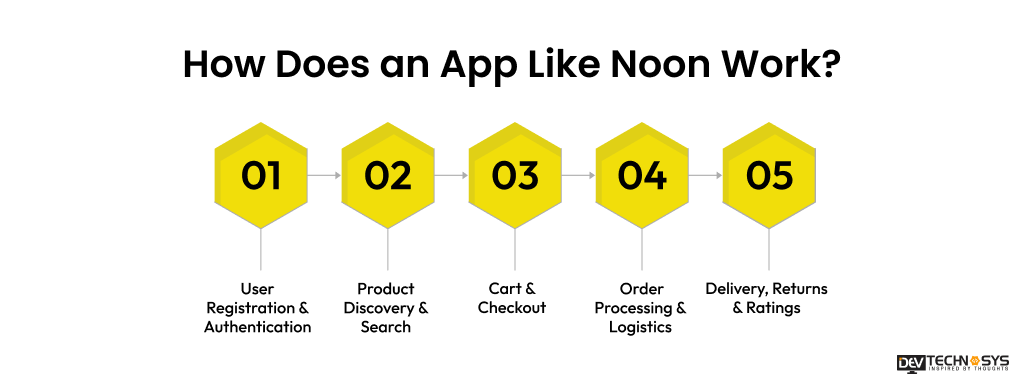
Step 1: User Registration & Authentication
Users register using mobile numbers, email IDs, or social logins. OTP verification ensures account security and prevents fraud. User profiles store addresses, payment preferences, order history, and wishlist items for faster repeat purchases. In the UAE, user onboarding must follow data protection standards and allow Arabic and English language preferences for better accessibility.
Step 2: Product Discovery & Search
Users browse products through categories, filters, and AI-powered search. Smart recommendation engines analyze browsing behavior, purchase history, and trending items to personalize product suggestions. Advanced filtering by price, brand, ratings, delivery time, and seller improves conversion rates and customer satisfaction.
Step 3: Cart & Checkout
Users add products to the cart, select delivery addresses, choose payment methods, and apply discount codes. Checkout flows must be frictionless, supporting UAE-preferred options such as cards, wallets, BNPL, and cash-on-delivery. Tax calculations, shipping fees, and estimated delivery times are shown transparently before payment confirmation.
Step 4: Order Processing & Logistics
Once an order is placed, the backend routes it to the appropriate seller or warehouse. Inventory availability is updated in real time. Logistics partners receive delivery requests, and users can track shipments live through the app. Automated notifications update users about order confirmation, dispatch, and delivery status.
Step 5: Delivery, Returns & Ratings
After delivery, users can rate products, sellers, and delivery experience. Easy return and refund options improve trust and reduce purchase hesitation. Transaction records and invoices are stored securely for future reference.
What are the Market Stats of the eCommerce App Industry?
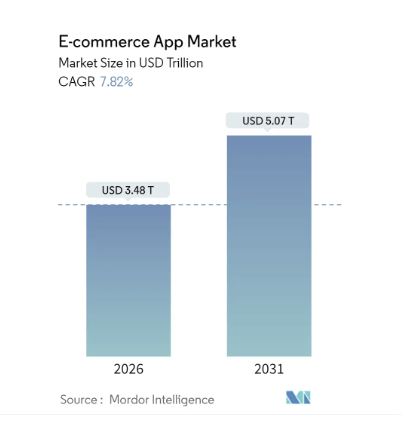
The global eCommerce app industry is growing due to mobile adoption and digital shopping demand. Consumers prefer eCommerce apps for convenience, personalization, faster deliveries, secure payments, and seamless shopping experiences. Here, we will understand it in a better way through market analysis by Mordor Intelligence:
- The global e-commerce app market reached USD 3.48 trillion in 2026, showing massive digital retail expansion.
- The market size is projected to reach USD 5.07 trillion by 2031, growing steadily at82% CAGR.
- AR try-on technologies boosted conversion rates by 18–22% in fashion and home-furnishing categories worldwide significantly.
- 5G networks reduced median page-load times by 40%, improving mobile shopping performance and user engagement.
- Middle East e-commerce penetration reached 48% in 2025, driven by mandatory digital payment adoption policies.
From Concept to Commerce: How to Build a Similar App Like Noon in the UAE?
When you create a Noon clone app, it demands strategic planning, scalable architecture, and strong regulatory compliance. Success depends on seamless user experience, efficient logistics integration, and secure digital payment systems. It is a structured approach that helps you build a grocery delivery app like Noon. It transforms an idea into a high-performing UAE eCommerce platform.
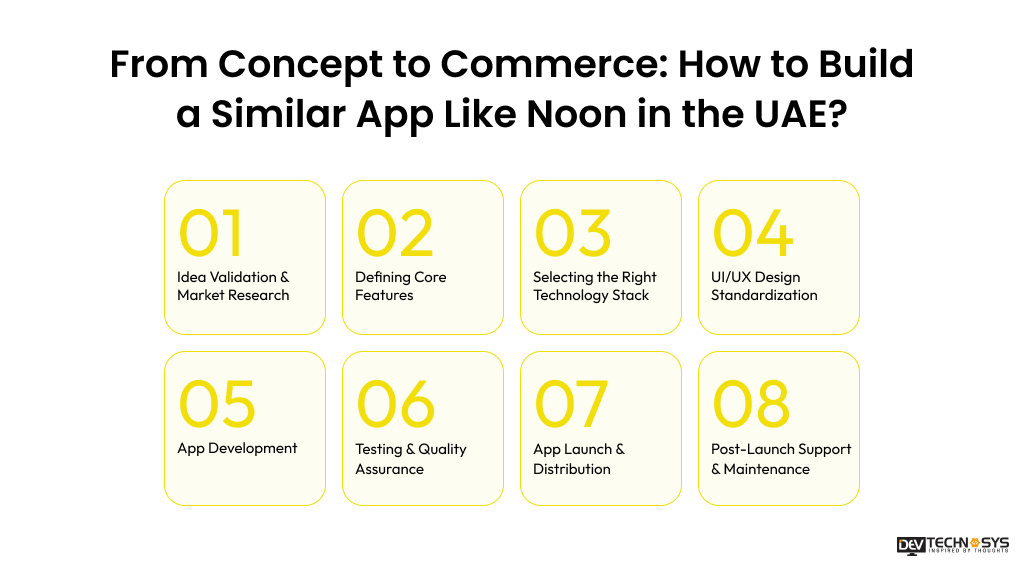
1. Idea Validation & Market Research
The first step to build a grocery delivery app like Hungerstation is to validate the idea dn do thorough market research. Analyze UAE consumer behavior, purchasing trends, logistics challenges, and competitors like Amazon UAE, Noon, and Namshi. Identify gaps such as underserved product categories, faster local delivery, or SME-focused marketplaces.
2. Defining Core Features
To develop a grocery delivery app like Noon, prioritize features that reduce friction, improve seller efficiency, and enhance customer trust. Start with essential buyer and seller features like product listings, cart, checkout, and order tracking. Advanced features such as AI recommendations, seller analytics, and loyalty programs can be added to a grocery app like Spinneys.
3. Selecting the Right Technology Stack
Choose scalable backend frameworks, cloud hosting, payment gateways, and logistics APIs. Technology choices directly impact app speed, uptime, and ability to handle peak shopping seasons like Ramadan and White Friday. Databases, caching systems, and microservices architecture are essential for handling large product catalogs and concurrent users.
4. UI/UX Design Standardization
Design a clean, intuitive interface optimized for mobile shopping. Product images, clear CTAs, easy navigation, and fast loading times increase conversions. Arabic-first design with RTL support and localized visuals improves adoption among UAE users. Consistent design systems and usability testing ensure accessibility, trust, and smooth shopping journeys across user segments.
5. App Development
The frontend of an App like elGrocer includes Android, iOS, and web apps for customers and sellers. Backend development handles product management, seller dashboards, order processing, payments, and logistics coordination. Integrations include payment gateways, courier services, analytics, CRM, and push notifications. To create a grocery delivery app like Noon, modular architecture allows easier scaling and feature updates.
6. Testing & Quality Assurance
Ensure accurate pricing, inventory sync, and payment security under high traffic conditions. Test app performance across devices, OS versions, and network speeds. Conduct security audits to protect user data and payment information. Automated and manual testing help prevent crashes, reduce downtime, and ensure compliance with UAE digital standards.
7. App Launch & Distribution
After you make a grocery delivery app like Noon with full-stack development services, publish it on play stores. Launch marketing campaigns using influencers, discounts, and referral programs. Monitor early feedback, fix bugs, and optimize onboarding flows. Data-driven launch strategies help maximize app visibility, downloads, and early user retention in competitive marketplaces.
8. Post-Launch Support & Maintenance
Continuous monitoring, updates, and performance optimization are critical. Regular feature updates, security patches, and seller support maintain platform reliability and growth. Ongoing analytics and user feedback enable continuous improvements, ensuring long-term scalability and customer satisfaction. Maintenance and scalable infrastructure help the platform adapt to traffic growth, market changes, and user expectations.
Industry Insight: In early 2025, over 70% of delivery orders across the UAE occurred via mobile apps such as Talabat, Deliveroo, and HungerStation: MarketNtel Advisors
Which Core Features Are Required to Build an App Like Noon?
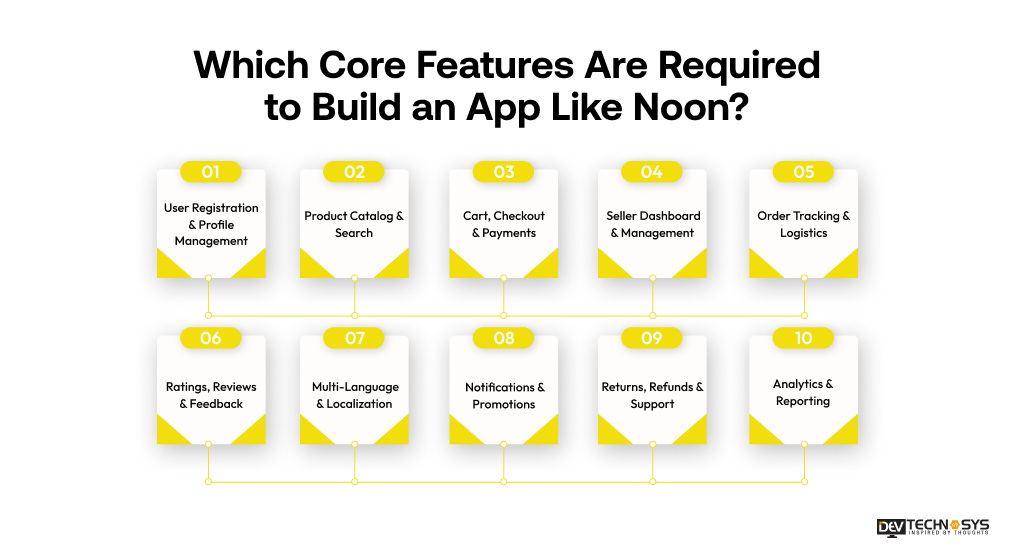
Building a Noon clone app requires robust, scalable features that support high traffic, multiple sellers, and seamless shopping. When you build a grocery delivery app like an Instashop, the core functionalities focus on user experience, seller operations, secure payments, logistics efficiency, and data-driven decision-making. These features ensure reliability, growth, and competitiveness in the UAE’s eCommerce ecosystem.
1. User Registration & Profile Management
Secure onboarding with OTP and profile management improves trust and repeat purchases. Users can save addresses, payment methods, and preferences securely. Personalized profiles enable tailored recommendations, faster checkouts, and improved customer retention over time.
2. Product Catalog & Search
Advanced product management supports multiple sellers, SKUs, variants, and pricing rules. Smart search improves discoverability and sales. Centralized catalog management ensures consistent product data, pricing accuracy, and real-time availability updates.
3. Cart, Checkout & Payments
Like Noon, other mobile app development solutions offer multiple payment options, transparent pricing, and smooth checkout flows. It reduces cart abandonment and increases conversion rates. Support for wallets, BNPL, and regional payment methods ensures compliance with UAE consumer preferences.
4. Seller Dashboard & Management
Sellers manage products, inventory, pricing, orders, and analytics through dedicated dashboards. Automation improves operational efficiency. Role-based access allows teams to manage operations securely without compromising sensitive business data.
5. Order Tracking & Logistics
Real-time order tracking and delivery updates improve transparency and customer satisfaction. While integrating with courier APIs, ensure accurate shipment status and automated delivery notifications. The route optimization and delivery scheduling help reduce delays and operational logistics costs.
6. Ratings, Reviews & Feedback
When you build an app like Panda, the product and seller ratings build trust and influence purchase decisions. Verified purchase reviews improve credibility and reduce fake or misleading product ratings. Feedback analytics help sellers identify issues and improve product quality and service standards.
7. Multi-Language & Localization
Arabic and English support with localized content increases reach and engagement across UAE demographics. RTL support and localized UX elements ensure seamless usability for Arabic-speaking customers. Region-specific content, currencies, and offers improve relevance and customer engagement levels.
8. Notifications & Promotions
Push notifications inform users about offers, order updates, and personalized deals. Behavior-based notifications increase engagement by delivering timely, relevant offers to users. Promotional campaigns can be automated for flash sales, festivals, and seasonal shopping events.
9. Returns, Refunds & Support
Easy returns and responsive customer support reduce friction and improve retention. Automated return workflows speed up refunds and improve overall customer satisfaction. Omnichannel support via chat, email, and phone ensures quick resolution of user concerns.
10. Analytics & Reporting
Data insights help optimize pricing, inventory, marketing, and customer experience when you build an App Like Noon. Real-time dashboards provide actionable insights into user behavior, sales trends, and campaign performance. The predictive analytics support demand forecasting, inventory planning, and strategic business decisions.
Why Entrepreneurs Want to Create an App Like Noon in UAE?
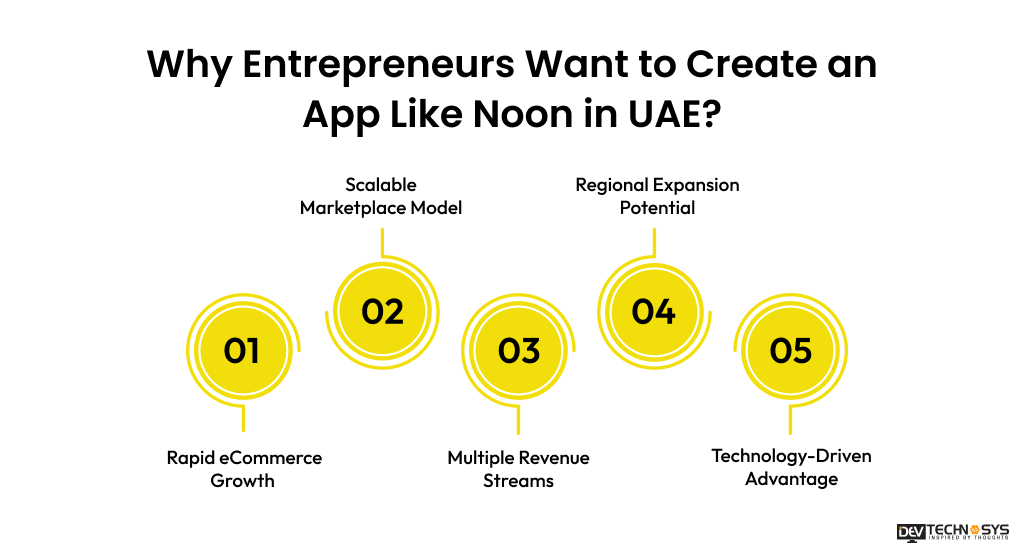
Entrepreneurs are increasingly targeting Noon alternatives to capitalize on the UAE’s fast-growing digital economy. High smartphone penetration, digital payments, and logistics infrastructure make the UAE ideal for grocery delivery app development services. A Noon-style model enables rapid growth, diversified revenue, and regional expansion across GCC markets.
1. Rapid eCommerce Growth
- Rising internet penetration and mobile usage accelerate online shopping adoption across urban and semi-urban UAE regions.
- Consumers demand faster deliveries, wider product selection, and seamless digital payment experiences.
- Post-pandemic shopping habits continue driving consistent growth in app-based retail platforms.
2. Scalable Marketplace Model
- Seller onboarding allows rapid catalog expansion without heavy inventory investment or warehousing costs.
- Platform owners focus on technology, marketing, and user acquisition instead of inventory management.
- Marketplace scalability supports exponential growth while maintaining operational flexibility and lower risks.
3. Multiple Revenue Streams
- Commission-based sales ensure steady income from every successful transaction on the platform.
- Sponsored listings and in-app advertising provide high-margin revenue opportunities for brands.
- Subscription plans for sellers unlock premium features, analytics access, and priority platform visibility.
4. Regional Expansion Potential
- Similar consumer preferences across GCC countries simplify cross-border marketplace expansion strategies.
- Centralized logistics and payment systems enable efficient scaling beyond UAE borders.
- Regulatory alignment within GCC markets reduces entry barriers for regional eCommerce platforms.
5. Technology-Driven Advantage
- AI-powered recommendations improve personalization, boosting engagement and average order values significantly.
- Logistics automation enhances delivery speed, order accuracy, and overall customer satisfaction.
- Advanced analytics help entrepreneurs optimize pricing, marketing strategies, and operational efficiency continuously.
How Much Does It Cost to Develop an App Like Noon in UAE?
The cost to develop an app like Noon in the UAE typically ranges between $8,000 and $30,000, depending on the app’s scope and complexity. A basic version with essential features like user registration, product listings, search, cart, and payments. It lowers the cost to develop grocery app.
More advanced apps require higher investment due to multi-seller support, real-time order tracking, logistics integrations, AI-driven recommendations, and analytics dashboards. Noon app development cost is also influenced by platform choice (Android, iOS, or both), UI/UX design standards, security compliance, third-party integrations, and ongoing maintenance.
Choosing a scalable architecture ensures long-term growth but slightly increases initial expenses to make an app like Noon.
Complexity Level |
Development Scope |
Time Required |
Cost Range |
| Low | MVP marketplace | 3–4 months | $8,000–$13,000 |
| Medium | Multi-seller, payments, logistics | 5–7 months | $13,000–$22,000 |
| High | Enterprise-scale platform | 8+ months | $22,000–$30,000 |
Key Cost-Influencing Factors
Several technical and strategic elements directly influence the total cost of developing a Noon-like eCommerce application. Choices around infrastructure, integrations, and security requirements significantly shape both initial investment and long-term expenses. Understanding these factors helps businesses plan realistic budgets while avoiding unexpected development or maintenance overruns.
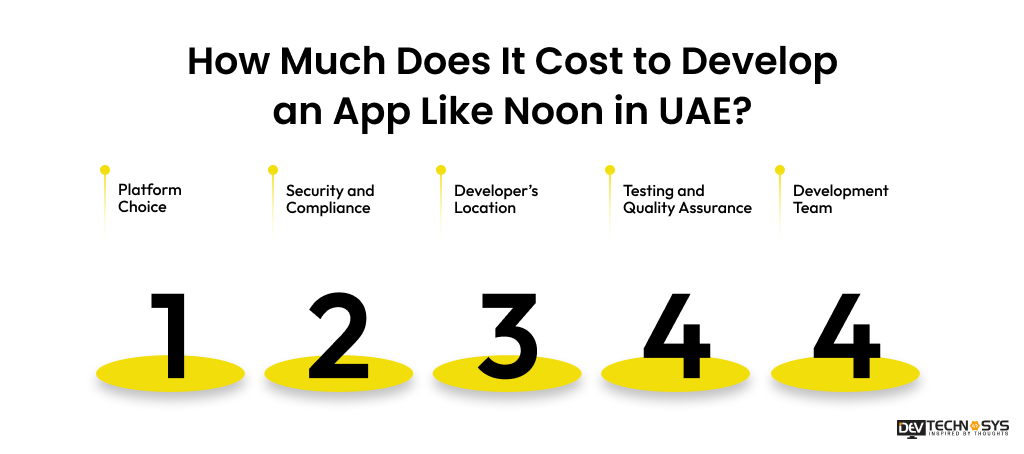
1. Platform Choice
Developing for both iOS and Android increases the cost to maintain an app due to separate builds, testing, and updates. The cross-platform frameworks lower development expenses but may restrict performance-heavy eCommerce functionalities. Platform-specific UI guidelines influence design effort, testing scope, and overall project complexity.
Platform Option |
Description |
Estimated Cost |
| Single Platform App | Android or iOS app with core features like login, catalog, cart, and payments | $8,000–$12,000 |
| Dual Platform App | Separate native apps for Android and iOS with consistent UX and features | $15,000–$22,000 |
| Cross-Platform App | Shared codebase using Flutter/React Native with advanced scalability | $20,000–$30,000 |
2. Security and Compliance
Advanced security layers increase costs but protect sensitive customer and payment information effectively. Compliance with UAE data protection and payment regulations adds legal and technical complexity. Regular security audits and updates create recurring costs but prevent breaches and fraud risks, and develop a grocery delivery app like Ocado.
Security Level |
Description |
Estimated Cost |
| Basic Security | SSL encryption, OTP authentication, and secure user login | $1,000–$2,000 |
| Standard Compliance | PCI-DSS payments, secure APIs, and role-based access control | $2,500–$4,000 |
| Advanced Security | Penetration testing, fraud detection, and UAE data compliance | $4,500–$6,000 |

3. Developer’s Location
Developers in North America and Europe typically charge higher hourly development rates. The offshore teams reduce the grocery delivery app development cost but may require additional communication and project management effort. Local UAE developers offer regulatory familiarity but often demand premium pricing.
Developer Region |
Description |
Estimated Cost |
| South Asia | Cost-effective offshore teams with competitive development rates | $1,200–$2,500 |
| Eastern Europe | Balanced pricing with strong technical expertise and communication | $3,000–$4,500 |
| Middle East / US | Premium local developers with regulatory and market familiarity | $4,500–$6,000 |
4. Testing and Quality Assurance
Multi-device testing ensures consistent performance across smartphones, tablets, and operating system versions. Load and stress testing increase the mobile app development cost, but prepare apps for high-traffic shopping events. Thorough QA reduces long-term maintenance costs by identifying issues before public release.
Testing Type |
Description |
Estimated Cost |
| Functional Testing | Validation of core features like checkout, search, and order flow | $800–$1,500 |
| Device & OS Testing | Testing across multiple devices, screen sizes, and OS versions | $1,800–$3,000 |
| Load & Security Tests | Stress testing for high traffic and security vulnerability checks | $3,500–$5,000 |
5. Development Team
Choosing the right development team model directly impacts the cost, quality, scalability, and timeline of your eCommerce app. Freelancers are budget-friendly and flexible but may lack reliability, scalability, and long-term project support. In-house teams offer full control and alignment but involve higher costs for salaries, infrastructure, and management. A grocery delivery app development company provides end-to-end expertise, faster delivery, and ongoing support with predictable pricing.
Team Type |
Description |
Estimated Cost |
| Freelancers | Independent developers for limited-scope orMVP-level projects | $3,000–$5,000 |
| In-House Team | Dedicated internal team with full control and long-term commitment | $6,000–$10,000 |
| Development Company | Full-service agency offering design, development, QA, and support | $10,000–$15,000 |
Industry Insight: Across MENA, online grocery sales have shown exceptional growth, especially in the UAE, where the online grocery segment grew at 27% CAGR between 2021 and 2023: McKincy
Which are The Top Noon Alternatives Popularly Used Worldwide?
Global eCommerce platforms offer diverse shopping experiences, competitive pricing, and strong logistics networks worldwide. Consumers choose Noon alternatives based on product variety, delivery speed, payment flexibility, and regional availability. These apps dominate different markets by combining marketplace models, private labels, and advanced fulfillment infrastructure.
App Name |
Launch Year |
Rating |
Downloads |
Platform Availability |
| Amazon | 1994 | 4.3 | 1B+ | Android, iOS, Web |
| AliExpress | 2010 | 4.4 | 500M+ | Android, iOS, Web |
| eBay | 1995 | 4.2 | 500M+ | Android, iOS, Web |
| Walmart | 2008 | 4.1 | 100M+ | Android, iOS, Web |
| Flipkart | 2007 | 4.5 | 500M+ | Android, iOS, Web |
| Shopee | 2015 | 4.6 | 500M+ | Android, iOS, Web |
| Lazada | 2012 | 4.4 | 100M+ | Android, iOS, Web |
| JD.com | 1998 | 4.3 | 100M+ | Android, iOS, Web |
| Rakuten | 1997 | 4.2 | 50M+ | Android, iOS, Web |
| Mercado Libre | 1999 | 4.6 | 100M+ | Android, iOS, Web |
Several global eCommerce platforms have successfully scaled by combining strong logistics, diverse sellers, and trusted user experiences. These Noon alternatives dominate their regions through technology, fulfillment efficiency, and customer-centric marketplace models. Here are some of the top apps for grocery delivery in Middle East.
1. Amazon
Amazon leads global eCommerce with unmatched product variety, fast Prime deliveries, advanced personalization, and robust seller ecosystems. It is among the best online delivery apps in UAE with a fulfillment network and cloud-powered scalability. Its customer-first policies make it a benchmark for marketplace platforms worldwide.
2. AliExpress
AliExpress connects global buyers directly with manufacturers and sellers, offering competitive pricing and massive product catalogs. Its cross-border logistics, buyer protection programs, and localized payment options drive strong adoption in international markets.
3. Flipkart
Flipkart is a dominant eCommerce platform in India, known for deep regional penetration and festival-driven sales. Strong logistics, cash-on-delivery options, and localized seller support fuel its consistent growth.
4. Shopee
Shopee excels in Southeast Asia with a mobile-first design, gamified shopping, and aggressive promotions. Integrated logistics, seller tools, and social-commerce features enhance engagement and repeat purchases.
5. eBay
eBay is one of the best grocery delivery apps in UAE. It is a pioneering online marketplace that enables consumer-to-consumer and business-to-consumer selling globally. Its auction model, refurbished goods market, and trusted buyer-seller protection sustain long-term platform relevance.
What Are The Monetization Models for Noon-Like Apps to Make Recurring Revenue?
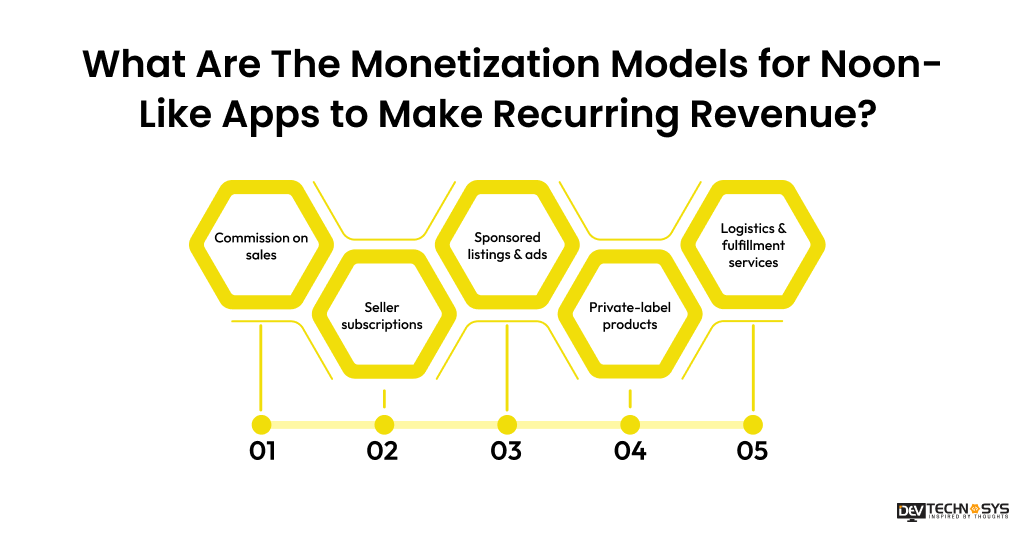
Monetization strategies define how Noon-like apps generate revenue while sustaining operations and long-term platform scalability. Diversified income models reduce financial risk and maximize profitability across sellers, users, and service offerings. Successful platforms combine multiple monetization channels to balance growth, competitiveness, and consistent cash flow generation.
1. Commission on sales
Platforms earn a fixed percentage from every transaction completed through the marketplace consistently. Revenue grows automatically as order volumes and seller participation increase over time. This model ensures predictable income without upfront costs for sellers.
2. Seller subscriptions
The sellers pay monthly or annual fees to access premium tools and advanced features. Subscriptions create steady recurring revenue regardless of individual sales performance. The premium tiers improve seller loyalty and long-term platform engagement.
3. Sponsored listings & ads
Brands pay to promote products through featured placements and targeted advertisements. Advertising boosts product visibility while generating high-margin platform revenue. Data-driven ad targeting increases relevance and conversion rates significantly.
4. Private-label products
Platforms sell in-house branded products directly to customers for higher profit margins. Private labels offer pricing control and stronger brand recognition. This model reduces dependency on third-party sellers for revenue growth.
5. Logistics & fulfillment services
Platforms charge sellers for warehousing, packaging, and delivery services. Fulfillment services generate recurring income while improving delivery speed and reliability. Integrated logistics enhances customer experience and operational efficiency.
How a Noon-Like App Builds Trust in High-Value Online Purchases?
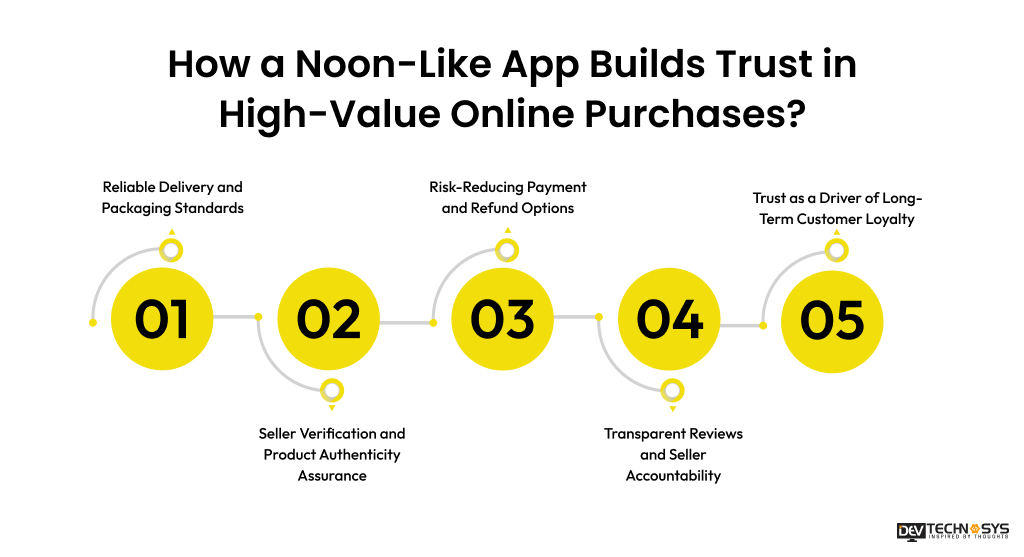
Trust is essential for encouraging customers to complete high-value purchases on eCommerce platforms. A reliable delivery, secure payments, and verified sellers reduce buyer hesitation and perceived risk. The strong trust mechanisms directly improve conversions, loyalty, and long-term marketplace growth.
1. Reliable Delivery and Packaging Standards
Fast, predictable delivery timelines and professional packaging reassure users when purchasing expensive or fragile products online. Clear delivery commitments reduce uncertainty and build confidence in the platform’s operational reliability.
2. Seller Verification and Product Authenticity Assurance
Verified seller badges, authenticity guarantees, and visible warranty information help customers feel secure about product quality and legitimacy. These trust signals significantly influence buying decisions for electronics, luxury, and branded goods.
3. Risk-Reducing Payment and Refund Options
Flexible payment options like cash-on-delivery and instant digital refunds reduce perceived financial risk. First-time buyers feel safer completing purchases when exit options are clearly defined.
4. Transparent Reviews and Seller Accountability
Localized reviews, real customer images, and seller response metrics improve transparency. Shoppers rely heavily on community feedback before committing to higher-value transactions.
5. Trust as a Driver of Long-Term Customer Loyalty
Strong trust mechanisms increase repeat purchases, higher cart values, and long-term loyalty. Trust directly converts into revenue growth and sustainable marketplace credibility.

Conclusion
To build an app like Noon in UAE, you have to go beyond coding and feature implementation alone. Success depends on strategic planning, regulatory alignment, scalable architecture, and seamless logistics operations across regions.
User experience design, seller enablement, payment security, and fulfillment speed directly influence customer trust. Every technical and business decision impacts platform performance, scalability, and long-term profitability significantly.
UAE’s competitive digital commerce landscape demands localization, compliance, and continuous technology optimization. Scalable cloud infrastructure and data-driven insights help platforms adapt to rapid demand fluctuations.
Partnering with an experienced eCommerce mobile app development company reduces risks and accelerates market-ready execution.
People Commonly Ask
Q1.How Much Does It Cost To Build An App Like Noon In UAE?
The cost to build an app like Noon typically ranges between $8,000 and $30,000 based on complexity, features, and scale. Basic apps cost less, while advanced marketplaces with logistics, analytics, and multi-vendor support require higher investment, ongoing maintenance, and infrastructure scalability.
Q2. How Does An App Like Noon Work?
A Noon-like app connects buyers, sellers, and delivery partners through a centralized digital marketplace. It manages product listings, payments, order processing, and logistics in real time, ensuring smooth coordination, transparent tracking, secure transactions, and efficient customer fulfillment.
Q3. What technology stack is best for a Noon-like app?
A scalable tech stack used for an app like Noon typically includes:
- Cloud hosting (AWS/Azure)
2. Microservices architecture
3. Secure payment gateways
4. Logistics APIs
5. Mobile frameworks like Flutter, React Native, Swift, or Kotlin
Q4. What Makes Noon Successful In UAE?
Noon’s success comes from strong localization, fast delivery infrastructure, competitive pricing, and a robust seller ecosystem. Arabic-first experiences, regional logistics hubs, trusted payment options, and aggressive promotions help Noon retain customers and scale efficiently.
Q5. How Long Does It Take To Develop An App Like Noon?
Development timelines typically range from 4 to 10 months, depending on feature scope and integrations. MVP versions launch faster, while full-scale marketplaces with logistics, seller dashboards, and analytics require extended development, testing, and compliance validation.