



 Tarun Nagar
 Key Takeaways:
-
- The OTT app development cost in 2026 ranges from $8,000 to $30,000, depending on project complexity and features.
- Costs vary based on premium features, backend infrastructure, security measures, and platform types.
- Different OTT app types, such as video streaming apps, music apps, and live streaming platforms, have varying development costs.
- To reduce OTT application development costs, businesses can build an MVP, outsource development, use open-source frameworks, and prioritize features.
OTT apps empower content creators, media companies, and businesses to deliver high-quality streaming experiences to audiences worldwide. From live sports events and movies, there are curated video libraries, music platforms, and interactive content available. OTT app development in UAE completely transformed the way users consume media.
Today’s audiences expect seamless streaming, personalized recommendations, offline access, and multi-device compatibility, which makes developing an OTT app both exciting and challenging. One of the most common questions businesses ask is: “How much does it cost to create an OTT app in 2026?”
The answer depends on multiple factors, including app complexity, platform choice, required features, third-party integrations, design requirements, and backend infrastructure. In this guide, we’ll explore the average OTT app development cost in Middle East in 2026.
What is the Average Cost to Develop an OTT App in 2026?
The average cost to build an OTT app in 2026 typically ranges from $8,000 to $30,000, depending on the project’s complexity, features, and platforms.
- A basic MVP app comes with essential features like user registration, content streaming, and search functionality. This usually makes the mobile app development cost fall between $8,000 and $15,000.
- A fully-featured OTT app offers advanced features such as AI-powered recommendations, multi-device support, offline downloads, in-app subscriptions, and more. Due to this, the cost to create an OTT app can range between $20,000 and $30,000.
Additional factors like backend infrastructure, third-party integrations, payment gateways, and design customization also influence the total cost. The development timeline for OTT apps generally spans 3 to 6 months, depending on feature complexity and platform support.
Let’s understand more through an OTT app development cost breakdown table:
Component |
Cost Range (USD) |
Notes |
| UI/UX Design | $1,000 – $3,000 | Wireframes, prototypes, branding, user flows |
| User App Development | $3,000 – $10,000 | Core features like registration, streaming, and favorites |
| Admin Panel & Backend | $2,000 – $6,000 | Dashboard, content management, analytics |
| APIs & Integrations | $500 – $3,500 | Payment gateways, analytics, social login |
| QA & Testing | $1,000 – $5,000 | Multi-device testing, bug fixes, performance checks |
| Deployment & Launch | $500 – $1,500 | App Store / Play Store submission |
| Miscellaneous | $500 – $1,000 | Project management, documentation |
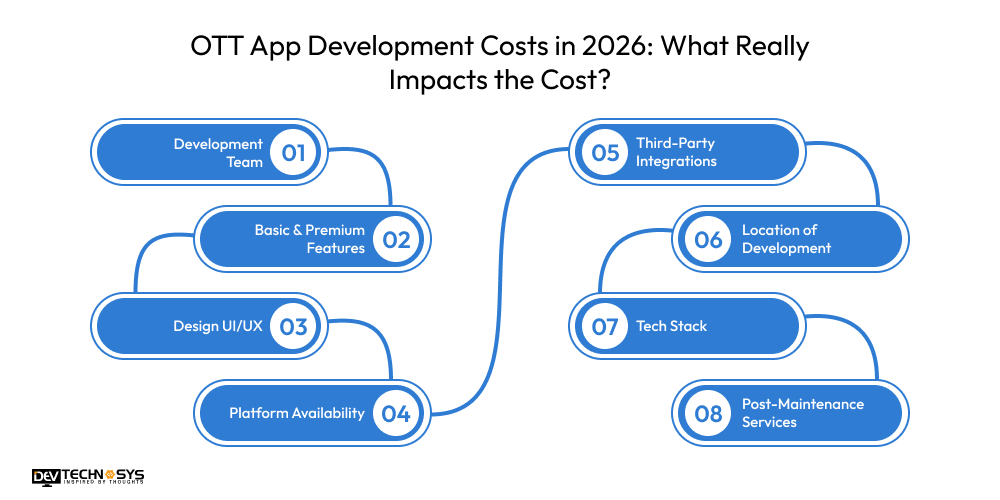
OTT App Development Costs in 2026: What Really Impacts the Cost?
The OTT app development cost in 2026 is influenced by features, platform choice, and development complexity. Choosing the right technology stack, integrations, and design significantly impacts the investment for the OTT app development solution. Understanding these OTT app development cost factors helps startups and enterprises plan budgets efficiently and maximize ROI.
1. Development Team
The team’s expertise, experience, and size directly affect development quality, timeline, and overall project cost. Hiring models like freelancers, in-house staff, or agencies can significantly change hourly rates and expenses. A well-coordinated team reduces errors, rework, and unexpected overrun of the OTT app development cost in UAE.
Team Model |
Description |
Cost Impact (USD) |
| Freelancer | Independent developers for specific tasks | $4,000 – $7,000 |
| In-House Team | Dedicated developers and managers | $6,000 – $12,000 |
| Development Agency | Full-cycle team with PM, QA, and support | $12,000 – $18,000 |
2. Basic & Premium Features
Essential features like user registration, streaming, and search form the app’s foundation and cost baseline. Advanced features like AI recommendations, offline downloads, and live streaming increase development time and expenses. Premium functionalities enhance user engagement but require additional resources and technology that increase the OTT app development cost in Dubai.
Feature Level |
Description |
Cost Impact (USD) |
| Basic Features | User registration, video playback, search | $1,500 – $3,000 |
| Advanced Features | Live streaming, offline downloads, multi-language | $3,000 – $6,000 |
| Premium Features | AI recommendations, dynamic ads, and multi-currency payments | $6,000 – $10,000 |
3. Design UI/UX
The app’s interface design affects usability, retention, and development cost depending on complexity and customization. Simple layouts with templates are cost-effective, while custom, animated UI/UX requires more hours and resources. Tools like Figma, Adobe XD, or Sketch may add licensing, affecting the overall OTT platform development cost.
Design Type |
Description |
Cost Impact (USD) |
| Basic UI | Ready-made templates | $1,000 – $2,000 |
| Custom UI | Brand-focused, intuitive flows | $2,000 – $4,000 |
| Advanced UX | Animations, personalized dashboards | $4,000 – $7,000 |
4. Platform Availability
Single-platform apps cost less, while Android, iOS, and web multi-platform apps require more resources. Cross-platform frameworks reduce cost but might limit performance compared to native video streaming app development. Separate apps for users, creators, and admins significantly increase the on-demand or live streaming app development cost.
Platform Scope |
Description |
Cost Impact (USD) |
| Single Platform | iOS or Android | $3,000 – $6,000 |
| Cross-Platform | Shared codebase | $5,000 – $10,000 |
| Multi-Platform | Separate apps for web, Android, iOS | $8,000 – $15,000 |
5. Third-Party Integrations
APIs for payments, analytics, and social media extend app functionality but increase development effort. Integrations with AI engines, streaming servers, or cloud platforms add complexity and recurring licensing costs. Proper integration ensures seamless operation and improved user experience, justifying the additional custom OTT app development cost.
Integration Level |
Description |
Cost Impact (USD) |
| Basic | Social login, analytics | $500 – $1,000 |
| Business | Payment, CRM, content management | $1,000 – $2,000 |
| Advanced | AI recommendations, real-time streaming APIs | $2,000 – $3,500 |
6. Location of Development
Geographical location affects developer rates, project cost, and communication efficiency when you launch an on-demand app. Hiring teams from North America or Europe is costlier than outsourcing to Asia or Eastern Europe. Time zones, language, and legal compliance also influence the overall project timeline and OTT app development services cost.
Location |
Average Hourly Cost (USD/GBP) |
| United States | $50 – $90 |
| United Kingdom | £40 – £70 |
| Southeast Asia | $25 – $45 |
| Eastern Europe | $30 – $55 |
7. Tech Stack
Your choice of technology influences both cost and scalability. It includes the selection of frameworks, languages, and databases. These affect speed, scalability, and OTT platform cost. Modern tech stacks with AI, cloud, and microservices increase upfront costs but improve app performance. Open-source technologies reduce licensing fees, while proprietary solutions can drive higher expenses.
Tech Stack Type |
Description |
Cost Impact (USD) |
| Standard Stack | Open-source frameworks | $2,000 – $3,000 |
| Modern Stack | Cloud-based, scalable architecture | $3,000 – $5,000 |
| Advanced Stack | AI, blockchain, live streaming optimizations | $5,000 – $8,000 |
8. Post-Maintenance Services
Ongoing maintenance is essential for smooth performance. It streamlines functioning, bug fixes, updates, and security improvements over time. Basic maintenance is affordable, while long-term support, scaling, and cloud optimizations raise the cost to maintain an app. Regular updates and monitoring are critical for retaining users and ensuring OTT platform reliability.
Maintenance Level |
Description |
Cost Impact (USD) |
| Basic Maintenance | Bug fixes, minor updates | $500 – $1,000 |
| Ongoing Support | Performance optimization | $1,000 – $2,000 |
| Long-Term Support | Security, scalability, compliance | $2,000 – $3,000 |
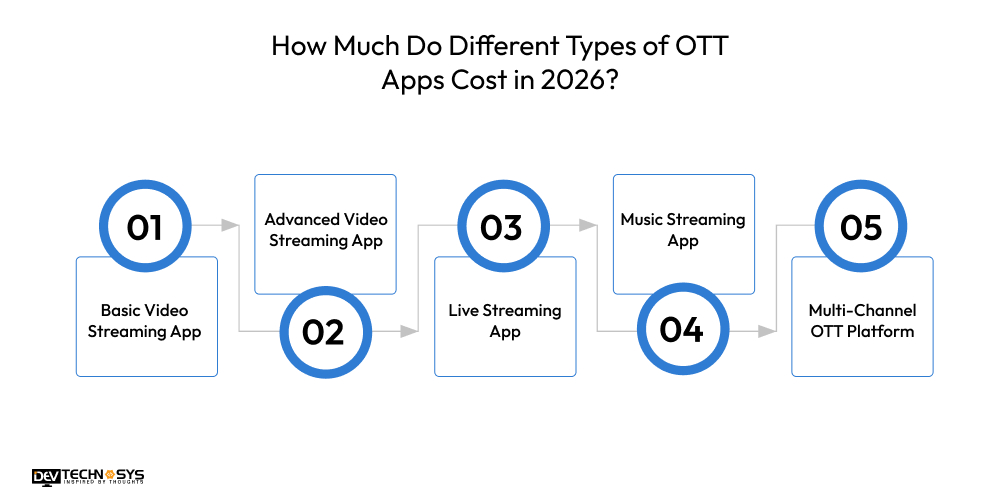
How Much Do Different Types of OTT Apps Cost in 2026?
OTT app costs in 2026 vary widely depending on features, platform, and content delivery options. Different types of entertainment app development require unique approaches, influencing both budget and time investment. Knowing app categories and their complexity helps businesses plan expenses and maximize audience engagement efficiently.
1. Basic Video Streaming App
These apps offer free, ad-supported content with pre-set channels, requiring a robust video delivery infrastructure. Focus is on seamless content streaming, ad integration, and a simple, intuitive user interface for viewers. Cost depends on backend scalability, content licensing, and the number of supported devices or platforms.
2. Advanced Video Streaming App
Subscription-based apps focus on on-demand, high-quality video with advanced recommendation algorithms for users. They require strong DRM protection, multi-device support, and cloud-based, scalable storage for large video libraries. Additional costs include personalization features, analytics, and frequent updates for iOS and Android app development.
3. Live Streaming App
Live streaming apps demand low-latency video delivery and real-time interaction features for broadcasters and viewers. Interactive features like chat, donations, subscriptions, and notifications increase development complexity and costs. Scalability is key to handling peak traffic, requiring reliable servers, CDN, and cloud infrastructure integration.
4. Music Streaming App
Music apps need seamless audio streaming, playlists, search, and personalized recommendations for enhanced user experience. Licensing agreements with artists and labels, plus DRM implementation, contribute significantly to overall development cost. Cross-platform support, offline playback, and social sharing features further influence the app’s complexity and budget.
5. Multi-Channel OTT Platform
Multi-channel platforms host user-generated content across categories with complex content moderation and recommendation systems. They require powerful search, categorization, analytics, and monetization options like ads or premium subscriptions. Scalable cloud storage and streaming infrastructure are crucial to support millions of daily active users efficiently.
Have a look at the OTT app development cost structure that explains estimate price of each type:
OTT App Type |
Cost (USD) |
Description |
| Basic Video Streaming App (PlutoTV) | $15,000 – $20,000 | On-demand movies/series streaming |
| Advanced Video Streaming App (Netflix) | $25,000 – $30,000 | Multi-genre, AI recommendations, offline mode |
| Live Streaming App (Twitch) | $12,000 – $18,000 | Real-time broadcasting and chat |
| Music Streaming App (Spotify) | $15,000 – $22,000 | Streaming, playlists, recommendations |
| Multi-Channel OTT Platform (YouTube) | $23,000 – $30,000 | User-generated content, multi-role dashboards |
How Much Do Popular OTT Apps Cost in 2026?
OTT app development costs in 2026 vary depending on features, platform, and content type. Knowing popular app types and prices helps businesses plan the budget of mobile app development solutions efficiently. Each app category requires unique features, infrastructure, and scalability considerations impacting overall investment.
1. App Like Netflix
Subscription-based on-demand video apps offer movies and series with personalized recommendations for users. They require strong DRM, scalable cloud storage, multi-device support, and advanced analytics features. High-quality streaming, frequent content updates, and user engagement tools add to the overall development cost.
Feature |
Estimated Hours |
Estimated Cost (USD) |
| User Registration & Profiles | 60–100 | $1,500 – $3,000 |
| Content Streaming & Search | 100–160 | $2,500 – $4,500 |
| Recommendations & AI Engine | 120–180 | $3,000 – $5,000 |
| Payment & Subscription | 80–120 | $1,500 – $3,000 |
| Admin Dashboard & Analytics | 90–140 | $2,000 – $3,500 |
| Overall Development Cost | 450–700 hours | $12,000 – $20,000 |
2. App Like Disney+
Premium on-demand apps focus on branded franchise content, including movies, series, and family-friendly entertainment. They need secure DRM, multi-platform support, and integration with payment gateways for subscriptions. Cloud-based storage, content recommendation, and regular updates drive higher development costs for such apps.
Feature |
Estimated Hours |
Estimated Cost (USD) |
| User Registration & Profiles | 60–100 | $1,500 – $3,000 |
| Multi-Device Streaming | 100–160 | $2,500 – $4,500 |
| Parental Controls | 60–100 | $1,200 – $2,500 |
| Content Search & Filters | 80–120 | $1,500 – $3,000 |
| Payment & Subscription Management | 80–120 | $1,500 – $3,000 |
| Admin Dashboard & Analytics | 90–140 | $2,000 – $3,500 |
| Overall Cost | 470–740 hours | $15,000 – $28,000 |
3. App Like Spotify
Music streaming apps require seamless audio playback, playlists, offline support, and personalized recommendations. Licensing agreements, DRM, and high-quality streaming infrastructure are major contributors to the cost. Cross-platform compatibility, social sharing, and analytics features further influence overall development complexity and investment.
Feature |
Estimated Hours |
Estimated Cost (USD) |
| User Registration & Profiles | 50–90 | $1,200 – $2,500 |
| Music Streaming & Playlists | 100–150 | $2,500 – $4,000 |
| Offline Mode | 60–100 | $1,200 – $2,200 |
| Search & Genre Filters | 60–100 | $1,200 – $2,000 |
| Payment & Subscription Management | 70–110 | $1,500 – $2,800 |
| Admin Dashboard & Analytics | 80–120 | $1,500 – $3,000 |
| Overall Cost | 420–670 hours | $15,000 – $25,000 |
4. App Like Twitch
Live streaming apps focus on real-time video with low latency for broadcasters and viewers. Features include chat, donations, subscriptions, notifications, and interactive overlays to engage the audience. Scalable servers, content moderation, and cloud infrastructure for peak traffic significantly affect development cost.
Feature |
Estimated Hours |
Estimated Cost (USD) |
| User Registration & Profiles | 50–90 | $1,200 – $2,400 |
| Live Streaming | 100–160 | $2,500 – $4,500 |
| Chat & Comments | 60–100 | $1,200 – $2,200 |
| Subscriptions & Donations | 70–110 | $1,500 – $2,800 |
| Notifications & Alerts | 50–80 | $1,000 – $1,800 |
| Admin Dashboard & Analytics | 70–120 | $1,500 – $3,000 |
| Overall Cost | 400–660 hours | $12,000 – $22,000 |

5. App Like YouTube
Multi-channel OTT platforms host user-generated content with advanced search, moderation, and recommendation systems. They require scalable cloud storage, monetization options, analytics, and support for millions of daily users. Complex backend, content delivery, and moderation systems contribute to higher development costs for such apps.
Feature |
Estimated Hours |
Estimated Cost (USD) |
| User Registration & Profiles | 60–100 | $1,500 – $3,000 |
| Video Upload & Streaming | 120–180 | $3,000 – $5,000 |
| Live Streaming & Chat | 100–160 | $2,500 – $4,500 |
| Monetization & Ads | 80–120 | $1,500 – $3,000 |
| Search & Recommendations | 100–150 | $2,500 – $4,000 |
| Admin Dashboard & Analytics | 90–140 | $2,500 – $4,500 |
| Overall Cost | 550–850 hours | $20,000 – $40,000 |
How to Reduce OTT App Development Cost in 2026?
Reducing OTT app development costs in 2026 requires smart planning, technology choices, and team management. You can reach out to a mobile app development company that helps you choose efficient frameworks, cloud solutions, and outsourcing. Understanding cost-saving strategies ensures high-quality apps without compromising features or user experience.
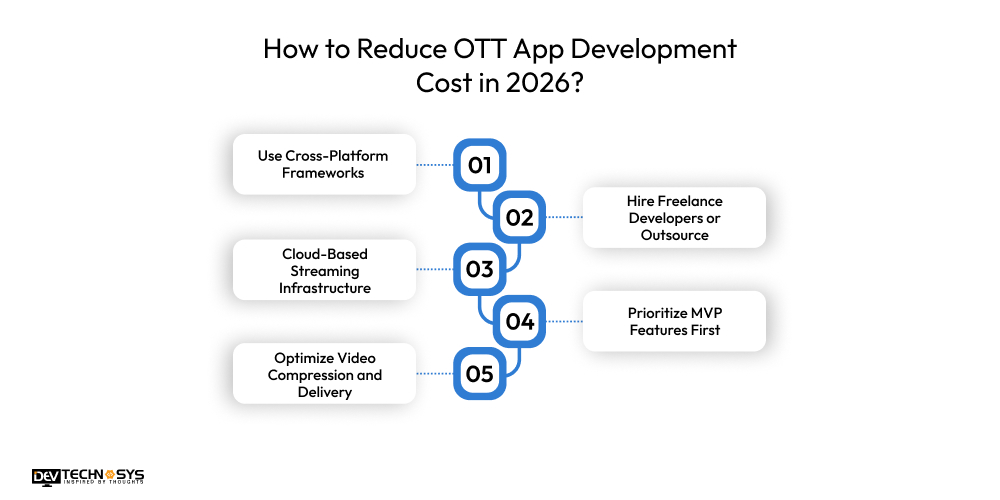
1. Use Cross-Platform Frameworks
Building apps with Flutter, React Native, or Xamarin reduces development time by sharing code across platforms. It minimizes separate iOS and Android development costs while maintaining near-native performance and user experience. Cross-platform frameworks are ideal for startups seeking cost-effective and faster OTT app deployment in 2026.
2. Hire Freelance Developers or Outsource
Outsourcing development or hiring freelancers reduces overhead compared to full-time in-house teams. It provides flexibility to scale the team according to project requirements and deadlines. Choosing experienced developers ensures quality delivery while keeping costs lower than traditional hiring models.
3. Cloud-Based Streaming Infrastructure
A video streaming app development company can offer cloud services like AWS, Azure, or Google Cloud. These integrations can reduce the need for physical servers. They provide scalable, pay-as-you-go solutions that handle high traffic without upfront infrastructure investment. Cloud integration also supports faster deployment, content delivery, and global reach for OTT apps.
4. Prioritize MVP Features First
Building a Minimum Viable Product (MVP) focuses on core features to launch quickly and affordably. It allows testing user engagement and validating ideas before investing in full-scale development. Adding advanced features gradually helps control costs while improving app performance and user satisfaction.
5. Optimize Video Compression and Delivery
Efficient video compression reduces the cost of bandwidth usage, server load, and streaming significantly. Using CDNs ensures smooth content delivery globally, minimizing latency and infrastructure expenses. A hybrid app development company optimizes video delivery to enhance user experience while keeping operational costs manageable for OTT apps.
Emerging Trends That Will Impact OTT App Development Cost in 2026
OTT app development costs in 2026 are influenced by emerging technologies, user expectations, and content trends. New features like AI, live streaming, and advanced infrastructure increase complexity and overall investment. Understanding these trends helps businesses plan budgets effectively while delivering engaging, future-ready OTT experiences.
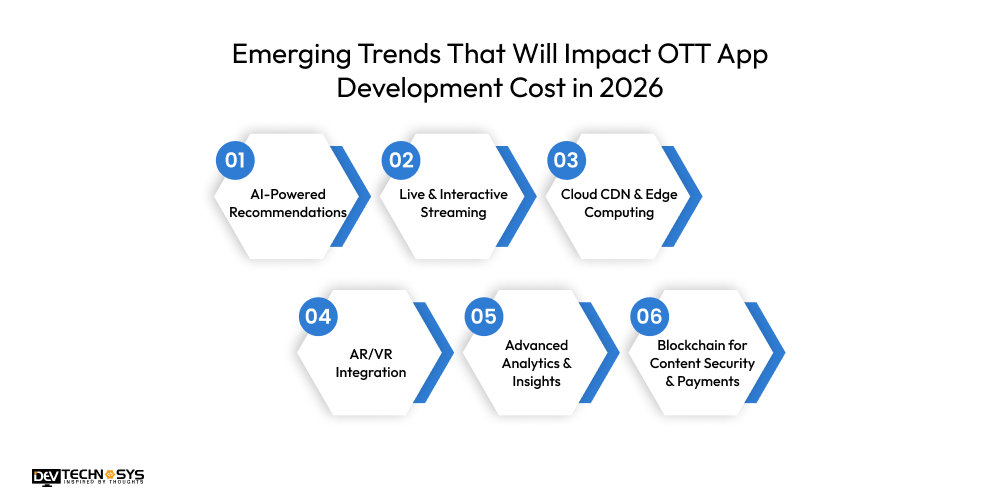
1. AI-Powered Recommendations
Personalized content boosts user engagement by analyzing behavior, but implementing AI algorithms increases development complexity. Integrating machine learning models requires more backend resources, advanced analytics, and ongoing optimization for accuracy. AI-driven recommendations improve retention, but add to both initial development and continuous maintenance costs.
2. Live & Interactive Streaming
Real-time video streaming with chat, reactions, and live events demands low-latency, scalable backend infrastructure. Features like moderation, notifications, and interactive overlays further increase development complexity and operational expenses. Scalable servers and optimized streaming protocols are critical for smooth performance during peak traffic periods.
3. Cloud CDN & Edge Computing
Content Delivery Networks (CDN) and edge computing reduce latency and improve global streaming quality. Hire on-demand app developers who can help implement these solutions. It adds infrastructure costs but enhances user experience and reliability. Cloud-based deployment ensures scalability, faster load times, and efficient handling of high concurrent users.
4. AR/VR Integration
Augmented and virtual reality features create immersive content experiences but require specialized development skills. Implementing AR/VR increases hardware compatibility needs, 3D content creation, and advanced rendering support. This trend adds significant development and testing costs but can differentiate apps in competitive markets.
5. Advanced Analytics & Insights
Integrating analytics tools allows tracking user behavior, engagement, and content performance in real time. Implementing dashboards, reports, and predictive analytics requires additional backend infrastructure and expertise. Although it increases cost, actionable insights improve content strategy, retention, and monetization opportunities.
6. Blockchain for Content Security & Payments
Blockchain ensures secure content distribution, copyright protection, and transparent payment systems for subscriptions. Integrating smart contracts and decentralized storage increases backend complexity and development time. This trend enhances user trust and monetization but impacts both initial investment and maintenance costs.
What are the Ways to Generate Revenue From OTT Apps?
OTT apps in 2026 offer multiple revenue streams to maximize profits while keeping users engaged. Choosing the right monetization model depends on content type, audience, and app features. Combining strategies strategically can boost earnings, retention, and overall app growth effectively.
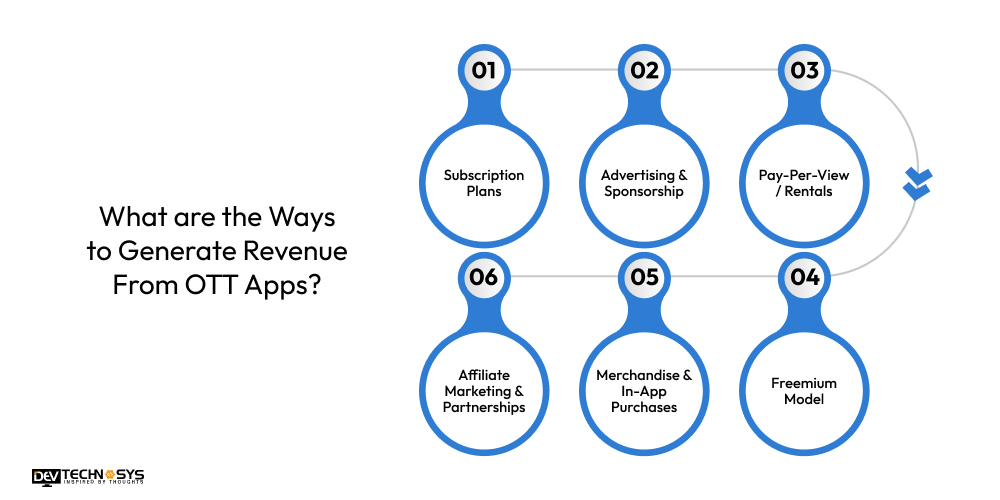
1. Subscription Plans
Users pay monthly or yearly fees for exclusive access to premium content and ad-free experiences. This model ensures steady recurring revenue while fostering loyalty and long-term user engagement. Offering tiered subscription levels allows apps to cater to casual viewers and power users efficiently.
2. Advertising & Sponsorship
Targeted ads, branded content, or sponsored segments generate income without charging users directly. Effective ad placement and audience segmentation enhance revenue while maintaining a positive user experience. Partnerships with brands also open new promotional opportunities and increase app visibility across markets.
3. Pay-Per-View / Rentals
Users pay one-time fees to access specific premium movies, events, or live performances. This model suits exclusive content releases or high-demand events, providing flexible monetization options. Pay-per-view ensures revenue from occasional viewers without committing them to recurring subscriptions.
4. Freemium Model
Free content is offered in Android and iOS app development services with limited features. While premium upgrades unlock advanced functionalities or content. It attracts a wide audience initially and converts engaged users into paying customers over time. Combining freemium with ads or microtransactions maximizes both engagement and revenue potential effectively.
5. Merchandise & In-App Purchases
Apps can sell related merchandise, collectibles, or digital goods tied to their content ecosystem. In-app purchases offer users premium features, extra content, or exclusive experiences within the app. This model creates multiple micro-revenue streams without disrupting the core content experience for viewers.
6. Affiliate Marketing & Partnerships
Integrating affiliate links or partner offerings within content generates commission-based revenue per conversion. Relevant product or service recommendations enhance user experience while monetizing audience engagement naturally. This approach leverages content-driven commerce without charging users directly for access to the app.
Conclusion
OTT apps 2026 are transforming how people consume entertainment, education, and media, offering on-demand, personalized, and interactive experiences. The development cost depends on several key factors, including the app’s features, supported platforms, technology stack, and third-party integrations.
Different types of OTT apps, like on-demand video streaming, live streaming, music streaming, or multi-channel platforms, have different cost considerations. Studying popular examples such as Netflix, Disney+, Spotify, Twitch, and YouTube provides valuable insights into successful monetization and feature strategies.
Collaborating with an experienced OTT app development company ensures a high-quality, scalable, and budget-friendly streaming app.
Frequently Asked Questions
1. How Much Does It Cost to Build an OTT App in 2026?
The cost to develop an OTT app ranges from $8,000 to $30,000. It depends on features, complexity, security, platform choice, integrations, and other factors. Adding advanced features like AI recommendations or live streaming increases the overall budget. A simple app is much more economical than a highly advanced app.
2. How Much Does It Cost to Hire OTT App Developers?
Hourly rates are $15 – $25 per hour, depending on experience, skills, and location. The highly skilled developers or specialized teams may charge above this standard range. Outsourcing developers from low-cost regions can significantly reduce project expenses. Whereas freelancers offer flexibility but may require more management for consistent results.
3. What is OTT App Maintenance Cost in 2026?
Maintenance is usually 15–20% of the initial development cost, covering updates, bug fixes, and security patches. Ongoing content updates and feature enhancements can increase yearly maintenance expenses. Server management, cloud storage, and CDN services contribute to recurring costs. Regular security audits are necessary to protect user data and ensure compliance.
4. How Long Does It Take to Develop an OTT App?
Basic MVP apps take 5–7 months, while full-featured apps require 6+ months. Adding live streaming or AI recommendations can extend the development timeline. UI/UX complexity and cross-platform support also influence overall project duration. Testing, bug fixes, and deployment time are crucial steps that add weeks.
5. What Key Factors Affect OTT App Development Cost?
Some of the key factors that can influence the OTT app development cost include:
- Development Team
- UI/UX Design
- Project Complexity
- Tech Stack
- Third-Party Integrations
Security & Compliance