



 Tarun Nagar
 Key Takeaways:
-
- Businesses can tap into the rapidly growing insurtech market and achieve long-term growth by building insurance apps like Tawuniya and Najm.
- Tawuniya is a leading digital insurance platform that offers seamless policy management, quick claims processing, and secure payment solutions for users.
- Bupa Arabia, Medgulf, Alien Care, AXA Gulf, and Daman are some of the top Tawniya alternatives offering similar digital insurance services in the Middle East.
- The success of an app like Tawuniya depends on integrating essential features such as real-time claims tracking, secure payments, and personalized policy recommendations.
- Insurance apps generate revenue through commission on policy sales, subscription plans, in-app advertisements, policy listing fees, and value-added services.
The insurance industry is undergoing a major digital shift, where customers expect quick, transparent, and mobile-first services. From purchasing policies to filing claims, everything is now moving toward seamless digital platforms. Leading this transformation is Tawuniya, a well-known insurance app that simplifies how users manage their insurance needs in the Middle East.
This growing demand has motivated businesses to create an insurance app like Tawuniya and take advantage of the expanding insurtech market. Whether you want to develop an insurance app like Tawuniya for health, motor, or travel insurance, a user-friendly and scalable solution can give you a strong edge over the competition. Companies that build an insurance app like Tawuniya not only improve customer experience but also streamline their internal operations.
In this blog, we’ll guide you through everything you need to know, including features, development steps, and the cost of developing the Tawuniya app. This way, you can confidently create an app like Tawuniya and thrive in the competitive insurance market.
What is Tawuniya?
Tawuniya is a leading digital insurance platform in Saudi Arabia, providing health, motor, travel, and corporate insurance services. Known for its user-friendly interface and secure digital transactions, it allows users to purchase policies, renew plans, and file claims directly from their mobile devices.
Many businesses now aim to build an Insurance app like Tawuniya to replicate its convenience and reliability. By studying how Tawuniya operates, companies can develop an Insurance app like Tawuniya that meets customer expectations for seamless digital insurance experiences.
For startups targeting Middle East insurance apps, creating an app like Tawuniya ensures strong engagement and operational efficiency. Its focus on customer-centric services makes it a benchmark for Tawuniya alternatives and a model for those looking to make an insurance app like Tawuniya in the competitive MENA market.
How Tawuniya Works?
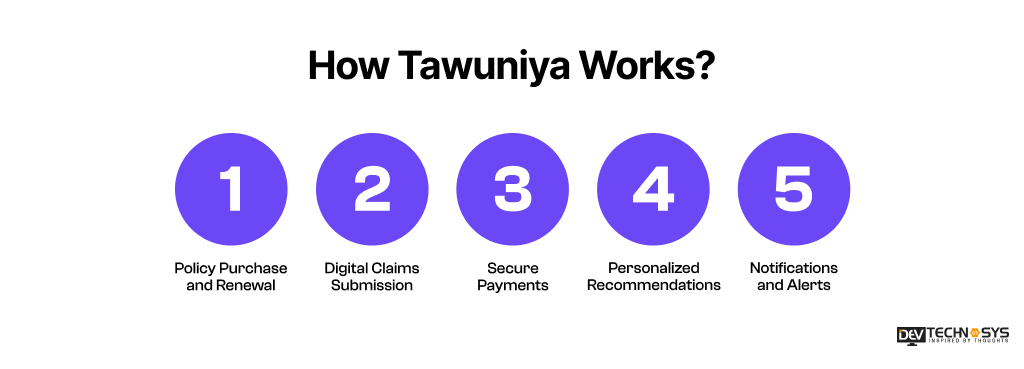
Tawuniya provides a fully digital insurance experience, allowing users to manage policies, file claims, and make payments seamlessly. Its intuitive interface and automated workflows make insurance management fast, simple, and secure.
1. Policy Purchase and Renewal
Users can easily browse available insurance plans, compare coverage options, and purchase policies directly through the app. The platform also sends automatic renewal reminders and notifications, helping users avoid lapses in coverage and maintain uninterrupted protection.
2. Digital Claims Submission
Tawuniya simplifies the claim process by allowing users to submit claims online. Users can upload documents, photos, and relevant details directly through the app. Real-time claim tracking ensures transparency and keeps users informed throughout the approval process.
3. Secure Payments
The app supports multiple secure payment methods, including credit/debit cards, digital wallets, and bank transfers. Users can pay premiums instantly, schedule recurring payments, and access detailed payment histories, reducing the need for offline interactions.
4. Personalized Recommendations
Tawuniya analyzes user preferences, previous coverage, and risk factors to provide tailored insurance suggestions. Personalized recommendations improve user satisfaction and make it easier for customers to choose the most relevant policies.
5. Notifications and Alerts
Automated notifications inform users about upcoming premium payments, claim updates, and policy changes. These timely alerts enhance trust, reduce missed deadlines, and improve the overall user experience.
What are the Market Stats of Insurance Apps Like Tawuniya?
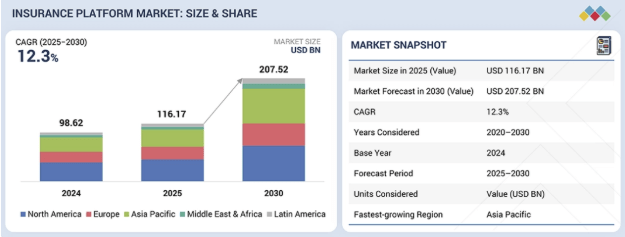
The demand to build an Insurance app like Tawuniya is rising rapidly due to the growth of digital insurance platforms in the Middle East. With increasing smartphone penetration, regulatory support, and demand for personalized policies, businesses are actively investing to develop an insurance app like Tawuniya and capture this expanding market.
Market Stats
- The Insurtech market reached around $116.17 billion in 2025 and is expected to grow to $207.52 billion by 2034, with a CAGR of over 12.3%.
- The broader Gulf Cooperation Council (GCC) insurtech market is valued at approximately $2.5 billion, with the UAE emerging as a key growth hub alongside Saudi Arabia.
- The UAE’s insurance technology sector is estimated at $1.3–1.5 billion, driven by increasing demand for digital-first insurance platforms and mobile-based services.
- Government initiatives led by entities like the Central Bank of the UAE and innovation hubs such as Dubai International Financial Center (DIFC) are accelerating growth through regulatory sandboxes and fintech support.
- Growing adoption of AI, telematics, and data-driven insurance models, along with demand for personalized and on-demand insurance, is pushing companies to build advanced apps similar to Tawuniya tailored for UAE users.
What is the Process to Build an Insurance App Like Tawuniya?
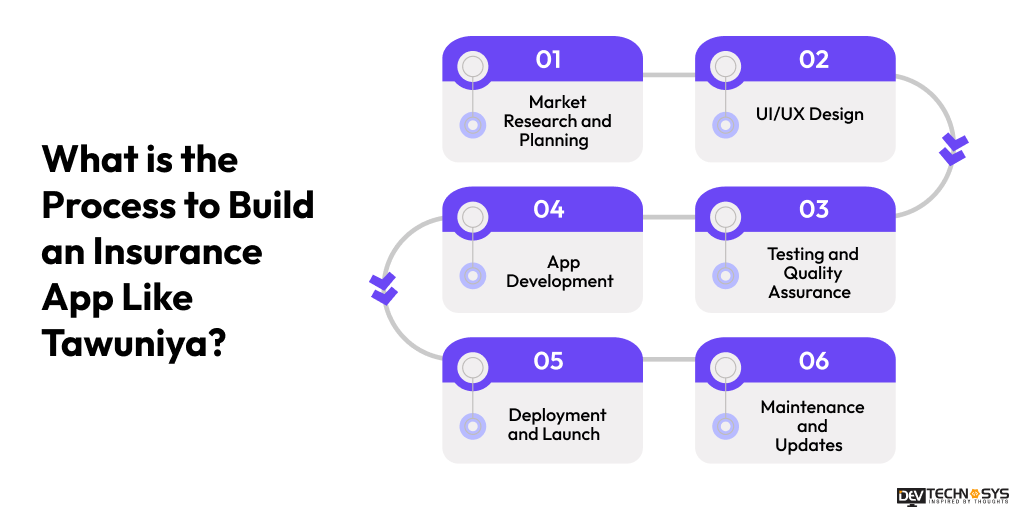
To build an insurance app like Tawuniya, businesses need to follow a clear development process. Each step, from planning to launch, is important for ensuring scalability, security, and a smooth user experience. Companies with a well-defined roadmap can lower risks and shorten time to market.
1. Market Research and Planning
This is the foundation stage where businesses look into target users, competitors, and industry trends. Knowing what customers expect helps determine the main features and functions of the app. It also helps businesses find gaps in current Middle East insurance apps and position their solution effectively. A clear roadmap makes execution easier in later stages.
2. UI/UX Design
A well-designed interface is key to delivering a smooth and engaging user experience. The design should focus on easy navigation, simple layouts, and quick access to key features like policies and claims. Businesses wanting to create an insurance app like Tawuniya must prioritize user-centered design. This improves user retention and satisfaction.
3. App Development
App development includes frontend and backend development, API integration, and database management. To create an app like Tawuniya, developers need to ensure scalability, good performance, and secure data handling. They use modern technologies to enable real-time updates and effective communication. A solid development base ensures long-term success for the app. You can hire a hybrid app development company to build a Tawuniya clone app with great expertise.
4. Testing and Quality Assurance
Before launch, the app goes through extensive testing to find and fix bugs and performance issues. This includes functional testing, security checks, and compatibility testing on different devices. Making sure the app offers a smooth and secure experience is vital for any app like Tawuniya. Proper testing also helps build trust with users.
5. Deployment and Launch
Once testing is done, the app is launched on platforms like Android and iOS. A well-planned launch strategy helps attract early users and gain traction. Businesses that develop an insurance app like Tawuniya should also focus on marketing and user onboarding. This helps improve visibility in a competitive market.
6. Maintenance and Updates
After the launch, regular updates and maintenance are necessary to keep the app relevant. This includes adding new features, fixing bugs, and enhancing security. Ongoing improvements help businesses remain competitive in the changing insurtech landscape. It also ensures continued user engagement and satisfaction. The cost to maintain an app is generally 15% to 20% of the total app development cost.
What Are the Essential Features of an App Like Tawuniya?
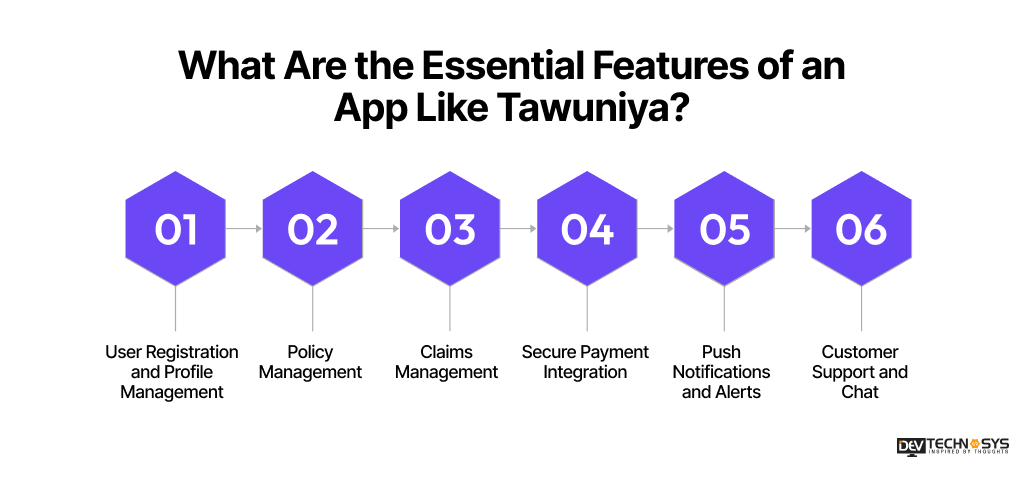
To build an Insurance app like Tawuniya, integrating the right set of features is crucial. A well-balanced feature set ensures smooth operations, better user engagement, and high customer satisfaction. Businesses that develop an app like Tawuniya must focus on both user-facing and admin-side functionalities to create a complete digital insurance ecosystem.
1. User Registration and Profile Management
Users may instantly register using their phone number, email address, or social media logins thanks to an easy and safe onboarding procedure. Users may keep documents, preferences, and personal information in one location with profile management. Every user will get a customized experience thanks to this functionality. Additionally, it facilitates quicker policy sales and claim processing.
2. Policy Management
The app should allow users to monitor, manage, and renew their insurance plans. Accessing policy details, coverage details, and renewal dates falls under this category. Companies that develop apps like Tawuniya need to make sure that policy-related tasks are simple to navigate. It lessens reliance on offline support and streamlines the user experience overall.
3. Claims Management
A digital claims feature allows users to file claims, upload documents, and track progress in real time. This eliminates the need for manual paperwork and speeds up the process. Transparency in claim status builds user trust and satisfaction. It is one of the most critical features of any successful app like Tawuniya.

4. Secure Payment Integration
Several payment options, including bank transfers, cards, and wallets, should be supported by the app. For premium payments, secure payment gateways provide quick and secure transactions. Payment history and receipts must be accessible to users as well. Convenience and trust are improved by this feature.
5. Push Notifications and Alerts
Users are updated about policy renewals, claim updates, and significant announcements through real-time notifications. Users can keep informed and avoid missing deadlines by receiving timely alerts. Additionally, it increases the app’s user engagement. A major factor in improving the overall experience is notifications.
6. Customer Support and Chat
Quick resolution of user inquiries is facilitated by in-app customer care, which includes live chat and chatbot integration. This increases satisfaction and speeds up reaction times. Effective support systems should be given top priority by companies looking to create an insurance app similar to Tawuniya. It fosters enduring client relationships and trust.
Why Businesses are Investing in Insurance App Development?
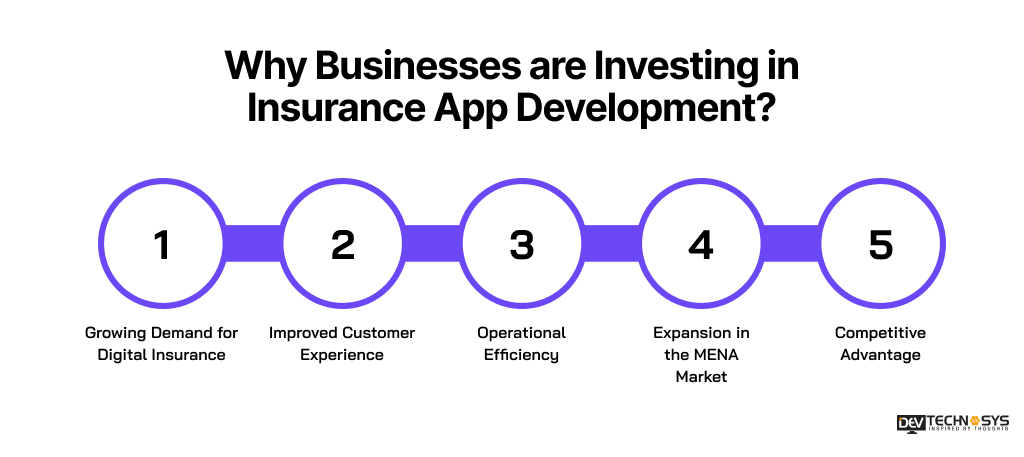
The rapid digital transformation in the insurance sector is pushing companies to build an Insurance app like Najm and stay competitive. With increasing demand for convenience and real-time services, businesses are actively choosing to develop an insurance app like Tawuniya to enhance customer experience and streamline operations.
1. Growing Demand for Digital Insurance
Customers now prefer managing their insurance policies through mobile apps rather than traditional methods. This shift is driving the growth of insurance apps in Saudi Arabia and across the MENA region. Businesses that adapt to this trend can attract a larger user base. It also helps in improving accessibility and service delivery.
2. Improved Customer Experience
Mobile apps offer a seamless and personalized experience with features like instant claims, notifications, and support. Companies that create an insurance app like Tawuniya can significantly enhance customer satisfaction. A better experience leads to higher retention and brand loyalty. This becomes a key differentiator in a competitive market.
3. Operational Efficiency
Digital platforms reduce manual processes, paperwork, and administrative costs. Automation in claims processing and policy management improves efficiency and accuracy. Businesses that make an insurance app like Tawuniya can optimize their internal operations. This results in faster service delivery and reduced overhead costs.
4. Expansion in the MENA Market
The rise of Middle East insurance apps is creating new growth opportunities for insurers and startups. Governments and regulatory bodies are also supporting digital innovation in insurance. Companies investing in this space can expand their reach across multiple regions. It opens doors to new revenue streams.
5. Competitive Advantage
Having a feature-rich mobile app gives businesses a strong edge over competitors. It allows them to offer faster, more reliable, and transparent services. Companies that invest early can position themselves as leaders in the best insurtech apps MENA category. This strengthens their market presence and brand value.
What is the Tawuniya Clone App Development Cost?
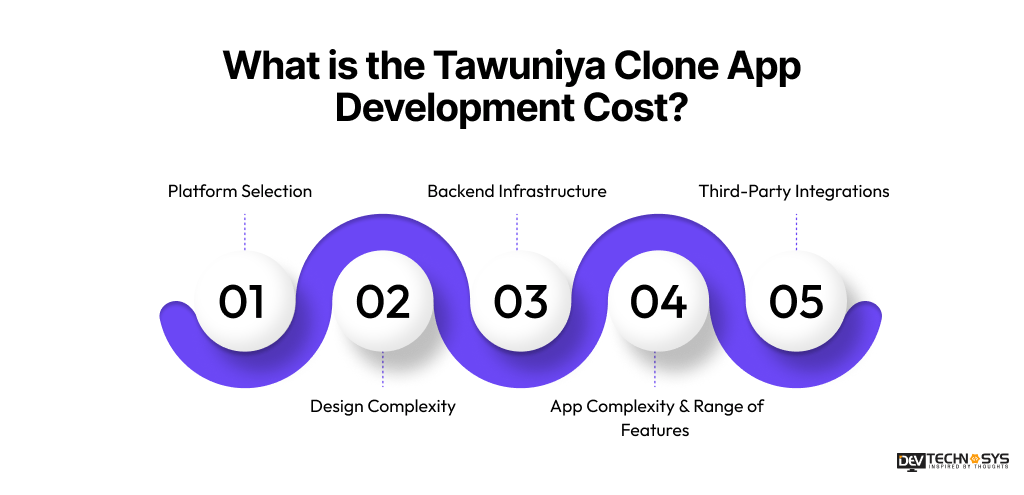
The cost to build an Insurance App Like Tawuniya typically ranges from $8,000 to $25,000, depending on factors such as features, design complexity, and platform selection. Businesses planning to develop an insurance app like Tawuniya should evaluate each cost component carefully to ensure efficient budget allocation and long-term scalability. The fintech app development cost is affected by various aspects.
| App Type | Key Features Included | Estimated Cost |
| Basic App (MVP) | User registration, policy view, basic claims, notifications | $8,000 – $12,000 |
| Mid-Level App | Secure payments, claim tracking, dashboards, analytics | $12,000 – $18,000 |
| Advanced App | AI automation, multi-policy management, and advanced security | $18,000 – $25,000 |
1. Platform Selection
Platform selection directly impacts both development cost and audience reach. Building for a single platform is more cost-effective and faster, but it limits your user base. On the other hand, native for both Andriod and iOS app development services increases cost due to separate codebases, while cross-platform development offers a balanced approach between cost and reach.
| Platform Choice | Cost Contribution | Impact |
| Single Platform | $2,000 – $4,000 | Budget-friendly, limited reach |
| Cross-Platform | $4,000 – $7,000 | Wider reach, cost-effective |
| Native (iOS + Android) | $7,000 – $10,000 | Best performance, higher cost |
2. Design Complexity
Design plays a crucial role in user engagement and retention. Basic UI designs using templates are affordable, but they may lack uniqueness. Custom UI/UX designs require more effort in research and prototyping, while premium designs with animations and advanced visuals significantly increase the overall development cost.
| Design Level | Cost Contribution | Description |
| Basic UI | $1,000 – $2,000 | Simple layouts |
| Custom UI/UX | $2,000 – $4,000 | User-friendly dashboards |
| Premium UI | $4,000 – $6,000 | Advanced visuals and animations |
3. Backend Infrastructure
Backend infrastructure is essential for managing user data, policies, and claims efficiently. Basic backend systems are cost-effective but limited in scalability. However, Android app development with advanced backend setups with cloud integration, real-time processing, and strong security requires more development time and expertise, increasing the cost to develop an Insurance App Like Tawuniya.
| Backend Type | Cost Contribution | Features |
| Basic Backend | $2,000 – $4,000 | Data storage, APIs |
| Scalable Backend | $4,000 – $6,000 | Real-time sync, analytics |
| Advanced Backend | $6,000 – $8,000 | High security, large-scale processing |
4. App Complexity & Range of Features
The number and complexity of features significantly impact the cost to build an Insurance App Like Tawuniya. Basic features such as login, profiles, and policy viewing are quick to implement and require minimal coding. However, advanced features like AI-based recommendations, automation, and real-time claim tracking demand more development time, technical expertise, and testing, which increases the total cost.
| Feature Type | Cost Contribution | Examples |
| Basic Features | $1,000 – $2,000 | Login, profiles, policy view |
| Core Features | $2,000 – $4,000 | Claims, payments, notifications |
| Advanced Features | $4,000 – $6,000 | AI, automation, personalization |
5. Third-Party Integrations
Third-party integrations involve additional costs such as licensing fees and subscriptions. Basic integrations like payment gateways and notifications are cost-effective and easy to implement. However, advanced integrations such as AI engines, analytics tools, and automation systems require more complex implementation and higher investment, increasing the cost to develop an Insurance App Like Tawuniya.
| Integration Type | Cost Contribution | Example |
| Basic APIs | $500 – $1,000 | Payments, notifications |
| Medium Integrations | $1,000 – $1,500 | Analytics tools |
| Advanced Integrations | $1,500 – $2,500 | AI, automation tools |
How to Monetize an Insurance App Like Tawuniya?
To successfully build an Insurance app like Tawuniya, having a strong monetization strategy is essential. Businesses that use banking app development can generate consistent revenue by offering value-driven services and leveraging multiple income streams within the app.
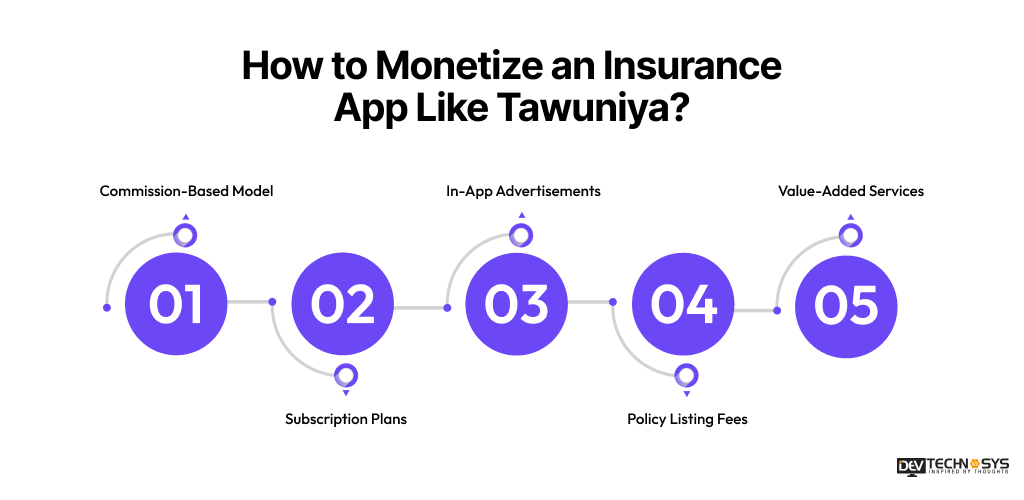
1. Commission-Based Model
Insurance apps can earn revenue by charging commissions on every policy sold through the platform. This is one of the most common monetization strategies, where the app acts as a bridge between users and insurance providers. As the number of users grows, commission-based earnings also increase steadily.
2. Subscription Plans
Offering premium subscription plans allows users to access exclusive benefits such as faster claim processing, priority support, or personalized insurance recommendations. This model ensures recurring revenue and helps businesses maintain a steady cash flow. Hire on-demand app developers for health insurance apps for expats UAE and similar markets.
3. In-App Advertisements
Displaying relevant ads from insurance providers or financial services can generate additional income. Businesses can partner with third-party advertisers to promote policies, financial products, or services within the app. However, ads should be optimized to avoid disrupting the user experience.
4. Policy Listing Fees
Insurance companies can be charged a fee to list their policies on the platform. This creates a marketplace model where multiple providers compete for visibility. It is an effective way to monetize a growing user base while offering users a variety of options.
5. Value-Added Services
Apps can offer additional services such as risk assessment, financial planning, or claim assistance for an extra fee. Businesses that create an insurance app like Tawuniya can use these services to enhance user experience while generating additional revenue streams.
What are the Top Tawuniya Alternatives in 2026?
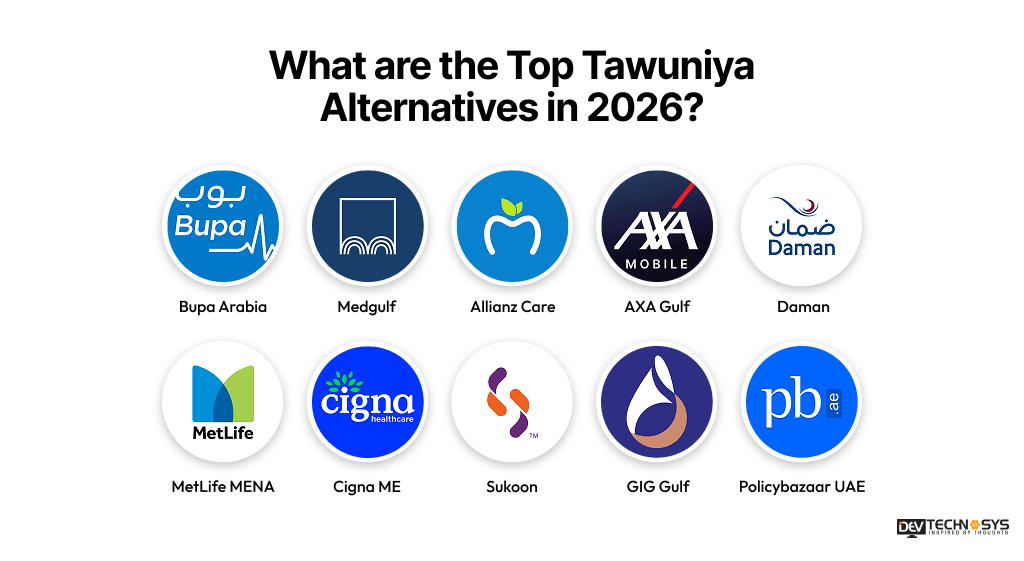
The insurance app market in the Middle East is highly competitive, with several platforms offering advanced digital services and seamless user experiences. While Tawuniya has a strong presence, users often explore other options based on features, coverage, and pricing. Businesses looking to build an app like Tawuniya can analyze these alternatives to understand market trends and user expectations. These are the top fintech apps in Middle East:
| Platform | Supported Devices | Downloads | Top Features |
| Bupa Arabia | Android | iOS | Web | 1M+ | Health insurance, digital claims, hospital network |
| Medgulf | Android | iOS | Web | 500K+ | Policy management, claims tracking, support |
| Allianz Care | Android | iOS | Web | 1M+ | Global coverage, expat insurance |
| AXA Gulf | Android | iOS | Web | 500K+ | Multi-insurance plans, fast claims |
| Daman | Android | iOS | Web | 1M+ | Health tracking, insurance cards |
| MetLife MENA | Android | iOS | Web | 500K+ | Policy insights, premium payments |
| Cigna ME | Android | iOS | Web | 1M+ | Global health coverage |
| Sukoon | Android | iOS | Web | 500K+ | Motor & health insurance |
| GIG Gulf | Android | iOS | Web | 500K+ | Digital policies, claims |
| Policybazaar UAE | Android | iOS | Web | 5M+ | Insurance comparison platform |
1. Bupa Arabia
Bupa Arabia is a leading health insurance provider in Saudi Arabia, offering comprehensive digital services for policy management and claims processing. The app allows users to access their insurance details, locate network hospitals, and submit claims seamlessly. Its strong healthcare network and focus on customer satisfaction make it a trusted choice among individuals and businesses.
2. Medgulf
Medgulf provides a wide range of insurance solutions, including health and motor coverage, through a user-friendly digital platform. The app simplifies policy management, claim submissions, and customer support interactions. Its efficient system and straightforward interface make it a reliable option for users looking for quick and hassle-free insurance services.
3. Allianz Care
Allianz Care specializes in international health insurance, particularly for expats and global travelers. The app offers features like digital claims, policy access, and healthcare provider search across multiple countries. Its global reach and advanced digital tools make it one of the preferred health insurance apps for expats UAE, especially for users seeking worldwide coverage.
4. AXA Gulf
AXA Gulf delivers a broad range of insurance products, including health, motor, and travel insurance. The app is known for its strong digital infrastructure, enabling quick claims processing and easy policy management. Its reliable customer support and efficient services make it a competitive alternative in the MENA insurance market.
5. Daman
Daman is a widely used health insurance platform in the UAE, offering digital access to insurance cards, claims, and wellness programs. Users can easily track their policies, submit claims, and access healthcare services through the app. Fintech app development like Daman focuses on health tracking and preventive care, adding extra value beyond basic insurance services.

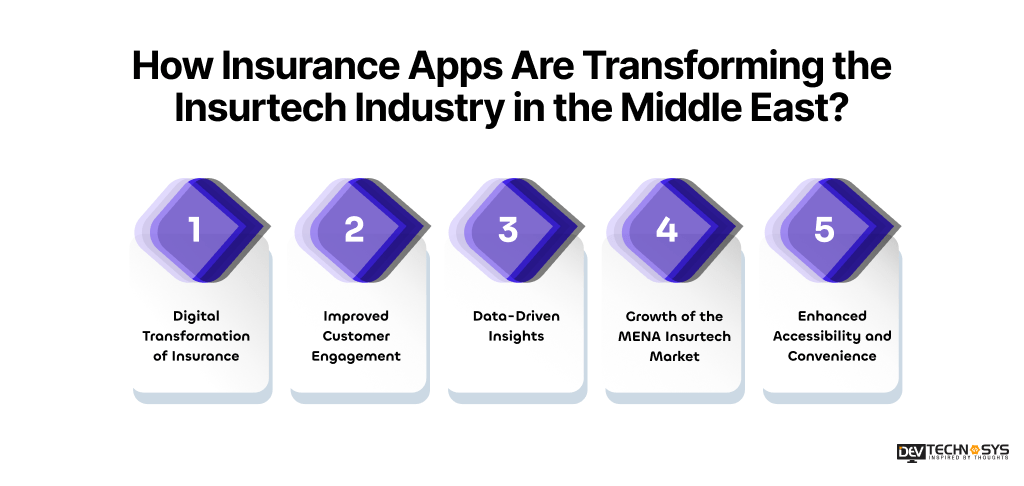
How Insurance Apps Are Transforming the Insurtech Industry in the Middle East?
The rise of mobile technology is reshaping the insurance landscape in the Middle East. Businesses that build an insurance app like Tawuniya are enabling users to manage policies, submit claims, and access services digitally, which significantly improves customer experience. These apps are bridging the gap between traditional insurance processes and modern, on-demand solutions.
1. Digital Transformation of Insurance
Insurance apps are replacing paper-based processes with fully digital workflows. Users can purchase policies, track claims, and make payments without visiting physical branches. This transformation not only increases efficiency for insurers but also improves convenience for customers, making apps like Tawuniya essential tools in modern insurance.
2. Improved Customer Engagement
With features like push notifications, personalized recommendations, and policy alerts, insurance apps enhance user engagement. Customers are more likely to stay loyal when they receive timely updates and relevant insurance suggestions. Businesses that create an insurance app like Tawuniya can leverage these tools to build stronger relationships with their users.
3. Data-Driven Insights
Digital insurance platforms collect vast amounts of user data, enabling insurers to analyze behavior, predict risks, and offer personalized policies. Apps like Tawuniya and its alternatives allow companies to make data-backed decisions, improving risk management and customer satisfaction.
4. Growth of the MENA Insurtech Market
The Middle East insurance market is experiencing rapid digital adoption, driven by government initiatives, regulatory support, and increasing smartphone penetration. Insurance apps in Saudi Arabia and UAE are leading this trend, providing a blueprint for new entrants looking to develop an app like Tawuniya.
5. Enhanced Accessibility and Convenience
Mobile insurance apps allow users to access their policies anytime, anywhere. This level of convenience has become a key differentiator in the competitive insurance sector. Apps also integrate with payment gateways, healthcare providers, and claim systems, offering a seamless experience for customers.
Conclusion
The Middle East insurance market is rapidly embracing digital transformation, making mobile apps essential for modern insurers. Businesses that build an insurance app like Tawuniya can provide seamless policy management, quick claims processing, and secure payments, enhancing customer convenience and trust. With advanced features, personalized experiences, and strong digital infrastructure, apps like Tawuniya improve engagement and operational efficiency. Building insurance apps takes a lot of time and rigorous research & development. These issues can easily be tackled by hiring a mobile app development company, which can help you build an app like Tawuniya.
FAQs
Q1. What Are the Essential Features of an App Like Tawuniya?
Key features include user registration, profile management, policy viewing, claim submission, secure payments, push notifications, customer support, and analytics. These ensure a smooth user experience, personalized services, and efficient insurance management for both users and businesses.
Q2. How Do I Develop an Insurance App Like Tawuniya?
Developing an app involves market research, UI/UX design, front-end and back-end development, API integrations, testing, deployment, and maintenance. Each stage ensures scalability, security, and seamless operation, delivering a reliable, high-performing insurance app for users.
Q3. Which Platforms Should I Target for an Insurance App Like Tawuniya?
Targeting both iOS and Android ensures maximum reach and engagement. Cross-platform development with frameworks like Flutter or React Native offers cost-effective development, faster deployment, and consistent performance across devices for a broad MENA user base.
Q4. What Technologies Are Used to Build an Insurance App Like Tawuniya?
Common technologies include mobile frameworks like Flutter or React Native, secure backends, cloud integration, API connections for payments and third-party services, analytics tools, and AI modules to improve user experience, personalization, and operational efficiency.
Q5. How Can I Monetize an Insurance App like Tawuniya?
Monetizing an app like Tawnuiya can be done by multiple strategies including subscriptions, commissions, in-app ads, and value-added services. Businesses using mobile app development solutions can integrate these models efficiently for revenue generation.