



 Tarun Nagar
 Key Takeaways:
-
- Conduct thorough market research to understand patient needs, competitor apps, and define a clear healthcare app value proposition.
- Follow healthcare regulations, implement data security measures, and plan for ongoing updates and support.
- The cost to build an app like Vezeeta ranges from $8,000 to $30,000, depending on features, platform, and complexity.
- The rise of telemedicine apps like Vezeeta has ushered in significant benefits for patients, making online doctor appointments more essential than ever.
The healthcare sector in the Middle East is embracing advanced technologies. Doctors, clinics, hospitals, and labs are using apps like Vezeeta for the most convenient experience. Recent developments in the med-tech industry have changed the function of healthcare services and increased the need for online consultations.
Developing an app like Vezeeta is crucial in improving healthcare access and management. With Vezeeta app development, healthcare providers are shifting their services to digital platforms. From health condition analysis to prescription refills, the teleconsultation app Vezeeta is a one-stop solution. In this blog, we’ll discuss the steps to build an app like Vezeeta, key features, costs, and monetization strategies.
What is Vezeeta?
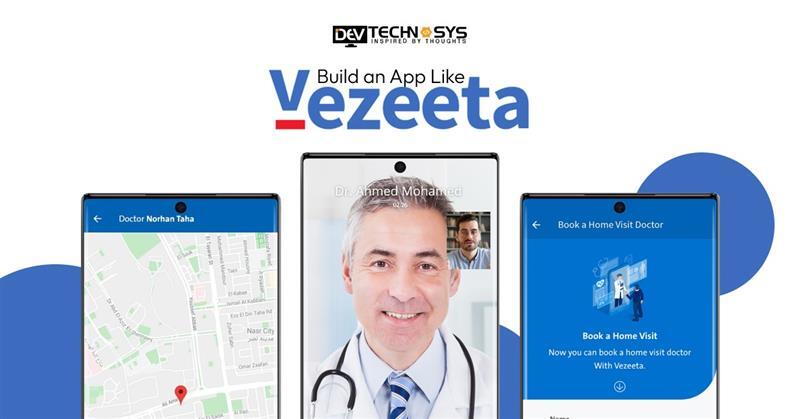
Vezeeta is a digital health platform that lets people find doctors, make appointments, and talk to doctors online. The app links patients with verified healthcare specialists in a range of fields. It also offers features such as clinic reviews, appointment scheduling, e-prescriptions, and pharmacy services, making it easier to access healthcare and manage it all online.
Standout Features
- Doctor Search & Discovery
- Online Appointment Booking
- Telemedicine Consultations
- E-Prescription & Pharmacy Services
How Does Vezeeta Work?
A similar app like Vezeeta simplifies the healthcare journey by digitally connecting patients with doctors and clinics. By combining telehealth technology tutorial and digital prescriptions, Vezeeta enables faster access to healthcare.
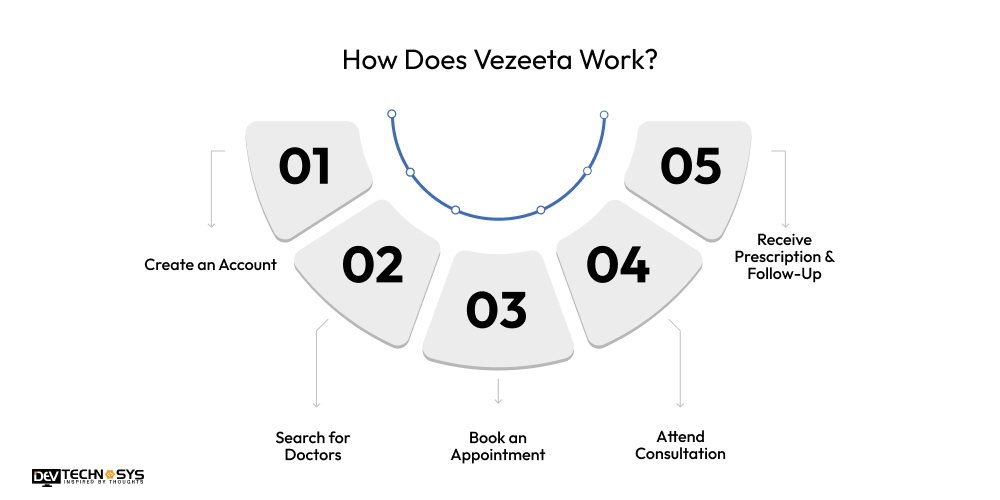
1. Create an Account
Users sign up on the Vezeeta app using their phone number or email. After registration, they can set their location, manage profiles, and start searching for nearby doctors.
2. Search for Doctors
Patients browse doctors based on specialty, location, consultation fees, ratings, and available time slots, helping them find the most suitable healthcare professional for their needs.
3. Book an Appointment
Once a doctor is selected, users can choose an available date and time slot. The appointment is instantly confirmed through the app without calling the clinic.
4. Attend Consultation
Patients can visit the clinic for in-person appointments or opt for online video consultations, allowing them to receive medical advice conveniently from home.
5. Receive Prescription & Follow-Up
After the consultation, patients may receive digital prescriptions through the app and schedule follow-up visits, ensuring continuous care and easier management of medical records.
Middle East Digital Health Market Overview
The Middle East digital health market is experiencing rapid growth due to increasing healthcare digitization, rising smartphone adoption, and strong government support for smart healthcare systems. A 2025-2033 report by Grand View Research highlights:
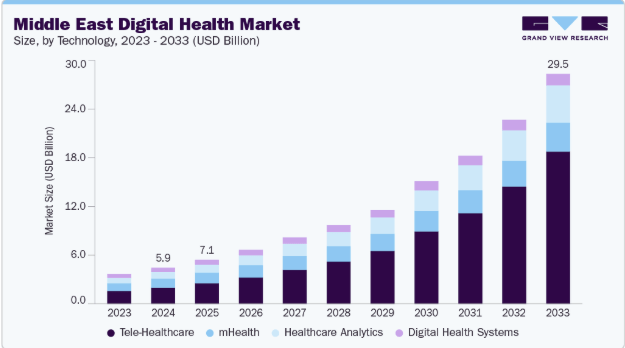
- Saudi Arabia’s digital health industry dominated the regional market, accounting for the largest revenue share of 39.77%.
- The Middle East digital health market size is projected to reach USD 29.46 billion by 2033.
- The industry is forecast to grow at a CAGR of 19.56% between 2025 and 2033.
- Tele-healthcare accounted for 47.07% of the total digital health market revenue, making it the largest technology segment in the region.
- The telemedicine segment captured around 40.6% of the smart healthcare market share, showing strong demand for virtual consultations.
How To Build An App Like Vezeeta? A Step-By-Step Guide
App like like Vezeeta have transformed how patients connect with doctors and manage medical appointments. To build an app like Doctor on demand requires strategic planning, the right technology stack, regulatory compliance, and a strong user-centric design.
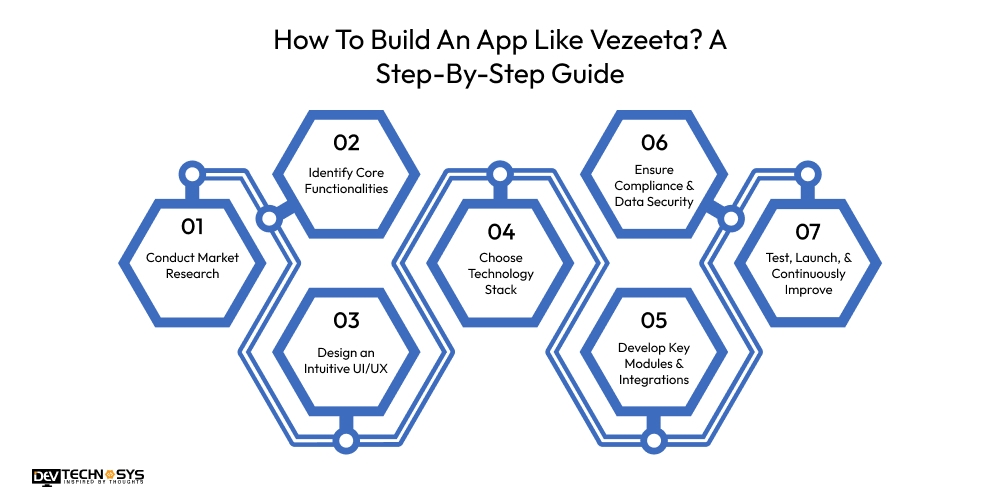
1. Conduct Market Research
Begin by looking at the digital healthcare market, your rivals, and what users require. Find the people who will use your product, such as patients, doctors, and clinics. Examine the features of top healthcare applications and establish a distinct value proposition. Before development starts, this study helps determine what the app will do and how it will generate revenue.
2. Identify Core Functionalities
List the most important features that your healthcare app needs. Some of these are finding a doctor, making an appointment, having a video consultation, getting a digital prescription, creating a patient profile, and integrating payments. Making a precise list of features ensures that your app meets the needs of both patients and doctors.
3. Design an Intuitive UI/UX
User experience is critical when you build an app like Vezeeta. Create a clean, simple, and accessible interface for patients and doctors. Focus on easy navigation, quick appointment booking, and clear display of health information. A well-designed UI/UX improves user engagement and reduces confusion.
4. Choose Technology Stack
Select a robust technology stack that supports scalability and security. Android app development frameworks such as Flutter and React Native can accelerate cross-platform development. Backend technologies, cloud infrastructure, APIs, and databases should support real-time appointment management, video consultations, and secure storage of medical data.

5. Develop Key Modules & Integrations
Begin development by building core modules, including patient registration, doctor profiles, appointment booking, telemedicine features, and payment systems. Integrate third-party tools for video conferencing, notifications, and health record management. Proper system architecture ensures seamless communication between patients and doctors.
6. Ensure Compliance & Data Security
Leading health apps in Middle East must follow strict regulations and data protection standards. Implement strong encryption, secure authentication, and privacy policies to protect patient data. Depending on your target market, comply with healthcare regulations such as HIPAA, GDPR, or other regional medical data protection frameworks.
7. Test, Launch, & Continuously Improve
Before launch, conduct extensive testing, including usability, performance, and security testing. Fix bugs and ensure smooth functionality across devices. After launching the app, monitor user feedback, track analytics, and release regular updates with new features to improve the healthcare experience and maintain competitiveness.
What Are The Must-Have Features For The Vezeeta Clone App?
It is important to hire a top healthcare app development company in the UAE. To build an app like Vezeeta, you need features that simplify doctor discovery, appointment booking, and digital consultations.
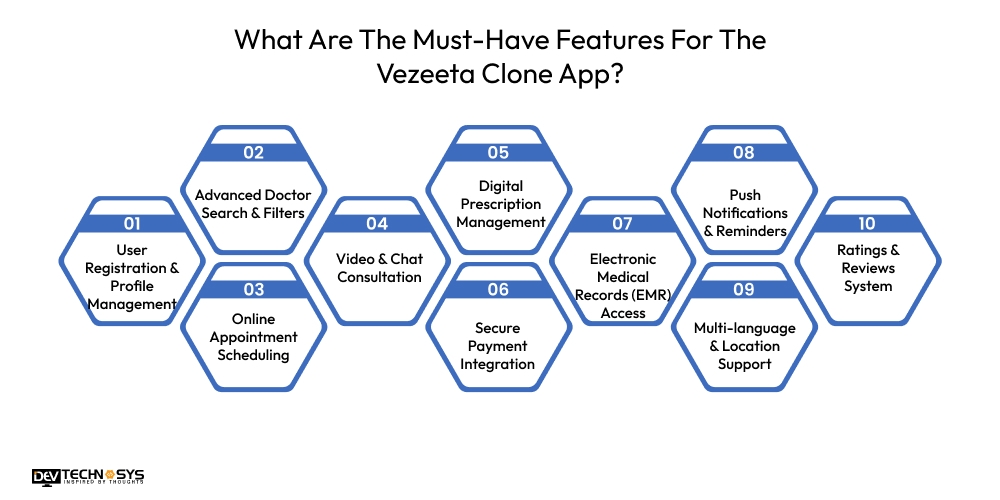
1. User Registration & Profile Management
Allow patients and doctors to register easily, create profiles, manage personal information, medical history, and update account preferences.
2. Advanced Doctor Search & Filters
Enable users to search for doctors by specialty, location, consultation fees, availability, ratings, and patient reviews to make better decisions.
3. Online Appointment Scheduling
Provide a real-time appointment booking system that allows patients to select available time slots and schedule consultations quickly.
4. Video & Chat Consultation
Integrate secure video and chat consultation features so patients can connect with doctors remotely for medical advice and follow-ups.
5. Digital Prescription Management
Allow doctors to issue electronic prescriptions after consultations, enabling patients to access and store prescriptions directly within the app.
6. Secure Payment Integration
Integrate multiple payment options, including cards, digital wallets, and online banking, for seamless and secure consultation fee payments.
7. Electronic Medical Records (EMR) Access
Enable secure storage and access to patients’ medical records, previous consultations, prescriptions, and health reports within the app.
8. Push Notifications & Reminders
Send automated notifications for appointment confirmations, reminders, prescription updates, and important healthcare alerts.
9. Multi-language & Location Support
Support multiple languages and regional settings to ensure accessibility for diverse users across different geographic locations.
10. Ratings & Reviews System
Allow patients to share feedback and rate doctors based on consultation experience, helping other users choose reliable healthcare professionals.
Industry Insight: A latest report by Decisions Advisors shows that the global mHealth app market will reach USD 163.5 billion by 2035, growing at a roughly 15% CAGR.
Why Healthcare Startups Are Investing In Apps Like Vezeeta?
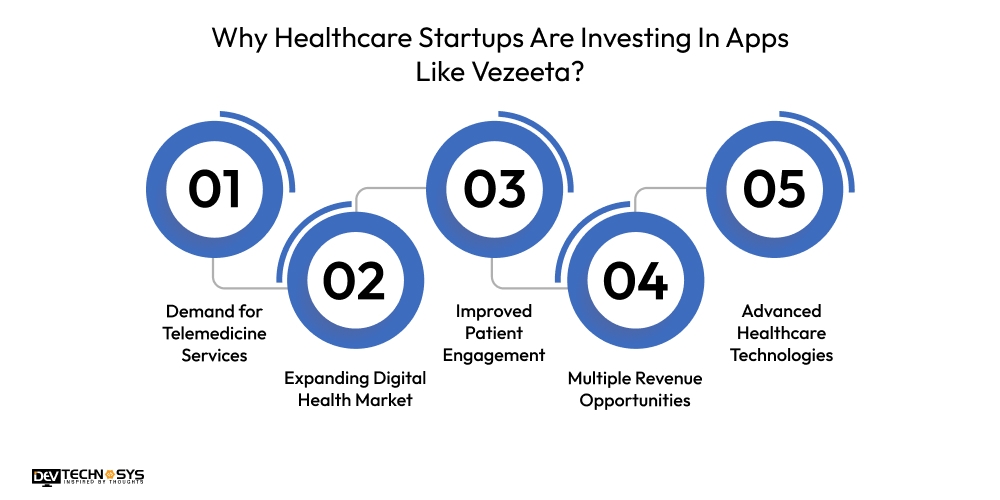
The rapid growth of digital healthcare and telemedicine has encouraged startups to develop an app like Vezeeta. The telemedicine app development solution for the Vezeeta clone app provides convenient appointment booking, online consultations, and digital health management.
1. Demand for Telemedicine Services
Patients want easy access to medical consultations, and the need for virtual healthcare services has increased significantly. Telemedicine apps let new businesses offer healthcare services remotely, reducing hospital visits and making it easier for people in distant or underserved areas to get care.
2. Expanding Digital Health Market
The worldwide digital health market is growing rapidly due to new technologies and the shift to digital healthcare. Startups are investing to make an app like Vezeeta to get a piece of this burgeoning market. These apps provide new ways to monitor patients from afar.
3. Improved Patient Engagement
Patients may quickly find doctors, make appointments, and get medical advice without going to the hospital via healthcare applications. This convenience makes patients more involved and satisfied, making digital healthcare platforms good investments for entrepreneurs.

4. Multiple Revenue Opportunities
iOS app development services for apps like Vezeeta can generate revenue in several ways, including charging for consultations, offering subscription plans, listing featured doctors, and partnering with pharmacies. These different ways to make money make healthcare platforms a good business opportunity for new companies.
5. Advanced Healthcare Technologies
Startups may add new technologies like AI-based symptom checks, electronic health records, and data analytics to healthcare apps. These new ideas help improve diagnoses, make operations run more smoothly, and raise the overall quality of online healthcare services.
How Much Does It Cost To Develop An App Like Vezeeta?
The cost to develop an app like Medisafe and Vezeeta typically ranges from $8,000 to $30,000, depending on the project scope and level of customization. Vezeeta app development costs mainly depend on app complexity, features, design quality, and the development team’s location.
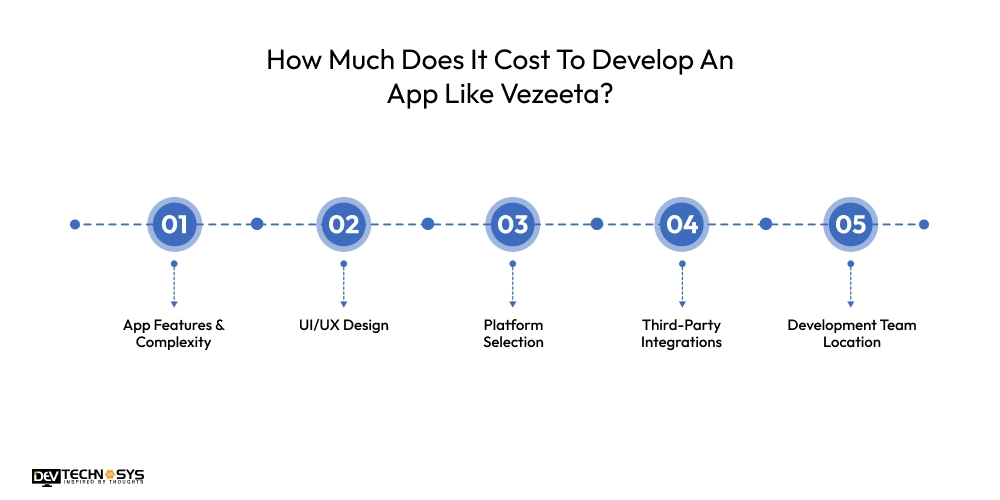
The final cost covers core functionalities like doctor discovery, appointment booking, teleconsultations, digital prescriptions, and secure payment systems.
| App Type | Features Included | Estimated Cost |
| Basic Healthcare App | Doctor search, patient registration, appointment booking, notifications, basic profile management | $8,000 – $12,000 |
| Moderate Complexity App | All basic features plus video consultations, secure payments, ratings & reviews, digital prescriptions | $12,000 – $20,000 |
| Advanced Healthcare App | Telemedicine, AI symptom checker, EHR integration, analytics dashboard, multi-language support | $20,000 – $30,000 |
The cost to build an app like Vezeeta depends on several technical and business factors. Understanding these cost-driving factors helps businesses plan their development strategy and build a scalable telemedicine solution within the desired budget.
1. App Features & Complexity
The healthcare app development cost in Dubai is affected by the number and difficulty of the features. More advanced features need more time to build, which makes the overall cost more than for basic healthcare appointment booking apps.
| Feature Complexity | Estimated Cost Impact |
| Basic Features | $2,000 – $4,000 |
| Medium Complexity Features | $4,000 – $6,000 |
| Advanced Features | $6,000 – $8,000 |
2. UI/UX Design
Designing the user interface and user experience is an important factor in understanding the cost to develop an app like Vezeeta. Patients and doctors can easily find their way around a clean and simple design. Custom designs increase the cost to create an app like Vezeeta.
| Design Type | Estimated Cost |
| Basic UI Design | $2,000 – $4,500 |
| Custom UI/UX Design | $5,500 – $8,000 |
| Advanced Interactive Design | $8,000 – $10,000 |
3. Platform Selection
The cost to maintain an app like Vezeeta for just one platform, like Android or iOS, is less than to make one that works on all platforms. Cross-platform or multi-platform development is often chosen by businesses seeking to reach a larger audience.
| Platform Type | Estimated Cost |
| Single Platform (Android or iOS) | $8,000 – $12,000 |
| Cross-Platform Development | $12,000 – $18,000 |
| Native Development for Both Platforms | $15,000 – $25,000 |
4. Third-Party Integrations
Payment gateways, video conferencing APIs, cloud storage, and notification systems are necessary third-party services to build an app like Vezeeta. The more integrations you need, the higher the healthcare app development cost will be.
| Integration Type | Estimated Cost |
| Payment Gateway Integration | $500 – $1,000 |
| Video Consultation API | $1,000 – $2,000 |
| Cloud Storage & Notifications | $2,000 – $3,500 |
5. Development Team Location
The cost to create an app like Vezeeta is greatly affected by where the development team is located. The cost of labor, the amount of knowledge, and the cost of running a business all affect development rates in different areas.
| Region | Estimated Cost |
| Asia / Eastern Europe | $1,000 – $3,300 |
| Middle East / Africa | $2,000 – $4,200 |
| North America / Western Europe | $4,400 – $6,000 |
Industry Insight: Emergen Research reports that the Middle East & Africa now accounts for around 4 % of global mobile medical app revenue.
What Are Best Alternatives To The Vezeeta Healthcare App?
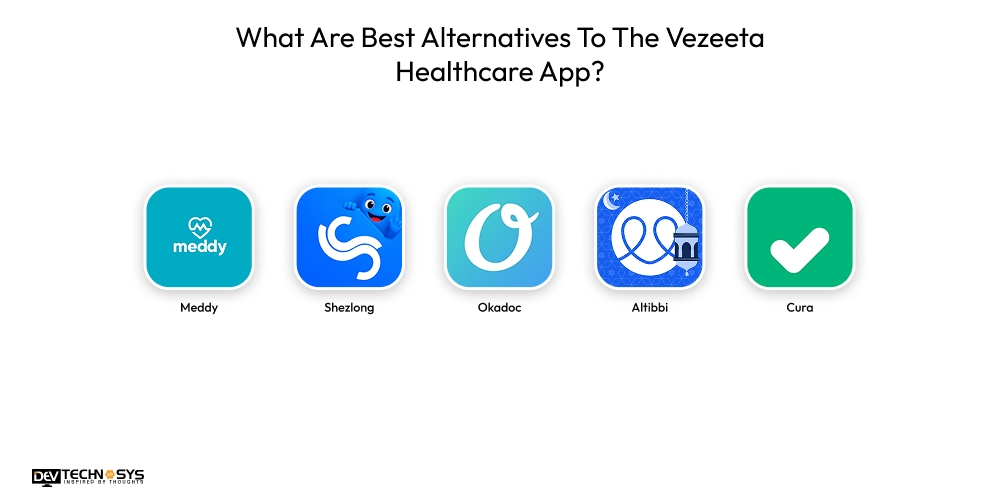
Vezeeta is a popular telemedicine and doctor-booking platform in the Middle East. from perpective of a telemedicine app development company, there are other similar apps offering virtual consultations, appointment scheduling, and digital health management.
| App Name | Key Services | Launch Year | Platform Availability |
| Meddy | Doctor search, appointment booking | 2015 | iOS, Android |
| Shezlong | Online mental health consultations | 2014 | iOS, Android |
| Okadoc | Doctor discovery, appointment scheduling | 2016 | iOS, Android |
| Altibbi | Teleconsultation, medical content | 2011 | iOS, Android, Web |
| Cura | Video consultations, pharmacy integration | 2018 | iOS, Android |
| Dawaey | Teleconsultation, lab booking | 2017 | iOS, Android |
| Healthigo | Appointment booking, telemedicine | 2018 | iOS, Android |
| MyClinic | Online appointments, patient management | 2016 | iOS, Android |
| Tabibak | Doctor search, telemedicine, digital prescriptions | 2017 | iOS, Android |
| CuraClinic | Teleconsultation, lab booking, pharmacy orders | 2019 | iOS, Android |
Platforms like Meddy, Cura, Altibbi, and Okadoc enhance convenience, reduce hospital visits, and empower patients with accessible, technology-driven healthcare solutions.
1. Meddy
Meddy is one of the best Vezeeta clone apps in the Middle East. It lets patients find doctors, read reviews, and make appointments right away. The technology also lets people talk to doctors over the phone, get digital prescriptions, and set reminders, making healthcare easier to access and use across the UAE and GCC.
2. Shezlong
Shezlong helps people with mental health problems by connecting them with certified therapists through private video calls. It is available in Arabic and English and allows people in the Middle East to access therapy and counseling online. The website protects users’ privacy and makes it easy for them to access expert mental health care without visiting a clinic in person.
3. Okadoc
Vezeeta alternatives like Okadoc let people in the UAE and Saudi Arabia find doctors, read reviews, and make appointments online. It makes healthcare contacts easier by enabling teleconsultations, automatic reminders, and rescheduling. Patients may quickly access medical care due to its simple interface, which reduces unnecessary hospital visits and wait times.
4. Altibbi
Altibbi gives people in the Middle East and North Africa access to teleconsultations, health articles, and certified medical advice. The platform uses digital prescriptions and lets patients and doctors communicate online. It works on iOS, Android, and the Web. It integrates healthcare information with remote consultations to deliver digital health services.
5. Cura
Cura offers video calls, pharmacy integration, and appointment management for users in the Middle East. The app’s main goal is to make digital healthcare easy to use and available in all GCC countries. Patients can talk to doctors online, get prescriptions, and safely track their medical information, making their healthcare experience more efficient.
Industry Insight: Wifi Talents Statistics show that 78 % of patients report improved satisfaction with digital communication options like teleconsultations.

How To Make Money From A Similar App Like Vezeeta?
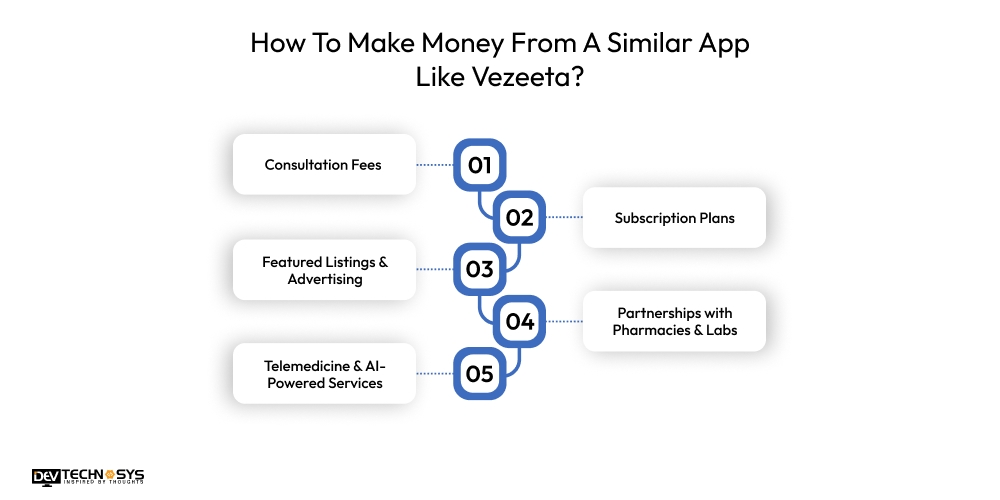
A mobile app development company builds apps like Vezeetat to improve patient access to doctors and present significant revenue opportunities. The best healthcare app in UAE can generate multiple income streams while providing convenient, high-quality digital healthcare solutions.
1. Consultation Fees
One of the main ways the business makes money is by charging people for consultations in person or online. The app can charge a fee for each booking or consultation. This model ensures that doctors are paid regularly, encourages them to provide high-quality care, and keeps the platform running.
2. Subscription Plans
Give patients or healthcare providers the option to pay for packages on a subscription basis. Patients can pay for extra features like VIP access, priority booking, or unlimited appointments. Doctors can sign up for better listings, analytics, and marketing tools. Regular subscriptions bring in steady income and keep users coming back to the platform over time.
3. Featured Listings & Advertising
Doctors, clinics, or pharmacies can pay for featured placements or advertisements within the app. Highlighting certain healthcare providers increases visibility and appointment requests, while generating revenue for the platform without charging patients directly, making it a win-win for both users and businesses.
4. Partnerships with Pharmacies & Labs
Connect with pharmacies and diagnostic labs to make it easier to distribute medicine, book lab tests, or buy health packages. The app makes money on every order or referral, which makes the healthcare experience better and brings in more money than just appointments and consultations.
5. Telemedicine & AI-Powered Services
Charge for premium telemedicine services, such as AI symptom checks, virtual health aides, or consultations with specialists. Adding sophisticated features makes the service more useful for patients and generates a higher-value service tier that can be monetized through pay-per-service or usage-based fees.
How To Ensure Compliance With Healthcare Regulations?
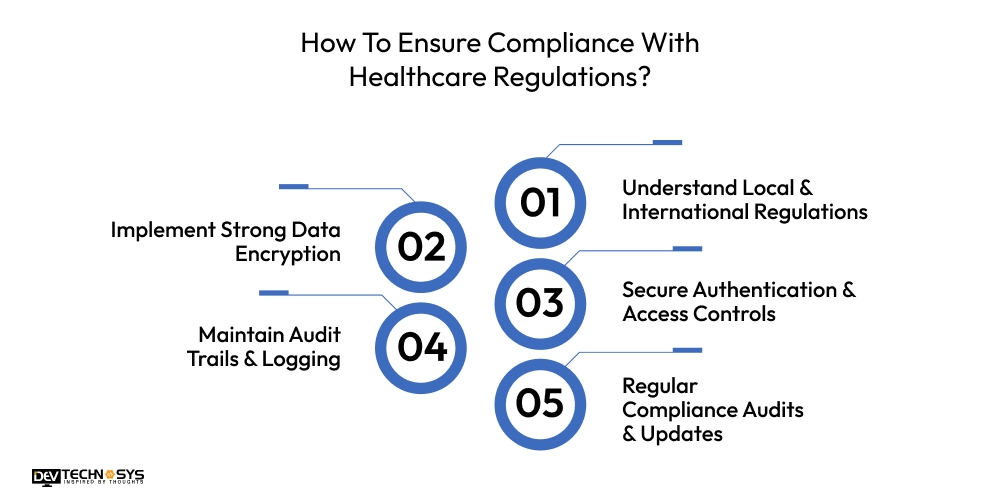
When you build an app like Vezeeta, it must handle sensitive patient data, making regulatory compliance critical. Popular telemedicine apps meet local and international healthcare standards protects patient privacy, prevent legal issues, and build trust. Compliance ensures secure handling of electronic health records.
1. Understand Local & International Regulations
Familiarize yourself with relevant healthcare laws such as HIPAA, GDPR, or regional Middle East regulations. Understanding patient data protection, telemedicine rules, and electronic health record standards helps you design your app’s architecture and processes to ensure full legal compliance and avoid fines or legal risks.
2. Implement Strong Data Encryption
All patient information, including medical records, consultation notes, and payment details, must be encrypted both in transit and at rest. Using secure encryption protocols prevents unauthorized access, ensures confidentiality, and aligns with healthcare regulations, protecting both users and the platform from potential data breaches.
3. Secure Authentication & Access Controls
When you build an app like Vezeeta, introduce multi-factor authentication for patients, doctors, and administrators. Role-based access ensures only authorized personnel can view or modify sensitive data. Proper access controls prevent misuse or unauthorized access, maintaining regulatory compliance and safeguarding patient trust in your healthcare platform.
4. Maintain Audit Trails & Logging
Track all system activities, including logins, data access, and modifications, through detailed audit logs. These logs provide accountability, enable investigation of suspicious activity, and demonstrate compliance with healthcare regulations during audits or inspections, ensuring transparency in patient data management.
5. Regular Compliance Audits & Updates
Continuously monitor regulatory changes and conduct internal compliance audits. Update app features, data handling policies, and security protocols to align with evolving laws. Ongoing compliance efforts help prevent legal issues, maintain user trust, and ensure long-term sustainability in the digital healthcare ecosystem.
Summing It Up
Vezeeta alternatives in Saudi Arabia make life easier for patients by allowing them to see a doctor without visiting a clinic. The rising demand for healthcare apps like Vezeeta has transformed how patients book appointments and consult with doctors. The telemedicine and teleconsultation landscapes are advancing healthcare software development.
With its advantages and capabilities, the medical sector is more likely to use this application than before. Similar apps like Vezeeta and Medisafe will create a future in healthcare that isn’t limited by particular circumstances. And the best thing about this application is that it benefits both doctors and patients equally.
Frequently Asked Questions
Q1. How Long Does it Take to Build an App Like Vezeeta?
Developing a Vezeeta-like healthcare app typically takes 2 to 5 months for a basic version. Advanced features like video consultations, AI symptom checkers, and multi-language support may extend development to 6-9 months, depending on team size, platform choice, and project complexity.
Q2. Can I Integrate Telemedicine Video Calls into my App?
Yes, integrating video consultations is essential for a Vezeeta-like app. Using third-party APIs such as Twilio or WebRTC ensures secure, high-quality video calls, allowing patients to consult with doctors remotely while maintaining privacy and compliance with healthcare regulations.
Q3. How do I Ensure a Smooth Patient Experience?
Focus on intuitive UI/UX, fast load times, simple navigation, appointment reminders, secure payments, and easy access to teleconsultations. Streamlined onboarding, real-time notifications, and patient support improve satisfaction and engagement, encouraging users to repeatedly use your healthcare app.
Q4. Which Platform Should I Choose for my Healthcare App?
You can develop for iOS, Android, or both. Single-platform apps are cheaper, while cross-platform or native apps ensure a wider user reach. The choice depends on your target audience, budget, and the need for performance, scalability, and native device functionality.
Q5. Which Features are Essential for a Vezeeta-Like App?
Key features include doctor search, appointment booking, video consultations, patient and doctor profiles, ratings and reviews, digital prescriptions, secure payments, notifications, and medical records management. Additional advanced features like AI symptom checkers enhance functionality and user experience.