



 Tarun Nagar
 Key Takeaways:
-
- The chatbot development cost in 2026 is around $8,000 to $25,000, or based on the unique or special project requirements.
- There are various factors that affect the cost, such as features, project complexity, functions, development team, deployment platforms, and more.
- Chatbot application development cost in various countries such as the UAE, Kuwait, Saudi Arabia, the USA, Australia, and many more.
By the year 2026, chatbots have become integrated into our daily activities. They assist users in getting answers on shopping apps, educational websites, banks, and even hospitals. Something people might wonder is the cost of creating a chatbot.
The costs associated with the development of chatbots in 2026 are dependent on a number of factors, such as intelligence, features, and the technologies applied. While advanced chatbots with artificial intelligence, voice recognition, and multilingual capabilities are more expensive, basic chatbots are less expensive.
Companies also incur costs on design, testing, and updates to keep chatbots operational. For businesses planning their budgets, an understanding of enterprise chatbot development costs assists in the allocation of funds appropriately.
As technology is continually advancing, knowing the costs associated with chatbots assists companies in selecting the most suitable chatbots for their needs.
What is the Cost to Develop a Chatbot in UAE in 2026?
The cost to build a chatbot in UAE in 2026 will depend on the features they have, how smart they are, and how well they work with other systems. A chatbot for a small to medium-sized business usually has conversational flows, rudimentary AI or NLP, support for Arabic and English, interaction with a CRM or website, and deployment across online or messaging platforms.
Depending on the scope, development cycles normally last between 4 and 10 weeks. Hosting, maintenance, and model upgrades are some of the costs that come up again and again. For most basic commercial use cases, the entire cost of chatbot development services is between $8,000 and $25,000.
Component |
Estimated Cost (USD) |
| Planning & Requirements | $500 – $1,500 |
| UI & Chat Flow Design | $1,000 – $3,000 |
| Chatbot Development | $3,000 – $10,000 |
| Language Support (EN + AR) | $1,000 – $3,000 |
| Integration (Website / CRM) | $1,000 – $4,000 |
| Testing & Deployment | $500 – $1,500 |
Total development cost: $8,000 to $25,000
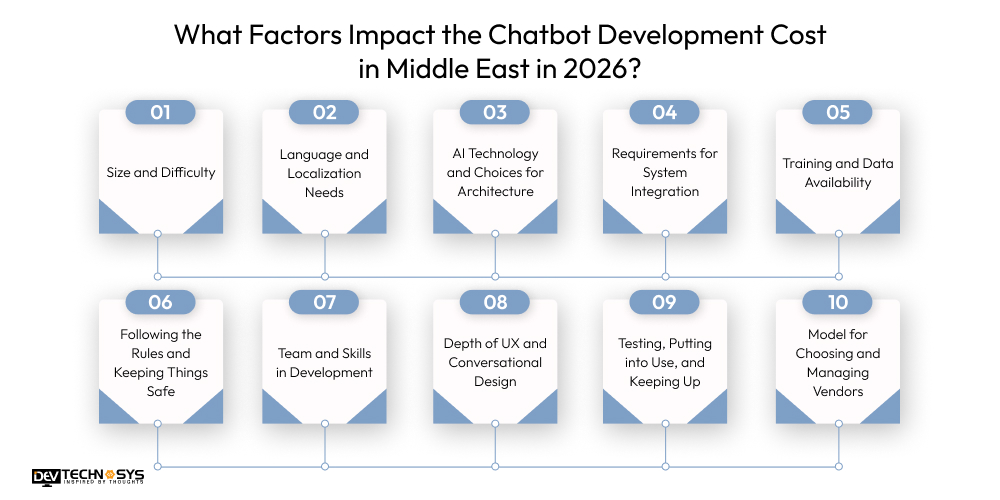
What Factors Impact the Chatbot Development Cost in Middle East in 2026?
The complexity, AI technology, language support, system integration, data requirements, security compliance, team experience, UX design, testing, and vendor selection all affect chatbot expenses in 2026. Every element affects the costs of creation, implementation, and upkeep for local businesses. So, let’s take a look at the chatbot development cost factors:
1. Size and Difficulty
The AI agent development services cost in the Middle East in 2026 are heavily influenced by their scope and sophistication. Bots that use rules to answer simple questions are much cheaper than conversational AI that can understand many languages, analyze sentiment, and connect with other apps.
Voice, customization, analytics, and omnichannel assistance are some of the advanced features that make design, training, testing, and maintenance more work. Clear specifications, limited feature creep, and phased rollouts help keep costs in check.
Scenario |
Description |
Estimated Cost Impact |
| Basic | FAQ bot, single channel | $1,000 – $2,500 |
| Moderate | Multi-intent conversational bot, basic NLP | $2,500 – $5,000 |
| Advanced | Omnichannel AI with sentiment analysis & personalization | $5,000 – $8,000 |
2. Language and localization needs
The cost of developing chatbots in Middle Eastern markets is greatly affected by language and localization needs. To support Arabic dialects, Modern Standard Arabic, English, and sometimes French, you need unique NLP models, linguists, and testing. Cultural tone, religious sensitivity, and right-to-left interface design all make things harder.
In 2026, businesses that want to reach more digital customers in different industries will require more training data and will have to pay more in the long run. This is because they will have to keep adjusting for slang, code-switching, and regional phrases.
Scenario |
Description |
Estimated Cost Impact |
| Single Language | English-only chatbot | $500 – $1,000 |
| Bilingual | English + Modern Standard Arabic | $1,000 – $2,500 |
| Multilingual & Dialects | Arabic dialects, cultural adaptation | $2,500 – $4,000 |

3. AI technology and choices for architecture
The average cost of chatbot application development in 2026 depends a lot on the AI technology and architecture that is used. Using open-source frameworks can save money on licensing, but it makes customizing and maintaining the software harder. Hyperscaler AI services or proprietary platforms raise subscription costs but cut down on development time.
For Middle Eastern businesses in 2026, choices on generative AI, retrieval systems, on-premise deployment, or cloud hosting have a big effect on security, scalability, compliance, and the total cost of ownership.
Scenario |
Description |
Estimated Cost Impact |
| Rule-based | Non-AI, simple rules | $500 – $1,000 |
| Open-source NLP | Custom AI with open-source frameworks | $1,500 – $3,500 |
| Proprietary/Cloud AI | Paid AI services, generative AI features | $3,500 – $6,000 |
4. Requirements for system integration
Integration needs with current corporate systems have a big impact on the costs for developing chatbots. To connect CRM, ERP, payment gateways, government platforms, or old databases, you need APIs, middleware, and security checks. In the Middle East, following the rules of national digital platforms and telecom infrastructures makes things more complicated.
Deeper integrations lead to longer testing cycles, more risk, and more work with third-party providers. This means greater prices and longer delivery times for regulated sectors and major businesses in the region.
Scenario |
Description |
Estimated Cost Impact |
| Minimal | Standalone chatbot | $500 – $1,000 |
| Moderate | CRM/ERP integration | $1,500 – $3,000 |
| Extensive | Multiple enterprise systems & payment gateways | $3,000 – $5,000 |
5. Training and data availability
In 2026, the main costs of chatbots will be the cost of data and the cost of training. To train accurate Arabic and multilingual models, you need high-quality datasets that are specific to your area. It takes time and trained workers to gather, clean, label, and manage data.
In regulated Middle Eastern industries, privacy regulations and guidelines about where data may be stored add extra work, making it harder to get ready, check models, and keep improving them for banking, healthcare, and government use cases in the area.
Scenario |
Description |
Estimated Cost Impact |
| Pre-existing Data | Ready-to-use dataset | $500 – $1,000 |
| Partial Data Cleaning | Some preprocessing & labeling needed | $1,500 – $3,000 |
| Custom Training | Data collection, labeling, continuous training | $3,000 – $5,000 |
6. Following the rules and keeping things safe
In the Middle East, security, compliance, and regulatory considerations have a big effect on the cost to develop a healthcare chatbot like Google’s AMIE. Government, banking, oil and gas, and other industries need tight rules, audits, and certifications. Adding encryption, access control, monitoring, and secure hosting raises the costs of development and operations.
In 2026, businesses that operate in various countries in MENA will have to deal with even more complexity and cost as they try to keep up with changing national AI policies and cross-border data rules.
Scenario |
Description |
Estimated Cost Impact |
| Basic | Standard encryption & access control | $500 – $1,000 |
| Moderate | Industry-specific compliance (finance, telecom) | $1,500 – $3,000 |
| High | Strict government/audit regulations | $3,000 – $4,500 |
7. Team and Skills in Development
The AI chatbot development cost in 2026 is directly affected by where the development team is located and what skills they have. In some regions, hiring native Middle Eastern developers may be more expensive, but it may also help with cultural alignment and compliance understanding.
Offshore or hybrid teams save costs, but they need better project management. Senior AI engineers, conversation designers, and Arabic NLP specialists make a lot of money, which raises the overall development and maintenance costs for complicated business chatbot projects in Middle Eastern markets.
Scenario |
Description |
Estimated Cost Impact |
| Junior/Local Team | Small local developers | $500 – $1,500 |
| Mixed Team | Local + offshore experts | $1,500 – $3,000 |
| Senior Specialized Team | NLP specialists, senior AI engineers | $3,000 – $5,000 |
8. Depth of UX and conversational design
The cost make a chatbot in Python also depends on how well it works for users and how deep its conversational design is. It takes a lot of research, path mapping, persona creation, and testing to make conversations seem realistic and human-like.
Tone, formality, and cultural differences are very important in the Middle East. In 2026, advanced UX, proactive flows, and continuous optimization will mean more design hours, more iteration cycles, and more long-term support expenditure for customer service, sales, and government engagement use cases across a range of digital channels in the area.
Scenario |
Description |
Estimated Cost Impact |
| Basic | Simple scripted flows | $500 – $1,000 |
| Moderate | Multi-turn conversations, persona design | $1,500 – $3,000 |
| Advanced | Proactive, human-like UX, cultural customization | $3,000 – $4,500 |
9. Testing, putting into use, and keeping up
People generally don’t think about how much testing, implementation, and ongoing maintenance will cost. Before they can be used, chatbots need to be tested for functionality, security, performance, and language. After deployment, monitoring, retraining, fixing bugs, and updating the platform all cost money on a regular basis.
In 2026, Middle Eastern markets, high service standards, and multilingual assistance will lead to more frequent maintenance, more people needed for support, and higher overall lifecycle costs for enterprise installations.
Scenario |
Description |
Estimated Cost Impact |
| Basic | Functional testing only | $500 – $1,000 |
| Moderate | Multi-language, security, and performance testing | $1,500 – $3,000 |
| Full Lifecycle | Continuous monitoring, updates, and retraining | $3,000 – $5,000 |
10. Model for Choosing and Managing Vendors
The cost to build a chatbot with Laravel is greatly affected by the choice of vendor and the way the project is managed. Vendors with greater experience charge more, but they also lower the risk, the need for rework, and the time it takes to finish a project. Fixed-price and agile engagement models make it harder to forecast how much money you’ll need.
In 2026, strong governance, stakeholder alignment, and clear SLAs help keep the scope and timing. This has a direct impact on the entire cost of these projects in both the public and commercial sectors.
Scenario |
Description |
Estimated Cost Impact |
| Budget Vendor | Small inexperienced vendor | $500 – $1,500 |
| Mid-tier Vendor | Experienced, agile management | $1,500 – $3,000 |
| Premium Vendor | Highly reputed, fixed-price, full support | $3,000 – $5,000 |
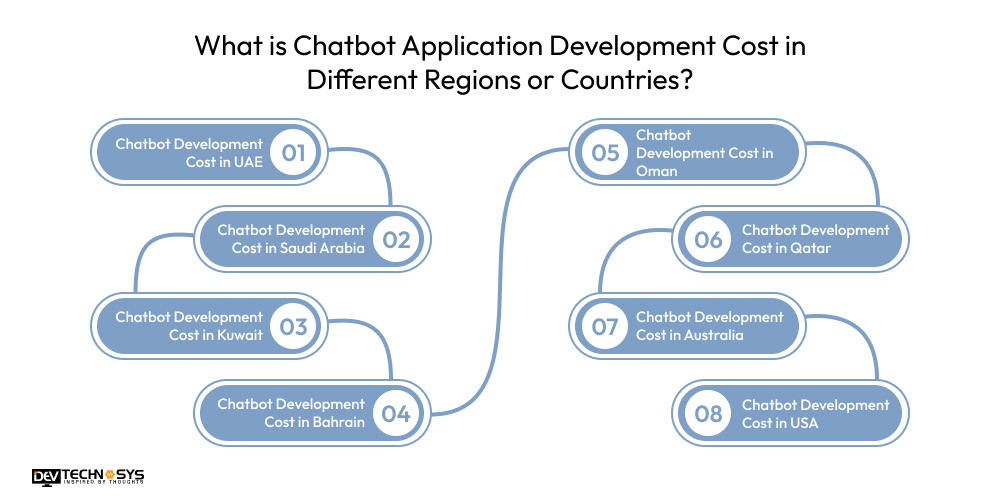
What is Chatbot Application Development Cost in Different Regions or Countries?
The complexity of AI, language support, integration requirements, UX design, and regulatory compliance all affect how much it costs to construct a chatbot worldwide. The Middle East, the United States, and Australia exhibit different ranges in 2026, with enterprise needs, sophisticated features, and local currencies greatly influencing project expenditures for enterprises and government sectors.
1. Chatbot Development Cost in UAE
In the UAE, the cost to make a chatbot is between AED 30,000 and AED 90,000, depending on multilingual support (Arabic/English), sophisticated AI, and corporate integration. Higher expenses reflect advanced user experience, security compliance with UAE data rules, and connection with local CRM/ERP systems. Premium vendors and huge institutions may pay more for specialized AI solutions.
2. Chatbot Development Cost in Saudi Arabia
Enterprise mobile application development services in Saudi Arabia typically cost between SAR 28,000 and SAR 85,000. Local demand for Arabic natural language processing, compliance with national data residency requirements, and interaction with government or financial systems all add difficulty.
Retail and corporate industries frequently invest more in analytics, ongoing optimization, and omnichannel assistance, which pushes projects to the higher end.

3. Chatbot Development Cost in Kuwait
Chatbot development in Kuwait typically costs between KWD 3,000 and KWD 9,000. Although the smaller market size keeps pricing low, strong demands for Arabic language correctness, cultural customisation, and integration with local business tools continue to have an impact on budgets. Organizations frequently prioritize conversational UX and local dialect support to boost adoption and customer satisfaction.
4. Chatbot Development Cost in Bahrain
In Bahrain, the cost to create a chatbot is between BHD 3,200 and BHD 10,000. Costs vary depending on AI sophistication, Arabic/English language support, data governance, and industry (financial versus retail). Local businesses are increasingly investing in analytics dashboards, omnichannel assistance, and robust security, particularly in regulated industries, which raises development and maintenance costs.
5. Chatbot Development Cost in Oman
In Oman, chatbot creation costs between OMR 3,500 to OMR 11,000. Costs are determined by Arabic conversational design, regional dialect handling, and interaction with corporate processes. Projects that require real-time assistance, speech functionality, and secure data compliance tend to fall in the top range. Offshore collaboration and vendor selection also have a substantial impact on ultimate prices.
6. Chatbot Development Cost in Qatar
The cost to make a chatbot in Qatar typically cost between QAR 30,000 to QAR 95,000. Investments are centered on multilingual AI, advanced analytics, and tight connection with business platforms.
Government and major company efforts frequently need complex functionality, NLP training for Gulf Arabic dialects, and strict security/hospitality standards, which raises overall development and continuing refinement expenses.
7. Chatbot Development Cost in Australia
In Australia, anticipate paying between AUD 7,000 and AUD 22,000, depending on the scope and AI sophistication. Advanced NLP, multichannel deployment (web, mobile, social), secure connectivity with local CRMs, and continuous maintenance all come at an increased cost.
Enterprises frequently allocate extra funds for user research, UX design, and data analytics in order to maximize engagement across several markets and compliance standards.
8. Chatbot Development Cost in USA
In the United States, the cost to make a chatbot ranges from $8,000 to $25,000. Costs vary based on AI competence, extensive integrations (business systems, CRMs), multilingual capabilities, and analytics. Large enterprises may pay extra for specialized NLP models, HIPAA/PCI compliance, and round-the-clock assistance. Startup and SMB solutions rely on templated platforms to keep costs down.
How to Make Money From Chatbots in 2026?
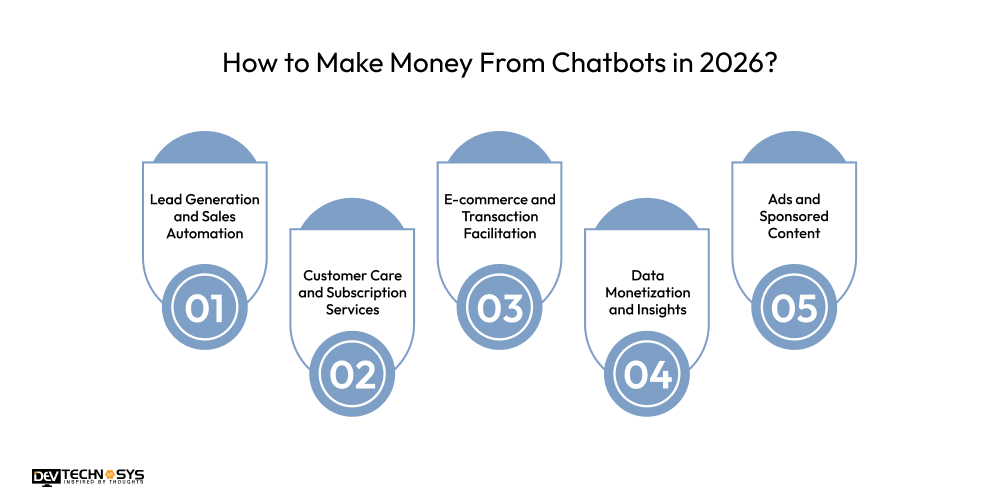
As of 2026, chatbots give many ways to make money, such as lead generation, e-commerce facilitation, subscription-based support, data-driven insights, and ads. Conversations driven by AI can help businesses make more sales, keep customers more interested, and set up regular income streams in many fields.
1. Lead Generation and Sales Automation
Chatbots can gather, qualify, and nurture leads automatically, resulting in improved sales conversions. Businesses may profit by producing qualified leads for their products or services. Integrating chatbots with CRM and payment gateways enables frictionless transactions, upselling, and cross-selling, resulting in ongoing income streams while minimizing human sales efforts.
2. Customer Care and Subscription Services
Chatbot-powered customer assistance may minimize staffing expenses while increasing service efficiency. Companies might generate revenue by offering membership fees for 24-hour AI help, premium debugging, or multilingual assistance. Tiered programs for various support levels enable firms to boost recurring income while improving customer experience and loyalty.
3. E-commerce and Transaction Facilitation
Chatbots that work with e-commerce platforms may assist consumers, propose items, and process purchases immediately. Businesses make money by boosting sales volume, lowering cart abandonment, and offering targeted incentives. Affiliate marketing, in-chat adverts, and transaction commissions may all be used to monetize chat conversations, converting them into direct income channels.
4. Data Monetization and Insights
Chatbots acquire useful information about user behavior, preferences, and comments. Companies may monetise this by studying trends, creating reports, or providing insights to partners while adhering to privacy guidelines.
According to the mobile app development company in Dubai, market research, targeted marketing efforts, and AI-powered analytics services generate additional revenue from actionable conversational data.
5. Ads and Sponsored Content
Chatbots may deliver targeted advertising, promotions, and sponsored messages during chats. Businesses can generate revenue by charging brands for placement or providing affiliate marketing possibilities. Contextual and tailored content increases engagement, click-through, and conversion rates, and generates steady advertising income without disturbing the user experience.
Conclusion
In conclusion, live chatbot development cost in 2026 remains affordable and scalable for businesses of all sizes, especially in fast-growing digital markets like the UAE. With the right feature set, companies can deploy efficient chatbots without overspending, while still supporting automation, multilingual users, and integrations.
Choosing the right artificial intelligence development company in UAE is critical, as experience, technical expertise, and post-launch support directly impact quality, performance, and long-term value. A well-built chatbot is an investment, not just a cost.
Frequently Asked Questions
1. How Much Does it Cost to Build a Chatbot in Dubai in 2026?
The cost to develop a chatbot in Dubai is between $8,000 and $25,000, depending on AI competence, multilingual support, UX design, connectors, and business capabilities. Advanced bots with analytics and omnichannel capabilities are on the higher end of this spectrum.
2. How Long Does it Take to Create a Chatbot in UAE in 2026?
Depending on the complexity, features, integrations, and testing needs, developing a chatbot in the UAE often takes six to twelve weeks. While AI-powered multilingual bots with enterprise-level capabilities need longer development and training cycles, simple FAQ bots may be finished in less than a month.
3. What is the Cost to Maintain an Chabot in Middle East?
In the Middle East, the yearly cost of chatbot maintenance, which includes updates, retraining, server hosting, bug repairs, analytics monitoring, and customer support, ranges from 10% to 20% of the initial development cost. High user interactions across organizations, frequent feature improvements, and multilingual capabilities all raise costs.
4. How Much Does it Cost to Hire Chatbot Developers in UAE?
For qualified AI engineers and NLP professionals, hiring chatbot developers in the UAE costs between $15 to $25 per hour. Expertise, team size, project complexity, and whether developers labor locally, remotely, or as part of a mixed workforce model all affect rates.
5. How to Reduce the Chatbot Application Development Cost in 2026?
Using prebuilt frameworks, initially restricting capabilities, utilizing open-source AI, outsourcing development, and phasing implementation are all ways to lower chatbot expenses in 2026. Reusable parts, automation in testing and deployment, and well-defined criteria all contribute to cost reduction without sacrificing functionality or quality.