



 Tarun Nagar
 Key Takeaways:
-
- The cost to create an app like Lulu will be around $8,000 to $25,000, based on complexity, features, and platforms. A basic MVP can cost between $8,000 and $12,000; an advanced app with complex features can cost around $30,000+.
- Building a grocery delivery app like LuLu requires careful planning, the right technology stack, and a strong focus on user experience.
- A well-designed UI/UX boosts engagement, encourages repeat usage, and increases conversion rates for both products and services.
- AI personalization, real-time inventory management, AR previews, hyper-local delivery, and loyalty programs differentiate your app.
In today’s fast-paced retail world, convenience and accessibility have become non-negotiable for shoppers. Apps like LuLu, a leading supermarket and hypermarket chain, have redefined the shopping experience by combining seamless online ordering, personalized offers, and real-time delivery tracking into a single intuitive platform.
To build an App like LuLu, you need to create a comprehensive ecosystem that lets users browse, compare, and purchase items effortlessly while enjoying loyalty rewards and smooth payment options.
If you aim to tap into the booming e-commerce and grocery delivery market, a LuLu-style app can be your gateway to customer loyalty and business growth. But how to develop a successful app like LuLu? That’s what we will discuss in this guide, from development steps to features to cost. We will discuss every crucial aspect of the LuLu app development. Keep scrolling!
What is LuLu App?
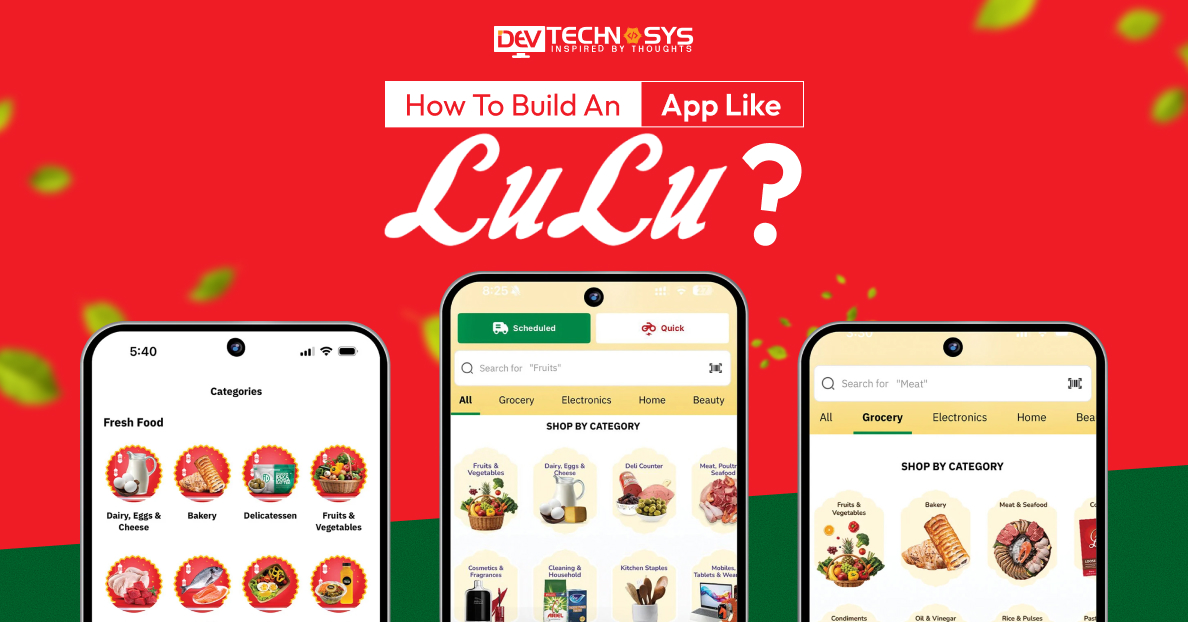
The LuLu Hypermarket App lets users shop groceries, electronics, and household essentials effortlessly on Android and iOS. With real-time order tracking, in-store pickup, express delivery, and exclusive offers, it provides a seamless, convenient, and engaging shopping experience. With intuitive navigation, smart search options, and loyalty rewards, the LuLu app transforms the traditional retail experience into a user-friendly, time-saving, and highly engaging digital journey.
Grocery Delivery App Market Stats
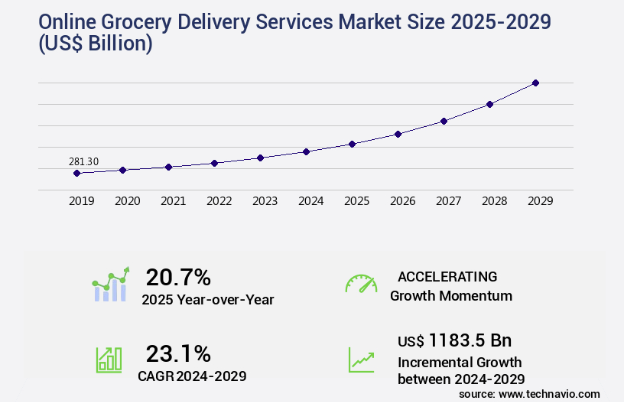
- The online grocery delivery services market size is expected to increase by USD 1,183.5 billion, at a CAGR of 23.1%, from 2024 to 2029.
- APAC dominated the market and accounted for a 57% growth during the 2025-2029 period.
- According to industry data, over 60% of grocery retailers have adopted online platforms, representing a 40% increase in order management system efficiency.
- The Individuals segment was valued at USD 244.60 billion in 2019 and showed a gradual increase during the forecast period.
How Does a Grocery App like LuLu Work?
A grocery app like LuLu Hypermarket App connects users, stores, and delivery partners on a single platform. Customers register, browse products, and place orders using secure payment methods. The system checks inventory in real-time, assigns deliveries to nearby drivers, and provides order tracking. After delivery, users can rate and provide feedback, completing a seamless shopping experience.
- User Registration & Login: Secure access with email, phone, or social login.
- Product Browsing & Search: Smart search, filters, and detailed listings.
- Add to Cart & Order Placement: Calculate totals, apply discounts, and process payments.
- Real-Time Inventory Check: Prevents out-of-stock issues.
- Delivery Partner Assignment: Optimized routes and notifications.
- Order Tracking & Notifications: Real-time updates for customers.
- Delivery & Handover: Confirm receipt and complete delivery.
- Post-Delivery Support & Feedback: Ratings, complaints, and customer support.
What are the Top 10 LuLu Alternatives To Explore in 2026?
Looking for the top LuLu clone apps? The growing demand for online grocery and retail shopping has led to the rise of several powerful apps, including the LuLu Hypermarket App. These LuLu clone apps offer convenient shopping experiences, featuring fast delivery, digital payments, and exclusive deals.
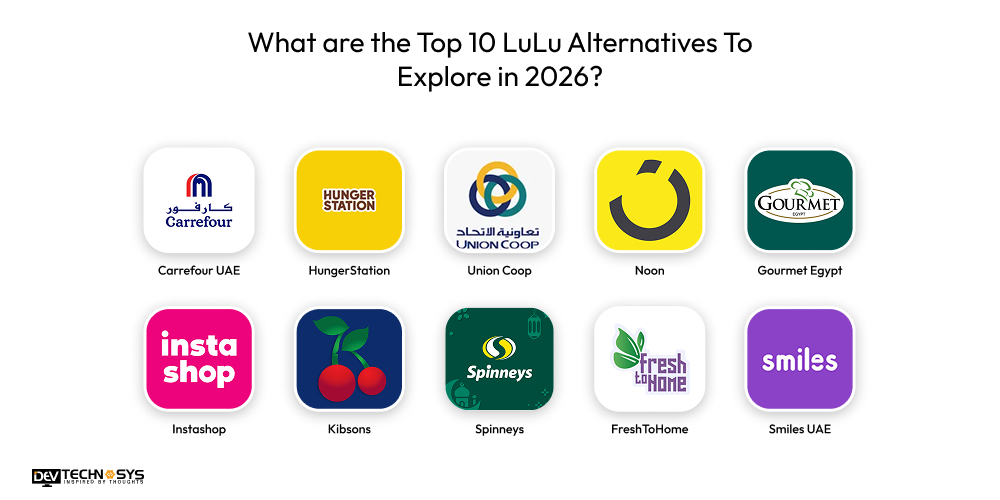
| App / Platform | Launch Year | App Store Rating | Platform Availability |
| Carrefour UAE | 1995 | 4.3 | Android, iOS, Web |
| HungerStation | 2012 | 4.4 | Android, iOS |
| Union Coop | 1982 | 4.2 | Android, iOS |
| Noon | 2017 | 4.3 | Android, iOS, Web |
| Gourmet Egypt | 2006 | 4.1 | Android, iOS, Web |
| Instashop | 2015 | 4.5 | Android, iOS |
| Kibsons | 1985 | 4.6 | Android, iOS, Web |
| Spinneys | 1961 | 4.3 | Android, iOS |
| FreshToHome | 2015 | 4.5 | Android, iOS |
| Smiles UAE | 2020 | 4.4 | Android, iOS |
In 2026, apps such as Noon, Instashop, and HungerStation are emerging as strong LuLu clone apps, providing seamless grocery, retail, and on-demand delivery services across the Middle East. Let’s learn more about them:
1. HungerStation
HungerStation is one of the largest delivery platforms in Saudi Arabia, connecting users with restaurants, supermarkets, pharmacies, and flower shops. The app offers real-time order tracking, multiple payment options, and fast delivery across 100+ cities. Businesses looking to build a grocery delivery app like Hungerstation can focus on multi-store ordering, delivery management, and loyalty features.
Industry Insights: Market Data Forecast states that HungerStation has over 15 million active users and processes around 35 million orders annually in Saudi Arabia.
2. Instashop
Instashop is a leading on-demand grocery delivery platform in the Middle East that allows users to order groceries, pharmacy items, and everyday essentials from nearby stores. Key features include quick delivery, live order tracking, and smart search filters. Businesses can build a grocery delivery app like an Instashop by integrating store partnerships, location-based services, and instant delivery logistics.
3. Noon
Noon is the best grocery app in UAE, offering electronics, fashion, groceries, and daily essentials. Its platform features fast delivery, secure payments, deals, and subscription services like Noon One. Companies aiming to develop an app like Noon should prioritize multi-category marketplaces, vendor management systems, AI recommendations, and scalable logistics.
Industry Insights: According to Financial Times, the Middle Eastern e-commerce platform Noon has raised over $2.7 billion in funding and is valued at around $10 billion.
4. Spinneys
Spinneys is a premium supermarket brand with a digital shopping platform offering fresh groceries, gourmet foods, and household essentials. The app provides online ordering, scheduled delivery, and loyalty rewards. Businesses planning to build app like Spinneys should focus on high-quality product catalogs, inventory management, and personalized promotions.
5. Gourmet Egypt
Gourmet Egypt is a specialized online grocery platform delivering premium meats, seafood, bakery items, and ready-to-cook meals. It focuses on high-quality sourcing and convenient home delivery. To develop an app like Gourmet Egypt, businesses should integrate premium product listings, subscription-based deliveries, and cold-chain logistics for the distribution of fresh food.
What Are the Steps to Build an App like LuLu?
According to the experts who provide grocery delivery app development services, building an app like LuLu Hypermarket App requires careful planning, the right technology stack, and a strong focus on user experience. Below are the essential steps to create a successful online grocery and retail shopping application.
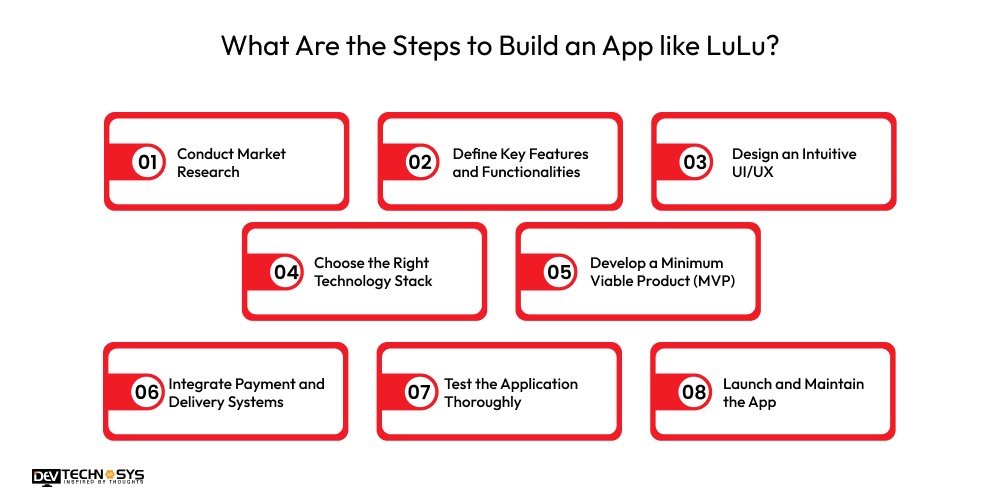
Step 1. Conduct Market Research
The process to build an app like LuLu starts with analyzing the online grocery and retail industry to understand customer needs, market demand, and competitor strategies. Study platforms like LuLu Hypermarket App, Noon, and Instashop to identify popular features, pricing models, and service gaps. This research helps define your target audience and build a competitive strategy.
Step 2. Define Key Features and Functionalities
To build an app like LuLu, you need to identify the essential features required for your grocery shopping app, including product browsing, advanced search filters, a shopping cart, secure payment gateways, and order tracking. You can also add delivery scheduling, loyalty rewards, personalized offers, and push notifications to improve user engagement and increase customer retention.
Step 3. Design an Intuitive UI/UX
A well-designed user interface ensures smooth navigation and a pleasant shopping experience. To build an app like LuLu, focus on clean layouts, clear product categories, quick-loading pages, and easy checkout. Artificial intelligence development experts in Middle East create an intuitive UI/UX that allows users to browse products, compare prices, and place orders quickly, increasing satisfaction and repeat purchases.

Step 4. Choose the Right Technology Stack
To build a grocery app like LuLu in Dubai, selecting the right technology stack ensures scalability, performance, and security. Businesses often use frameworks like Flutter or React Native for cross-platform apps and Node.js or Django for backend development. Cloud platforms such as AWS or Google Cloud help manage data storage, security, and app scalability efficiently.
Step 5. Develop a Minimum Viable Product (MVP)
Start the process to build a grocery App like LuLu by creating a minimum viable product with essential features such as product listings, a shopping cart, payment integration, and order tracking. Launching an MVP helps test the concept in the real market, gather user feedback, and refine the application before investing in advanced features.
Step 6. Integrate Payment and Delivery Systems
A successful retail app requires secure payment and reliable logistics integration. Your hybrid app development company in UAE will add payment gateways, digital wallets, and real-time delivery tracking to ensure smooth transactions. Integrating delivery partner management systems and automated notifications improves operational efficiency and keeps users informed about their orders.
Step 7. Test the Application Thoroughly
After you build an artificial Intelligence app, it’s time for comprehensive testing. It ensures your similar app like LuLu performs smoothly across different devices and operating systems. Conduct functional testing, usability testing, performance testing, and security testing to identify bugs and improve stability. This process ensures the app delivers a reliable, secure, and seamless shopping experience for users.
Step 8. Launch and Maintain the App
After testing, publish the application on the Google Play Store and Apple App Store with a strong marketing strategy. Promote it through digital marketing, social media campaigns, and referral programs. Continuously monitor performance, collect feedback, and release regular updates to keep the app competitive and user-friendly.
What are the Key Features That Power a LuLu-Style Shopping App?
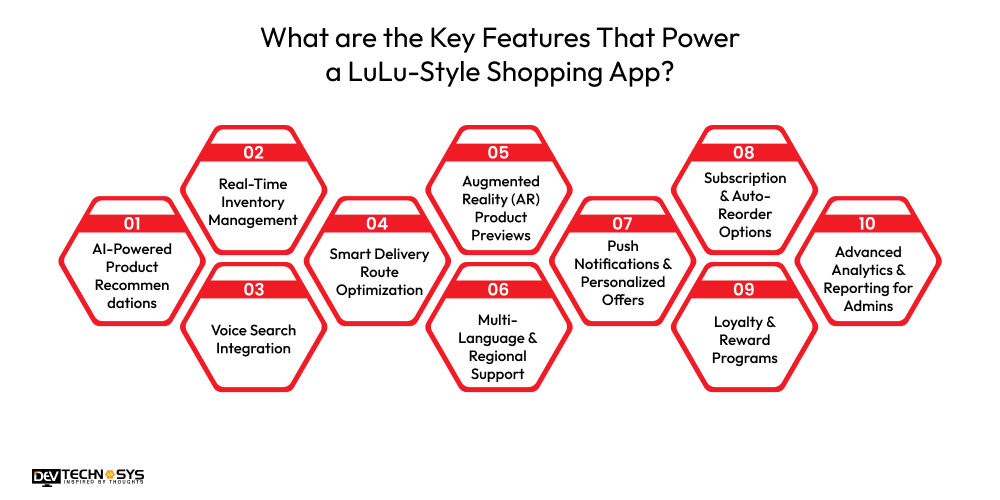
According to a top mobile app development company, a successful retail and grocery platform like the LuLu Hypermarket app requires a well-structured system with dedicated panels for users, delivery drivers, and administrators. Here are the top features that apps like LuLu need to incorporate.
| User Panel Features | Driver Panel Features | Admin Panel Features |
| User Registration & Login | Driver Registration & Verification | Dashboard & Analytics |
| Smart Product Search & Filters | Order Request Notifications | Product & Category Management |
| Product Listings with Images & Details | Route Optimization & Navigation | Inventory & Stock Management |
| Shopping Cart & Wishlist | Order Pickup & Delivery Updates | Order & Delivery Management |
| Secure Payment Gateway Integration | Earnings & Payment Tracking | User & Driver Management |
| Order Tracking in Real-Time | Delivery Status Updates | Discounts, Coupons & Promotions |
| Delivery Scheduling & Address Management | Customer Contact & Support | Commission & Revenue Management |
| Ratings, Reviews & Feedback | Availability Status Toggle | Reports, Insights & Performance Monitoring |
1. AI-Powered Product Recommendations
Use machine learning algorithms to analyze user behavior, purchase history, and preferences. The app can suggest personalized products, increasing engagement, boosting sales, and creating a more tailored shopping experience for each customer.
2. Real-Time Inventory Management
Sync the LuLu alternatives with warehouse and store inventories in real-time. This ensures accurate stock updates, prevents out-of-stock orders, and allows automatic notifications to users when items are unavailable or restocked.
3. Voice Search Integration
Enable users to search for products using voice commands. It improves accessibility, speeds up browsing, and provides a hands-free shopping experience, especially for busy customers or those using mobile devices on the go.
4. Smart Delivery Route Optimization
LuLu alternatives use GPS and AI to calculate the fastest and most efficient delivery routes for drivers. This reduces delivery times, minimizes fuel costs, and enhances customer satisfaction with accurate ETAs.
5. Multi-Language & Regional Support
Offer multiple languages and local currency options to cater to a diverse audience. It makes the app more user-friendly and accessible across regions, enhancing adoption and retention in different markets.
6. Augmented Reality (AR) Product Previews
Allow users to visualize products like electronics, furniture, or home essentials in their environment using AR. This improves confidence in purchasing, reduces returns, and provides a more interactive shopping experience.
7. Push Notifications & Personalized Offers
Send targeted notifications about discounts, promotions, and order updates based on user behavior and preferences. Personalized messages improve engagement, drive repeat purchases, and boost overall revenue.
8. Subscription & Auto-Reorder Options
Develop a grocery App like LuLu with subscription options to enable recurring orders for essentials such as groceries, dairy, and cleaning products. Users can set subscriptions or auto-reorders, ensuring convenience while building customer loyalty and predictable revenue streams.
9. Loyalty & Reward Programs
Grocery delivery app development solutions require incorporating point-based rewards, cashback offers, or tiered membership programs. It encourages repeat purchases, increases user retention, and incentivizes customers to explore new products or premium offerings.
10. Advanced Analytics & Reporting for Admins
Provide administrators with real-time insights on sales trends, user behavior, product performance, and delivery efficiency. Data-driven dashboards enable better decision-making, inventory planning, and marketing strategies.
Why Businesses Must Invest in LuLu App Development?
Investing in a LuLu Hypermarket app enables businesses to tap into the booming online grocery and retail market. It drives customer convenience, boosts engagement with personalized offers, ensures real-time order management, and expands reach.
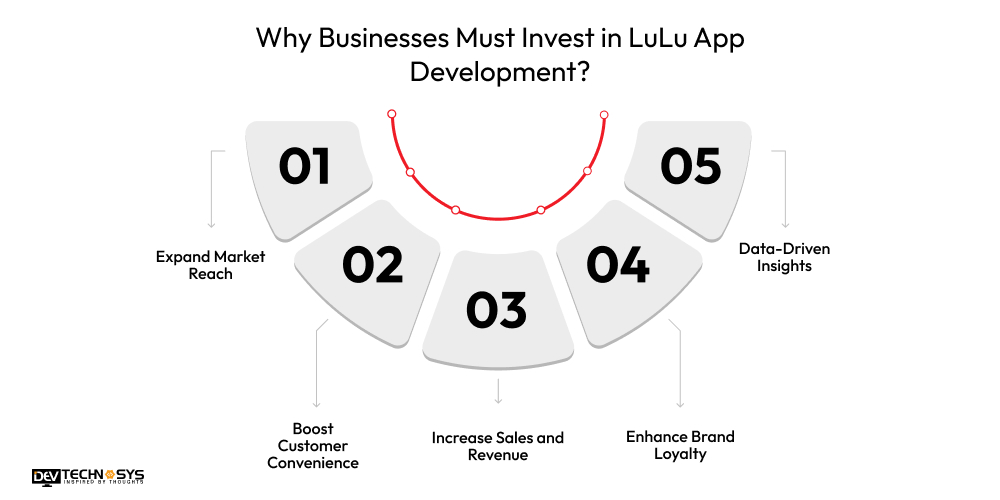
1. Expand Market Reach
Businesses should develop a grocery App like LuLu because it allows them to extend their presence beyond physical stores, reaching a wider audience across cities and regions. Online visibility attracts tech-savvy customers, increases brand awareness, and opens new revenue streams in the growing digital retail space.
2. Boost Customer Convenience
Apps provide users with easy navigation, quick product search, secure payment options, and real-time delivery tracking. Features like scheduled deliveries and in-app support enhance user experience, making shopping faster, simpler, and more satisfying, ultimately increasing customer loyalty.
3. Increase Sales and Revenue
By offering personalized deals, discounts, and push notifications, apps encourage repeat purchases and higher average order value. Businesses can cross-sell and upsell effectively while capturing valuable customer insights, ultimately driving consistent revenue growth.

4. Enhance Brand Loyalty
Regular engagement through rewards programs, personalized offers, and notifications strengthens the emotional connection with customers. A well-designed app builds trust, encourages repeat purchases, and establishes long-term loyalty, positioning the brand as a reliable and convenient shopping choice.
5. Data-Driven Insights
Experts who provide full stack development services in Middle East will use advanced analytics in grocery delivery apps. It provides insights into user behavior, product performance, and market trends. Businesses can leverage this data for inventory planning, targeted marketing campaigns, and strategic decisions, improving efficiency and ensuring sustainable growth in a competitive retail landscape.
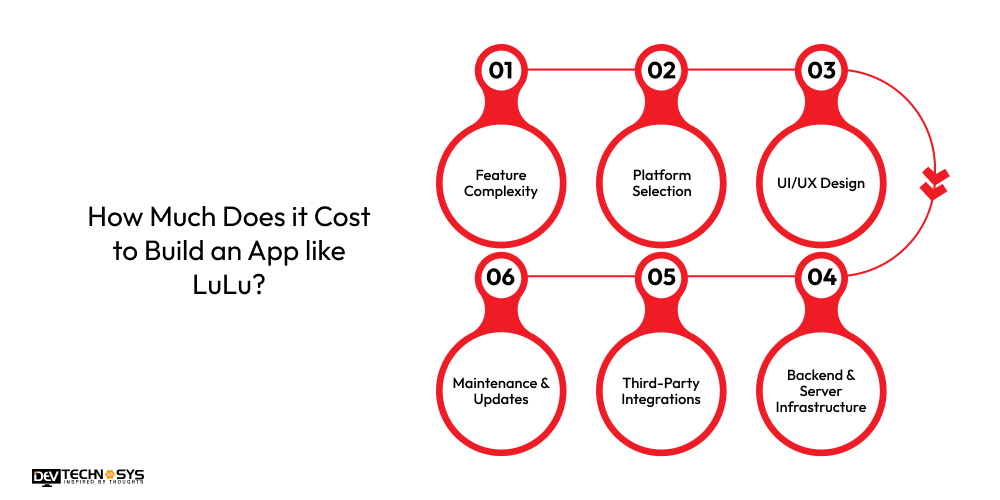
How Much Does it Cost to Build an App like LuLu?
The cost to develop grocery app in Dubai will be around $8,000 to $25,000, based on complexity, features, and platforms. A basic MVP can cost between $8,000 and $12,000, while a mid-level app with advanced features such as AI recommendations and multi-payment integration can range from $12,000 to $18,000.
The LuLu app development cost for full-featured enterprise apps with AR previews, loyalty programs, delivery logistics, and analytics dashboards can exceed $30,000. Here’s the table showcasing the cost to build an app like Lulu based on app type.
| App Type | Estimated Cost (USD) |
| Basic MVP | $8,000 – $12,000 |
| Standard App | $12,000 – $20,000 |
| Feature-Rich App | $22,000 – $30,000+ |
Additional factors such as UI/UX design, backend infrastructure, third-party integrations, and ongoing maintenance influence the final cost to develop a grocery delivery app like Gourmet Egypt. Launching an MVP first helps validate the concept, manage budget efficiently, and reduce risks before scaling to a comprehensive app.
1. Feature Complexity
Advanced features like AI-powered recommendations, AR product previews, personalized offers, loyalty programs, and multi-payment options increase grocery app development cost. More sophisticated functionalities require additional coding, testing, and integration, directly impacting the overall grocery app development cost. Investing in advanced features can differentiate your app from competitors.
| Feature Type | Estimated Cost (USD) |
| Basic Features | $4,000 – $6,000 |
| Mid-Level Features | $6,000 – $8,000 |
| Advanced Features | $8,000 – $10,500 |
2. Platform Selection
Developing for multiple platforms, Android, iOS, and Web, requires additional resources and time, which impacts the final cost to build an app like Lulu. Cross-platform frameworks can reduce costs, but native apps offer better performance, so platform choice significantly influences development expenses. Choosing the right platform ensures maximum reach and user engagement.
| Platform | Estimated Cost (USD) |
| Single Platform | $8,000 – $12,000 |
| Cross-Platform | $12,000 – $18,000 |
| Native Multi-Platform | $15,000 – $20,000 |
3. UI/UX Design
Custom, interactive, and user-friendly designs enhance engagement but demand more effort. Detailed product displays, smooth navigation, animations, and personalized interfaces require skilled designers, increasing both design hours and costs. A strong UI/UX also improves conversion rates and customer satisfaction.
| Design Type | Estimated Cost (USD) |
| Basic UI | $6,000 – $8,000 |
| Interactive UI | $8,000 – $12,000 |
| Premium UX/UI | $12,000 – $15,000 |
4. Backend & Server Infrastructure
Robust backend systems handle inventory management, real-time order tracking, delivery assignment, and data storage. Complex server architecture and API integrations can raise mobile app development costs, but are essential for scalability and reliability. An efficient backend ensures smooth app performance during peak usage. Here’s the table highlighting the cost to create an app like Lulu based on the backend level.
| Backend Level | Estimated Cost (USD) |
| Basic Backend | $8,000 – $10,000 |
| Standard Backend | $10,000 – $13,000 |
| Advanced Backend | $13,000 – $16,000 |
5. Third-Party Integrations
Payment gateways, mapping services, push notifications, and analytics tools often come with licensing fees or subscriptions. Integrating multiple external services adds to development complexity and overall cost to develop an app like LuLu. Proper integration enhances functionality, security, and overall user experience.
| Integration Type | Estimated Cost (USD) |
| Basic Integrations | $3,000 – $6,000 |
| Standard Integrations | $6,000 – $8,000 |
| Advanced Integrations | $7,000 – $10,000 |
6. Maintenance & Updates
Post-launch support, bug fixes, feature enhancements, and server maintenance are ongoing expenses. Typically, the annual cost to maintain an app will be 12% to 20% of initial development, ensuring smooth performance and adapting the app to market trends. Regular updates help retain users and improve app ratings.
| Maintenance Type | Estimated Cost (USD) |
| Basic Support | $2,000 – $4,000 |
| Standard Maintenance | $4,000 – $6,000 |
| Premium Maintenance | $6,000 – $8,000 |

How to Monetize an App Like LuLu?
Monetizing a grocery app like LuLu Hypermarket App requires a strategic mix of revenue streams. Businesses can earn through product markups, delivery fees, subscriptions, vendor commissions, in-app ads, and loyalty programs, creating sustainable income while enhancing user engagement and convenience.
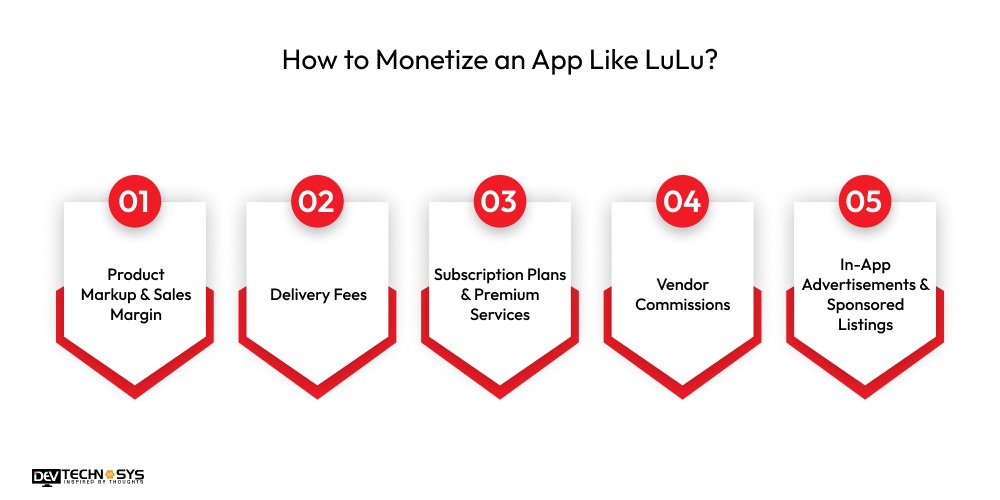
1. Product Markup & Sales Margin
One of the primary ways to monetize a grocery app is to add a margin to each product sold. By pricing items slightly above wholesale or vendor costs, businesses earn revenue per transaction while remaining competitive. Strategic pricing ensures profitability without discouraging customers from making regular purchases.
2. Delivery Fees
Charging delivery fees based on distance, order size, or delivery speed generates consistent revenue. Users pay extra for express or scheduled deliveries, creating a balance between convenience and monetization. Transparent fees also help customers understand costs while providing the business with a steady income stream.
3. Subscription Plans & Premium Services
Offering subscription models for perks like free delivery, early access to deals, or exclusive discounts provides predictable recurring revenue. Premium services improve user retention, encourage frequent purchases, and strengthen customer loyalty while delivering added value that differentiates the app from competitors in a crowded market.
4. Vendor Commissions
Partner stores and brands can be charged a commission on every sale processed through the app. This incentivizes vendors to join the platform, ensures a steady revenue stream for the app owner, and allows the platform to scale with multiple partners while sharing profits mutually.
5. In-App Advertisements & Sponsored Listings
Allowing brands to run ads or sponsored product listings within the app generates additional income. These placements increase vendor visibility, attract customer attention, and provide businesses with a high-margin revenue source while maintaining an engaging shopping experience for users.
What are the Latest Trends Shaping The Future of Grocery App Development?
The grocery app industry is rapidly evolving, driven by technology and changing customer expectations. Innovative features and smart solutions are shaping the future, making apps like LuLu Hypermarket App faster, smarter, and more personalized than ever.
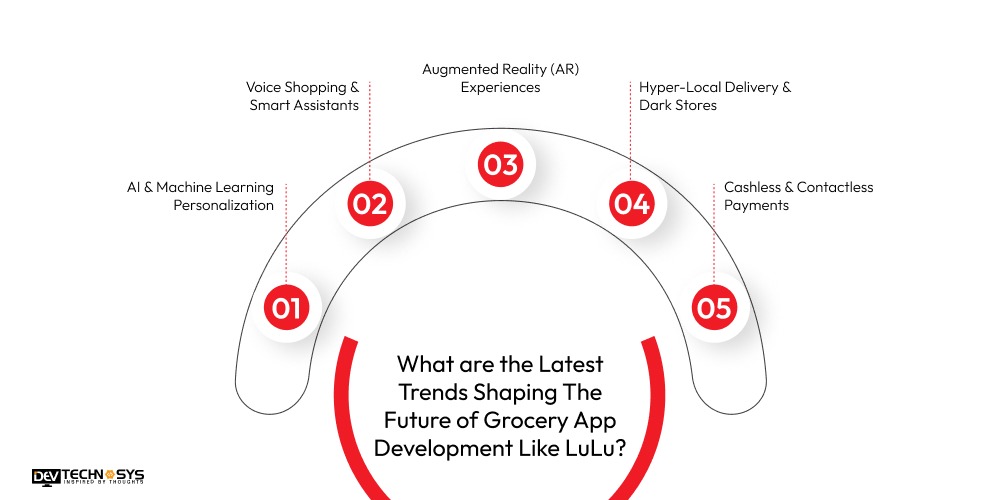
1. AI & Machine Learning Personalization
Wondering about the role of artificial intelligence in mobile app development in UAE? Well, AI and ML analyze user behavior, preferences, and past purchases to deliver highly tailored product recommendations, personalized discounts, and predictive suggestions. It enhances engagement, encourages repeat purchases, and ensures a more satisfying, customized shopping experience for every customer.
2. Voice Shopping & Smart Assistants
Voice-enabled search and ordering through smart assistants like Siri, Google Assistant, and Alexa allow users to shop hands-free. Voice shopping technology speeds up the ordering process, enhances convenience for busy or mobile users, and makes the app more accessible for diverse audiences.
3. Augmented Reality (AR) Experiences
AR integration allows users to visualize products in their own environment, such as groceries, furniture, or home essentials, before purchasing. This immersive experience improves decision-making, reduces return rates, and creates a more interactive and engaging shopping journey.
4. Hyper-Local Delivery & Dark Stores
Grocery apps are using micro-fulfillment centers and “dark stores” to ensure ultra-fast deliveries, sometimes within 30 minutes. The hyperlocal delivery trend enhances last-mile efficiency, improves customer satisfaction, and enables businesses to compete effectively in high-demand urban areas.
5. Cashless & Contactless Payments
Digital wallets, buy-now-pay-later (BNPL) options, and contactless payment methods streamline checkout processes. These secure and convenient solutions reduce friction, speed up transactions, and provide a safer, more seamless payment experience, boosting user confidence and overall retention.
Final Thoughts
Building an app like LuLu Hypermarket App requires careful planning, from market research and feature selection to UI/UX design, backend development, and seamless delivery integration. By incorporating advanced features, secure payment systems, and personalized services, businesses can create a scalable, engaging, and profitable grocery app that meets modern customer expectations. If you are a business looking to build an app like Lulu, turn to Dev Technosys, a top grocery delivery app development company in Middle East.
FAQs
Q1. How Long Does It Take To Develop An App Like LuLu?
Developing a basic MVP can take 3 to 5 months, while a mid-level app may require 6 to 9 months. A fully-featured enterprise app with advanced functionalities and multi-platform support could take 9 to 15 months, depending on complexity and team size.
Q2. What Is The Estimated Cost to Develop an App like LuLu?
The cost to develop an App like LuLu varies widely. A simple MVP may cost around $8,000- $12,000; a mid-level LuLu app development costs around $12,000–$18,000; and a full-featured enterprise app with advanced features, AI integration, and multi-platform support can exceed $30,000.
Q3. Which Platforms Should A Grocery App Like LuLu Target?
To reach a wide audience, apps should target Android, iOS, and optionally Web. Using cross-platform frameworks like Flutter or React Native can reduce development time and costs while maintaining performance across multiple devices.
Q4. What Monetization Strategies Work Best For Such Apps?
Revenue can be generated through product markups, delivery fees, subscription plans, vendor commissions, in-app advertisements, and loyalty programs. Combining multiple streams ensures profitability while providing a smooth, convenient experience for customers.
Q5. How Can Businesses Ensure User Retention In A LuLu-Style App?
User retention is strengthened by personalized recommendations, loyalty rewards, push notifications, subscription benefits, and timely delivery. Continuous engagement and convenience encourage repeat purchases, increasing brand loyalty and long-term app success.