





In 2025, the e-commerce sector has undergone major evolution over the past decade. Mobile e-commerce apps have shifted from a mere trend to the top choice for consumers because of the comfort and convenience they provide.
E-commerce app development provides a lucrative opportunity for businesses that want to establish a strong position in the online marketplace, particularly in the UAE.
According to Statista, the number of e-commerce app users in the UAE is expected to reach 5.7 million by 2025. However, before jumping into the development process, it’s crucial to have an in-depth knowledge of the involved costs.
Key takeaways:
-
- In general, developing a basic e-commerce app in 2025 costs between $8,000 and $25,000, depending on the complexity and features required.
- The integration of AI, AR, personalization, or real-time tracking can increase the cost to $ 30,000 or more.
- Projections for 2025 indicate that the e-commerce market is expected to trend upward by 5-10%.
- Outsourcing to experienced offshore teams can lower costs by 30–50% compared to in-house development in Western countries.
In today’s blog, we will discuss the cost to develop an Ecommerce mobile app in 2025. In general, the E-commerce app cost in Qatar ranges between $8,000 – $30,000, based on factors like features, platform, and maintenance.
So, let’s not waste any more time and discover how much it actually costs to develop an E-commerce App in 2025, along with the factors influencing the cost, benefits for business, and more. Let’s begin!
What is an e-commerce app?
An e-commerce app is mobile software that acts as a medium between businesses and consumers. E-commerce apps allow users to buy or sell their products and services online. E-commerce apps empower users to participate in a wide range of online shopping activities such as browsing products, searching for specific items, adding products to a cart, completing secure purchases, and tracking or managing orders, through their smartphones.
The key components of an e-commerce mobile app involves:
- Frontend (User Interface)
- Backend (Server-Side Logic)
- Database (Stores product/user details)
- API Layer
- Authentication System
- Payment Gateway Integration
- Admin Panel / CMS
- Analytics & Reporting Module
- Notification System
- Security Layer
Market Analysis of E-commerce Apps
- The e-commerce market in the UAE is experiencing rapid growth, with an expected revenue of US$5,969.2 million in
- The global market of retail e-commerce was expected to reach USD 5,858.04 billion in the year 2023 and is projected to reach USD 12,349.94 billion by 2030, expected to rise at a CAGR of 6% from 2024 to 2030.
- The GSM Association (GSMA) estimates that the internet penetration rate in mobile devices will increase from 9% in 2019 to approximately 60.5% by 2025.
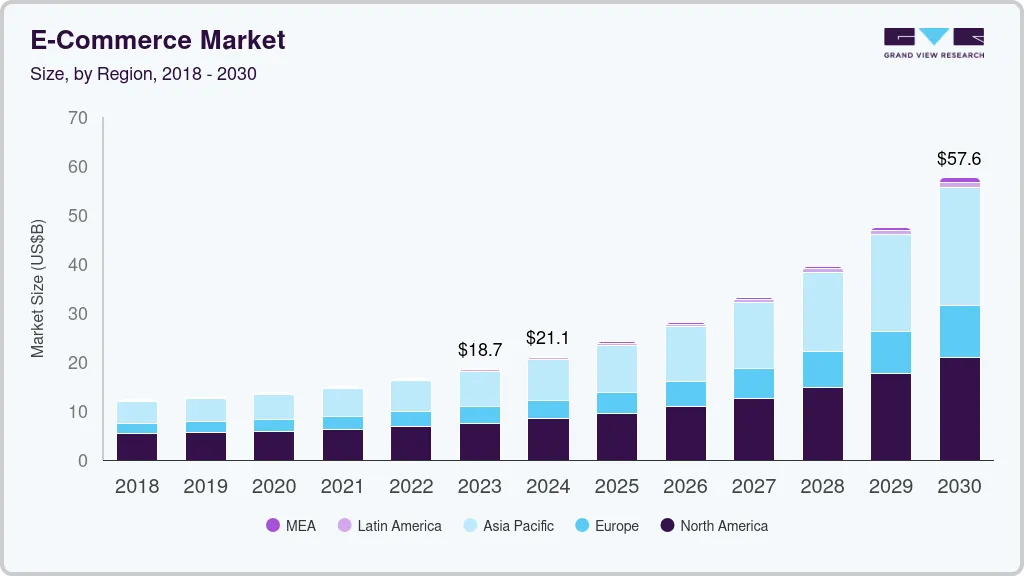
- The widespread adoption of smartphones globally is driving the market’s growth. GSMA reports that more than 54% of the global population, roughly 3 billion people, owns smartphones.
- The B2B e-commerce market is valued at $32.11 trillion as of 2025 and is expected to grow at a CAGR of 5%, reaching $36.16 trillion by 2026.
- The e-commerce app market in the UAE is experiencing rapid growth, with an expected revenue of US$5,969.2 million in
What is the Cost to Build an E-commerce App?
The cost to develop an e-commerce mobile app in 2025 varies depending on the development complexity of the app, designed use, platform (iOS, Android, or cross-platform), and the feature set you integrate into your app. Generally, the e-commerce app development cost in the UAE ranges somewhere between $8,000 – $15,000.
However, the cost to build an e-commerce app with advanced features that is tailored to meet the unique business needs can range somewhere between $15,000 – $25,000 and even higher. To learn more interesting details about the cost of the Saudi Arabia e-commerce app, contact a top-rated e-commerce app development provider.
App Type |
Estimated Cost (USD) |
Development Timeline |
| Basic E-commerce App | $8,000 – $12,000 | 4 – 6 weeks |
| Standard E-commerce App | $12,000 – $18,000 | 6 – 10 weeks |
| Advanced E-commerce App | $18,000 – $25,000 | 10 – 16 weeks |

What Factors Can Affect the E-commerce App Development Cost?
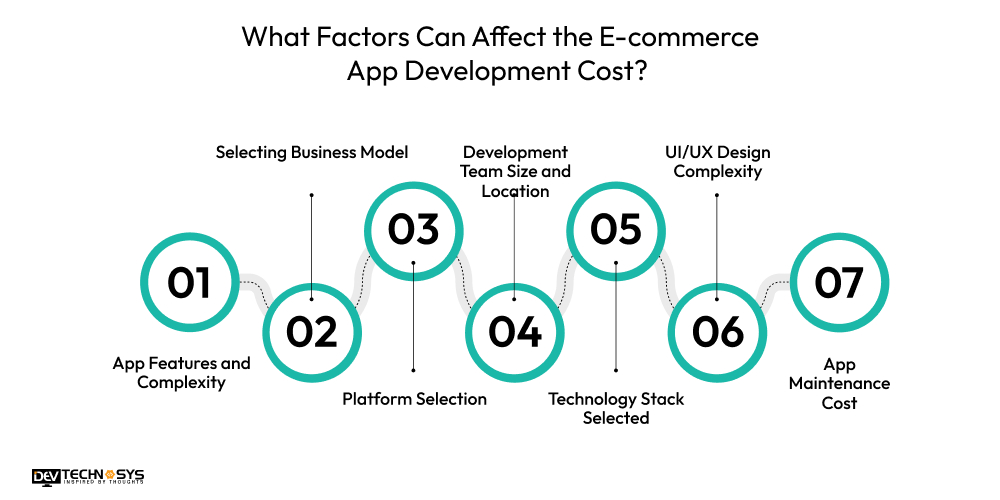
Factors affecting the cost to build a successful e-commerce website include app features, platform choice, UX/UI design complexity, and development team location. Let’s learn about these factors affecting the e-commerce app pricing in Saudi Arabia in detail.
1. App Features and Complexity
The complexity of your e-commerce app significantly raises the cost to build an e-commerce app. A basic eCommerce app with essential features like user login, product catalog, and checkout may cost $10,000 to $20,000.
Adding features such as wishlists, push notifications, order tracking, and coupon management can increase the cost to build an e-commerce app to $25,000–$30,000. More advanced features would exceed your set budget.
Feature Level |
Included Features |
Estimated Cost (USD) |
Timeline |
| Basic | User login, product catalog, shopping cart, checkout | $8,000 – $15,000 | 4 – 6 weeks |
| Intermediate | Wishlist, push notifications, order history, coupon codes | $15,000 – $20,000 | 6 – 8 weeks |
| Advanced (within budget) | Order tracking, advanced filters, vendor rating, loyalty system | $20,000 – $25,000 | 8 – 10 weeks |
2. Selecting Business Model
According to a top Android app development company in UAE, choosing the right business model affects both cost and structure. A single-vendor model is straightforward and fits within a $8,000–$20,000 range.
If you’re thinking of taking a multi-vendor approach with seller dashboards and commission settings, you can expect the cost to build an e-commerce app to reach around $25,000–$30,000. However, advanced e-commerce functionalities may require a higher investment beyond the $30,000 mark.
Model Type |
Details |
Estimated Cost (USD) |
Timeline |
| Single-vendor | Simple backend, admin panel, product management | $8,000 – $15,000 | 3 – 5 weeks |
| Multi-vendor (basic) | Seller dashboard, commission settings, vendor management | $15,000 – $20,000 | 5 – 7 weeks |
| Multi-vendor (full) | Advanced seller tools, analytics, earnings summary | $20,000 – $25,000 | 7 – 8 weeks |
3. Platform Selection
The platform choice, iOS, Android, or both, can significantly impact the cost to develop an e-commerce app. The cost to make an e-commerce app for a single platform ranges between $10,000 and $20,000.
A cross-platform solution using Flutter or React Native offers wider reach and efficient development within $20,000–$30,000. Dedicated team cost to build e-commerce app for both platforms separately would exceed the upper end of your budget range.
Platform Type |
Details |
Estimated Cost (USD) |
Timeline |
| Single Platform | Either iOS or Android | $10,000 – $15,000 | 4 – 6 weeks |
| Cross-Platform | Flutter/React Native (iOS + Android from one codebase) | $15,000 – $20,000 | 5 – 7 weeks |
| Cross-Platform + API | Full API integration with scalable backend | $20,000 – $25,000 | 6 – 8 weeks |
4. Development Team Size and Location
Team size and location directly affect development cost. Hiring a skilled iOS app developer in Saudi Arabia or hiring offshore teams or freelancers from countries like India or Malaysia keeps costs within $8,000 to $30,000.
The cost to hire e-commerce app developers, designers, and QA testers is affordable in these regions. At the same time, US or UK-based companies typically exceed this range due to higher hourly rates.
Team Location |
Details |
Estimated Cost (USD) |
Timeline |
| Offshore (India/Malaysia) | Developers, designers, QA testers from low-cost regions | $8,000 – $15,000 | 4 – 7 weeks |
| Local (Saudi Arabia) | Regional expertise, moderate cost | $15,000 – $20,000 | 5 – 8 weeks |
| Mixed Team | Local PM + offshore dev/design team | $20,000 – $25,000 | 6 – 9 weeks |
5. Technology Stack Selected
Your technology stack determines both functionality and scalability. Open-source tools and widely used frameworks, such as Node.js, React, or Firebase, typically cost between $10,000 and $25,000. Opting for cloud-based infrastructure or AI features within budget is possible, but limited. For long-term scalability, you’ll need to strike a balance between performance and the budget cap.
Stack Type |
Technologies Used |
Estimated Cost (USD) |
Timeline |
| Standard Stack | React/Angular, Node.js, MySQL/PostgreSQL | $10,000 – $15,000 | 4 – 6 weeks |
| API-Driven Stack | REST APIs, Firebase/Auth, MongoDB | $15,000 – $20,000 | 6 – 8 weeks |
| Scalable Cloud Stack | AWS/Azure backend, microservices, CI/CD setup | $20,000 – $25,000 | 7 – 9 weeks |
6. UI/UX Design Complexity
Design is crucial for user engagement and establishing brand identity. Dubai e-commerce app pricing for a simple yet effective design lies between $5,000 – $10,000. The cost for custom designs, animations, and detailed product displays can reach up to $15,000–$30,000.
Within budget, you can achieve a clean and appealing design without overly complex visual elements or high-end interaction flows.
Design Level |
Details |
Estimated Cost (USD) |
Timeline |
| Simple Design | Clean layout, easy navigation, brand color palette | $8,000 – $12,000 | 3 – 4 weeks |
| Branded Custom Design | Typography, icon sets, image-rich product pages | $12,000 – $18,000 | 4 – 6 weeks |
| Interactive Design | Animations, micro-interactions, transitions | $18,000 – $25,000 | 6 – 8 weeks |
7. App Maintenance Cost
The cost to maintain an app is often not included in the main development cost, but it is an important step to ensure the success of your e-commerce app. After launch, the e-commerce app requires regular updates, server hosting, bug fixes, security patches, and API maintenance.
This is an ongoing cost. Separate from the development cost. This cost is essential to ensure smooth performance, user satisfaction, and long-term app stability.
Maintenance Type |
Includes |
Estimated Annual Cost |
Frequency |
| Basic Maintenance | Bug fixes, minor updates, SSL renewals | $2,000 – $3,500 | Monthly/Quarterly |
| Standard Maintenance | Server monitoring, API updates, content changes | $3,500 – $5,000 | Monthly |
| Extended Maintenance | New features, third-party integrations, performance improvements | $5,000 – $6,000 | Monthly |
How Investing in E-commerce App Development Can Benefit Businesses in 2025 And Beyond?
Deciding to develop an e-commerce app is a beneficial decision for businesses. An e-commerce app can help businesses make higher sales, provide better user engagement, provide valuable data insights, and offer a superior user experience.
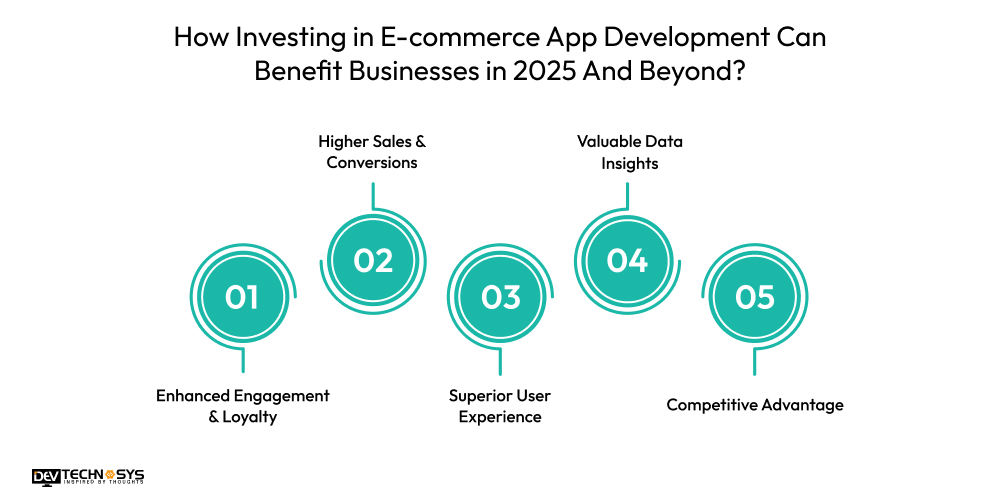
1. Enhanced Engagement & Loyalty:
Through push notifications and hyper-personalization provided by e-commerce apps, businesses can drive repeat purchases and build strong brand connections.
2. Higher Sales & Conversions:
According to companies providing e-commerce development services, investing in e-commerce apps can bring businesses faster, smoother checkouts and lower cart abandonment rates.
3. Superior User Experience:
Native mobile design, offline capabilities, and advanced features like AR improve customer satisfaction.
4. Valuable Data Insights:
Businesses may build an e-commerce app like Mumzworld that provides rich analytics on user behavior for informed business decisions.
5. Competitive Advantage:
This is important to stay relevant in a mobile-dominated market and to adopt future technologies like AI.
How AI Impacts the Cost of E-commerce App Development?
AI in E-commerce significantly impacts the cost of building an e-commerce app by adding advanced functionality that enhances user experience, personalization, and operational efficiency.
Features like AI-driven product recommendations, intelligent search, dynamic pricing, and automated customer support systems require complex algorithms, machine learning models, and additional backend infrastructure.
While basic AI functionalities may add around $2,000 to $5,000 to the total cost, more sophisticated implementations—such as real-time analytics or predictive behavior modeling, can push the investment even higher.
Hidden Cost Factors in eCommerce Website Projects
Before seeking out top providers for mobile app development services, you need to learn about the common e-commerce website projects:
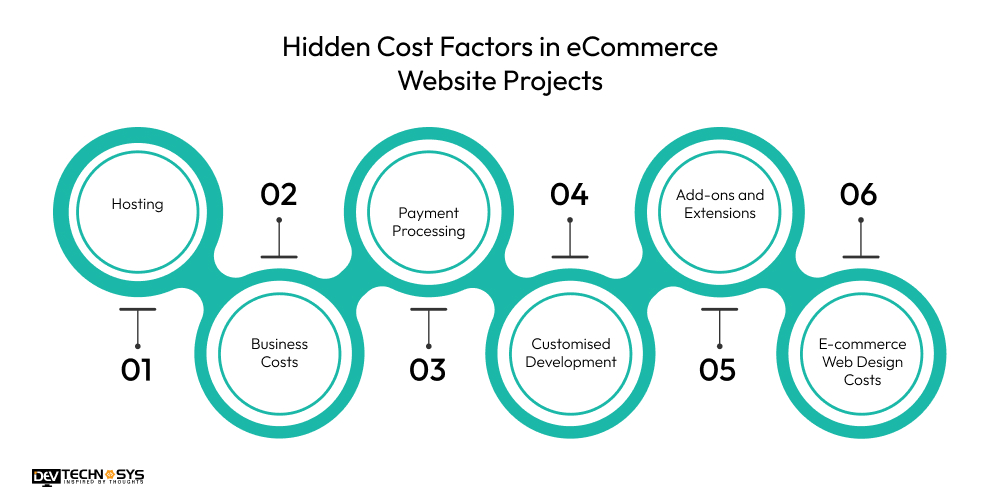
1. Hosting
To stay in your budget range, you can opt for cloud-based or shared hosting, which is included in platforms like Shopify, WooCommerce (via Bluehost), or BigCommerce.
- Estimated Hosting Cost: $20 – $100/month
- Annual Budget Allocation: $240 – $1,200
Note: Shopify plans include hosting, can start from $39/month, and are best suited for budget-conscious startups.
2. Business Costs
The cost to develop an app for businesses involves legal, SSL, domain, branding, and early-stage marketing.
- Estimated cost: $500 – $2,000
- Scope: Domain ($10–$20/year), SSL (free via hosting), privacy policy, initial ads
Note: Allocate a portion for launching your store (ads, influencer promos, social content).
3. Payment Processing
Payment methods are among the common factors involved in the cost to build an e-commerce app. You won’t pay upfront, but transaction fees apply for each sale.
- Estimated Fees: 2.0% – 2.9% + fixed fee per transaction (e.g., $0.30 per sale)
- Annual Budget Allocation (for processing ~$50k sales): $1,000 – $1,500
Note: Consider Shopify Payments or Razorpay for streamlined integration and competitive fees.
4. Customised Development
E-commerce MVP app development requires custom features like product filters, special checkout flows, or vendor panels using affordable developers.
- Estimated cost: $3,000 – $10,000
- Scope: Backend features, frontend UI improvements, integrations with payment/shipping APIs
Note: Consider hiring freelance developers or offshore agencies to maximize value.
5. Add-ons and Extensions
The cost to build an e-commerce app involves factors like add-ons and extensions. Use only essential plugins for SEO, marketing, inventory, and CRM to stay on budget.
- Estimated cost: $100 – $1,000 annually
- Popular Plugins: Shopify Apps, WooCommerce Extensions, Mailchimp, Live Chat
Note: Start with free versions and scale up as your needs grow.

6. eCommerce Web Design Costs
You can use pre-designed themes or lightly customized templates to control the e-commerce app development cost.
- Estimated cost: $500 – $3,000
- Scope: Includes layout setup, branding elements, mobile responsiveness, and slight design tweaks.
Note: Avoid full custom designs unless design is a major competitive factor.
Tips To Reduce the Cost of Developing an E-Commerce App
Here are some of the tips that can largely reduce the cost to develop an e-commerce app. Let’s learn more about these cost-reducing tips:
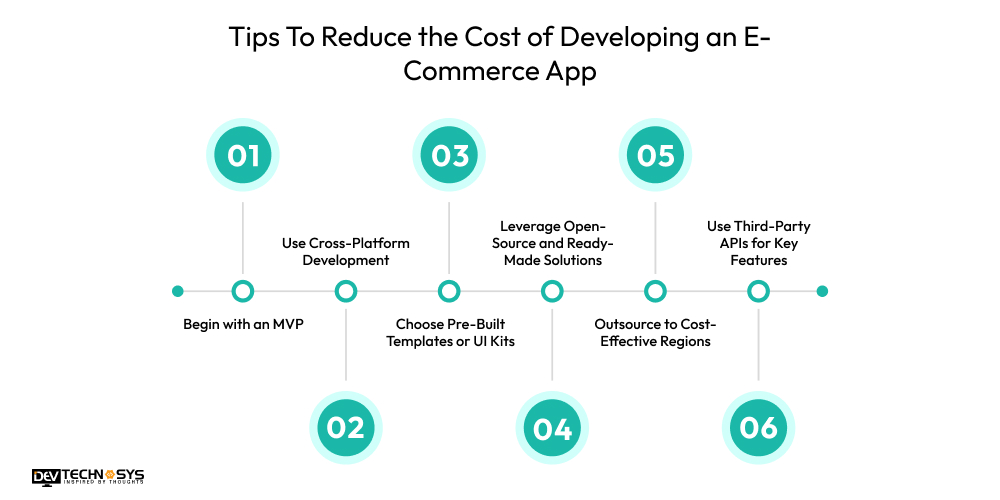
1. Begin with an MVP (Minimum Viable Product)
Pay attention to integrating only core features at first, like product listing, cart, checkout, and expenses. You can add advanced features like wishlists, loyalty programs, or AI later based on user feedback.
2. Use Cross-Platform Development
Experts at the Magento development company prefer using frameworks like Flutter or React Native for an e-commerce app that functions smoothly on both iOS and Android. This reduces development time and cost by 30–40% compared to native app development.
3. Choose Pre-Built Templates or UI Kits
To reduce the cost of developing e-commerce app in Dubai, use pre-designed templates or open-source UI kits instead of custom UI/UX from scratch. They provide a clean look and save thousands on design and frontend development.
4. Leverage Open-Source and Ready-Made Solutions
Use platforms like Magento, WooCommerce, or Shopify SDKs to manage the backend and stores. These platforms help reduce the need for custom development and speed up launch time.
5. Outsource to Cost-Effective Regions
E-commerce app pricing in Saudi Arabia differs from rates charged by other regions. Hire experienced development teams from India, Eastern Europe, or Southeast Asia, where hourly rates are lower but quality remains high. Ensure you check portfolios and reviews before hiring.
6. Use Third-Party APIs for Key Features
According to a top shopping app development company, instead of building custom solutions, integrate reliable third-party APIs for payments (Stripe, Razorpay), shipping, chat, and analytics. It’s faster and more economical.
Advanced e-commerce app features to consider in 2025
Here we present a list of advanced features that should be considered for adding in an e-commerce app to improve operations, user experience, and business efficiency:
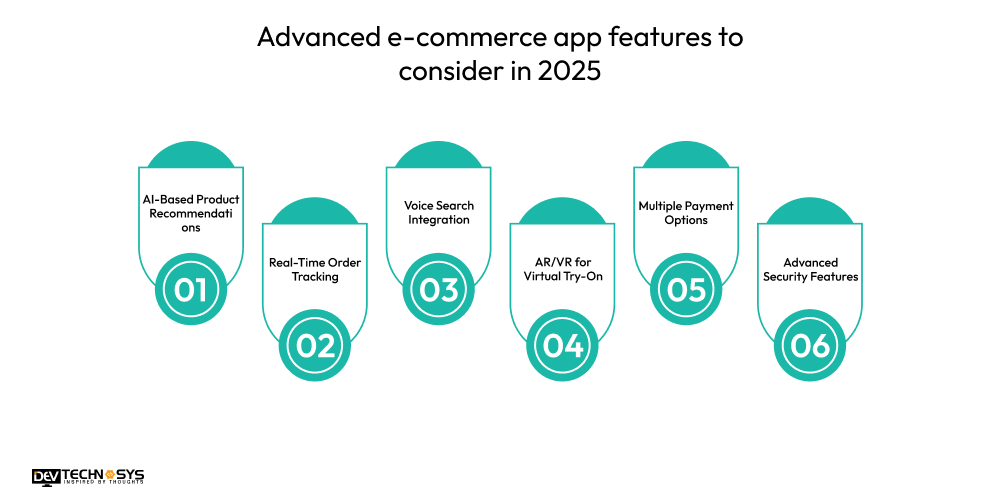
1. AI-Based Product Recommendations
It is important to add an AI based product recommendation feature that uses AI and ML algorithms to study what users prefer and understand their behavior. This feature allows the app to send personalized product suggestions, which can bring high user engagement, upselling opportunities, and conversion rates.
2. Real-Time Order Tracking
Allows users to track orders after receiving the confirmation notification that their order has been placed. This feature improves transparency, gains customer trust, and reduces manual support requirements or inquiries about the status of order delivery.
3. Voice Search Integration
Adding a feature like voice search allows users to search for products directly using voice commands. It enables a quicker, hands-free online shopping experience and caters to users who are especially abled or who prefer voice-based navigation, improving accessibility and convenience.
4. AR/VR for Virtual Try-On
Adding features like AR/VR is great, but it can also increase the Saudi Arabia e-commerce app cost. Augmented Reality and Virtual Reality technologies let users visualize how products (such as apparel, furniture, or cosmetics) will look or fit in real life. This minimizes product returns and boosts confidence in users about their purchases.
5. Multiple Payment Options
Multiple modes of payment like credit/debit cards, UPI, net banking, digital wallets, cash on delivery, and EMI are crucial in an e-commerce app. It increases checkout success and user satisfaction by catering to diverse customer preferences.
6. Advanced Security Features
Essential for safeguarding customer data and transactions, this includes SSL encryption, biometric authentication, two-factor authentication (2FA), and PCI-DSS compliance. Security features enhance brand credibility and protect against fraud.
Cost to Develop Various Panels and Their Features
The cost of developing an e-commerce application varies depending on the number and complexity of features. The table below showcases the Dubai e-commerce app pricing for various panels with the following features:
Panel |
Key Features |
Estimated Cost (USD) |
| Admin Panel | User & order management, product approval, analytics, notifications, CMS, refunds, security tracking | $8,000 – $15,000 |
| Vendor Panel | Product upload, order dashboard, earnings summary, offers, chat support, shipping, analytics | $6,000 – $12,000 |
| Customer Panel | Registration, search & filter, cart, checkout, order tracking, chat, profile, returns, loyalty tools | $7,000 – $14,000 |
Revenue Models for E-commerce Applications
Here’s a list of standard and effective revenue models for e-commerce applications, designed to help you monetize efficiently and sustainably:
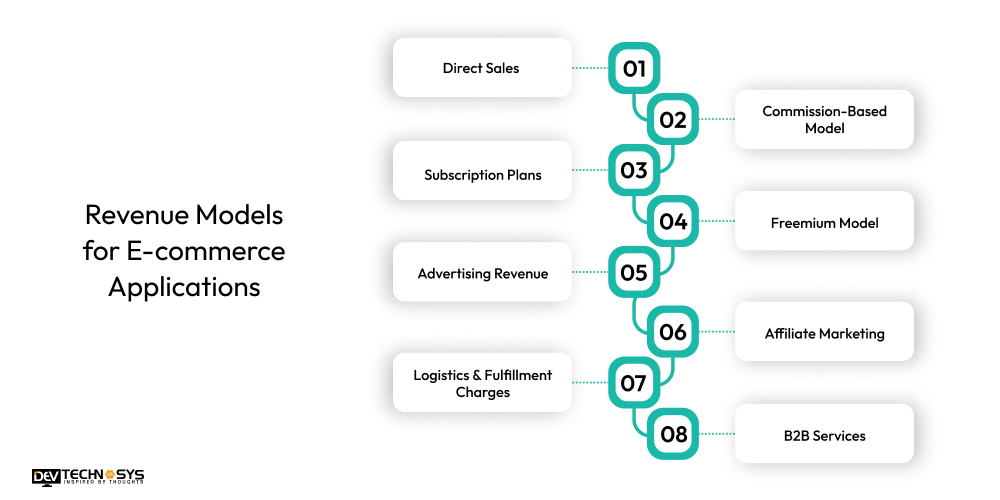
1. Direct Sales (Product-Based Revenue)
This is the core model where the app earns by selling physical or digital products directly to consumers. The business retains profits after deducting production, shipping, and operational costs.
2. Commission-Based Model
If your app is a multi-vendor marketplace, you can charge sellers a percentage on each sale made through the platform. It’s scalable and common in apps like Amazon, Flipkart, and Etsy.
3. Subscription Plans
Offer monthly or yearly subscriptions to customers or vendors. For customers, this may include free shipping or exclusive deals. For vendors, it could offer premium store placement or analytics tools.
4. Freemium Model
Provide core features for free and lock premium features (like faster delivery, gift wrapping, or customizations) behind a paywall. This model is effective in gradually boosting conversions.
5. Advertising Revenue
You can sell ad space within the app to third-party brands or promote specific products from vendors for a fee. Native or targeted ads can generate steady income without hurting user experience.
6. Affiliate Marketing
Promote third-party products and earn commissions on successful referrals or sales. This works well for content-driven eCommerce apps or platforms with curated product listings.
7. Logistics & Fulfillment Charges
If you offer your own delivery or warehouse services, you can charge sellers logistics and fulfillment fees. This model helps recoup operational costs and boosts profits in high-volume markets.
8. B2B Services
If your platform serves businesses, consider offering additional services such as bulk order handling, invoicing tools, API access, or white-labeled store setups, all of which can be provided as paid services or enterprise plans.

Conclusion
In the above blog, we examined the key factors that impact the development cost of an e-commerce app in 2025. From feature complexity and platform choices to UI/UX design and ongoing maintenance, each factor plays a vital role in deciding the final development budget.
While basic e-commerce apps can be built within a range of $8,000 to $25,000, additional features, cross-platform functionality, and scalability needs can increase the cost accordingly. If you are a business seeking to build an e-commerce app, contact Dev Technosys, one of the leading eCommerce development companies in UAE. And stay tuned for more informative updates.
FAQs
1. What Is The Average Cost To Build An E-commerce App In 2025?
The average cost of developing an e-commerce app ranges from $8,000 to $25,000 for a basic to mid-level app, depending on features, design, and platform choice.
2. What Factors Influence The Cost Of E-commerce App Development?
Key factors include app features, UI/UX design complexity, platform (iOS/Android), technology stack, team location, and maintenance needs.
3. How Much Does It Cost To Add AI Features To My E-commerce App?
Integrating AI (e.g., recommendations, chatbots) may add $2,000 to $5,000 or more, depending on complexity and data usage.
4. Is It Cheaper To Build A Single-Vendor Or Multi-Vendor App?
The cost of building a single-vendor app is typically $8,000 to $15,000, while a multi-vendor marketplace may require $20,000 to $25,000 within this budget.
5. How Much Does It Cost To Maintain An E-commerce App Annually?
Maintenance (updates, server, bug fixes) generally costs $2,000 to $6,000/year, depending on app complexity and usage.
6. Can I Reduce Development Costs By Using Cross-Platform Frameworks?
Yes. Using Flutter or React Native can save time and money by building one codebase for both Android and iOS, usually between $15,000–$22,000.